Auteur: Henk Tennekes

  • Insecticide Resistance Signals Negative Consequences of Widespread Neonicotinoid Use on Multiple Field Crops in the U.S. Cotton Belt

    Insecticide Resistance Signals Negative Consequences of Widespread Neonicotinoid Use on Multiple Field Crops in the U.S. Cotton Belt

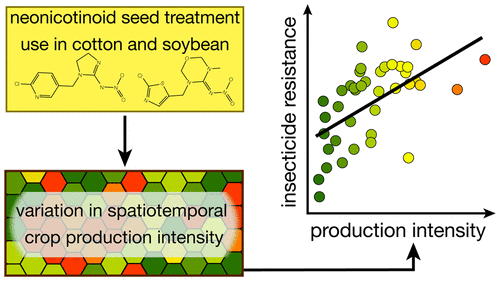
    Over the past 15 years, neonicotinoid seed treatments have been adopted worldwide and are used on a large proportion of U.S. field crops. Although neonicotinoids are used widely, little is known about how large-scale deployment affects pest populations over long periods. Here, we report a positive relationship between the deployment of neonicotinoid seed-dressings on multiple crops and the emergence of insecticide resistance in tobacco thrips (Frankliniella fusca), a polyphagous insect herbivore that is an important pest of seedling cotton but not soybean or maize. Using a geospatial approach, we studied the relationship between neonicotinoid resistance measured in 301 F. fusca populations to landscape-scale crop production patterns across nine states in the southeastern U.S. cotton production region, in which soybean, maize and cotton are the dominant crops. Our research linked the spatiotemporal abundance of cotton and soybean production to neonicotinoid resistance in F. fusca that is leading to a dramatic increase in insecticide use in cotton. Results demonstrate that cross-crop resistance selection has important effects on pests and, in turn, drives pesticide use and increases environmental impacts associated with their use.

    Source: Huseth AS et al. Environ. Sci. Technol., 2018, 52 (4), pp 2314–2322
    DOI: 10.1021/acs.est.7b06015
    https://pubs.acs.org/doi/pdf/10.1021/acs.est.7b06015

  • Das Verschwinden der Grasfrösche

    Das Verschwinden der Grasfrösche

    Der zu den Braunfröschen gehörende Grasfrosch (Rana temporaria) galt früher als „Allerweltsart“. Bis ins 20. Jahrhundert hinein landete er bevorzugt in der Fastenzeit hin- und wieder auf heimischen Tellern. Er ist fast überall in Deutschland anzutreffen. Dennoch sind auch bei dieser häufig vorkommenden Amphibienart in den letzten Jahren sehr starke Bestandsrückgänge festzustellen. In bestimmten Regionen ist er bereits ganz verschwunden, sodass er in Rheinland-Pfalz auf der Vorwarnliste der gefährdeten Arten aufgeführt ist. Die Tiere ernähren sich von Insekten, Würmern, Nacktschnecken etc. Letztendlich wird auch das Insektensterben Konsequenzen für den Grasfrosch haben, denn Insekten sind seine Hauptnahrungsquelle.

    Quelle: Blick, 09.03.18
    http://www.blick-aktuell.de/Berichte/Kroeten-und-Froesche-gehen-auf-Wanderschaft-316800.html

  • Protecting our butterflies is vital to the environment

    Protecting our butterflies is vital to the environment

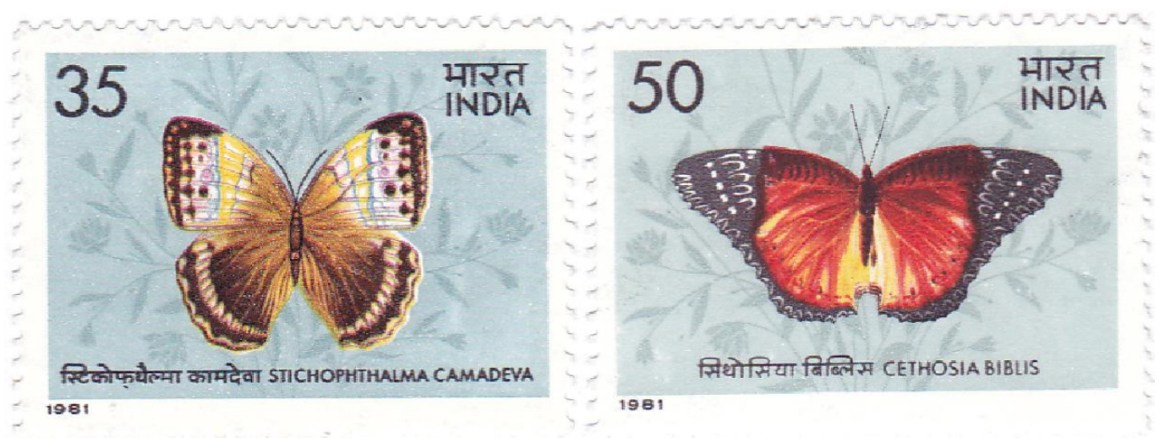
    The State of the Nations Butterfly report which is published every five years shows long term and ten year trends – and it’s waving a danger flag. The most recent report published in 2015 indicates that overall a staggering 76 percent of our butterflies declined in abundance and occurrence over the past 40 years.

    Four species of butterfly have become extinct over the past 150 years and the rest face an uncertain future. Our moths are doing no better as the total number over the past 40 years has declined overall by 28 percent, even as low as 40 percent in southern areas.

    Butterflies and moths give us a meaningful glimpse into our current biodiversity and future environmental state – the government recognises them as indicators. They pollinate our food sources along with bees and other flying insects. Butterflies don’t have the furry bodies that bees have so they take less pollen, but they cover greater distances, strengthening the genetic variation of DNA in plants.

    This makes our plants tougher and less likely to fall prey to disease. It’s thought 84 percent of EU crops are pollinated by insects – and our activities are putting them in danger. And butterflies and moths form part of the natural food chain. Birds, bats, and spiders amongst others eat caterpillars and blue tit chicks exist almost entirely upon them. Removing a step in the food chain can have unforeseen consequences on our wildlife. Farming practices have changed beyond recognition. No longer do we have wildflower meadows meant for hay which our butterflies thrived in, but intensive farming of mono-crops such as rapeseed and long grass with little diversity.

    Farming pesticides that kill insects and disease also have an effect on our beneficial insects. Research continues into the effects of pesticides on farmland butterflies. Our own garden pesticides certainly destroy the resident butterflies in the form of eggs and caterpillars.

    Source: Clive Harris in the Ecologist | 13th March 2018
    https://theecologist.org/2018/mar/13/why-protecting-our-butterflies-vital-environment

    Clive Harris is a gardener and blogger at DIY Garden. If you’d like more information about how to make your garden more butterfly friendly, visit Clive’s ultimate guide to butterflies.

  • South Africa’s seabirds are in serious decline

    South Africa’s seabirds are in serious decline

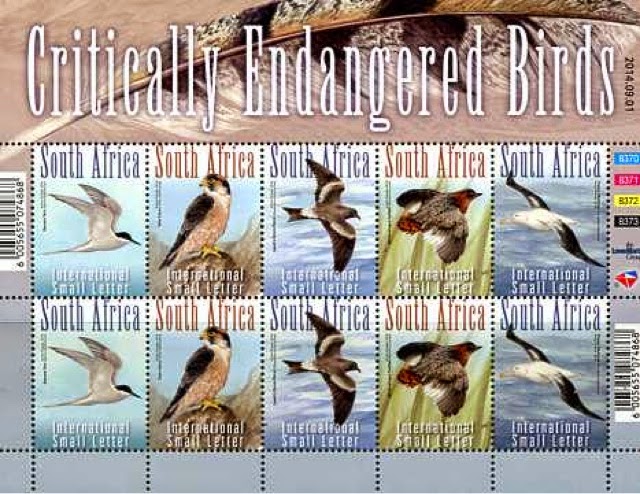
    Over five years in the making, The State of South Africa’s Birds 2018 report used national survey and monitoring data to create a picture of the conservation status of the country’s birds and their habitats. Unfortunately, the study outlines several troubling tends. Overall, it found that 132 of the 856 species in the country were threatened or near-threatened in the country, with 13 Critically Endangered – just one step away from being extinct in South Africa.

    The picture for seabirds in particular looks especially grim; 27 types of seabird are threatened to some degree, with one – Tristan Albatross Diomedea dabbenena, Critically Endangered globally. Three more, Leach’s Storm Petrel Oceanodroma leucorhoa, Damara Tern Sternula balaenarum and Crozet Shag, a subspecies of Imperial Shag Phalacrocorax Atriceps, are Critically Endangered nationally. In total, seabirds make up over a third of the birds in South Africa which are threatened or Near-Threatened. This mirrors a worldwide trend, where seabirds are declining faster than any other comparable group.

    Source: Bird Life International, 12 March 2018
    http://www.birdlife.org/worldwide/news/new-report-south-africa%E2%80%99s-seabirds-raptors-serious-decline

  • Wells closed across Denmark as every tenth shows pesticide levels that are too high

    Wells closed across Denmark as every tenth shows pesticide levels that are too high

    Denmark is facing a historic pollution case as it has been revealed that every tenth test sample taken from almost 1,700 wells reveals a level of pesticide residue that is considered too high. As a result, a number of wells have been closed due to the concerns. In its report on the issue, the Geological Survey of Denmark and Greenland (GEUS) found unusually high concentrations and a broad geographic occurrence, establishing that the pesticide residue Desphenylchloridazone is prevalent in the groundwater – in open land and in drinking water wells.

    ”In the groundwater surveillance tests, Desphenylchloridazone has been found in 29.2 percent of cases. The content was higher than the permitted limit for drinking water in 16.9 percent of cases, and the limit was exceeded by a factor of 10 or more in over 4.6 percent of cases,” GEUS wrote in its report (here in Danish).

    “In standard water supply wells, Desphenylchloridazone was found in 26.3 percent of tested wells. The prevalence of the residue was higher than the limit for drinking water in 9.7 percent of sample tests, and it exceeded the limit by a factor of 10 or more in 1.0 percent of cases.”

    Desphenylchloridazone is a metabolite of Chloridazon, a pesticide that was used in Denmark up until 1996 when it was banned because of the risk it carried concerning groundwater contamination.

    The find is particularly eye-catching because the waterworks were only recently compelled to test for Desphenylchloridazone after a handful of waterworks discovered the residue following tests made on their own initiative.

    Traces of Desphenylchloridazone were found in wells across the country, but the most highly-contaminated wells were located mostly in the southern part of Denmark. Of these, seven were in Funen, two were in south Jutland and two were in Lolland-Falster.

    Source: CPH Post, 14 March 2018
    http://cphpost.dk/news/one-in-ten-danish-drinking-water-sources-are-contaminated.html

  • Tropical aquatic ecosystems are much more sensitive to imidacloprid

    Tropical aquatic ecosystems are much more sensitive to imidacloprid

    The neonicotinoid insecticide imidacloprid is used in Bangladesh for a variety of crop protection purposes. Imidacloprid may contaminate aquatic ecosystems via spray drift, surface runoff and ground water leaching. The present study aimed at assessing the fate and effects of imidacloprid on structural (phytoplankton, zooplankton, macroinvertebrates and periphyton) and functional (organic matter decomposition) endpoints of freshwater, sub-tropical ecosystems in Bangladesh. Imidacloprid was applied weekly to 16 freshwater microcosms (PVC tanks containing 400 L de-chlorinated tap water) at nominal concentrations of 0, 30, 300, 3000 ng/L over a period of 4 weeks. Results indicated that imidacloprid concentrations from the microcosm water column declined rapidly. Univariate and multivariate analysis showed significant effects of imidacloprid on the zooplankton and macroinvertebrate community, some individual phytoplankton taxa, and water quality variables (i.e. DO, alkalinity, ammonia and nitrate), with Cloeon sp., Diaptomus sp. and Keratella sp. being the most affected species, i.e. showing lower abundance values in all treatments compared to the control. The observed high sensitivity of Cloeon sp. and Diaptomus sp. was confirmed by the results of single species tests. No significant effects were observed on the species composition of the phytoplankton, periphyton biomass and organic matter decomposition for any of the sampling days. Our study indicates that (sub-)tropical aquatic ecosystems can be much more sensitive to imidacloprid compared to temperate ones.

    Source:
    Kizar Ahmed Sumon et al. Environmental Pollution 236 (2018) 432-441

  • Neonicotinoïden mogelijk alleen nog onder glas

    Neonicotinoïden mogelijk alleen nog onder glas

    Landbouwminister Carola Schouten gaat ervan uit dat de Europese Commissie het gebruik van neonicotinoïden gaat beperken tot alleen de toepassingen onder glas. De bewindsvrouw schrijft dit deze week in een brief aan de Tweede Kamer. De verwachting is dat de Europese Commissie binnenkort met een definitief voorstel komt om het gebruik van neonicotinoïden verder aan banden te leggen. Eind maart brengen de EU-lidstaten mogelijk het voorstel van de EC in stemming.

    EFSA, de Europese autoriteit voor voedselveiligheid, presenteerde vorige week een studie met de bevestiging dat neonicotinoïden schadelijk zijn voor alle bijensoorten. Op basis van deze resultaten verwacht Schouten dat in het voorstel van de commissie het gebruik van deze middelen in open teelten volledig zullen verdwijnen. Alleen toepassingen onder glas zullen dan nog in aanmerking komen voor een toelating.

    Schouten schrijft dat zodra de voorstellen beschikbaar zijn, zij zich hierover laat voorlichten door het Ctgb. De minister stelt dat zij waarschijnlijk bij de lijn blijft dat ingrijpen in de toelatingen noodzakelijk is als EFSA risico’s ziet voor bijen.

    Bron: Nieuwe Oogst, 7 maart 2018
    https://www.nieuweoogst.nu/nieuws/2018/03/07/neonicotinoiden-mogelijk-alleen-nog-onder-glas

  • Het Ctgb wil het neonicotinoïde insecticide dinotefuran toelaten voor de bestrijding van kakkerlakken

    Het Ctgb wil het neonicotinoïde insecticide dinotefuran toelaten voor de bestrijding van kakkerlakken

    Het College voor de toelating van gewasbeschermingsmiddelen en biociden (Ctgb) besluit binnenkort over de toelating van onderstaande middelen op basis van een werkzame stof die niet eerder in Nederland is toegelaten. Voordat het college besluit tot toelating, liggen ontwerpbesluiten twee weken ter inzage. De terinzageleggingen worden 8 maart 2018 gemeld via www.overheid.nl; de inzagetermijn eindigt op 22 maart 2018. Een van de werkzame stoffen is het neonicotinoïde insecticide dinotefuran.

    Addict Gel Kakkerlakken op basis van de werkzame stof dinotefuran
    Het middel is aangevraagd ter bestrijding van Duitse en Oosterse kakkerlakken. Het betreft een middel voor professioneel gebruik. De werkzame stof dinotefuran is niet eerder in Nederland in een biocide toegelaten; vandaar dat de zienswijzeprocedure van toepassing is.

    Bron: Agri-Holland Nieuws, 8 maart 2018
    https://www.agriholland.nl/nieuws/artikel.html?id=200443

  • New research finds bee-killing pesticides may be impacting our health

    New research finds bee-killing pesticides may be impacting our health

    Lots of recent research on neonicotinoid pesticides has focused on their deadly effects on honeybees and hives, but few have studied their possible effects on human health. Now, a Quebec research team has made some disturbing findings, including how the pest killers might affect unborn babies during pregnancy, and how they play a role in fuelling breast cancer. Elyse Caron-Beaudoin, a postdoctoral fellow at the University of Montreal’s School of Public Health, says while neonic pesticides have passed tests related to their toxicity in order to be approved for use in Canada, no one has looked at the long-term effects of these chemicals on human hormone production.

    “And so that’s what we decided to investigate,” Caron-Beaudoin told CTV News Channel from Montreal Thursday. She and her team decided to focus on estrogen production in two contexts: during pregnancy and during the development of breast cancer. Since it would have been unethical to experiment on actual pregnant women or breast cancer patients, she and her team tried to mimic some of those physiological processes in the lab.

    In the pregnancy model, they used a “co-culture” of two different cells placed put together to mimic the interaction between the fetus and the placenta. “We exposed that model to neonic insecticides at concentrations that we would find in the environment, and what we found was there was an alteration of estrogen production,” she explained.

    While it’s unclear what effects that estrogen disruption might have on real humans, Caron-Beaudoin notes that previous research has shown varying hormone levels in pregnancy can harm the baby.

    We know that alteration of estrogen production during pregnancy is associated with some negative birth outcomes, like low birth weight and smaller heads,” she said.

    For their second round of experiments on the effects of neonics on breast cancer, Caron-Beaudoin’s team used a cancer cell line derived from breast cancer patients.

    She explained that in hormone-dependent breast cancer — which comprises the majority of breast cancer — the growth and proliferation of cancer cells is driven by high concentrations of estrogen.

    “So we exposed those cells to concentrations of neonics that we would commonly find in the environment, and we saw there was an increased activity of a protein, of an enzyme that is responsible (for) estrogen production. So again, we saw that neonics could potentially be endocrine disruptors ,” she said.

    That enzyme is called aromatase, which turns the hormone androgen into small amounts of estrogen in the body. One of the key treatments for hormone-dependent breast cancer is aromatase inhibitors, which help block the production of estrogen.

    The full results of Caron-Beaudoin’s research will appear in an upcoming issue of Environmental Health Perspectives.

    Source: CTV News, March 9, 2018
    https://www.ctvnews.ca/health/new-research-finds-bee-killing-pesticides-may-be-impacting-our-health-1.3835828
  • Death of the bee hive: understanding the failure of an insect society

    Death of the bee hive: understanding the failure of an insect society

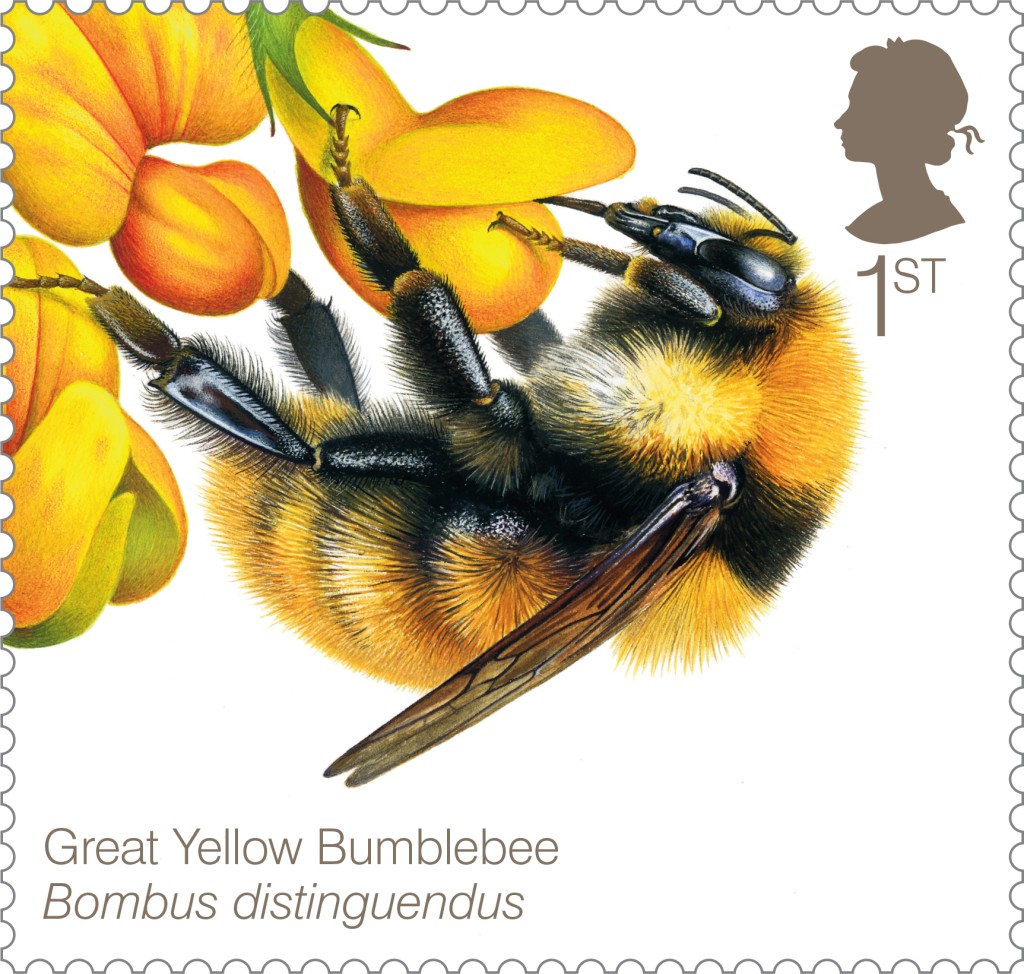
    Since 2007 honey bee colony failure rates overwinter have averaged about 30% across much of North America. In addition, cases of extremely rapid colony failure have been reported, which has been termed colony collapse disorder. Both phenomena result from an increase in the frequency and intensity of chronic diseases and environmental stressors. Colonies are often challenged by multiple stressors, which can interact: for example, pesticides can enhance disease transmission in colonies. Colonies may be particularly vulnerable to sublethal effects of pathogens and pesticides since colony functions are compromised whether a stressor kills workers, or causes them to fail at foraging. Modelling provides a way to understand the processes of colony failure by relating impacts of stressors to colony-level functions.

    Source:
    Andrew B Barron. Current Opinion in Insect Science, Volume 10, August 2015, Pages 45-50
    https://www.sciencedirect.com/science/article/pii/S2214574515000541#!