Auteur: Henk Tennekes

  • Hemmung der Abbau-Enzyme verstärkt die toxische Wirkung von Neonicotinoiden

    Hemmung der Abbau-Enzyme verstärkt die toxische Wirkung von Neonicotinoiden

    Die als Insektenbekämpfungsmittel eingesetzten Neonicotinoide sind für Bienen schädlich – so viel scheint klar. Doch einige Mittel aus dieser Substanzklasse wirken viel toxischer als andere. Warum das so ist, haben nun Forscher aufgeklärt. Demnach sind die Insektizide besonders schädlich, die zusätzlich zu ihrer Giftwirkung auch bestimmte Abwehrenzyme der Bienen hemmen. Dadurch können die Insekten das Gift nicht mehr abbauen, bevor es Schaden anrichtet.

    Für ihre Studie gingen die Forscher der Frage nach, welche biochemischen Faktoren die Wirkung der Mittel auf Bienen und Hummeln bestimmen könnten. Erste Tests ergaben, dass Unterschiede in der Bindung an die Andockstelle in den Insektenzellen nicht dafür verantwortlich sind. Imidacloprid und Thiacloprid, zeigten nahezu die gleiche Affinität zu diesem Rezeptor, wie die Forscher berichten.

    Doch an anderer Stelle wurden die Wissenschaftler fündig: Blockierten sie bei den Hummeln und Honigbienen eine bestimmte Enzymfamilie, reagierten die Insekten plötzlich auch auf Thiacloprid. „Honigbienen wurden 170-mal anfälliger für Thiacloprid, Hummeln um 4,2-fach sensibler“, berichten Bass und seine Kollegen. Nähere Analysen enthüllten den Grund dafür: „Die P450-Unterfamilie von Enzymen enthält potente Abbauhelfer für bestimmte Neonicotinoide“, so die Forscher.

    Wie sich zeigte, besitzen Bienen und Hummeln mit diesen Enzymen biochemische Abwehrwaffen, die zumindest gegen einige Neonicotinoide effektiv sind. Die Enzyme sorgen dafür, dass diese Insektizide zersetzt und abgebaut werden, bevor sie im Körper und Nervensystem der Tiere Schaden anrichten können. Weil jedoch Neonicotinoide wie Imidacloprid und Thiamethoxam diese Enzyme hemmen, können sie ihre toxische Wirkung voll entfalten. „Die Identifizierung dieser Schlüsselenzyme liefert uns nun die Chance, bei der Entwicklung neuer Pestizide schon früh testen zu können, ob die Bienen sie abbauen können oder nicht“, sagt Bass.

    Die neuen Ergebnisse könnten auch erklären, warum eigentlich für die Bienen unschädliche Fungizide die toxische Wirkung von Neonicotinoiden verstärken können: Offenbar hemmen einige dieser Pilzmittel die Schutzenzyme der Bienen und machen sie so anfälliger für die Insektizide. „Das Wissen um diese Enzyme und ihre Wirkung kann künftig genutzt werden, um solche negativen Wechselwirkungen zu vermeiden“, sagen die Forscher.

    Quellen:
    Cristina Manjon (Bayer, Monheim) et al., Current Biology, doi: 10.1016/j.cub.2018.02.045
    Natur.de, 23. März 2018
    https://www.wissenschaft.de/umwelt-natur/neonicotinoide-gehemmte-abwehr/

  • EU in ‘state of denial’ over destructive impact of farming on wildlife

    EU in ‘state of denial’ over destructive impact of farming on wildlife

    Europe’s crisis of collapsing bird and insect numbers will worsen further over the next decade because the EU is in a “state of denial” over destructive farming practices, environmental groups are warning. European agriculture ministers are pushing for a new common agriculture policy (CAP) from 2021 to 2028 which maintains generous subsidies for big farmers and ineffectual or even “fake” environmental or “greening” measures, they say.

    In a week when two new studies revealed drastic declines in French farmland birds – a pattern repeated across Europe – the EU presidency claimed that the CAP continued to provide safe food while defending farmers and “protecting the environment”.

    “The whole system is in a state of denial,” said Ariel Brunner, head of policy at Birdlife Europe. “Most agriculture ministers across Europe are just pushing for business as usual. The message is, keep the subsidies flowing.” Farm subsidies devour 38% of the EU budget and 80% of the subsidies go to just 20% of farmers, via “basic payments” which hand European landowners £39bn each year.

    Because these payments are simply related to land area, big farmers receive more, can invest in more efficient food production – removing hedgerows to enlarge fields for instance – and put smaller, less intensive farmers out of business. France lost a quarter of its farm labourers in the first decade of the 20th century, while its average farm size continues to rise. A smaller portion – £14.22bn annually – of EU farm subsidies support “greening” measures but basic payment rules work against wildlife-friendly farming: in Britain, farmers can’t receive basic payments for land featuring ponds, wide hedges, salt marsh or regenerating woodland.

    Signals from within the EU suggest that the next decade’s CAP – which will be decided alongside the EU budget by 2019 – will continue to pay farmers a no-strings subsidy, while cash for “greening”, or wildlife-friendly farming, may even be cut.

    Birdlife Europe said the “greening” was mostly “fake environmental spending” and wildlife-friendly measures had been “shredded” by “loophole upon loophole” introduced by member states.

    The greening has also been criticised by the European court of auditors, the EU’s independent auditor charged with protecting the interests of EU taxpayers. In December, the auditor concluded that greening was “unlikely to provide significant benefits for the environment and climate” because it changed practices on just 5% of EU farmland. “Member states use the flexibility in greening rules to limit the burden on farmers and themselves, rather than to maximise the expected environmental and climate benefit,” it concluded.

    This week the European court of auditors renewed its criticism of the CAP, highlighting “inherent limitations” in the basic payment scheme and “insufficient progress on environmental care and climate action”.

    Harriet Bradley, agriculture policy officer at Birdlife Europe, said: “It’s a massive scandal but the farm lobby is so powerful it hasn’t penetrated public consciousness.”

    This week studies revealed that the abundance of farmland birds in France had fallen by a third in 15 years – with population falls intensifying in the last two years. It’s a pattern repeated across Europe: farmland bird abundance in 28 European countries has fallen by 55% over three decades, according to the European Bird Census Council. Conservationists say it’s indicative of a wider crisis – particularly the decimation of insect life linked to neonicotinoid pesticides.

    According to Prof Richard Gregory of the RSPB Centre for Conservation Science, there is a strong correlation between higher cereal yields and fewer farmland birds. “It’s a worrying signal that ecosystem health and function is being severely impacted by the changes in farming and the drive to use more intensive methods,” said Gregory.

    While the farm lobby argues increased yields are needed to feed the world, Gregory said the RSPB’s management of a commercial arable farm, Hope Farm, in Cambridgeshire, has shown “you can have your cake and eat it”.

    Hope Farm is 90% commercial crops but after managing 10% for wildlife since 2000, breeding farmland birds have trebled, with linnet and skylark increasing by more than threefold.

    A study of 60 English farms in the highest level of EU agri-environment scheme found that 12 of 17 priority farmland bird species increased in abundance between 2008 and 2014, against a 56% national decline since 1970.

    But farmers are critical of how they the EU pays them to help wildlife while simultaneously incentivising them to destroy it. Isabella Tree, the author of Wilding, a study of her and her husband’s rewilding of their 3,500-acre dairy and arable farm in West Sussex, said the EU farm subsidy system was “crazy”.

    “Being paid to reverse what you’re being incentivised to do on the other hand is just bonkers,” she said. EU subsidies kept them farming in the 1990s, when it was “the wrong thing for this land and completely unsustainable”. Since rewilding their farm, 16 singing male turtle doves – Britain’s most endangered farmland bird – have returned to breed.

    According to Tree, a “silver lining” of Brexit is the opportunity to devise a UK system that rewards sustainable farming. She believes that farms could be incentivised to create “pop-up” rewilding on parcels of land for 25-year periods, creating a rotational system of wildlife-rich scrub which also restores soil, allowing farmers to return one patch to agricultural land again and rewild another.

    “Rewilding is not an enemy of farming – it boosts populations of pollinating insects and restores soil,” said Tree. “We hope the government will accept the idea of rewilding as an easy, cheap and powerful way to restore your soil, and providing scrub habitat for wildlife.”

    Source: The Guardian, 23 March 2018
    https://www.theguardian.com/environment/2018/mar/23/eu-in-state-of-denial-over-destructive-impact-of-farming-on-wildlife

  • Balochistan witnesses steep decline in bird populations

    Balochistan witnesses steep decline in bird populations

    There has been a steep decline in bird populations in Balochistan (one of the four provinces of Pakistan. Its provincial capital and largest city is Quetta), said conservator of forests and wildlife Balochistan Sharifuddin on Wednesday. The official confirmed that there has been a decline in the overall population of sparrows among other birds in Quetta and other parts of Balochistan. The revelation comes just a day after bird lovers marked the World Sparrow Day on Tuesday (March 20). “Even crow, which was a common bird, has decreased in number,” he remarked. “There are no exact figures but it is correct the bird populations have been affected.” Moreover, a study noted that certain bird populations have been reduced by at least 80 percent since 1990. The research, which was based on Germany and Europe, found that lapwings decreased by 80 percent between 1990 to 2013, the number of partridges dropped by 84 percent between 1990 and 2015.

    Sources: Geo News, 21 March 2018
    https://www.geo.tv/latest/187345-steep-decline-in-bird-populations-in-balochistan
    Wikipedia
    https://en.wikipedia.org/wiki/Balochistan,_Pakistan

  • Fluitende vogeltjes zijn binnenkort verleden tijd

    Fluitende vogeltjes zijn binnenkort verleden tijd

    De lente is begonnen, en dan hoor je buiten steeds meer vogeltjes fluiten en zingen. Maar dat is voor toekomstige generaties misschien iets wat ze nooit meer zullen horen. In West-Europese landbouwgebieden gaat het aantal typische vogels, zoals de leeuwerik en de vink, drastisch achteruit. Dat stellen wetenschappers van het Centre National de la Recherche Scientifique (CNRS) en het Muséum National d’Histoire Naturelle in Frankrijk.

    Volgens de studie is het aantal zangvogels op het Franse platteland sinds het begin van deze eeuw al met een derde gekrompen. “Al in het begin van de jaren zestig waarschuwde de Amerikaanse ecologe Rachel Carson voor de schadelijke impact van pesticiden op de Amerikaanse vogelpopulaties,” stippen de onderzoekers aan. “Daarbij werd opgemerkt dat de vogels weliswaar niet rechtstreeks in contact kwamen met het toxische product, dat zich echter in steeds hogere concentraties in hun voedselketen opstapelde.”

    “Inmiddels zijn wel een aantal producten verboden, maar het probleem is lang nog niet opgelost. De combinatie van een intensieve landbouw en een massaal gebruik van pesticiden heeft een vernietigende impact op de biodiversiteit.”

    Woestijnen
    “De situatie is catastrofaal,” zegt onderzoeker Benoït Fontaine, bioloog aan het Centre d’Ecologie et des Sciences de la Conservation (Cesco) van het Muséum National d’Histoire Naturelle. “Onze landelijke regio’s worden echte woestijnen. Alle vogelpopulaties worden getroffen.”

    Uit het onderzoek, dat zich toespitste op een landbouwgebied van 450 vierkante kilometer in de regio Deux-Sèvres – ten zuidoosten van Nantes – bleek dat de vogelpopulaties sinds het begin van deze eeuw met gemiddeld 33 procent zijn ingekrompen.

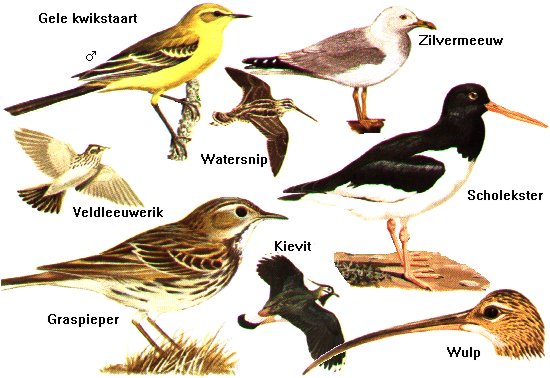
    Bij de graspieper loopt het verlies echter op tot 68 procent. Ook de kneu heeft 27 procent van zijn populatie verloren. De patrijs zou in bepaalde regio’s zelfs bijna volledig zijn verdwenen.

    Graslanden en heggen
    De reden voor de achteruitgang moet volgens de onderzoekers zeker worden gezocht bij de intensivering van de landbouw, waarbij de landschappen steeds homogener worden. “In Frankrijk moeten steeds meer gebieden met een monocultuur worden opgemerkt,” zeggen de onderzoekers. “Dat heeft echter geleid tot de vernietiging van milieus die de activiteit van vogels en insecten stimuleren.”

    “Bovendien worden de akkers massaal met pesticiden bewerkt, ondanks de Franse plannen om het gebruik van deze producten tegen het einde van dit decennium gevoelig in te perken,” benadrukken de wetenschappers. “In de jaren zestig was er vooral sprake van dichloordifenyltrichloorethaan (DDT), maar nu wordt vooral gewerkt met neonicotinoïden, insecticiden die het volledige ecosysteem contamineren. Verder is er ook nog glyfosaat, de meest gebruikt onkruidverdelger van de wereld. Door de werking van die twee soorten producten verdwijnen zowel planten als insecten, de voedingsbronnen van de vogels.”

    De landbouw zal volgens de onderzoekers een antwoord moeten vinden. “Uiteraard is er ook de bekommernis voor de volksgezondheid, maar toch zal de oplossing uit de landbouwsector moet komen,” wordt er opgemerkt.

    Daarbij wordt gewezen naar een aantal experimenten waarbij wetenschappers en landbouwers aan alternatieve strategieën werken, vooral gebaseerd op agro-ecologie en biodiversiteit. Ook het beheer van graslanden en heggen kan volgens de onderzoekers een gunstige invloed hebben op de biodiversiteit.

    Bron: News Monkey, 21 maart 2018
    http://newsmonkey.be/article/87245

  • Catastrophe as France’s bird population collapses due to pesticides

    Catastrophe as France’s bird population collapses due to pesticides

    Bird populations across the French countryside have fallen by a third over the last fifteen years, researchers have said. Dozens of species have seen their numbers decline, in some cases by two-thirds, the scientists said in a pair of studies – one national in scope and the other covering a large agricultural region in central France. “The situation is catastrophic,” said Benoit Fontaine, a conservation biologist at France’s National Museum of Natural History and co-author of one of the studies.“Our countryside is in the process of becoming a veritable desert,” he said in a communique released by the National Centre for Scientific Research (CNRS), which also contributed to the findings.

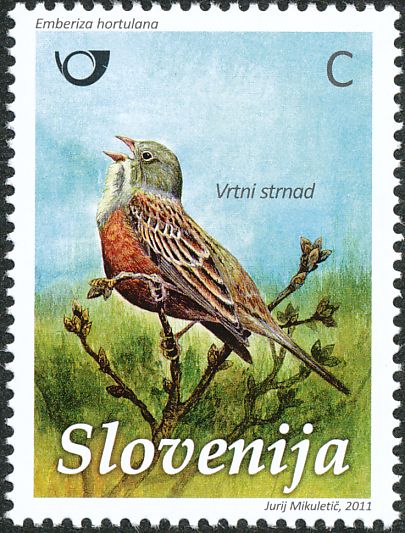
    The common White Throat, the Ortolan Bunting, the Eurasian Skylark and other once-ubiquitous species have all fallen off by at least a third, according a detailed, annual census initiated at the start of the century. A migratory song bird, the meadow pipit, has declined by nearly 70%.

    The museum described the pace and extent of the wipe-out as “a level approaching an ecological catastrophe”. The primary culprit, researchers speculate, is the intensive use of pesticides on vast tracts of monoculture crops, especially wheat and corn. The problem is not that birds are being poisoned, but that the insects on which they depend for food have disappeared. “There are hardly any insects left, that’s the number one problem,” said Vincent Bretagnolle, a CNRS ecologist at the Centre for Biological Studies in Chize.

    Recent research, he noted, has uncovered similar trends across Europe, estimating that flying insect populations have declined by 80%, and the total bird population has dropped by more than 400 million birds in 30 years. Despite a government plan, to cut pesticide use in half by 2020, sales in France have climbed steadily, reaching more than 75,000 tonnes of active pesticide ingredient in 2014, according to European Union figures.

    “What is really alarming, is that all the farmland birds are declining at the same speed, even ’generalist’ birds,” which also thrive in other settings such as wooded areas, said Bretagnolle. “That shows that the overall quality of the agricultural eco-system is deteriorating.” Figures from the national survey – which relies on a network of hundreds of volunteer ornithologists – indicate the die-off gathered pace in 2016 and 2017. Drivers of the drop in bird populations extend beyond the vanishing of their main food source, the scientists said.

    Shrinking woodlands, the absence of the once common practice of letting fields lie fallow and especially rapidly expanding areas of crop mono-cultures crops have each played a role. “If the situation is not yet irreversible, all the actors in the agriculture sector must work together to change their practices,” Fontaine said.

    Source: The Guardian, 21 March 2018
    https://www.theguardian.com/world/2018/mar/21/catastrophe-as-frances-bird-population-collapses-due-to-pesticides

  • Les oiseaux disparaissent des campagnes françaises à une « vitesse vertigineuse »

    Les oiseaux disparaissent des campagnes françaises à une « vitesse vertigineuse »

    Ce déclin « catastrophique », d’un tiers en quinze ans, est largement dû aux pratiques agricoles, selon les études du CNRS et du Muséum d’histoire naturelle. Le printemps risque fort d’être silencieux. Le Muséum national d’histoire naturelle (MNHN) et le Centre national de la recherche scientifique (CNRS) publient, mardi 20 mars, les résultats principaux de deux réseaux de suivi des oiseaux sur le territoire français et évoquent un phénomène de « disparition massive », « proche de la catastrophe écologique ». « Les oiseaux des campagnes françaises disparaissent à une vitesse vertigineuse, précisent les deux institutions dans un communiqué commun. En moyenne, leurs populations se sont réduites d’un tiers en quinze ans. »

    Plus inquiétant, les chercheurs observent que le rythme de disparition des oiseaux s’est encore intensifié ces deux dernières années.

    Résultats de deux réseaux de surveillance
    Le constat est d’autant plus solide qu’il est issu de deux réseaux de surveillance distincts, indépendants et relevant de deux méthodologies différentes. Le premier, le programme STOC (Suivi temporel des oiseaux communs) est un réseau de sciences participatives porté par le Muséum national d’histoire naturelle. Il rassemble les observations d’ornithologues professionnels et amateurs sur l’ensemble du territoire et dans différents habitats (ville, forêt, campagne). Le second s’articule autour de 160 points de mesure de 10 hectares, suivis sans interruption depuis 1994 dans la « zone-atelier « du CNRS Plaine et val de Sèvre, où des scientifiques procèdent à des comptages réguliers.

    « Les résultats de ces deux réseaux coïncident largement et notent une chute marquée des espèces spécialistes des plaines agricoles, comme l’alouette », constate l’écologue Vincent Bretagnolle, chercheur au Centre d’études biologiques de Chizé, dans les Deux-Sèvres (CNRS et université de La Rochelle). Ce qui est très inquiétant est que, sur notre zone d’étude, des espèces non spécialistes des écosystèmes agricoles, comme le pinson, la tourterelle, le merle ou le pigeon ramier, déclinent également. »

    Sur la zone-atelier du CNRS – 450 km2 de plaine agricole étudiés par des agronomes et des écologues depuis plus de vingt ans –, la perdrix est désormais virtuellement éteinte. « On note de 80 % à 90 % de déclin depuis le milieu des années 1990, mais les derniers spécimens que l’on rencontre sont issus des lâchers d’automne, organisés par les chasseurs, et ils ne sont que quelques rescapés », précise M. Bretagnolle.

    Déclin massif des insectes
    Pour le chercheur français, « on constate une accélération du déclin à la fin des années 2000, que l’on peut associer, mais seulement de manière corrélative et empirique, à l’augmentation du recours à certains néonicotinoïdes, en particulier sur le blé, qui correspond à un effondrement accru de populations d’insectes déjà déclinantes ».

    A l’automne 2017, des chercheurs allemands et britanniques conduits par Caspar Hallmann (université Radboud, Pays-Bas) ont, pour la première fois, mis un chiffre sur le déclin massif des invertébrés depuis le début des années 1990 : selon leurs travaux, publiés en octobre dans la revue PloS One, le nombre d’insectes volants a décliné de 75 % à 80 % sur le territoire allemand.

    Attribué par les chercheurs à l’intensification des pratiques agricoles de ces vingt-cinq dernières années, le déclin observé est plus particulièrement marqué depuis 2008-2009, « une période qui correspond, entre autres, à la fin des jachères imposées par la politique agricole commune [européenne], à la flambée des cours du blé, à la reprise du suramendement au nitrate permettant d’avoir du blé surprotéiné et à la généralisation des néonicotinoïdes », ces fameux insecticides neurotoxiques, très persistants, notamment impliqués dans le déclin des abeilles, et la raréfaction des insectes en général.

    Des mesures encore non publiées, réalisées en France dans la zone-atelier Plaine et val de Sèvre, sont cohérentes avec ces chiffres. Elles indiquent que le carabe, le coléoptère le plus commun de ce type d’écosystème, a perdu près de 85 % de ses populations au cours des vingt-trois dernières années, sur la zone étudiée par les chercheurs du CNRS.

    « Or de nombreuses espèces d’oiseaux granivores passent par un stade insectivore au début de leur vie, explique Christian Pacteau, référent pour la biodiversité à la Ligue de protection des oiseaux (LPO). La disparition des invertébrés provoque donc naturellement un problème alimentaire profond pour de nombreuses espèces d’oiseaux et ce problème demeure invisible : on va accumuler de petites pertes, nid par nid, qui font que les populations ne sont pas remplacées. »

    Dégradations profondes de l’environnement
    La disparition en cours des oiseaux des champs n’est que la part observable de dégradations plus profondes de l’environnement. « Il y a moins d’insectes, mais il y a aussi moins de plantes sauvages et donc moins de graines, qui sont une ressource nutritive majeure pour de nombreuses espèces, relève Frédéric Jiguet, professeur de biologie de la conservation au Muséum et coordinateur du réseau d’observation STOC. Que les oiseaux se portent mal indique que c’est l’ensemble de la chaîne trophique [chaîne alimentaire] qui se porte mal. Et cela inclut la microfaune des sols, c’est-à-dire ce qui les rend vivants et permet les activités agricoles. »

    La situation française n’est pas différente de celle rencontrée ailleurs en Europe. « On est dans la continuité d’une tendance lourde qui touche l’ensemble des pays de l’Union européenne », note M. Jiguet. Est-elle réversible ? « Trois pays, les Pays-Bas, la Suède et le Royaume-Uni, ont mis en œuvre des politiques nationales volontaristes pour inverser cette tendance lourde, en aménageant à la marge le modèle agricole dominant, explique Vincent Bretagnolle. Aucun de ces trois pays n’est parvenu à inverser la tendance : pour obtenir un effet tangible, il faut changer les pratiques sur des surfaces considérables. Sinon, les effets sont imperceptibles. Ce n’est pas un problème d’agriculteurs, mais de modèle agricole : si on veut enrayer le déclin de la biodiversité dans les campagnes, il faut en changer, avec les agriculteurs. »

    Source: Le Monde, 2018/03/20
    http://mobile.lemonde.fr/biodiversite/article/2018/03/20/les-oiseaux-disparaissent-des-campagnes-francaises-a-une-vitesse-vertigineuse_5273420_1652692.html

  • Die Fortsetzung des stummen Frühlings

    Die Fortsetzung des stummen Frühlings

    Die Biologin Rachel Carson begann ihr berühmt gewordenes Buch einst mit einem Zukunftsmärchen. Sie schildert eine Stadt inmitten blühender Obstgärten. Entlang der Straßen entzücken Schneeballsträucher, hohe Farne und wilde Blumen das Auge. Die Vogelwelt ist artenreich, in den Bächen tummeln sich Fische. Doch dann rafft eine seltsame, schleichende Seuche Mensch und Tier dahin. Bäume und Blüten verkümmern. Die wenigen, noch übrig gebliebenen Vögel zittern und können nicht mehr singen. Es sei ein „stummer Frühling“, gewesen, schreibt sie in ihrem gleichnamigen, 1962 erschienenen Buch.

    Die Forscherin zeigt darin auf, wie massiv Pestizide das ökologische Gleichgewicht durcheinanderbringen. Ihr Hauptaugenmerk liegt auf den gefährlichen Folgen des – ab den 1970er-Jahren in einzelnen europäischen Ländern und 1992 dann auch in Österreich verbotenen – Insektizids DDT. Die Lektüre des für die damals aufkeimende Ökobewegung prägenden Werks erschütterte auch den Schüler Johann Zaller. So sehr, dass er beschloss, nach seiner HTL-Ausbildung als Elektrotechniker Biologie und Ökologie zu studieren und sich schließlich an der Wiener Boku mit den – wenig erforschten – Nebeneffekten von Pestiziden zu befassen.

    Nun legt er mit „Unser täglich Gift“ selbst ein allgemein verständlich formuliertes Sachbuch vor, in dem er einen umfassenden Überblick über Pestizide als „unterschätzte Gefahr“ bietet. Er wolle damit einer emotional geführten Debatte auf Fakten basierende Informationen entgegenhalten, sagt er. Allein in Deutschland und Österreich sind rund 1200 Pestizidprodukte auf dem Markt. Viele wirken systemisch, haften also nicht nur außen an der Pflanze, sondern verteilen sich bis in die Früchte – mit unklaren Folgen für Mensch und Umwelt, denn die Nebeneffekte seien nur ungenügend untersucht.

    „Die Leute glauben, die Behörden führen die Studien zur Zulassung durch, aber sie nicken sie nur ab. Die Studien kommen von den Herstellern und werden geheimgehalten.“ Außerdem würden nur die Wirkstoffe, nicht die – ebenfalls toxischen – beigemengten Stoffe untersucht. Diese können aber mitunter bis zu 60 Prozent eines Produkts ausmachen.

    Zaller will daher mit seinem Team in einem gerade startenden Projekt untersuchen, wie sich einerseits der reine Glyphosatwirkstoff und andererseits drei unterschiedliche verarbeitete Produkte auf Regenwürmer auswirken. So lasse sich sagen, was giftiger ist. Bereits beobachtet haben die Wissenschaftler, wie von landwirtschaftlichen Flächen in benachbarte Laichgewässer ausgewaschenes Glyphosat auf Erdkröten wirkt. Das auch im Buch vorgestellte Resultat: Die Schwänze der Kaulquappen waren verkrüppelt. Außerdem werde die eigentlich als Rohrreiniger entwickelte chemische Verbindung, wenig realitätsnah, nur bei einer normierten Temperatur von 20 Grad Celsius getestet. „Wir haben allerdings herausgefunden, dass Glyphosat bei unterschiedlichen Temperaturen unterschiedlich wirkt“, schildert Zaller.

    Die Bandbreite unterschiedlicher Pestizide ist freilich groß. Herbizide etwa sollen Unkraut vernichten, Akarizide Milben und Spinnentiere, Insektizide sonstiges Ungeziefer, Molluskizide Schnecken. In der Praxis werden diese in viel zu großer Menge und viel zu oft präventiv eingesetzt, kreidet Zaller an. Er sei erschrocken, als er feststellte, dass diese bereits in Arktis und Antarktis oder in Gletscherseen zu finden seien.

    Was ihn am meisten schockierte? Dass das Nervenleiden Parkinson bei französischen Weinbauern als Folge ständiger Pestizidbelastung eine anerkannte Berufskrankheit sei, sagt er. Bei Pestiziden mache nicht erst die Dosis das Gift. „Der alte Spruch von Paracelsus gilt hier nicht, weil Langzeiteffekte ignoriert werden.“ Außerdem sind viele Pestizide hormonell wirksam – und dazu reichen geringe Mengen. Getestet werde das meist nur bei Erwachsenen, nicht aber bei Kindern. „Wer hier forscht, wird schnell in die Ecke des Aktivisten oder Fortschrittsverhinderers gedrängt“, erzählt Zaller.

    Er ist überzeugt, dass sich die meisten Pestizide ersetzen lassen. In einem noch laufenden Forschungsprojekt hat er etwa getestet, was sich statt Schneckenkorn – das auch Regenwürmern schadet – nutzen lässt: Man könnte einen parasitischen Fadenwurm einsetzen, der die Schnecken befällt und tötet. Mitunter helfen aber auch alte Hausrezepte wie Seifenlauge gegen Blattläuse, und ebenso lasse sich Unkraut im Weingarten wieder mit Werkzeugen entfernen.

    Die Nachfrage nach Pestiziden ist seit 1950 allerdings um das Fünfzigfache gestiegen, berichtet Zaller. Fatal, denn: „Wenn jemand raucht, kann man hinausgehen. Pestiziden kann man nicht ausweichen.“ Der stumme Frühling dürfte also seine Fortsetzung finden.

    Quelle: “Die Presse”, 17.03.2018
    https://diepresse.com/home/science/5390366/Die-Fortsetzung-des-stummen-Fruehlings

  • Bug diet of birds has dramatically declined in quality, researchers find

    Bug diet of birds has dramatically declined in quality, researchers find

    “You are what you eat” is the guiding principle behind a new study comparing the diet of birds today with that of birds dead for more than a century. The results show large changes in the diets of aerial insectivores, or birds such as swallows, swifts, martins and whip-poor-wills that consume insects while in mid-flight. Today, the bulk of the birds’ diet is made up of small insects at the lower end of the food web, or at a lower “trophic” level, the researchers say. “Higher up on a trophic level might be steak,” said Joe Nocera, an assistant professor of forestry and environmental management at the University of New Brunswick and one of the authors of the paper. “Lower on a trophic level might be a salad. You’d have to eat a lot more salad to make up for that steak.”

    For example, whip-poor-wills today still have to eat insects, Nocera said, but what they have to choose from isn’t as beneficial as it was 100 years ago. Joe Nocera, an assistant professor of forestry and environmental management at UNB, is an author of the paper, along with Philina English and David Green of Simon Fraser University. Using stable isotopes, or molecules found in the food eaten by birds, researchers have been able to map the changes in diet for species such as whip-poor-wills back to the 1800s.

    “It’s a species that used to be common in New Brunswick, but isn’t anymore,” Nocera said. “So we looked at Ontario populations. And we wanted to know what’s driving their population declines over the past century.” Nocera said most species of aerial insectivores, including swifts and swallows, have been in severe decline and he thinks it’s most likely a response to declines in insect populations.

    “But we don’t know that,” he said. “We have terrible historical records on insect abundance in history.”
    Large collections of dead bugs gathered over decades are nearly impossible to find, so the precise changes in the insect world can’t be documented. But collections of dead birds are available.

    By using museum specimens of whip-poor-wills (Antrostomus vociferus) collected as far back as the 1880s, researchers were able to determine what those birds consumed and compare their diets to birds of the same species collected this century.

    Determining the diet of the birds that lived more than 130 years ago is done by examining stable isotopes, a type of biological tracer, found in the museum specimens. “When a bird, or any animal for that matter, eats something, it incorporates all the molecules of that item into its own tissues,” said Nocera. “In the case of a bird, when it grows feathers it has the chemical makeup, partly, of what it’s been eating.” By tracking nitrogen isotopes in the birds since 1880, researchers are able to also track their food intake. “The long story short is that it has changed, and fairly dramatically, for both adults and chicks, over the past century,” Nocera said.

    The paper is titled “Stable Isotopes from Museum Specimens May Provide Evidence of Long-Term Change in the Trophic Ecology of a Migratory Aerial Insectivore.” Written by Philina English and David Green of Simon Fraser University as well as Nocera, it was published last month in Frontiers in Ecology and Evolution.

    Source: CBC News, March 14, 2018
    http://www.cbc.ca/news/canada/new-brunswick/whip-poor-will-study-aerial-insectovores-1.4575617

  • Farmers Overwhelmingly Oppose Bayer-Monsanto Merger, Call For Antitrust Division to Reject Bid

    Farmers Overwhelmingly Oppose Bayer-Monsanto Merger, Call For Antitrust Division to Reject Bid

    An overwhelming majority of surveyed farmers are concerned about the proposed Bayer-Monsanto merger and believe it will have a negative impact on independent farmers and farming communities, a poll released on March 6 has found. According to the poll, of the farmers who responded: 93.7 percent are concerned about the proposed merger of Bayer and Monsanto (82.8 percent are very concerned/10.9 percent somewhat concerned); 93.7 percent of farmers are concerned that the proposed Bayer-Monsanto merger will negatively impact independent farmers and farming communities (83.9 percent are very concerned/9.8 percent somewhat concerned);

    The farmer’s top three concerns of the merger are:

    91.9 percent of farmers are concerned that the merged company will use its dominance in one product to push sales of other products (79.6 percent very concerned/12.3 percent somewhat concerned);
    91.7 percent of farmers are concerned that Bayer/Monsanto will control data about farm practices (79.5 percent very concerned/12.2 percent somewhat concerned)
    89.0 percent of farmers think the merger will result in increased pressure for chemically dependent farming (77.1 percent very concerned/11.9 percent somewhat concerned).
    The poll also found a high level of concern amongst farmers surveyed that the merged company will control data about farm practices, will increase prices, diminish quality, choice and seed varieties including availability of regionally adaptive seed, which farmers identified as critical given increasing climate variability.

    The new poll, fielded by a coalition of farm groups, comes as the U.S. Department of Justice is reviewing the merger between chemical giant Bayer (NYSE:BAYN) and agrochemical giant Monsanto (NYSE: MON). If the Bayer-Monsanto merger is approved, the new company would be the world’s largest vegetable seed company, world’s largest cottonseed company, world’s largest manufacturer and seller of herbicides, and the world’s largest owner of intellectual property/patents for herbicide tolerant traits.

    Source: Rural America in These Times, March 15, 2018
    http://inthesetimes.com/rural-america/entry/20991/monsanto-bayer-merger-corporate-agribusiness-consolidation-antitrust-laws

  • Environmental impacts of neonicotinoids outweigh crop yield benefits

    Environmental impacts of neonicotinoids outweigh crop yield benefits

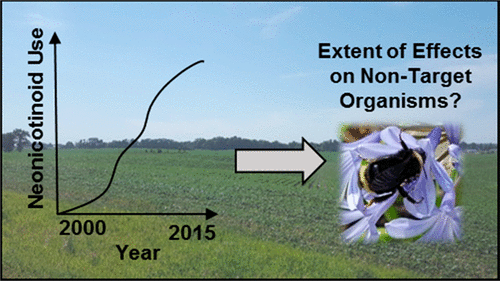
    Neonicotinoid use has increased rapidly in recent years, with a global shift toward insecticide applications as seed coatings rather than aerial spraying. While the use of seed coatings can lessen the amount of overspray and drift, the near universal and prophylactic use of neonicotinoid seed coatings on major agricultural crops has led to widespread detections in the environment (pollen, soil, water, honey). Pollinators and aquatic insects appear to be especially susceptible to the effects of neonicotinoids with current research suggesting that chronic sublethal effects are more prevalent than acute toxicity. Meanwhile, evidence of clear and consistent yield benefits from the use of neonicotinoids remains elusive for most crops.

    Source:
    Michelle L. Hladik, Anson R. Main, and Dave Goulson. Environ. Sci. Technol., Article ASAP
    DOI: 10.1021/acs.est.7b06388
    https://pubs.acs.org/doi/abs/10.1021/acs.est.7b06388