Auteur: Henk Tennekes

  • Letter to the White House Urging Suspension of Neonicotinoid Pesticides

    Letter to the White House Urging Suspension of Neonicotinoid Pesticides

    Dear Mr. President,
    We write to highlight a very important concern: the negative environmental and economic impacts of outdoor uses of the EPA-approved neonicotinoid insecticides: imidacloprid, clothianidin, thiamethoxam, dinetofuran and acetamiprid. On April 29, the European Union voted for a two-year suspension on major uses of the three most common neonicotinoids: imidacloprid, clothianidin and thiamethoxam. The decision came on the heels of comprehensive, peer-reviewed research conducted by the European Food Safety Authority (EFSA), which indicated that those three insecticides pose both acute and chronic hazards to honey bees and that significant gaps exist in the data needed to assess their safety. The EU decision signals the way forward for your Administration to suspend neonicotinoids in the United States.

    Dear Mr. President,
    We write to highlight a very important concern: the negative environmental and economic impacts of outdoor uses of the EPA-approved neonicotinoid insecticides: imidacloprid, clothianidin, thiamethoxam, dinetofuran and acetamiprid. On April 29, the European Union voted for a two-year suspension on major uses of the three most common neonicotinoids: imidacloprid, clothianidin and thiamethoxam. The decision came on the heels of comprehensive, peer-reviewed research conducted by the European Food Safety Authority (EFSA), which indicated that those three insecticides pose both acute and chronic hazards to honey bees and that significant gaps exist in the data needed to assess their safety. The EU decision signals the way forward for your Administration to suspend neonicotinoids in the United States.

    The undersigned groups are very concerned with EPA’s past approvals of these insecticides. Agency officials have acknowledged that here, as in Europe, the original risk assessments and registration data requirements focused on acute honey bee mortality and failed to adequately consider other key risks to colony health. This means the hundreds of EPA-approved neonicotinoid products were approved based on inadequate assessments. This is unacceptable in view of the fact that honey bee pollination is a $20 to 30 billion per year contributor to U.S. agriculture and vital to the majority of fruit and vegetable produce.

    In the face of severely declining bee colonies nationally — with beekeepers reporting record losses this year — it would not be responsible to continue to allow these threatening compounds to be used so broadly. Independent scientists and commercial beekeepers attribute dramatic bee die-offs to a combination of factors, but exposure to neonicotinoids is a key contributor. We are asking you as Chief Executive to direct the EPA to follow the EU and EFSA lead and recognize the risks are unacceptably high. Pollination services provided by honey bees and the other even less-studied wild bees are far too important for agriculture, gardens and wild plants to treat them in a non-precautionary manner. Many thousands of beekeeper livelihoods, and indeed the future viability of commercial beekeeping and the crops relying on these pollination services, are potentially in jeopardy. Experts have identified the potential for “domino effects” of cascading inadequate crop pollination due to shortage of viable pollinators. This could rapidly evolve into devastating, perhaps irreversible, losses to farmers, consumers and the economy as a whole, which relies on domestically-produced bee-pollinated food and fiber crops.

    In recent statements about the EU’s decision, EPA officials highlighted a recent USDA report, the Report on the National Stakeholders Conference on Honey Bee Health – National Honey Bee Health Stakeholder Conference Steering Committee. Unlike the peer-reviewed, scientific EFSA report, the USDA report was not peer-reviewed; it derived from a meeting of numerous stakeholders including many non-scientists. It is dated and not comprehensive. Further, there was not consensus among the stakeholders on the statements in the final report.

    We would like to bring your attention to recent acknowledgments of key facts by EPA officials, made in public statements at recent meetings, in media statements, in EPA documents and other venues:

    • They acknowledged EPA’s enforcement guidance for neonicotinoid use was inadequate.

    • They acknowledged EPA’s bee kill incident reporting system was inadequate.

    • They have stated the labels on neonicotinoid products are inadequate to mitigate adverse environmental effects, specifically to avoid seed dust-mediated mortality to honey bees and other beneficial insects in or near corn fields.

    • They recognize the current corn planting machinery poses significant dust-off risks and needs changing, while also recognizing that such changes will likely take many years and stating that EPA lacks authority to mandate machinery changes.

    • They acknowledge that bee health and populations, and crop pollination, are in a near-crisis state based on several synergistic factors including insecticide use.

    • They indicated the agency has not consulted with the U.S. Fish and Wildlife Service on potential effects on threatened or endangered species under Sec. 7 of the Endangered Species Act for the neonicotinoid insecticides.

    Despite the above, EPA has refused to exercise its regulatory power to address the one factor it could address tomorrow – the major contribution of these insecticide to bee declines – and instead has pointed to land use decisions, crop planting choices by farmers, pathogens, bee nutrition and other factors over which EPA has no authority. Indeed, no other Federal agency has the power to help stem bee declines by addressing any of those synergistic factors within a reasonable timeframe.

    We would like to further highlight a broader threat: water contamination by imidacloprid, clothianidin, thiamethoxam and the other compounds, the effect of which is to “sterilize” much of the invertebrate food chain, threatening insects, fish, amphibians and other taxa, including, but not limited to, aquatic and insectivorous birds. Recently, the American Bird Conservancy (ABC) released a report, The Impact of the Nation’s Most Widely Used Insecticides on Birds, researched by an internationally-recognized avian toxicologist, Pierre Mineau, who examined the key EPA risk assessment documents and found numerous failures in the agency’s approvals. The report showed high direct and indirect mortality risks to a broad suite of birds, as well as to aquatic invertebrates and ecosystems generally. It found that the observed acute threats from water contamination by EPA-approved neonicotinoids “may be totally unprecedented in the history of pesticide registration”. It also stated: “EPA has not been heeding the warnings of its own toxicologists”. Dr. Mineau examined the approved product labels and found them inadequate, stating “regulators are clearly mistaken in believing that exposure to treated seed can be minimized by label statements or adherence to good agricultural practices”. The report describes EPA’s analysis as “scientifically unsound”. It urges the agency to suspend use of these products and to ban neonicotinoid seed treatments altogether.

    The leeway for your Administration to somehow disregard the ABC report was drastically reduced by the peer-reviewed publication in PLOS ONE on May 1 of this year of a major Dutch study, Macro-Invertebrate Decline in Surface Water Polluted with Imidacloprid. This multi-year, comprehensive, field study states (emphasis added):

    While a large amount of evidence exists from laboratory single species and mesocosm experiments, our study is the first large scale research based on multiple years of actual field monitoring data that shows that neonicotinoid insecticide pollution occurring in surface water has a strong negative effect on aquatic invertebrate life, with potentially far-reaching consequences for the food chain and ecosystem functions.

    In short, we could face a second “Silent Spring” above and beyond the threats to managed and wild pollinators. Unfortunately, EPA’s planned deadline of completing its Registration Reviews for the major neonicotinoids by 2018 is far too slow in view of their potentially calamitous risks.

    We trust you do not want to preside over this pending crisis. Directing EPA to follow the EU’s lead would be a first step but even more protective measures are needed, including a minimum two-year suspension for all outdoor uses of neonicotinoid insecticides pending resolution of their risks.

    Thank you for your consideration of this urgent appeal. We look forward to your response.

    Sincerely,

    George H. Fenwick, American Bird Conservancy

    Jay Feldman, Beyond Pesticides

    Patty Clary, Californians for Alternatives to Toxics

    Michael Green, Center for Environmental Health

    Andrew Kimbrell, Center for Food Safety

    Jamie Rappaport Clark, Defenders of Wildlife

    Wenonah Hauter, Food & Water Watch

    Erich Pica, Friends of the Earth

    Kim Leval, Northwest Center for Alternatives to Pesticides

    Judy Hatcher, Pesticide Action Network North America

    Michael Brune, Sierra Club

    Scott Hoffman Black, The Xerces Society

    CC: Tom Vilsack, Secretary of Agriculture

    Sally Jewell, Secretary of the Interior

    Nancy Sutley, Chair, Council on Environmental Quality

    Bob Perciasepe, Acting Administrator, EPA

    *To reply to the signers please contact: Ms. Larissa Walker, Policy & Campaign Coordinator Center for Food Safety, 660 Pennsylvania Ave. SE, Suite 302, Washington, DC 20003 email: lwalker@centerforfoodsafety.org; tel: 202.547.9359; fax: 202.547.9429
    Source:
    http://www.pesticide.org/the-buzz/letter-to-the-white-house-urging-suspension-of-neonicotinoid-pesticides
  • Subsidie voor teeltproject zonder neonicotinoïden

    Subsidie voor teeltproject zonder neonicotinoïden

    Rozenkwekerij de Bierkreek heeft 340.000 euro subsidie van het Ministerie van Economische Zaken gekregen om een methode op de markt te zetten om containerteelt zonder insecticiden mogelijk te maken. De Bierkreek gaat de komende vier jaar samen met HAS Hogeschool en HAS kennistransfer aan het project werken. Om containerteelt vrij van insecticiden te krijgen zijn voornamelijk aanpassingen van containervelden nodig. Door het aantrekken van natuurlijke vijanden als zweefvliegen, sluipwespen, lieveheersbeestjes en gaasvliegen zijn minder bestrijdingsmiddelen nodig. Hierdoor zou de plant beter beschermd zijn tegen schade door luizen, trips, spint en andere insecten. HAS-studenten onderzoeken hoe de inrichting van een containerveld moet worden aangepast. De Bierkreek is op zoek naar tuincentra, handelaren en kwekers die willen meewerken aan dit project. Het hoeven geen biologisch gecertificeerde bedrijven te zijn.

    Rozenkwekerij de Bierkreek heeft 340.000 euro subsidie van het Ministerie van Economische Zaken gekregen om een methode op de markt te zetten om containerteelt zonder insecticiden mogelijk te maken. De Bierkreek gaat de komende vier jaar samen met HAS Hogeschool en HAS kennistransfer aan het project werken. Om containerteelt vrij van insecticiden te krijgen zijn voornamelijk aanpassingen van containervelden nodig. Door het aantrekken van natuurlijke vijanden als zweefvliegen, sluipwespen, lieveheersbeestjes en gaasvliegen zijn minder bestrijdingsmiddelen nodig. Hierdoor zou de plant beter beschermd zijn tegen schade door luizen, trips, spint en andere insecten. HAS-studenten onderzoeken hoe de inrichting van een containerveld moet worden aangepast. De Bierkreek is op zoek naar tuincentra, handelaren en kwekers die willen meewerken aan dit project. Het hoeven geen biologisch gecertificeerde bedrijven te zijn.

    Bron: De Boomkwekerij, 24-04-2013
    http://www.deboomkwekerij.nl/nieuws/9208/subsidie-voor-teeltproject-zonder-neonicotinoiden

  • De adder is uitgestorven in het Meinweggebied

    De adder is uitgestorven in het Meinweggebied

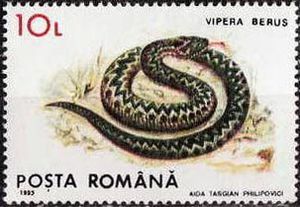
    Al vanaf de start van het herpetologisch onderzoek in het Meinweggebied was duidelijk dat het Gagelveld voor de Adder (Vipera berus) van bijzondere betekenis was. Inventarisaties in 1977 toonden aan dat het Gagelveld in die tijd een uitstekend adderbiotoop vormde. In totaal werden 144 verschillende dieren gemerkt, waarvan 31 adulte mannetjes en 33 adulte vrouwtjes. Met name in voor- en najaar als de dieren zich concentreren rond de overwinteringsplekken moet het Gagelveld een adderdichtheid hebben gekend van ongeveer acht volwassen dieren per hectare. In de daarop volgende jaren is de adderstand in het Gagelveld onrustbarend afgenomen, zelfs zodanig dat thans moet worden gevreesd dat er geen dieren meer voorkomen.

    Al vanaf de start van het herpetologisch onderzoek in het Meinweggebied was duidelijk dat het Gagelveld voor de Adder (Vipera berus) van bijzondere betekenis was. Inventarisaties in 1977 toonden aan dat het Gagelveld in die tijd een uitstekend adderbiotoop vormde. In totaal werden 144 verschillende dieren gemerkt, waarvan 31 adulte mannetjes en 33 adulte vrouwtjes. Met name in voor- en najaar als de dieren zich concentreren rond de overwinteringsplekken moet het Gagelveld een adderdichtheid hebben gekend van ongeveer acht volwassen dieren per hectare. In de daarop volgende jaren is de adderstand in het Gagelveld onrustbarend afgenomen, zelfs zodanig dat thans moet worden gevreesd dat er geen dieren meer voorkomen.

    Bron:
    A.J.W. Lenders, Groenstraat 106, 6074 EL Melick
    Natuurhistorisch Maandblad, mei 2004, jaargang 93, blz. 167-169 (bijlage)

  • The Trojan hives: pollinator pathogens, imported and distributed in bumblebee colonies

    The Trojan hives: pollinator pathogens, imported and distributed in bumblebee colonies

    Over a million commercially produced bumblebee colonies are imported annually on a global scale for the pollination of greenhouse crops. After importation, they interact with other pollinators, with an associated risk of any parasites they carry infecting and harming native bees. National and supranational regulations are designed to prevent this, and commercially produced bumblebee colonies are accordingly now often sold and imported as being parasite-free. Here, we used molecular methods to examine the occurrence of parasites in bumblebee colonies that were commercially produced in 2011 and 2012 by three producers. We then used controlled experiments to determine whether any parasites present were infectious. We found that 77% of the commercially produced bumblebee colonies from the three producers, which were imported on the basis of being free of parasites, in fact carried microbial parasites, with five different parasites being detected across the total sample of bumblebees and a further three in the pollen supplied with the colonies as food.

    Over a million commercially produced bumblebee colonies are imported annually on a global scale for the pollination of greenhouse crops. After importation, they interact with other pollinators, with an associated risk of any parasites they carry infecting and harming native bees. National and supranational regulations are designed to prevent this, and commercially produced bumblebee colonies are accordingly now often sold and imported as being parasite-free. Here, we used molecular methods to examine the occurrence of parasites in bumblebee colonies that were commercially produced in 2011 and 2012 by three producers. We then used controlled experiments to determine whether any parasites present were infectious. We found that 77% of the commercially produced bumblebee colonies from the three producers, which were imported on the basis of being free of parasites, in fact carried microbial parasites, with five different parasites being detected across the total sample of bumblebees and a further three in the pollen supplied with the colonies as food.

    Our controlled experiments demonstrated that at least three of these parasites were infectious to bumblebees with significant negative effects on their health. Furthermore, we also found that at least four of the parasites carried by commercially produced bumblebees were infectious to honeybees, indicating that they pose a risk to other pollinators as well. The results demonstrate that commercially produced bumblebee colonies carry multiple, infectious parasites that pose a significant risk to other native and managed pollinators. More effective disease detection and management strategies are urgently needed to reduce the pathogen spillover threat from commercially produced bumblebees.

    Source:
    Peter Graystock, Kathryn Yates, Sophie E. F. Evison, Ben Darvill, Dave Goulson, William O. H. Hughes.
    Journal of Applied Ecology, Early View. Article first published online: 18 JUL 2013 DOI: 10.1111/1365-2664.12134
    http://onlinelibrary.wiley.com/doi/10.1111/1365-2664.12134/abstract

  • Normoverschrijdingen van imidacloprid in het beheergebied van het Hoogheemraadschap Rijnland zijn in 2011 aangetroffen in glastuinbouwgebieden, in de boomteelt en in akkerbouwgebieden

    Normoverschrijdingen van imidacloprid in het beheergebied van het Hoogheemraadschap Rijnland zijn in 2011 aangetroffen in glastuinbouwgebieden, in de boomteelt en in akkerbouwgebieden

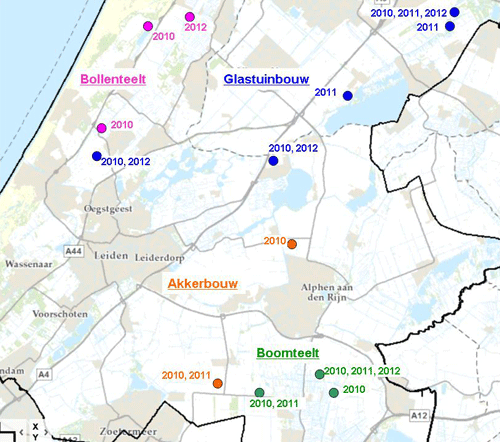
    Binnen het beheergebied van het Hoogheemraadschap Rijnland is ca. 48.000 ha in agrarisch gebruik. Dit is 43% van het totale oppervlak van Rijnland. De teelten die voorkomen zijn akkerbouw (aardappelen, bieten, granen, maïs, en overige landbouwgewassen), bollenteelt, boomteelt, glastuinbouw en grasland (veehouderij). De gewasbeschermingsmiddelen die op de prioritaire stoffenlijst staan, hebben een norm voor de jaargemiddelde concentratie (JGM) en een maximaal aanvaardbare concentratie (MAC).Het insecticide imidacloprid werd in 2011 op alle meetlocaties aangetroffen. Zowel jaargemiddelde als MAC waarden werden in 2011 op vijf locaties overschreden. (JGM norm is 0,007 μg/l en MAC norm is 0,2 μg/l). De normoverschrijdingen werden aangetroffen in glastuinbouwgebieden, in de boomteelt en in akkerbouwgebieden. Bijgevoegd kaartje geeft de locaties aan waar imidacloprid in de laatste drie jaar in normoverschrijdende concentraties werd aangetroffen. Hieruit blijkt dat ook de bollenteelt in de afgelopen drie jaar normoverschrijdingen veroorzaakte.

    Binnen het beheergebied van het Hoogheemraadschap Rijnland is ca. 48.000 ha in agrarisch gebruik. Dit is 43% van het totale oppervlak van Rijnland. De teelten die voorkomen zijn akkerbouw (aardappelen, bieten, granen, maïs, en overige landbouwgewassen), bollenteelt, boomteelt, glastuinbouw en grasland (veehouderij). De gewasbeschermingsmiddelen die op de prioritaire stoffenlijst staan, hebben een norm voor de jaargemiddelde concentratie (JGM) en een maximaal aanvaardbare concentratie (MAC).Het insecticide imidacloprid werd in 2011 op alle meetlocaties aangetroffen. Zowel jaargemiddelde als MAC waarden werden in 2011 op vijf locaties overschreden. (JGM norm is 0,007 μg/l en MAC norm is 0,2 μg/l). De normoverschrijdingen werden aangetroffen in glastuinbouwgebieden, in de boomteelt en in akkerbouwgebieden. Bijgevoegd kaartje geeft de locaties aan waar imidacloprid in de laatste drie jaar in normoverschrijdende concentraties werd aangetroffen. Hieruit blijkt dat ook de bollenteelt in de afgelopen drie jaar normoverschrijdingen veroorzaakte.

    Akkerbouw komt voornamelijk voor in de diepe droogmakerijen te weten de Haarlemmermeerpolder, polder de Noordplas, polder Nieuwkoop en polder Vierambacht. De bollenteelt in Rijnland bevindt zich hoofdzakelijk in de duin- en bollenstreek. Dit is in het gebied tussen Katwijk en Heemstede, ten westen van de Haarlemmermeerpolder. De boomteelt is geconcentreerd rond Boskoop en Waddinxveen. Glastuinbouw heeft geen groot aandeel in het grondgebruik binnen Rijnland en ligt verspreid binnen Rijnland. Het totale oppervlak is 1.067 hectare, 1% van Rijnlands beheergebied en 2% van het agrarisch grondgebruik en dit ligt verspreid in de gemeenten Katwijk, Aalsmeer, Kaag en Braassem, Haarlemmermeer en Leidschendam-Voorburg. Binnen het agrarisch grondgebruik beslaat grasland met 63% het grootste deel binnen Rijnland. Dit is 27% van Rijnlands gebied.
    Bronnen: Hoogheemraadschap Rijnland
    http://www.rijnland.net/rijnland_0/taken/schoon_water/artikelen/imidacloprid_water
    WATERKWALITEIT AGRARISCHE GEBIEDEN RIJNLAND 2010 & 2011 (bijlage)

  • Pesticides et abeilles: l’EFSA finalise de nouvelles orientations

    Pesticides et abeilles: l’EFSA finalise de nouvelles orientations

    L’EFSA a publié un document d’orientation relatif à l’évaluation des risques potentiels associés à l’utilisation de pesticides pour les abeilles communes, les bourdons et les abeilles solitaires. Le système précédent de l’UE en matière d’évaluation des risques pour les abeilles ne prenait pas entièrement en considération les risques associés à l’exposition chronique ou répétée aux pesticides, ni les risques potentiels pour les larves. Ce nouveau document d’orientation comble ces lacunes et prévoit également un système d’évaluation pour les bourdons et les abeilles solitaires. Il propose aussi une nouvelle méthode pour estimer si le préjudice potentiel pour les abeilles associé à l’utilisation d’un produit phytopharmaceutique est acceptable. Le document d’orientation de l’EFSA constitue une source de conseils actualisés à destination des acteurs impliqués dans l’évaluation des pesticides, notamment le secteur de l’industrie et les autorités publiques.

    L’EFSA a publié un document d’orientation relatif à l’évaluation des risques potentiels associés à l’utilisation de pesticides pour les abeilles communes, les bourdons et les abeilles solitaires. Le système précédent de l’UE en matière d’évaluation des risques pour les abeilles ne prenait pas entièrement en considération les risques associés à l’exposition chronique ou répétée aux pesticides, ni les risques potentiels pour les larves. Ce nouveau document d’orientation comble ces lacunes et prévoit également un système d’évaluation pour les bourdons et les abeilles solitaires. Il propose aussi une nouvelle méthode pour estimer si le préjudice potentiel pour les abeilles associé à l’utilisation d’un produit phytopharmaceutique est acceptable. Le document d’orientation de l’EFSA constitue une source de conseils actualisés à destination des acteurs impliqués dans l’évaluation des pesticides, notamment le secteur de l’industrie et les autorités publiques.

    Source: EFSA, 4 juillet 2013
    http://www.efsa.europa.eu/fr/press/news/130704.htm?utm_source=homepage&utm_medium=infocus&utm_campaign=pesticidesbeesguidance

  • Thirty years of genetically engineered plants – 20 years of commercial cultivation in the United States: a critical assessment

    Thirty years of genetically engineered plants – 20 years of commercial cultivation in the United States: a critical assessment

    First genetically engineered plants were created 30 years ago. Commercial growing in the USA began almost 20 years ago. Initially, although US farmers had a number of advantages from cultivating herbicide-resistant crops (savings in working time, spraying lesser amounts of herbicide to kill weeds) this is now mostly reversed. The weeds have adapted to the cultivation of the genetically engineered plants so that farmers are experiencing a substantial increase in both working hours and the amounts of herbicide they require. Even the pest insects targeted by the cultivation of insecticide-producing plants have partially adapted. Secondary pests have now spread throughout maize cultivations and we have a scenario where plants have been genetically engineered to produce up to six different toxins. Agricultural technologies are drawing farmers into a production systemisation that will force agriculture towards more industrialisation and massively increase costs for seeds, without there being a substantial increase in yields or significant savings in the amounts of spray required.

    First genetically engineered plants were created 30 years ago. Commercial growing in the USA began almost 20 years ago. Initially, although US farmers had a number of advantages from cultivating herbicide-resistant crops (savings in working time, spraying lesser amounts of herbicide to kill weeds) this is now mostly reversed. The weeds have adapted to the cultivation of the genetically engineered plants so that farmers are experiencing a substantial increase in both working hours and the amounts of herbicide they require. Even the pest insects targeted by the cultivation of insecticide-producing plants have partially adapted. Secondary pests have now spread throughout maize cultivations and we have a scenario where plants have been genetically engineered to produce up to six different toxins. Agricultural technologies are drawing farmers into a production systemisation that will force agriculture towards more industrialisation and massively increase costs for seeds, without there being a substantial increase in yields or significant savings in the amounts of spray required.

    Agrochemical companies such as Monsanto are not traditional breeders. When genetic engineering was introduced and it became possible to file far-reaching patents, these kinds of companies saw an opportunity to access the market and implement new strategies for maximum profit. In the meantime, companies such as Monsanto, Dupont and Syngenta, dominate the international seed market even in conventional breeding sectors. Prices for seeds are increasing and the number of farmers using seeds from their own harvest has fallen steeply. Amongst other things, companies are resorting to sending out detectives to investigate possible patent infringements and, in the USA, the available range of conventional types of plant breeds such as maize is already strongly reduced. In future, developments in the USA point to the continuing strong influence of agro-chemical companies, and the further neglect of alternative growing methods, which would lead to an effective reduction in the use of herbicide sprays.
    Contamination with non-authorised genetically engineered plants has already caused millions of dollars worth of damage in the USA. Furthermore, contamination with plants authorised for cultivation is not systematically registered and, as yet, there are no co-existence or liability regulations in place, so that in some regions it is no longer possible to have a non-genetically engineered and/or ecological form of agriculture. The actual economic damage to non-genetically engineered products cannot be quantified.
    US industry has, so far, thwarted any attempt to introduce the labelling of genetically engineered products in food. The consequence is that consumers do not have any real choice and the markets are not differentiated as they are in the EU. Accordingly, this has affected agricultural practice. Consumers do not have sufficient influence through their purchasing behaviour to counteract undesirable developments in agriculture. At the same time, consumers in the USA are exposed to a whole range of insufficiently investigated risks regarding unintended substances from plant metabolism, from residues from complementary herbicides and from the properties of additional proteins produced in the plants. As yet, there is no way of monitoring the actual effects that consumption of these products might have.
    The cultivation of genetically engineered plants is closely associated with substantial increases in the amounts of herbicide required. Contamination with certain insecticides has also increased significantly. In particular, it has been proven that the cultivation of herbicide-resistant plants leads to a reduction in biodiversity as well as having an effect on soil and plant health. Many scientists are warning that there is a danger to the health of people living in places where crops are regularly sprayed with large amounts of glyphosate. Furthermore, the effects of insecticide-producing plants on so-called non-target organisms have still not been properly investigated.
    Genetically engineered rapeseed has already managed to escape from the fields into the environment from where it cannot be withdrawn, and from where it evades any adequate control of the effect it has on the environment. The long-term consequences of such genetically engineered plants escaping into the wild cannot be reliably assessed.

    As yet, genetically engineered maize is only grown in very few regions of the EU. However, in 2013, a whole series of decisions can be expected to be made including a decision on the cultivation of herbicide resistant soybean. Considering the outcome that cultivation of such plants has had in the USA, these pending decisions should be considered as decisive for the future development of agriculture in the EU. Importing millions of tons of feed means that a whole range of products from US agriculture are finding their way into food production in the EU. With these products, residues from herbicides and/or insecticides, which were either completely absent or only present in smaller amounts, will be continuously absorbed into animal feed. The consequences for the long-term health of livestock, and products derived thereof has not yet been adequately investigated.
    The consequences of having patents on seeds have long since reached the EU. Although this started with patents on genetically engineered plants, there are now patents on conventional breeds and many plant-breeding companies have been bought up. Monsanto, for example, already has a substantial share of trade with vegetable seeds in the EU, even though no genetically engineered vegetables are produced here.

    Source:
    Dr. Christoph Then. 30 years of genetically engineered plants – 20 years of commercial cultivation in the United States: a critical assessment, January 2013 (attached)
    The study was written for Martin Häusling, Green Party, Member of the European Parliament.
    The English version edited and published by Testbiotech

  • The acute toxicity (LD50 values) to honey bees for all pesticides (fungicides, herbicides, insecticides, etc.) registered at the U.S. Environmental Protection Agency for which there are data

    The acute toxicity (LD50 values) to honey bees for all pesticides (fungicides, herbicides, insecticides, etc.) registered at the U.S. Environmental Protection Agency for which there are data

    An export from US EPA OPP Ecological Toxicity database (distinct from EcoTox, and based on data submitted by registrants) with LD50 values for all registered pesticides (insecticides, herbicides, fungicides, etc.) for which there are data (attached). This database hasn’t been updated by the IPM Centers (who host it) since 2011, so the new ones are missing, but you can get a feel for the numbers of pesticides that fall in the category of highly acutely toxic.

    An export from US EPA OPP Ecological Toxicity database (distinct from EcoTox, and based on data submitted by registrants) with LD50 values for all registered pesticides (insecticides, herbicides, fungicides, etc.) for which there are data (attached). This database hasn’t been updated by the IPM Centers (who host it) since 2011, so the new ones are missing, but you can get a feel for the numbers of pesticides that fall in the category of highly acutely toxic.

  • Cocktail of multiple pressures combine to threaten the world’s pollinating insects

    Cocktail of multiple pressures combine to threaten the world’s pollinating insects

    A new review of insect pollinators of crops and wild plants has concluded they are under threat globally from a cocktail of multiple pressures, and their decline or loss could have profound environmental, human health and economic consequences. Globally, insects provide pollination services to about 75% of crop species and enable reproduction in up to 94% of wild flowering plants. Pollination services provided by insects each year worldwide are valued at over US$200 billion. The review, published on 22nd April 2013 in the scientific journal Frontiers in Ecology and the Environment, was carried out by an international team of 40 scientists from 27 institutions involved in the UK’s Insect Pollinators Initiative (IPI), a £10m research programme investigating the causes and consequences of pollinator decline. Dr Adam Vanbergen, from the UK’s Centre for Ecology & Hydrology (CEH) and science coordinator of the IPI, led the review. He said, “There is no single smoking gun behind pollinator declines; instead there is a cocktail of multiple pressures that can combine to threaten these insects. For example, the loss of food resources in intensively farmed landscapes, pesticides and diseases are individually important threats, but are also likely to combine and exacerbate the negative impacts on pollinators.”

    A new review of insect pollinators of crops and wild plants has concluded they are under threat globally from a cocktail of multiple pressures, and their decline or loss could have profound environmental, human health and economic consequences. Globally, insects provide pollination services to about 75% of crop species and enable reproduction in up to 94% of wild flowering plants. Pollination services provided by insects each year worldwide are valued at over US$200 billion. The review, published on 22nd April 2013 in the scientific journal Frontiers in Ecology and the Environment, was carried out by an international team of 40 scientists from 27 institutions involved in the UK’s Insect Pollinators Initiative (IPI), a £10m research programme investigating the causes and consequences of pollinator decline. Dr Adam Vanbergen, from the UK’s Centre for Ecology & Hydrology (CEH) and science coordinator of the IPI, led the review. He said, “There is no single smoking gun behind pollinator declines; instead there is a cocktail of multiple pressures that can combine to threaten these insects. For example, the loss of food resources in intensively farmed landscapes, pesticides and diseases are individually important threats, but are also likely to combine and exacerbate the negative impacts on pollinators.”

    The review concluded that:
    •Pollinator populations are declining in many regions, threatening human food supplies and ecosystem functions.
    •A suite of interacting pressures are having an impact on pollinator health, abundance, and diversity. These include land-use intensification, climate change, and the spread of alien species and diseases.
    •A complex interplay between pressures (e.g. lack of food sources, diseases, and pesticides) and biological processes (e.g. species dispersal and interactions) at a range of scales (from genes to ecosystems) underpins the general decline in insect pollinator populations.
    •Interdisciplinary research and stakeholder collaboration are needed to help unravel how these multiple pressures affect different pollinators and will provide evidence-based solutions.
    •Current options to alleviate the pressure on pollinators include establishment of effective habitat networks, broadening of pesticide risk assessments, and the development and introduction of innovative disease therapies.

    Source: Birdguide, 30 June 2013
    http://www.birdguides.com/webzine/article.asp?print=1&a=3738

  • L’Union Européenne interdit un quatrième pesticide nocif pour les abeilles

    L’Union Européenne interdit un quatrième pesticide nocif pour les abeilles

    L’Union Européenne a ajouté un pesticide fabriqué par la compagnie de produits chimiques allemande BASF à sa liste noire de substances soupçonnées de jouer un rôle dans le déclin des populations d’abeille dans le monde. Les gouvernements membres de l’Union Européenne ont interdit l’utilisation de l’insecticide agricole fipronil pour traiter le maïs et les graines de tournesol, d’après ce qu’a indiqué la Commission Européenne. Les restrictions prendront effet à compter du 31 Décembre 2013, mais les graines qui ont déjà commencé à être traitées peuvent être plantées jusqu’à la fin du mois de Février 2014.

    L’Union Européenne a ajouté un pesticide fabriqué par la compagnie de produits chimiques allemande BASF à sa liste noire de substances soupçonnées de jouer un rôle dans le déclin des populations d’abeille dans le monde. Les gouvernements membres de l’Union Européenne ont interdit l’utilisation de l’insecticide agricole fipronil pour traiter le maïs et les graines de tournesol, d’après ce qu’a indiqué la Commission Européenne. Les restrictions prendront effet à compter du 31 Décembre 2013, mais les graines qui ont déjà commencé à être traitées peuvent être plantées jusqu’à la fin du mois de Février 2014.

    Source:
    Actualites, 17/07/2013
    http://www.actualites-news-environnement.com/30867-Union-Europeenne-pesticide-abeilles.html