Auteur: Henk Tennekes

  • Waren sie in den sechziger Jahren noch ein häufiger Anblick, gilt heute fast jede zweite Ackerwildkrautart in Niedersachsen als akut gefährdet

    Waren sie in den sechziger Jahren noch ein häufiger Anblick, gilt heute fast jede zweite Ackerwildkrautart in Niedersachsen als akut gefährdet

    Wer kennt sie noch? Blühende Ackerraine mit Klatschmohn, Kornblume, Acker-Rittersporn und Sommer-Adonisröschen. Waren sie in den sechziger Jahren noch ein häufiger Anblick, gilt heute fast jede zweite Ackerwildkrautart in Niedersachsen als akut gefährdet. „Sogar die Kornblume ist auf unseren Äckern in Südniedersachsen kaum noch zu finden“, sagt Reinhard Urner, der stellvertretender Vorsitzender des Landschaftspflege­verbandes ist. Die fast vergessenen Ackerwildkräuter böten eine beeindruckende Vielfalt an Arten, Formen und Farben in der Kulturlandschaft. Diese Vielfalt solle auch künftigen Generationen noch erhalten bleiben, meint Urner: „Der wachsende wirtschaftliche Druck in der Landwirtschaft lässt keinen Platz mehr für die Beikräuter. Durch ausgefeilte Unkraut­bekämpfung sind die früher von blühenden Wildkräutern durchsetzten Ackerflächen heute nahezu frei von Begleitflora und -fauna.“ Der Rückgang der Ackerwildkräuter ist in ganz Deutschland festzustellen.

    Wer kennt sie noch? Blühende Ackerraine mit Klatschmohn, Kornblume, Acker-Rittersporn und Sommer-Adonisröschen. Waren sie in den sechziger Jahren noch ein häufiger Anblick, gilt heute fast jede zweite Ackerwildkrautart in Niedersachsen als akut gefährdet. „Sogar die Kornblume ist auf unseren Äckern in Südniedersachsen kaum noch zu finden“, sagt Reinhard Urner, der stellvertretender Vorsitzender des Landschaftspflege­verbandes ist. Die fast vergessenen Ackerwildkräuter böten eine beeindruckende Vielfalt an Arten, Formen und Farben in der Kulturlandschaft. Diese Vielfalt solle auch künftigen Generationen noch erhalten bleiben, meint Urner: „Der wachsende wirtschaftliche Druck in der Landwirtschaft lässt keinen Platz mehr für die Beikräuter. Durch ausgefeilte Unkraut­bekämpfung sind die früher von blühenden Wildkräutern durchsetzten Ackerflächen heute nahezu frei von Begleitflora und -fauna.“ Der Rückgang der Ackerwildkräuter ist in ganz Deutschland festzustellen.

    Sie erstreckt sich nicht nur auf die Wildkräuter selbst, sondern gilt auch für viele Tierarten, die direkt oder indirekt auf die Ackerwildkräuter als Nahrungsquelle angewiesen sind (direkt z.B. blütenbesuchende Insekten wie Wildbienen und Schmetterlinge oder indirekt z.B. insektenfressende Vögel wie das Rebhuhnküken, das eiweißreiche Insektenkost benötigt). Der Göttinger Raum ist für Ackerwildkräuter in Niedersachsen von besonderer Bedeutung. Viele Arten haben hier ihren Verbreitungsschwerpunkt. Von etlichen Arten sind die einzigen Vorkommen nur hier zu finden. Dabei sind insbesondere die flachgründigen, von Natur aus ertrags­ärmeren Kalksteinverwitterungsböden im Landkreis Göttingen für erfolgreiche Schutzmaßnahmen prädestiniert.

    Um den „Ackerwildkrautschutz“ im Landkreis praktisch umzusetzen, vereinbart der Landschaftspflegeverband auf ausgewählten Ackerrandstreifen eine besondere Bewirt­schaftung mit den Landwirten. Zentral für eine acker­wildkrautgerechte Bewirtschaftung ist neben dem „Ackern“ der Verzicht auf den Einsatz von Dünge- und Pflanzenschutzmitteln. Die Landwirte werden im Gegenzug für den entgangenen Ertrag und den zusätzlichen Aufwand entschädigt.

    Quelle: Landkreis Göttingen – Der Landrat, 17.07.2013
    http://www.pressemeldung-niedersachsen.de/goettingen-kornblume-und-acker-rittersporn-in-gross-lengden-11947/

  • Schon der Ausfall eines einzigen Blütenbestäubers kann ein Ökosystem aus dem Gleichgewicht bringen

    Schon der Ausfall eines einzigen Blütenbestäubers kann ein Ökosystem aus dem Gleichgewicht bringen

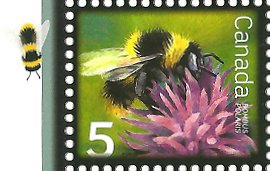
    Das zeigt eine Studie an Hummeln im US-Staat Colorado. Blieb dort nur eine einzige der insgesamt elf Hummelarten einer Blumenwiese fern, so bildeten manche Pflanzen ein Drittel weniger Samen, wie die Forscher in den “Proceedings” der US-Nationalen Akademie der Wissenschaften (“PNAS”) schreiben. Der Grund: Viele verbleibende Hummeln wurden ihren bisherigen Blüten untreu.

    Das zeigt eine Studie an Hummeln im US-Staat Colorado. Blieb dort nur eine einzige der insgesamt elf Hummelarten einer Blumenwiese fern, so bildeten manche Pflanzen ein Drittel weniger Samen, wie die Forscher in den “Proceedings” der US-Nationalen Akademie der Wissenschaften (“PNAS”) schreiben. Der Grund: Viele verbleibende Hummeln wurden ihren bisherigen Blüten untreu.

    Etwa 90 Prozent aller Pflanzen werden durch Tiere bestäubt, vor allem Insekten. Besonders wichtig für die Pflanzenvermehrung sind Bienen, deren Populationen jedoch in vielen Regionen seit Jahren drastisch sinken. Bisher gingen theoretische Modelle davon aus, dass der Ausfall eines einzelnen Bestäubers keine Schäden hinterlässt, solange andere Arten die Lücke füllen. Dem widerspricht die Studie von Berry Brosi und Heather Briggs von der Emory University in Atlanta. Auf Bergwiesen im US-Staat Colorado hielten die Umweltforscherinnen jeweils eine der elf Hummelarten von einem etwa 400 Quadratmeter großen Areal fern. Dabei beobachteten sie, wie sich die übrigen Hummeln verhielten und wie sich die Pflanzen vermehrten. “Die meisten Bestäuber besuchen im Laufe ihres Lebens mehrere Pflanzenarten, aber über kürzere Zeiträume zeigen sie das, was wir Blütentreue nennen”, sagt Brosi laut einer Mittelung ihrer Universität. “Sie neigen dazu, sich auf eine gerade blühende Pflanze zu konzentrieren und einige Wochen später ziehen sie weiter zur nächsten blühenden Art.”

    Der Ausfall einer Hummelart brachte dieses Gefüge durcheinander, wie die Forscherinnen berichten. In ungestörten Arealen waren 78 Prozent der Hummeln blütentreu. Fehlte jedoch eine Art, so sank der Anteil auf 66 Prozent – mit gravierenden Folgen für die Pflanzen. Weil mehr Hummeln verschiedene Blüten ansteuerten, trugen sie seltener die passenden Pollen am Körper: Die Bestäubungsrate sank. Dies betraf vor allem Rittersporn-Arten. “Fehlte nur eine Hummelart, so bildeten diese Blumen ein Drittel weniger Samen”, sagt Brosi. “Das ist alarmierend und legt nahe, dass der weltweite Rückgang an Bestäubern größere Folgen auf Blütenpflanzen und Nahrungspflanzen haben könnte als bisher bekannt.”

    Quelle: n-tv, 22.07.2013
    http://www.n-tv.de/wissen/Hummeln-werden-ihren-Blueten-untreu-article11035246.html

  • Biologisch voedsel verdient de voorkeur voor zwangere vrouwen en kinderen

    Biologisch voedsel verdient de voorkeur voor zwangere vrouwen en kinderen

    Het magazine ‘Scientific American’ vroeg onlangs welke dokters meer inspanningen zouden doen om zwangere vrouwen te waarschuwen voor bepaalde chemicaliën. Het overzicht leert dat slechts 19 procent van de dokters wijzen op het gevaar van pesticiden voor zwangere vrouwen, 8 procent over BPA (een hormonenverstoorder in sommige plastics) en slechts 5 procent over phthalaten (te vinden in cosmetica en shampoos). Bruce Blumberg, een ontwikkelingsbioloog aan de Universiteit van Californië in Irvine, raadt de mensen sterk aan om biologisch voedsel te kopen om de risico’s op hormonale verstoring te voorkomen. Dat geldt vooral voor zwangere vrouwen en kinderen. “Vermijd plastics om voedsel of water in op te bergen, voegt hij er aan toe.

    Het magazine ‘Scientific American’ vroeg onlangs welke dokters meer inspanningen zouden doen om zwangere vrouwen te waarschuwen voor bepaalde chemicaliën. Het overzicht leert dat slechts 19 procent van de dokters wijzen op het gevaar van pesticiden voor zwangere vrouwen, 8 procent over BPA (een hormonenverstoorder in sommige plastics) en slechts 5 procent over phthalaten (te vinden in cosmetica en shampoos). Bruce Blumberg, een ontwikkelingsbioloog aan de Universiteit van Californië in Irvine, raadt de mensen sterk aan om biologisch voedsel te kopen om de risico’s op hormonale verstoring te voorkomen. Dat geldt vooral voor zwangere vrouwen en kinderen. “Vermijd plastics om voedsel of water in op te bergen, voegt hij er aan toe.

    Bron: De Wereld Morgen, 19-07-2013
    http://www.dewereldmorgen.be/artikels/2013/07/19/chemie-en-obesitas

  • De maaltijd, waaraan eerder deze week in de Indiase staat Bihar 23 schoolkinderen zijn overleden, bevatte een giftig insecticide

    De maaltijd, waaraan eerder deze week in de Indiase staat Bihar 23 schoolkinderen zijn overleden, bevatte een giftig insecticide

    Dat meldt de politie zaterdag. De scholieren van een basisschool werden dinsdag ziek nadat ze het middagmaal op school hadden gegeten. Uit eerste elementen van het onderzoek bleek dat de container die gebruikt werd in de bereiding, eerder zou gebruikt zijn om een insecticide in op te slaan. Dat wordt nu bevestigd. Bij labotests werden in olie, voedselresten, borden en bestek elementen van monocrotofos aangetroffen, een pesticide die veel gebruikt wordt in de Indiase landbouw, aldus de politie. De stof is extreem toxisch voor de mens en ontleedt bij verhitting of bij verbranding met vorming van giftige en irriterende dampen, waaronder stikstofoxiden en fosforoxiden.

    Dat meldt de politie zaterdag. De scholieren van een basisschool werden dinsdag ziek nadat ze het middagmaal op school hadden gegeten. Uit eerste elementen van het onderzoek bleek dat de container die gebruikt werd in de bereiding, eerder zou gebruikt zijn om een insecticide in op te slaan. Dat wordt nu bevestigd. Bij labotests werden in olie, voedselresten, borden en bestek elementen van monocrotofos aangetroffen, een pesticide die veel gebruikt wordt in de Indiase landbouw, aldus de politie. De stof is extreem toxisch voor de mens en ontleedt bij verhitting of bij verbranding met vorming van giftige en irriterende dampen, waaronder stikstofoxiden en fosforoxiden.

    Nieuwsblad, 20 juli 2013
    http://www.nieuwsblad.be/article/detail.aspx?articleid=DMF20130720_00665317
    Wikipedia
    http://nl.wikipedia.org/wiki/Monocrotofos

  • Das rätselhafte Sterben der Fasane im Emsland

    Das rätselhafte Sterben der Fasane im Emsland

    “Es ist zum Weinen”, sagt Hubert Ull, der Vorsitzende der Jägerschaft Lingen. “Als Landwirt fahre ich jeden Tag durch die Felder, aber in diesem Jahr habe ich hier noch nicht einen jungen Fasanen (Phasianus colchicus) gesehen.” Niedersachsen, insbesondere das Emsland, gilt neben dem nördlichen Nordrhein-Westfalen als Hauptverbreitungsgebiet des bunt gefiederten Geflügels. In den vergangenen Jahren ist dessen Zahl dramatisch zurückgegangen. Wurden in Niedersachsen vor fünf Jahren noch 150000 Fasane erlegt, waren es zuletzt knapp 60000 – laut Landesjagdbericht die niedrigste Quote seit 1959.

    “Es ist zum Weinen”, sagt Hubert Ull, der Vorsitzende der Jägerschaft Lingen. “Als Landwirt fahre ich jeden Tag durch die Felder, aber in diesem Jahr habe ich hier noch nicht einen jungen Fasanen (Phasianus colchicus) gesehen.” Niedersachsen, insbesondere das Emsland, gilt neben dem nördlichen Nordrhein-Westfalen als Hauptverbreitungsgebiet des bunt gefiederten Geflügels. In den vergangenen Jahren ist dessen Zahl dramatisch zurückgegangen. Wurden in Niedersachsen vor fünf Jahren noch 150000 Fasane erlegt, waren es zuletzt knapp 60000 – laut Landesjagdbericht die niedrigste Quote seit 1959.

    Gleich mehrere Forschungsprojekte kümmern sich inzwischen um den Niedergang der Fasanenpopulation. Im Visier haben sie unter anderem die intensive Landwirtschaft und die Massentierhaltung. Das Emsland ist für die Forscher beispielhaft für die negative Entwicklung der Fasanenbestände. Die Zahl der geschossenen Tiere ist hier innerhalb von zwei Jahren um rund 70 Prozent zurückgegangen – von 7837 auf 2310. Die Abschusszahlen geben aber nur einen ungenauen Hinweis auf den tatsächlichen Bestand, sagt Hubert Ull. Wichtiger seien die Beobachtungen im Revier. “Wenn ich früher vom Hof ins Dorf fuhr, sind mir jedes Mal Fasane über den Weg gelaufen. Das ist heute anders”, sagt der Vorsitzende der Emsländischen Jäger aus Andervenne. Und er befürchtet das Schlimmste: “In diesem Jahr brauchen wir nicht lange zur Jagd zu gehen – da gibt’s nichts mehr zu jagen.”

    Quelle: Weser Kurier, 17.07.2013
    http://www.weser-kurier.de/region/niedersachsen_artikel,-Das-raetselhafte-Sterben-der-Fasane-_arid,616603.html

  • Pollinator decline intensifies pollen limitation and reduces plant reproductive success, threatening natural populations of extinction

    Pollinator decline intensifies pollen limitation and reduces plant reproductive success, threatening natural populations of extinction

    There is now compelling evidence of a reduction of pollinator richness and density at a global scale. In this opinion article, we argue that such pollinator decline intensifies pollen limitation and reduces plant reproductive success, threatening natural populations of extinction. We use genetic architecture and selection experiments on floral traits and evaluate the potential for plant reproductive strategies to adapt rapidly to new pollination environments. We propose that plant reproductive strategies could adapt to the current pollinator decline by decreasing or increasing their reliance to pollinators, for example, increasing autonomous selfing or reinforcing interactions with pollinators. We further discuss if and how adaptation of plant reproductive strategies can buffer the demographic consequences of pollinator decline, and possibly rescue plant populations from extinction.

    There is now compelling evidence of a reduction of pollinator richness and density at a global scale. In this opinion article, we argue that such pollinator decline intensifies pollen limitation and reduces plant reproductive success, threatening natural populations of extinction. We use genetic architecture and selection experiments on floral traits and evaluate the potential for plant reproductive strategies to adapt rapidly to new pollination environments. We propose that plant reproductive strategies could adapt to the current pollinator decline by decreasing or increasing their reliance to pollinators, for example, increasing autonomous selfing or reinforcing interactions with pollinators. We further discuss if and how adaptation of plant reproductive strategies can buffer the demographic consequences of pollinator decline, and possibly rescue plant populations from extinction.

    Source:
    Michel Thomann, Eric Imbert, Celine Devaux, and Pierre-Olivier Cheptou.
    Trends in Plant Science, July 2013, Vol. 18, No. 7, pp. 353-359 (attached)

  • In recent years, India has seen a dramatic decline of house sparrows

    In recent years, India has seen a dramatic decline of house sparrows

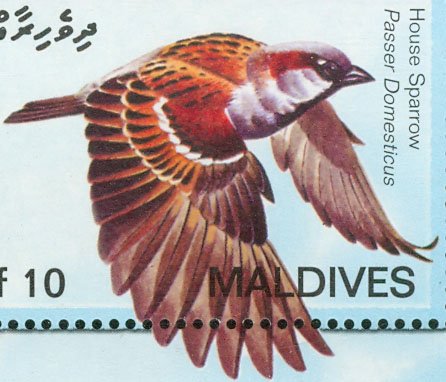
    In recent years Indian ornithologists have observed a sharp decline in house sparrow (Passer domesticus) populations across West Bengal, Bangalore, Punjab, Rajasthan, Delhi and Haryana due to danger posed to their survival by a host of factors, such as lack of nesting sites due to modern architecture of building, and lack of seed and insect food. The aim of this paper was to investigate the possible causes for the decline of house sparrow in Sivakasi Taluk during December 2011 to December 2012. In Naranapuram (190 ± 4.89) and Duraichamipuram (83.33 ± 0.94) a high number of house sparrows were recorded. Moderate numbers of sparrows were found in Kalayarkuruchi (40 ± 1.63), Anaiyur (34 ± 1.63) and Pudhukottai (27.66 ± 1.24). The sparrows were completely absent in Achankulam and Alankulam. The house sparrow population was found to be higher in the rural areas when compared to the urban areas in the selected study sites.

    In recent years Indian ornithologists have observed a sharp decline in house sparrow (Passer domesticus) populations across West Bengal, Bangalore, Punjab, Rajasthan, Delhi and Haryana due to danger posed to their survival by a host of factors, such as lack of nesting sites due to modern architecture of building, and lack of seed and insect food. The aim of this paper was to investigate the possible causes for the decline of house sparrow in Sivakasi Taluk during December 2011 to December 2012. In Naranapuram (190 ± 4.89) and Duraichamipuram (83.33 ± 0.94) a high number of house sparrows were recorded. Moderate numbers of sparrows were found in Kalayarkuruchi (40 ± 1.63), Anaiyur (34 ± 1.63) and Pudhukottai (27.66 ± 1.24). The sparrows were completely absent in Achankulam and Alankulam. The house sparrow population was found to be higher in the rural areas when compared to the urban areas in the selected study sites.

    Source:
    Balaji et al. J. Pure Appl. Zool., 1(2): 160-166, 2013 (attached)

  • Economic valuation of the vulnerability of world agriculture confronted with pollinator decline

    Economic valuation of the vulnerability of world agriculture confronted with pollinator decline

    There is mounting evidence of pollinator decline all over the world and consequences in many agricultural areas could be significant. We assessed these consequences by measuring 1) the contribution of insect pollination to the world agricultural output economic value, and 2) the vulnerability of world agriculture in the face of pollinator decline. We used a bioeconomic approach, which integrated the production dependence ratio on pollinators, for the 100 crops used directly for human food worldwide as listed by FAO. The total economic value of pollination worldwide amounted to €153 billion, which represented 9.5% of the value of the world agricultural production used for human food in 2005. In terms of welfare, the consumer surplus loss was estimated between €190 and €310 billion based upon average price elasticities of − 1.5 to − 0.8, respectively. Vegetables and fruits were the leading crop categories in value of insect pollination with about €50 billion each, followed by edible oil crops, stimulants, nuts and spices.

    There is mounting evidence of pollinator decline all over the world and consequences in many agricultural areas could be significant. We assessed these consequences by measuring 1) the contribution of insect pollination to the world agricultural output economic value, and 2) the vulnerability of world agriculture in the face of pollinator decline. We used a bioeconomic approach, which integrated the production dependence ratio on pollinators, for the 100 crops used directly for human food worldwide as listed by FAO. The total economic value of pollination worldwide amounted to €153 billion, which represented 9.5% of the value of the world agricultural production used for human food in 2005. In terms of welfare, the consumer surplus loss was estimated between €190 and €310 billion based upon average price elasticities of − 1.5 to − 0.8, respectively. Vegetables and fruits were the leading crop categories in value of insect pollination with about €50 billion each, followed by edible oil crops, stimulants, nuts and spices.

    The production value of a ton of the crop categories that do not depend on insect pollination averaged €151 while that of those that are pollinator-dependent averaged €761. The vulnerability ratio was calculated for each crop category at the regional and world scales as the ratio between the economic value of pollination and the current total crop value. This ratio varied considerably among crop categories and there was a positive correlation between the rate of vulnerability to pollinators decline of a crop category and its value per production unit. Looking at the capacity to nourish the world population after pollinator loss, the production of 3 crop categories – namely fruits, vegetables, and stimulants – will clearly be below the current consumption level at the world scale and even more so for certain regions like Europe.

    Source:
    Nicola Gallai, Jean-Michel Salles, Josef Settele, Bernard E. Vaissière.
    Ecological Economics 02/2009; 68(3):810-821. DOI:10.1016/j.ecolecon.2008.06.014
    http://www.researchgate.net/publication/23647989_Economic_valuation_of_the_vulnerability_of_world_agriculture_confronted_with_pollinator_decline

  • The decline of moths in Great Britain

    The decline of moths in Great Britain

    Population declines among insects are inadequately quantified, yet of vital importance to national and global biodiversity assessments and have significant implications for ecosystem services. Substantial declines in abundance and distribution have been reported recently within a species-rich insect taxon, macro-moths, in Great Britain and other European countries. These declines are of concern because moths are important primary consumers and prey items for a wide range of other taxa, as well as contributing to ecosystem services such as pollination. I summarise these declines and review potential drivers of change. Direct evidence for causes of moth declines is extremely limited, but correlative studies and extrapolation from closely related taxa suggest that habitat degradation (particularly because of agricultural intensification and changing silviculture) and climate change are likely to be major drivers.

    Population declines among insects are inadequately quantified, yet of vital importance to national and global biodiversity assessments and have significant implications for ecosystem services. Substantial declines in abundance and distribution have been reported recently within a species-rich insect taxon, macro-moths, in Great Britain and other European countries. These declines are of concern because moths are important primary consumers and prey items for a wide range of other taxa, as well as contributing to ecosystem services such as pollination. I summarise these declines and review potential drivers of change. Direct evidence for causes of moth declines is extremely limited, but correlative studies and extrapolation from closely related taxa suggest that habitat degradation (particularly because of agricultural intensification and changing silviculture) and climate change are likely to be major drivers.

    Source:
    Richard Fox (2013) Insect Conservation and Diversity 6, 5–19 (attached)

  • The use of pesticides and other farming practices are causing a dramatic decline in the population of what was once one of California’s most populous bird species: the tricolored blackbird

    The use of pesticides and other farming practices are causing a dramatic decline in the population of what was once one of California’s most populous bird species: the tricolored blackbird

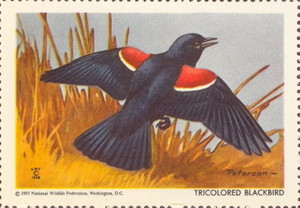
    A recent estimate has pegged the population of the small, dark and swift-moving birds at 260,000. That’s down from 400,000 birds counted in 2008, according to an Audubon California survey. The tricolored blackbird (Agelaius tricolor) – with its red shoulder patch and a white bar of feathers on its wing – differs from the more common red-winged blackbird in that it is a species that lives in tight colonies. “We are, absolutely, concerned about the species because we’ve had a 33 percent decline in their numbers between 2008 and 2011,” said Keiller Kyle, conservation project director for Audubon California. The declines are being seen throughout the San Joaquin and Sacramento valleys and as far south as Riverside County. The low population numbers are a stark contrast to what was seen in 1937, when it was estimated that as many as 3 million tricolored blackbirds darkened the sky statewide. With substantially lower populations today, the fear is that if the species is not safeguarded, it could become endangered and swiftly go the way of two colonial bird species – the passenger pigeon and the Carolina parakeet. Both are now extinct.

    A recent estimate has pegged the population of the small, dark and swift-moving birds at 260,000. That’s down from 400,000 birds counted in 2008, according to an Audubon California survey. The tricolored blackbird (Agelaius tricolor) – with its red shoulder patch and a white bar of feathers on its wing – differs from the more common red-winged blackbird in that it is a species that lives in tight colonies. “We are, absolutely, concerned about the species because we’ve had a 33 percent decline in their numbers between 2008 and 2011,” said Keiller Kyle, conservation project director for Audubon California. The declines are being seen throughout the San Joaquin and Sacramento valleys and as far south as Riverside County. The low population numbers are a stark contrast to what was seen in 1937, when it was estimated that as many as 3 million tricolored blackbirds darkened the sky statewide. With substantially lower populations today, the fear is that if the species is not safeguarded, it could become endangered and swiftly go the way of two colonial bird species – the passenger pigeon and the Carolina parakeet. Both are now extinct.

    In the Sacramento Valley, loss of wetlands and the establishment of large farms that use pesticides are deeply curtailing the tricolored blackbird population, Kyle said. The birds feed on caterpillars, beetles and grasshoppers – the type of insects pesticides are designed to control.

    The birds demand a lot of insects. Kyle has been studying a colony of 1,000 birds that have recently nested in a bamboo stand inside the Bransford rice farm in Williams.

    The size of farms has also been affecting the birds. Large farm concerns, such as rice farms, limit the tricolored blackbird’s food supply because the birds roam only within a 5-mile wide radius from their colony.

    “The birds are only able to use the edges of the flooded rice fields and that really limits the area for them to find food,” Kyle said. “Also, the row crops that have been prolific in the valley like alfalfa – a lot of that is being converted over to orchards and vineyards – which means the birds are also losing the open country.”

    In the south, the disappearance of forests and wetlands have forced the birds to set up nests in wheat fields.

    When farmers harvest the wheat for cattle feed, their tractors tear up the nests with chicks that have yet to fledge, said Robert Meese, avian-ecologist at UC Davis.

    Meese said the scarcity of food for the tricolored blackbird in the Sacramento Valley has made it difficult for the birds to reproduce.

    “Since 2007 we are seeing that it takes the birds multiple nests to produce a single fledgling,” Meese said. “And that’s simply because the birds are near starvation. In some cases the females are unable to form eggs. They come in and they mate and they build nests and sit for a week, and then they abandon them.”

    Meese said that population surveys have found more colonies overall, but that each has fewer birds.

    Moreover, only 60 percent of adult tricolored blackbird males survive through the winter. “There are too few young being fledged now to replace the adults that are dying,” he said.

    In the Sacramento Valley, the tricolored blackbird population has gone from 37,933 in 2008 to 19,164 birds in 2011.

    Meese said that he is expecting populations of the tricolored blackbird to plunge further once a new count of the birds is finalized by next April.

    “We need to identify willing landowners to switch from using insecticides to organic or pesticide-free growing,” said Meese.

    One solution may be found in a plan currently being implemented by six dairy and wheat farmers in Kern County, the Audubon Society and the National Resources Conservation Service.

    In that effort, dairy farmers hold off harvesting their wheat crop to allow tricolored blackbirds to fledge. In turn they have been compensated – at 75 percent of the market rate – for the delay of harvest, said Alan Forkey conservationist with the conservation service.

    “Dairy farmers are struggling right now economically and cost of feed is very important so to delay harvest you are losing quality on your feed and delaying planting of your summer crop,” said Paul Sousa, director of environmental services for Western United Dairymen.

    It’s estimated the project has saved the lives of 65,000 birds. The six dairy farmers participated voluntarily, Sousa said.

    “These six farms that volunteered were the most crucial because they had the largest number of birds on their farms,” he said. “We would like to keep this voluntary and not have these birds listed as endangered.”

    In the Sacramento Valley, rice farmer Don Bransford has willingly changed his farm practices to help safeguard the colony of tricolored blackbirds that have recently started to nest in a stand of bamboo on his rice farm.

    Bransford said he uses pesticides only sparingly, if at all, and that he flattens levees and leaves islands in flooded rice fields to improve nesting and feeding habitats for the birds. He said he is not getting compensated for changing his farming habits.

    “If this improves the bird’s population, then I see it as a win-win for everyone,” he said.

    Read more here: http://www.sacbee.com/2013/06/21/5513307/scientists-worry-over-dwindling.html#storylink=cpy