Auteur: Henk Tennekes

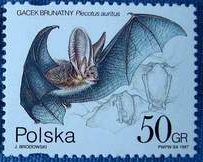
  • One of the UK’s rarest mammals, the grey long-eared bat (Plecotus austriacus) is in danger of disappearing from the country

    One of the UK’s rarest mammals, the grey long-eared bat (Plecotus austriacus) is in danger of disappearing from the country

    A four-year study by scientists from the University of Bristol estimated there were 1,000 of the bats left – all confined to southern England. The Bat Conservation Trust has published the findings in a new conservation management plan. Dr Orly Razgour, who led the research, said that very little was known about the species before she started her study. “We thought there might be more colonies, that it might be less rare than we suspected,” she told BBC News. “But after studying the species for four years, we realised that they are very rare. We also know that [it has] declined dramatically in the last century”.

    A four-year study by scientists from the University of Bristol estimated there were 1,000 of the bats left – all confined to southern England. The Bat Conservation Trust has published the findings in a new conservation management plan. Dr Orly Razgour, who led the research, said that very little was known about the species before she started her study. “We thought there might be more colonies, that it might be less rare than we suspected,” she told BBC News. “But after studying the species for four years, we realised that they are very rare. We also know that [it has] declined dramatically in the last century”.

    Source: BBC News, 5 August 2013
    http://www.bbc.co.uk/news/science-environment-23519010

  • Australia has experienced the largest documented decline in biodiversity of any continent over the past 200 years

    Australia has experienced the largest documented decline in biodiversity of any continent over the past 200 years

    Under the EPBC Act more than 50 species of Australian animals have been listed as extinct, including 27 mammal species, 23 bird species, and 4 frog species. The number of known extinct Australian plants is 48. Australia’s rate of species decline continues to be among the world’s highest, and is the highest in the OECD.
    The list of nationally threatened species continues to grow in Australia, with 426 animal species (including presumed extinctions) and 1,339 plant species listed as threatened under the EPBC Act. Furthermore, there is some evidence that the rates of recovery once a species has been listed as threatened, whilst it is difficult to determine in short time periods, may be particularly low. In a study conducted on 38 threatened species recovery plans across every state and territory, evidence of ongoing decline in populations was displayed in 37 per cent of cases.

    Under the EPBC Act more than 50 species of Australian animals have been listed as extinct, including 27 mammal species, 23 bird species, and 4 frog species. The number of known extinct Australian plants is 48. Australia’s rate of species decline continues to be among the world’s highest, and is the highest in the OECD.
    The list of nationally threatened species continues to grow in Australia, with 426 animal species (including presumed extinctions) and 1,339 plant species listed as threatened under the EPBC Act. Furthermore, there is some evidence that the rates of recovery once a species has been listed as threatened, whilst it is difficult to determine in short time periods, may be particularly low. In a study conducted on 38 threatened species recovery plans across every state and territory, evidence of ongoing decline in populations was displayed in 37 per cent of cases.

    Source:
    Bimbleboxartproject, 10 August 2013
    http://bimbleboxartproject.wordpress.com/2013/08/10/how-to-tell-the-wildlife-that-people-are-planning-to-come-and-destroy-their-thriving-ancient-ecosystems-why-does-australia-have-such-a-high-rate-of-biodiversity-loss/

  • For the first time since the 1960s, hen harriers have failed to nest successfully in England

    For the first time since the 1960s, hen harriers have failed to nest successfully in England

    Just two pairs attempted to nest this year in England, but both failed. At one of these sites the RSPB was working with the landowner to ensure the nest was protected. Sadly, the eggs never hatched. No new hen harriers this season means that the hen harrier (Circus cyaneus) is one the brink of extinction in England. The news of the nest failure follows the publication in May of the State of Nature report which showed that 60 per cent of those wildlife species which are monitored are declining across the UK. In 2011, the Government published ‘Biodiversity 2020’ (the revised England Biodiversity Strategy). In this strategy the Government made a clear commitment that there should be no extinction of an English wild species at the hands of man. This mirrors an international commitment under the Convention of Biological Diversity. Martin Harper, the RSPB’s conservation director, added: “With no birds nesting successfully this year, the hen harrier is clearly on the brink of extinction in England. We are eager to hear proposals from DEFRA about how the hen harrier can be restored to its rightful place on the English uplands.”

    Just two pairs attempted to nest this year in England, but both failed. At one of these sites the RSPB was working with the landowner to ensure the nest was protected. Sadly, the eggs never hatched. No new hen harriers this season means that the hen harrier (Circus cyaneus) is one the brink of extinction in England. The news of the nest failure follows the publication in May of the State of Nature report which showed that 60 per cent of those wildlife species which are monitored are declining across the UK. In 2011, the Government published ‘Biodiversity 2020’ (the revised England Biodiversity Strategy). In this strategy the Government made a clear commitment that there should be no extinction of an English wild species at the hands of man. This mirrors an international commitment under the Convention of Biological Diversity. Martin Harper, the RSPB’s conservation director, added: “With no birds nesting successfully this year, the hen harrier is clearly on the brink of extinction in England. We are eager to hear proposals from DEFRA about how the hen harrier can be restored to its rightful place on the English uplands.”

    Source: RSPB, 9 August 2013
    http://www.rspb.org.uk/media/releases/351247-hen-harrier-on-the-brink-of-extinction-in-england

  • Glyphosate and AMPA in the Lavaux vineyard area, western Switzerland: Proof of widespread export to surface waters

    Glyphosate and AMPA in the Lavaux vineyard area, western Switzerland: Proof of widespread export to surface waters

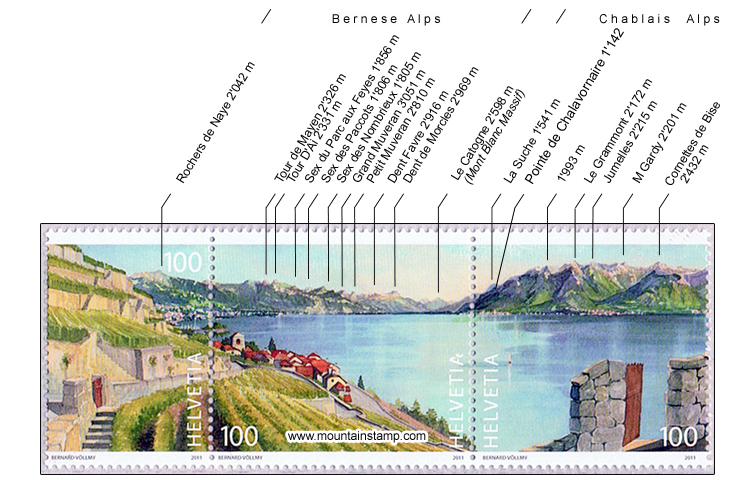
    Two parcels of the Lavaux vineyard area, western Switzerland, were studied to assess to which extent the widely used herbicide, glyphosate, and its metabolite aminomethylphosphonic acid (AMPA) were retained in the soil or exported to surface waters. Our results revealed elevated glyphosate and AMPA concentrations at 60 and 80 cm depth at parcel bottoms, suggesting their infiltration in the upper parts of the parcels and the presence of preferential flows in the studied parcels. Indeed, the succession of rainy days induced the gradual saturation of the soil porosity, leading to rapid infiltration through macropores, as well as surface runoff formation. Furthermore, the presence of more impervious weathered marls at 100 cm depth induced throughflows, the importance of which in the lateral transport of the herbicide molecules was determined by the slope steepness. Mobility of glyphosate and AMPA into the unsaturated zone was thus likely driven by precipitation regime and soil characteristics, such as slope, porosity structure and layer permeability discrepancy. Important rainfall events (>10 mm/day) were clearly exporting molecules from the soil top layer, as indicated by important concentrations in runoff samples. The mass balance showed that total loss (10–20%) mainly occurred through surface runoff (96%) and, to a minor extent, by throughflows in soils (4%), with subsequent exfiltration to surface waters.

    Two parcels of the Lavaux vineyard area, western Switzerland, were studied to assess to which extent the widely used herbicide, glyphosate, and its metabolite aminomethylphosphonic acid (AMPA) were retained in the soil or exported to surface waters. Our results revealed elevated glyphosate and AMPA concentrations at 60 and 80 cm depth at parcel bottoms, suggesting their infiltration in the upper parts of the parcels and the presence of preferential flows in the studied parcels. Indeed, the succession of rainy days induced the gradual saturation of the soil porosity, leading to rapid infiltration through macropores, as well as surface runoff formation. Furthermore, the presence of more impervious weathered marls at 100 cm depth induced throughflows, the importance of which in the lateral transport of the herbicide molecules was determined by the slope steepness. Mobility of glyphosate and AMPA into the unsaturated zone was thus likely driven by precipitation regime and soil characteristics, such as slope, porosity structure and layer permeability discrepancy. Important rainfall events (>10 mm/day) were clearly exporting molecules from the soil top layer, as indicated by important concentrations in runoff samples. The mass balance showed that total loss (10–20%) mainly occurred through surface runoff (96%) and, to a minor extent, by throughflows in soils (4%), with subsequent exfiltration to surface waters.

    Source:

    Silwan Daouk, Luiz F. De Alencastro & Hans-Rudolf Pfeifer (2013)
    Journal of Environmental Science and Health, Part B: Pesticides, Food Contaminants, and Agricultural Wastes
    Special Issue: Pesticides in the Environment
    Volume 48, Issue 9, 2013 pages 725-736
    DOI:10.1080/03601234.2013.780548
    http://www.tandfonline.com/doi/abs/10.1080/03601234.2013.780548#.UgTlQ77CRkc

  • Adverse effects of thiamethoxam on ladybirds

    Adverse effects of thiamethoxam on ladybirds

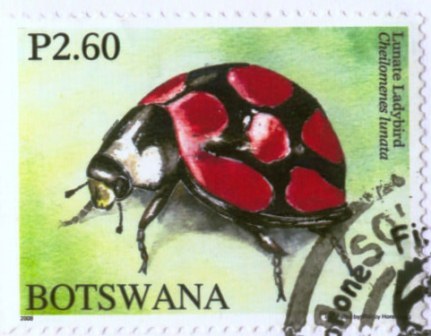
    Ladybirds are well known beneficial arthropods found in many habitats and ecosystems. They feed on various kinds of pest insects. In fact, coccinellids during their adult and larval stages attack on a variety of soft bodied herbivorous pests, including aphids, whiteflies, psyllids, and scales. Moreover they ingest fungal spores, pollen and nectar as complementary or even alternative foods when the preys are rare. In this study, the influence of sublethal concentrations (LC10 and LC30) of a neonicotinoid insecticide, thiamethoxam, was evaluated on life parameters of Hippodamia variegata Goeze (Coleoptera: Coccinellidae), Results showed that thiamethoxam changed life expectancy, and declined age-specific fecundity. The insecticide decreased preadult development time significantly, but it didn’t have any effect on adult developmental period. Also, Eggs fecundity and fertility were not changed by treatments. According to this study, more care should be taken when thiamethoxam is used in IPM programs.

    Ladybirds are well known beneficial arthropods found in many habitats and ecosystems. They feed on various kinds of pest insects. In fact, coccinellids during their adult and larval stages attack on a variety of soft bodied herbivorous pests, including aphids, whiteflies, psyllids, and scales. Moreover they ingest fungal spores, pollen and nectar as complementary or even alternative foods when the preys are rare. In this study, the influence of sublethal concentrations (LC10 and LC30) of a neonicotinoid insecticide, thiamethoxam, was evaluated on life parameters of Hippodamia variegata Goeze (Coleoptera: Coccinellidae), Results showed that thiamethoxam changed life expectancy, and declined age-specific fecundity. The insecticide decreased preadult development time significantly, but it didn’t have any effect on adult developmental period. Also, Eggs fecundity and fertility were not changed by treatments. According to this study, more care should be taken when thiamethoxam is used in IPM programs.

    Source:
    Shima Rahmani et al. (2013) International Research Journal of Applied and Basic Sciences 4 (3): 556-560

  • A sad farewell to the darling birds of May

    A sad farewell to the darling birds of May

    It’s always harder to take account of an absence, than it is of a presence. I say that because an absence has just made itself manifest in the natural world, which will have passed many millions of people by, but which will nonetheless have been noticed keenly by those who are attuned to it, and there are some. It is this: the swifts have gone. At least, they have from my part of the world, the south-west corner of London, and soon they will be gone from all of Britain. Swifts (Apus apus) are among the most exciting of our birds because they are the most aerial – almost their whole lives are lived on the wing, and when a young swift leaves the nest it may spend the next three years entirely in the sky, eating, drinking, sleeping and even, eventually, mating (something first observed by the parson-naturalist Gilbert White of Selborne in the 18th century).

    It’s always harder to take account of an absence, than it is of a presence. I say that because an absence has just made itself manifest in the natural world, which will have passed many millions of people by, but which will nonetheless have been noticed keenly by those who are attuned to it, and there are some. It is this: the swifts have gone. At least, they have from my part of the world, the south-west corner of London, and soon they will be gone from all of Britain. Swifts (Apus apus) are among the most exciting of our birds because they are the most aerial – almost their whole lives are lived on the wing, and when a young swift leaves the nest it may spend the next three years entirely in the sky, eating, drinking, sleeping and even, eventually, mating (something first observed by the parson-naturalist Gilbert White of Selborne in the 18th century).

    Their airborne mastery climaxes in “screaming parties” on warm evenings, when groups of the birds chase frenziedly around their breeding area, uttering wild cries; and I suppose it’s because they add so much to the summer that their vanishing is such a forlorn moment. For it’s as sudden as their arrival; one morning in early August you wake and glance up to the sky, and they’re not there any more.

    Look. They’ve gone.

    For those who are alive to it, this is a disappearance that strikes at the heart. For it signifies an incontestable ending: the sun may be hot still, the falling leaves may be months away, you may not even have taken your holiday yet – but you know somewhere deep down, whatever the weather, that summer is over. And it turns your mind also to other endings; to the endings of all things.
    Edward Thomas, the wonderful poet killed in the First World War, caught some of this feeling in his own poem on swifts, very different from Ted Hughes’s, which begins:

    “How at once should I know, When stretched in the harvest blue I saw the swift’s black bow, That I would not have that view Another day Until next May Again it is due?”

    But even in thinking forward to the return of the birds the following year, Thomas’s mind shifts back to the ending which their disappearance so hauntingly signifies; indeed, to the ending of all things, which is our lot as humans:

    “The same year after year—But with the swift alone. With other things I but fear That they will be over and done Suddenly And I only see Them to know them gone.”

    For those attuned to it, an empty sky this week, blue and hot as it may still be, is one of the most melancholy sights of the year.

    Source: Michael McCarthy, The Independent, 7 August 2013
    http://www.independent.co.uk/environment/nature/nature_studies/nature-studies-time-again-to-bid-a-sad-farewell-to-the-darling-birds-of-may-8750287.html

  • One formerly widespread species, the nine-spotted ladybug, is now virtually extinct in northeast North America

    One formerly widespread species, the nine-spotted ladybug, is now virtually extinct in northeast North America

    One of the great mysteries of the insect world right now ranking up there with the loss of winged pollinators in general is what has happened to North America’s native ladybug species? About 20 years ago, they started to “fly away” just like the nursery rhyme. There are still ladybugs to be found; but, the chances are they are not native ladybugs. Invasive ladybird beetles now account for two-thirds of all ladybugs in the United States and Canada. Other countries are faring no better. The UK is suffering a serious invasion of Harlequin ladybugs. These aliens are taking over and pushing out the native species there as well. Many more countries are fighting their own battle with invasive alien ladybird beetles.

    One of the great mysteries of the insect world right now ranking up there with the loss of winged pollinators in general is what has happened to North America’s native ladybug species? About 20 years ago, they started to “fly away” just like the nursery rhyme. There are still ladybugs to be found; but, the chances are they are not native ladybugs. Invasive ladybird beetles now account for two-thirds of all ladybugs in the United States and Canada. Other countries are faring no better. The UK is suffering a serious invasion of Harlequin ladybugs. These aliens are taking over and pushing out the native species there as well. Many more countries are fighting their own battle with invasive alien ladybird beetles.

    Source:
    http://pippap.hubpages.com/hub/Where-Have-All-The-Ladybugs-Gone

  • Alarming illicit use of clothianidin, fipronil, thiamethoxam and thiacloprid, either individually or simultaneously, in seed treatments

    Alarming illicit use of clothianidin, fipronil, thiamethoxam and thiacloprid, either individually or simultaneously, in seed treatments

    Recently, legislative decisions withdrew or temporarily suspended the use of neonicotinoids and fipronil as seeds tanning in many countries because of their endocrine-disrupting activity imputable to the bees’ toxicity. In this study, the occurrence of acetamiprid, fipronil, clothianidin, flonicamid, imidacloprid, nitenpyram, thiacloprid and thiamethoxam was detected in 66 samples of commercial treated corn seeds, collected in the Italian market in the frame of ministerial institutional quality control activity. Because of the lack of a validated analytical protocol for neonicotinoid detection in seeds, a routinely suitable liquid chromatography–tandem mass spectroscopy (LC-MS/MS) analytical method was developed and statistically validated on fortified corn seeds. Survey results demonstrated that 88% of the investigated seed samples showed the presence of residues of clothianidin, fipronil, thiamethoxam and thiacloprid, either individually or simultaneously, with values that ranged from about 0.002 to 20 mg kg−1, which evidenced the alarming illicit use of these pesticides in seed treatments.

    Recently, legislative decisions withdrew or temporarily suspended the use of neonicotinoids and fipronil as seeds tanning in many countries because of their endocrine-disrupting activity imputable to the bees’ toxicity. In this study, the occurrence of acetamiprid, fipronil, clothianidin, flonicamid, imidacloprid, nitenpyram, thiacloprid and thiamethoxam was detected in 66 samples of commercial treated corn seeds, collected in the Italian market in the frame of ministerial institutional quality control activity. Because of the lack of a validated analytical protocol for neonicotinoid detection in seeds, a routinely suitable liquid chromatography–tandem mass spectroscopy (LC-MS/MS) analytical method was developed and statistically validated on fortified corn seeds. Survey results demonstrated that 88% of the investigated seed samples showed the presence of residues of clothianidin, fipronil, thiamethoxam and thiacloprid, either individually or simultaneously, with values that ranged from about 0.002 to 20 mg kg−1, which evidenced the alarming illicit use of these pesticides in seed treatments.

    Source:

    Leonardo Sabatino, Monica Scordino, Valentina Pantò, Elena Chiappara, Pasqualino Traulo & Giacomo Gagliano (2013) Survey of neonicotinoids and fipronil in corn seeds for agriculture. Food Additives & Contaminants: Part B: Surveillance, Volume 6, Issue 1.
    DOI:10.1080/19393210.2012.717969
    http://www.tandfonline.com/doi/abs/10.1080/19393210.2012.717969#.UgIt7r7CRkd

  • Neonicotinoid Insecticides Alter Induced Defenses and Increase Susceptibility to Spider Mites in Distantly Related Crop Plants

    Neonicotinoid Insecticides Alter Induced Defenses and Increase Susceptibility to Spider Mites in Distantly Related Crop Plants

    Chemical suppression of arthropod herbivores is the most common approach to plant protection. Insecticides, however, can cause unintended, adverse consequences for non-target organisms. Previous studies focused on the effects of pesticides on target and non-target pests, predatory arthropods, and concomitant ecological disruptions. Little research, however, has focused on the direct effects of insecticides on plants. Here we demonstrate that applications of neonicotinoid insecticides, one of the most important insecticide classes worldwide, suppress expression of important plant defense genes, alter levels of phytohormones involved in plant defense, and decrease plant resistance to unsusceptible herbivores, spider mites Tetranychus urticae (Acari: Tetranychidae), in multiple, distantly related crop plants. Using cotton (Gossypium hirsutum), corn (Zea mays) and tomato (Solanum lycopersicum) plants, we show that transcription of phenylalanine amonia lyase, coenzyme A ligase, trypsin protease inhibitor and chitinase are suppressed and concentrations of the phytohormone OPDA and salicylic acid were altered by neonicotinoid insecticides. Consequently, the population growth of spider mites increased from 30% to over 100% on neonicotinoid-treated plants in the greenhouse and by nearly 200% in the field experiment.

    Chemical suppression of arthropod herbivores is the most common approach to plant protection. Insecticides, however, can cause unintended, adverse consequences for non-target organisms. Previous studies focused on the effects of pesticides on target and non-target pests, predatory arthropods, and concomitant ecological disruptions. Little research, however, has focused on the direct effects of insecticides on plants. Here we demonstrate that applications of neonicotinoid insecticides, one of the most important insecticide classes worldwide, suppress expression of important plant defense genes, alter levels of phytohormones involved in plant defense, and decrease plant resistance to unsusceptible herbivores, spider mites Tetranychus urticae (Acari: Tetranychidae), in multiple, distantly related crop plants. Using cotton (Gossypium hirsutum), corn (Zea mays) and tomato (Solanum lycopersicum) plants, we show that transcription of phenylalanine amonia lyase, coenzyme A ligase, trypsin protease inhibitor and chitinase are suppressed and concentrations of the phytohormone OPDA and salicylic acid were altered by neonicotinoid insecticides. Consequently, the population growth of spider mites increased from 30% to over 100% on neonicotinoid-treated plants in the greenhouse and by nearly 200% in the field experiment.

    Our findings are important because applications of neonicotinoid insecticides have been associated with outbreaks of spider mites in several unrelated plant species. More importantly, this is the first study to document insecticide-mediated disruption of plant defenses and link it to increased population growth of a non-target herbivore. This study adds to growing evidence that bioactive agrochemicals can have unanticipated ecological effects and suggests that the direct effects of insecticides on plant defenses should be considered when the ecological costs of insecticides are evaluated.

    Source: Szczepaniec A, Raupp MJ, Parker RD, Kerns D, Eubanks MD (2013) Neonicotinoid Insecticides Alter Induced Defenses and Increase Susceptibility to Spider Mites in Distantly Related Crop Plants. PLoS ONE 8(5): e62620. doi:10.1371/journal.pone.0062620
    http://www.plosone.org/article/info%3Adoi%2F10.1371%2Fjournal.pone.0062620

  • Maissorte MON810 – “Es wird Zeit, dass man uns nicht mehr wie Versuchskaninchen behandelt!”

    Maissorte MON810 – “Es wird Zeit, dass man uns nicht mehr wie Versuchskaninchen behandelt!”

    In Frankreich war die Aussaat von Genmais bislang nicht erlaubt. Allerdings hat das oberste Verwaltungsgericht dieses Anbauverbot gekippt. Nun sucht die Regierung nach juristischen Mitteln, um die Maissorte MON810 weiterhin von französischen Äckern fernzuhalten. “Diese Entscheidung schockiert uns zutiefst”, sagt Olivier Belval. Er ist der Präsident der Nationalen Imker-Union in Frankreich. Zum wiederholten Mal bekam der US-Konzern Monsanto recht, diesmal vor dem obersten Verwaltungsgericht, dem französischen Staatsrat. So wankt das Verbot für den Anbau des genmanipulierten Mais MON810 erneut, das zunächst unter der konservativen Regierung 2007 und 2008 verhängt und das 2012 erneuert worden war.

    In Frankreich war die Aussaat von Genmais bislang nicht erlaubt. Allerdings hat das oberste Verwaltungsgericht dieses Anbauverbot gekippt. Nun sucht die Regierung nach juristischen Mitteln, um die Maissorte MON810 weiterhin von französischen Äckern fernzuhalten. “Diese Entscheidung schockiert uns zutiefst”, sagt Olivier Belval. Er ist der Präsident der Nationalen Imker-Union in Frankreich. Zum wiederholten Mal bekam der US-Konzern Monsanto recht, diesmal vor dem obersten Verwaltungsgericht, dem französischen Staatsrat. So wankt das Verbot für den Anbau des genmanipulierten Mais MON810 erneut, das zunächst unter der konservativen Regierung 2007 und 2008 verhängt und das 2012 erneuert worden war.

    In der Sachverständigenkommission, die damals herausfinden sollte, ob das Produkt aus dem Hause Monsanto gefährlich für Umwelt und Gesundheit sei, saß damals auch Philippe Martin. Ein strikter Gegner von Genmais. Heute ist er Umweltminister. Gemeinsam mit seinem Kollegen im Ressort Landwirtschaft, Stephane Le Foll, versuchte der Minister die Gemüter zu beruhigen, um andere Saatkulturen und die Bienenstämme nicht zu gefährden.

    Die Politik ist also entschlossen, die richterliche Entscheidung zu umgehen. “Das ist möglich”, erklärte die Europa-Abgeordnete und frühere Umweltministerin, Corinne Lepage. Schließlich habe die Justiz sich auf EU-Recht bezogen und auf formelle Fehler in der französischen Begründung für das Anbauverbot hingewiesen.

    Die Autorisierung für den Anbau von MON810 sei auf Gemeinschaftsebene 2007 ausgelaufen, erläuterte Lepage im französischen Rundfunk. Die neue Verordnung sei in Arbeit und deshalb gebe es derzeit formell keine Pflicht auf EU-Ebene, den Anbau zuzulassen.

    Diese juristische Grauzone müsse Paris nutzen. Die Argumente seien aufseiten Frankreichs, denn neue Untersuchungen aus dem Jahre 2012 zeigten, welche Gefahr von den BT-Toxinen im genmanipulierten MON 810 für den Menschen ausgehe:

    Mit französischer Unterstützung müsse noch vor Ablauf der Legislaturperiode für das Europaparlament im kommenden Jahr ein Text auf den Tisch, der es jedem Land ermögliche, den Anbau zu untersagen, wenn gewünscht, sagte Lepage.

    “Es wird Zeit, dass man uns nicht mehr wie Versuchskaninchen behandelt!”

    Die Entscheidung der Richter, die dem US-Konzern Monsanto die Tür zum Anbau von genmanipuliertem Mais in Frankreich wieder aufgestoßen hat, schürt inzwischen die antieuropäischen Töne. Die Chefin des rechtsradikalen “Front National”, Marine Le Pen, gab eine Erklärung heraus. Das Urteil zeige, wie gering Frankreichs Spielraum sei. Es werde Zeit, und ihre Partei setze sich dafür ein, dass nationales Recht wieder über europäisches Recht gestellt werde. Und die empörten Imker Frankreichs stießen ins selbe Horn:

    “Wir müssen feststellen, dass ein Land genmanipulierten Mais nicht einfach verbieten darf, wenn es seine Bevölkerung schützen will, sondern wissenschaftlich und technisch argumentieren muss”,

    sagte Olivier Belval. Eine Mehrheit der Franzosen spricht sich in Umfragen gegen den Anbau von genmanipuliertem Mais aus und hält die Entwicklung insgesamt für gefährlich. Es brauche endlich ein klares Verbot, sagte vor diesem Hintergrund Laurent Pinatel, der Sprecher der Landwirtschaftsgewerkschaft. Mit den ständigen Moratorien, die von Gerichten wieder kassiert würden, müsse Schluss sein. Bei dem Streit um den Genmais MON810 gehe es aber am Ende um eine grundsätzliche Frage …

    “… ist das die Nahrung, die wir wollen? Eine Nahrung, die durch Chemie und Petrochemie produziert wird, oder eben eine, die von den Bauern kommt?”

    Frankreichs Regierung hat zugesagt, das Problem zu lösen, bis im Frühjahr 2014 die neue Saat ausgebracht wird.

    Quelle: Deutschlandfunk, 05.08.2013
    http://www.dradio.de/dlf/sendungen/umwelt/2203530/