Auteur: Henk Tennekes

  • Massive Outbreak Killing Pacific Coast Starfish In Droves

    Massive Outbreak Killing Pacific Coast Starfish In Droves

    Starfish are dying in massive numbers due to a disease outbreak that melts the animals into a white goo, leaving researchers scrambling to explain the troubling phenomenon. Dubbed Sea Star Wasting Syndrome, the disease is most prominent on the Pacific Coast, ranging from Southern California to Alaska, where at least 10 species of sea stars have reportedly been afflicted. According to the Associated Press, up to 95 percent of sea star populations in some tide pools have been killed. While major sea star die-off was documented in Southern California in the 1980s and 1990s, the current outbreak, which causes lesions, tissue decay and eventual loss of limbs, is unprecedented. “We’ve never seen it at this scale up and down the coast,” Pete Raimondi of the University of California Santa Cruz told the Santa Rosa Press Democrat. “They essentially melt in front of you.”

    Starfish are dying in massive numbers due to a disease outbreak that melts the animals into a white goo, leaving researchers scrambling to explain the troubling phenomenon. Dubbed Sea Star Wasting Syndrome, the disease is most prominent on the Pacific Coast, ranging from Southern California to Alaska, where at least 10 species of sea stars have reportedly been afflicted. According to the Associated Press, up to 95 percent of sea star populations in some tide pools have been killed. While major sea star die-off was documented in Southern California in the 1980s and 1990s, the current outbreak, which causes lesions, tissue decay and eventual loss of limbs, is unprecedented. “We’ve never seen it at this scale up and down the coast,” Pete Raimondi of the University of California Santa Cruz told the Santa Rosa Press Democrat. “They essentially melt in front of you.”

    UC Santa Cruz’s Pacific Rocky Intertidal Monitoring Program has been collecting data on the sea star deaths since June, when Washington’s Olympic National Park found up to 26 percent of sea stars in the park were diseased. A map of the data collected by the program shows that since that finding, incidences of the disease have been recorded all along the west coast.

    According to the Press Democrat, two scientists from Raimondi’s team are leaving this week for a multi-month sweep of California, Oregon and Washington to quantify the outbreak and further understand the disease they have little explanation for yet

    Source: The Huffington Post | By Lydia O’Connor Posted: 11/05/2013
    http://www.huffingtonpost.com/2013/11/04/starfish-deaths_n_4215015.html

  • Quail numbers flying toward extinction

    Quail numbers flying toward extinction

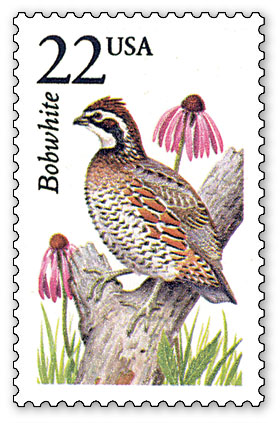
    Bobwhite quail (Colinus virginianus), arguably the most recognized and revered game bird in the nation, has seen its wild population free-fall over the past half-century or so. In some states within the birds’ native range, which covers most of the United States from the Atlantic seaboard to the Great Plains, bobwhite numbers have declined by as much as 90 percent or more. That includes states such as Georgia, Mississippi and South Carolina, where wild quail were so abundant they were a part of the region’s cultural and social fabric. In some states where the birds were relatively abundant as recently as 30 years ago, bobwhites are considered “recreationally extinct,” their numbers so low that hunting seasons have been either suspended or, if hunting is allowed, almost no wingshooters pursue the iconic game bird. No region of the bobwhites’ range has escaped the collapse, including Texas. The statewide bobwhite quail population has, by some estimates, declined 70 percent or more over the past 60 years. In parts of Texas, the birds have all but vanished; East Texas and the Post Oak Savanna, which held fairly healthy bobwhite populations into the 1960s, are almost wholly devoid of wild quail, and the Blackland Prairies and Edwards Plateau regions hold only scattered, isolated islands of quail.

    Bobwhite quail (Colinus virginianus), arguably the most recognized and revered game bird in the nation, has seen its wild population free-fall over the past half-century or so. In some states within the birds’ native range, which covers most of the United States from the Atlantic seaboard to the Great Plains, bobwhite numbers have declined by as much as 90 percent or more. That includes states such as Georgia, Mississippi and South Carolina, where wild quail were so abundant they were a part of the region’s cultural and social fabric. In some states where the birds were relatively abundant as recently as 30 years ago, bobwhites are considered “recreationally extinct,” their numbers so low that hunting seasons have been either suspended or, if hunting is allowed, almost no wingshooters pursue the iconic game bird. No region of the bobwhites’ range has escaped the collapse, including Texas. The statewide bobwhite quail population has, by some estimates, declined 70 percent or more over the past 60 years. In parts of Texas, the birds have all but vanished; East Texas and the Post Oak Savanna, which held fairly healthy bobwhite populations into the 1960s, are almost wholly devoid of wild quail, and the Blackland Prairies and Edwards Plateau regions hold only scattered, isolated islands of quail.

    Only in portions of the state’s Rolling Plains, South Texas Plains and pockets of the Gulf Coast Prairies and High Plains are bobwhites, these days, considered anything other than rare birds. And even in those areas, quail numbers have shriveled over the past decades.

    Source: Chron, November 9, 2013
    http://www.chron.com/news/article/Quail-numbers-flying-toward-extinction-4971113.php

  • Monsanto’s Friends in High Places – The remarkable revolving door career of Michael Taylor at the FDA and Monsanto

    Monsanto’s Friends in High Places – The remarkable revolving door career of Michael Taylor at the FDA and Monsanto

    Many companies hope to send an employee into a government agency to influence regulation. How much better if the employee can actually shape government regulation to promote and sell a specific product! Monsanto seems to have accomplished this — and much more. Michael Taylor is among a number of people with Monsanto ties who have worked in government in recent years. He worked for the Nixon and Reagan Food and Drug Administration in the 1970s, then became a lawyer representing Monsanto. In 1991, he returned to the FDA as Deputy Commissioner for Policy under George H. W. Bush, and helped secure approval for Monsanto’s genetically engineered bovine (cow) growth hormone, despite it being banned in Canada, Europe, Japan, Australia, and New Zealand.

    Many companies hope to send an employee into a government agency to influence regulation. How much better if the employee can actually shape government regulation to promote and sell a specific product! Monsanto seems to have accomplished this — and much more. Michael Taylor is among a number of people with Monsanto ties who have worked in government in recent years. He worked for the Nixon and Reagan Food and Drug Administration in the 1970s, then became a lawyer representing Monsanto. In 1991, he returned to the FDA as Deputy Commissioner for Policy under George H. W. Bush, and helped secure approval for Monsanto’s genetically engineered bovine (cow) growth hormone, despite it being banned in Canada, Europe, Japan, Australia, and New Zealand.

    This was only a start for Taylor. He also did not like some producers advertising their milk as bovine-growth-hormone-free. That seemed to put Monsanto’s product in an unfavorable light. So in 1994 he wrote a guidance document from within the FDA requiring that any food label describing the product as bovine-growth-hormone-free must also include these words: “The FDA has determined … no significant difference has been shown between milk derived from [BGH] and non-[BGH] supplemented cows.”

    It apparently did not concern Taylor that this new pronouncement by the FDA was unsupported by either Monsanto or FDA studies. A private company making any such unsupported claim could have been charged with fraud. But since it came out of the FDA, milk producers would place themselves at legal risk by not printing it on their label.

    Taylor moved to the US Department of Agriculture (USDA) in the mid-1990s. During this period, he tried to persuade the FDA and Federal Trade Commission (FTC) to take a further step and make it illegal for dairies to make any claim to a bovine-growth-hormone-free product. Failing in that, he reached out to state governments to make such a claim illegal at the state level. This was finally blocked by a court decision in Ohio that there was indeed a “compositional difference” between BGH and non-BGH-treated milk. Long before this 2010 ruling, Taylor had returned to Monsanto as a vice president, and then returned to President Obama’s FDA, first as Senior Advisor on Food Safety and then Deputy Commissioner for Foods.
    Taylor’s story, however, is not just about milk, or even mainly about milk. During his second posting at the FDA, as Deputy Commissioner for Policy 1991–1994, Agency scientists were grappling with questions about the overall safety of genetically engineered foods (often labeled Genetically Modified Organisms). As Jeffrey Smith notes,

    [Internal] memo after memo described toxins, new diseases, nutritional deficiencies, and hard to detect allergens. [Staff scientists] were adamant that the technology carried “serious health hazards,” and required careful, long-term research, including human studies. …

    The Agency, under Taylor’s and later under others’ leadership, simply ignored these findings. No human studies were required. GMO foods were allowed to enter the food supply unregulated by the FDA and barely regulated by the USDA, which views them as an important US export product. By 2012, in the US, 90 percent of sugar beets (representing half of overall sugar production) was GMO, 85 percent of soybeans (which are to be found in 70 percent of all supermarket food products), and 85 percent of corn, including the corn used to make high fructose corn syrup, a sweetener used in most soft drinks and processed foods.

    The few scientists trying to conduct independent research on GMO often found their careers damaged. Most food research, conferences, and fellowships are funded by “Big Food” companies including Monsanto, which has a chilling effect. Even sympathetic colleagues may be reluctant to back those who dare speak out.

    Those who persevered in conducting independent research, often abroad, reported worrisome findings. An Austrian study found that mice fed GMO corn seemed fine in the first and second generations, but by the third were sterile. A Russian study of hamsters fed GMO soybeans found a similar result. Could human beings exhibit a similar, delayed response? No one knows. Another, unrelated study showed that the pesticide used in large quantities on engineered Roundup Ready crops is toxic to male testicle cells and threatens both testosterone synthesis and sperm count.

    At the same time that the FDA tries to remain as silent as possible about GMOs, the US Department of Agriculture and other parts of the US government are doing everything they can to promote them. The USDA under both George W. Bush and Obama has sought to accelerate what is already an automatic rubberstamp for new GMO products, to “deregulate” them (including grasses such as alfalfa that cannot be restricted to the planted area), and to provide immunity from lawsuits over the spread of GMO crops to adjoining organic farms. Immunity from lawsuit was especially ironic. For years, GMO producers had threatened, intimidated, sued, and in every imaginable way attempted to bully adjoining farmers. If any of the patented seeds drifted and were found on the neighboring farm, that farmer would be charged with “theft.” The clear message: buy the patented seeds or face destruction through legal costs. Remarkably, courts were buying this specious argument. But finally the persecuted began to counter-sue successfully, and the USDA immediately rushed to provide legal immunity to the GMO producers in the form of an insurance policy that organic farmers would have to buy and that would be their only available form of compensation.
    Although we have chosen to focus on the remarkable revolving door career of Michael Taylor at the FDA and Monsanto, because it has potentially affected the future health of hundreds of millions of people, stories like his are not uncommon. A Chicago Tribune article from 2012 is headlined: Chemical Firms Champion New EPA (Environmental Protection Agency) Expert. It describes how Todd Stedeford worked at the EPA from 2004–2007 under the George W. Bush administration, then joined chemical firm Albemarle Corp. While at Albemarle, which makes flame retardants, he defended chemicals used in many products and even suggested that the standard set by the EPA for flame retardants was 500 times too high. Having returned to the EPA in 2011, under President Obama, he is now “in charge of a … program studying whether dozens of industrial chemicals, including flame retardants, are too dangerous.” One must ask: what was the EPA thinking when it made this appointment?

    Bill Ruckelshaus, twice EPA head, once said that “at EPA you work for a cause that is beyond self-interest. … You’re not there for the money, you are there for something beyond yourself.” But on leaving the EPA, he himself became a Monsanto director. Meanwhile the Geneva-based Covalence group placed Monsanto dead last on a list of 581 global companies ranked by their reputation for ethics.

    Source: The Market Oracle, November 9, 2013
    Author: Hunter Lewis
    Hunter Lewis is cofounder of Against Crony Capitalism. He is the former CEO of Cambridge Associates and the author of six books. His most recent book is Where Keynes Went Wrong. He has served on boards and committees of 15 not-for-profit organizations, including environmental, teaching, research, and cultural organizations, as well as the World Bank.
    http://www.marketoracle.co.uk/Article43052.html

  • Mesomycetozoean parasites threaten amphibian and freshwater fish populations

    Mesomycetozoean parasites threaten amphibian and freshwater fish populations

    A new paper is calling for more attention to be paid to poorly-known micro-organisms capable of killing off amphibians and fishes. Chytridiomycosis, caused by the amphibian chytrid fungus, affects the skin of amphibians, is capable of killing rapidly, and is responsible for population declines and extinctions in amphibians globally. Not surprisingly, it is the most well-studied disease in amphibians. But it’s not the only fungal or ‘fungal-like’ disease out there. One particular group of fungal-like parasites called mesomycetozoeans (what is it with fungi and difficult to pronounce names!?) are very poorly-studied parasites capable of causing high mortality rates in fish and amphibian populations. Mesomycetozoeans are microscopic, but can cause visible lesions on skin, muscle or internal organs in amphibians and freshwater fishes, and these infections can kill. Although we don’t know much about them, several aspects of the biology of mesomycetozoeans are particularly worrying. They are highly virulent (deadly!) under certain conditions, aren’t at all fussy about which species they infect (even jumping from fish to frog, for example), and have a free-living infectious stage. Together, these characteristics make them possible candidates for causing the extinction of their host species, just like the better-known amphbian chytrid fungus.

    A new paper is calling for more attention to be paid to poorly-known micro-organisms capable of killing off amphibians and fishes. Chytridiomycosis, caused by the amphibian chytrid fungus, affects the skin of amphibians, is capable of killing rapidly, and is responsible for population declines and extinctions in amphibians globally. Not surprisingly, it is the most well-studied disease in amphibians. But it’s not the only fungal or ‘fungal-like’ disease out there. One particular group of fungal-like parasites called mesomycetozoeans (what is it with fungi and difficult to pronounce names!?) are very poorly-studied parasites capable of causing high mortality rates in fish and amphibian populations. Mesomycetozoeans are microscopic, but can cause visible lesions on skin, muscle or internal organs in amphibians and freshwater fishes, and these infections can kill. Although we don’t know much about them, several aspects of the biology of mesomycetozoeans are particularly worrying. They are highly virulent (deadly!) under certain conditions, aren’t at all fussy about which species they infect (even jumping from fish to frog, for example), and have a free-living infectious stage. Together, these characteristics make them possible candidates for causing the extinction of their host species, just like the better-known amphbian chytrid fungus.

    Like many parasites, mesomycetozoeans are also currently being introduced into new environments and new species via the global wildlife trade. Internationally-travelling fish are generally not rigorously checked for parasites- particularly such small and poorly-known ones- and are often released into the wild. That cool new species of freshwater fish imported into the country for your aquarium may be carrying some killer hitch-hikers. Mesomycetozoeans have already been linked to dramatic population declines in at least one European fish species, the sunbleak (Leucaspius delineatus), and there are indications that they are already impacting amphibian populations in America and Europe. Global climate change and habitat modification is likely to make things even worse for freshwater fish and amphibians. There is an urgent need to survey for mesomycetozoean parasites in the field and in specimens transported in the aquatic wildlife trade. Tighter control of the aquatic wildlife trade is also needed to prevent or reduce the global spread of wildlife disease. Given the state of amphibians globally (an incredible one-third of all species threatened with extinction), amphibians don’t need more diseases to deal with!

    More information: Rowley, J.J.L., Gleason, F.H., Andreou, D., Marshall, W., Lilje, O. & Goslan, R. (2013). Impacts of mesomycetozoean parasites on amphibian and freshwater fish populations. Fungal Biology Reviews, http://dx.doi.org/10.1016/j.fbr.2013.09.002
    This research was a collaboration between the Australian Museum Research Institute, University of Sydney, James Cook University, Bournemouth University, the Centre for Aquatic Health Sciences (Campbell River) and the Museum National d’Histoire Naturelle –

    See more at: http://australianmuseum.net.au/BlogPost/Science/Poorly-known-parasites-threaten-freshwater-biodiversity#sthash.tZHxSrI4.dpuf

    – See more at: http://australianmuseum.net.au/BlogPost/Science/Poorly-known-parasites-threaten-freshwater-biodiversity#sthash.tZHxSrI4.dpuf

  • Decline in the abundance of fish in the San-Joaquin Sacramento Delta

    Decline in the abundance of fish in the San-Joaquin Sacramento Delta

    A report released in late October by the California Department of Fish and Wildlife shows a decline in the abundance of fish in the San-Joaquin Sacramento Delta. The Fall Mid Water Trawl indices measure the relative abundance and distribution of upper estuary pelagic species. Unlike a population count, the indices sample 122 stations from upstream San Pablo Bay to Stockton in September and October by towing a midwater trawl through the water for 12 minutes. All fish, shrimp and jellyfish collected are identified and enumerated. This year’s indices reveal that populations of Delta fish such as Delta smelt, striped bass and threadfin shad are at a fraction of their historical abundance. Striped bass in particular have plummeted since the 1980s, with the 23 counted in this year’s report the second lowest figure since the trawls began in 1967.

    A report released in late October by the California Department of Fish and Wildlife shows a decline in the abundance of fish in the San-Joaquin Sacramento Delta. The Fall Mid Water Trawl indices measure the relative abundance and distribution of upper estuary pelagic species. Unlike a population count, the indices sample 122 stations from upstream San Pablo Bay to Stockton in September and October by towing a midwater trawl through the water for 12 minutes. All fish, shrimp and jellyfish collected are identified and enumerated. This year’s indices reveal that populations of Delta fish such as Delta smelt, striped bass and threadfin shad are at a fraction of their historical abundance. Striped bass in particular have plummeted since the 1980s, with the 23 counted in this year’s report the second lowest figure since the trawls began in 1967.

    “The decline is directly related to flipping on the switches to the state and federal water pumps,” David Ostrach, a former UC Davis researcher who has closely studied striped bass reproduction and physiology told the East Bay Express.

    Stripers are an estuarine fish which spawn in open freshwater. In California, about one-half to two-thirds of the eggs are spawned in the Sacramento River and the remainder in the Delta. Young fish can easily be sucked into the pumps, killing them, or diverted to backwaters and sloughs with insufficient food and habitat.

    In a statement released Wednesday, the California Sportfishing Protection Alliance attributed the decline in Delta fisheries to state and federal water export projects bypassing regulatory requirements. The Alliance said that as a result of excessive water export, Delta fish populations have dramatically declined.

    Scientists however believe other factors have also contributed to the fish’s decline. Stripers spawn prolifically—for example, a five pound female may spawn 180,000 eggs in one season. But UC Davis fish expert Peter Moyle told the Express that pollutants such as DDT and pesticides may have lowered the fertility of females and slowed growth rates in young fish, while a population crash in the 1980s may have come as a result of invasive species consuming juvenile striper’s preferred food.

    Source: Bay Nature, November 6, 2013
    http://baynature.org/2013/11/06/report-shows-decline-in-delta-fish-populations/

  • Unbemerkt – Schleichender Verlust an Biodiversität

    Unbemerkt – Schleichender Verlust an Biodiversität

    Der Verlust an Biodiversität geht schleichend und für viele unmerklich vor sich. Neben den Schmetterlingen u.a. Insekten sind auch die Wirbeltiere vom intensiven Obstbau geschädigt, was am Beispiel der Vogelwelt gut belegbar ist. Es sind zwei Gründe, die zur Ausrottung bestimmter Vogelarten in der Talsohle des intensiven Obstbaus geführt haben. Zum einen ist es der Lebensraumverlust und zum anderen der Spritzmitteleinsatz. Als Beispiele seien zwei früher häufige Arten genannt, die Feldlerche (Alauda arvensis) und der Neuntöter (Lanius collurio). Beide Arten stehen auf der Roten Liste der bedrohten Vogelarten und es sind vor allem die Lebensraumveränderungen, die zu ihrem starken Rückgang (europaweit!) geführt haben. Für beide Arten bietet der Obervinschgau zurzeit noch gute Brutgebiete. In der Heckenlandschaft Hoache/Mals (ca. 100 ha) wurde am 19. Juni 2013 die erstaunliche Zahl von 27 Neuntötern (15 Männchen, 9 Weibchen und einige Jungvögel) gezählt, wobei mehrere Brutpaare beobachtet werden konnten. Dieses Brutgebiet ist bei einer weiteren ungehinderten Ausbreitung des intensiven Obstanbaus ohne ökologische Ausgleichsmaßnahmen in höchstem Maß gefährdet. Dabei ist der Neuntöter nur ein Indikator für viele weitere Tierarten des Gebietes. Die Malser Haide hingegen stellt eines der letzten bedeutenden Brutgebiete für die Feldlerche dar. Auch diese Vogelart kann sich nicht an den Obstbau anpassen. Weitere stark bedrohte Arten sind Schwarzkehlchen (Saxicola rubicola), Wiedehopf (Upupa epops), Wendehals (Jynx torquilla), Goldammer (Emberiza citrinella), Braunkehlchen (Saxicola rubetra), Wachtel (Coturnix coturnix) und Wachtelkönig (Crex crex).

    Der Verlust an Biodiversität geht schleichend und für viele unmerklich vor sich. Neben den Schmetterlingen u.a. Insekten sind auch die Wirbeltiere vom intensiven Obstbau geschädigt, was am Beispiel der Vogelwelt gut belegbar ist. Es sind zwei Gründe, die zur Ausrottung bestimmter Vogelarten in der Talsohle des intensiven Obstbaus geführt haben. Zum einen ist es der Lebensraumverlust und zum anderen der Spritzmitteleinsatz. Als Beispiele seien zwei früher häufige Arten genannt, die Feldlerche (Alauda arvensis) und der Neuntöter (Lanius collurio). Beide Arten stehen auf der Roten Liste der bedrohten Vogelarten und es sind vor allem die Lebensraumveränderungen, die zu ihrem starken Rückgang (europaweit!) geführt haben. Für beide Arten bietet der Obervinschgau zurzeit noch gute Brutgebiete. In der Heckenlandschaft Hoache/Mals (ca. 100 ha) wurde am 19. Juni 2013 die erstaunliche Zahl von 27 Neuntötern (15 Männchen, 9 Weibchen und einige Jungvögel) gezählt, wobei mehrere Brutpaare beobachtet werden konnten. Dieses Brutgebiet ist bei einer weiteren ungehinderten Ausbreitung des intensiven Obstanbaus ohne ökologische Ausgleichsmaßnahmen in höchstem Maß gefährdet. Dabei ist der Neuntöter nur ein Indikator für viele weitere Tierarten des Gebietes. Die Malser Haide hingegen stellt eines der letzten bedeutenden Brutgebiete für die Feldlerche dar. Auch diese Vogelart kann sich nicht an den Obstbau anpassen. Weitere stark bedrohte Arten sind Schwarzkehlchen (Saxicola rubicola), Wiedehopf (Upupa epops), Wendehals (Jynx torquilla), Goldammer (Emberiza citrinella), Braunkehlchen (Saxicola rubetra), Wachtel (Coturnix coturnix) und Wachtelkönig (Crex crex).

    Nun zu einem Beispiel aus der Klasse der Säugetiere, den Fledermäusen. Diese haben in der Natur kaum Feinde. Dennoch ist in Mitteleuropa ein drastischer Rückgang festzustellen, was v.a. am Wirken des Menschen liegt. Im Schludernser Kirchturm lebt eine Fledermauskolonie der seltenen Großen Hufeisennase. Es ist die letzte Kolonie dieser Art in Südtirol. Fragen wir uns, warum gerade hier in Schluderns, am Rande des intensiven Obstbaus, eine solche Kolonie überleben konnte, so finden wir folgende Erklärung: Ihr Überleben wird begünstigt durch die Heckenlandschaften an den Hangfüßen, die hochstämmigen Obstbäume im Ortsbereich und die natürlichen Lebensräume der Schludernser Auen.Diese ökologisch wertvollen Flächen kommen den Ansprüchen der Großen Hufeisennase entgegen. Sie bilden einen Biotopverbund, der die lebensfeindliche Wirkung des intensiven Obstbaus abgemildert und dem schleichenden Biodiversitätsverlust entgegenwirkt. Hier zeigt sich der Wert ökologischer Ausgleichsflächen im Landwirtschaftsgebiet, vernetzt mit intakten Naturlandschaften, in eindrücklicher Weise.

    Was kann getan werden?

    • Es soll darauf geachtet werden im Landwirtschaftsgebiet möglichst viele Lebensräume (auch kleine) zu erhalten, die zusammen mit extensiv genutzten Flächen und intakten Naturlandschaften ein Biotopverbundsystem schaffen, das vielen Lebewesen eine Möglichkeit zum Überleben bietet und damit auch die natürlichen Regelkreisläufe unterstützt und fördert.
    • Ein Landschaftsentwicklungskonzept kann hierfür ein geeignetes Instrument sein.

    Quelle: Der Vinschger
    Autor: Joachim Winkler, Mals, Herbst 2013
    http://www.dervinschger.it/artikel.phtml?id_artikel=20577&seite=1

  • Vizepräsident der Landesjägerschaft Niedersachsen, Josef Schröer, kritisiert die ohne Augenmaß auf Flora und Fauna vorangetriebene Entwicklung der Landwirtschaft

    Vizepräsident der Landesjägerschaft Niedersachsen, Josef Schröer, kritisiert die ohne Augenmaß auf Flora und Fauna vorangetriebene Entwicklung der Landwirtschaft

    Wenig hoffnungsvoll klangen die Prognosen der Jagdpächter über den Wildbesatz in den einzelnen Revieren des Hegerings Altenoythe im Hinblick auf die anstehende Jagdsaison. Sie hatten sich jetzt zur Herbstversammlung in der Gaststätte Dumstorff getroffen. Bei den Fasanen lautete die Einschätzung: „wenig bis nichts“. Die Hasenstärke wurde von „wissen wir nicht“ über „vielleicht“ bis „geht und gut“ beschrieben. Bei den Kaninchen lautete der Tenor: „Sie sind wieder krank“. Aus allen Revieren hieß es, dass der Fuchsbestand stark rückläufig sei, da das Tier an Staupe erkrankt sei. Die Aufmerksamkeit der Altenoyther Jäger sicherte sich der Vizepräsident der Landesjägerschaft Niedersachsen, Josef Schröer, bei seinem mit großer Leidenschaft vorgetragenem Referat zum Thema „Artenvielfalt im Wandel der Landwirtschaft – Bleiben Hase, Fasan und Rebhuhn auf der Strecke?“. Schröer kritisierte die ohne Augenmaß auf Flora und Fauna vorangetriebene Entwicklung der Landwirtschaft, die von der Flurbereinigung über den Einsatz von Pestiziden und Insektiziden bis hin zu Biogasanlagen und den damit verbunden Monokulturen und deren Erntemethoden reichten. Neben den genannten Niederwildtierarten seien auch viele andere Tierarten fast aus der Natur verschwunden. Die Liste reiche vom Birkhuhn über Schnepfen, Kiebitz und Sperling bis zu den Insekten, und auch beim Niederwild sei „das Ende der Fahnenstange“ noch nicht erreicht. Er forderte mehr Biotope, Wallhecken, Blühstreifen und „Lerchenfenster“.

    Wenig hoffnungsvoll klangen die Prognosen der Jagdpächter über den Wildbesatz in den einzelnen Revieren des Hegerings Altenoythe im Hinblick auf die anstehende Jagdsaison. Sie hatten sich jetzt zur Herbstversammlung in der Gaststätte Dumstorff getroffen. Bei den Fasanen lautete die Einschätzung: „wenig bis nichts“. Die Hasenstärke wurde von „wissen wir nicht“ über „vielleicht“ bis „geht und gut“ beschrieben. Bei den Kaninchen lautete der Tenor: „Sie sind wieder krank“. Aus allen Revieren hieß es, dass der Fuchsbestand stark rückläufig sei, da das Tier an Staupe erkrankt sei. Die Aufmerksamkeit der Altenoyther Jäger sicherte sich der Vizepräsident der Landesjägerschaft Niedersachsen, Josef Schröer, bei seinem mit großer Leidenschaft vorgetragenem Referat zum Thema „Artenvielfalt im Wandel der Landwirtschaft – Bleiben Hase, Fasan und Rebhuhn auf der Strecke?“. Schröer kritisierte die ohne Augenmaß auf Flora und Fauna vorangetriebene Entwicklung der Landwirtschaft, die von der Flurbereinigung über den Einsatz von Pestiziden und Insektiziden bis hin zu Biogasanlagen und den damit verbunden Monokulturen und deren Erntemethoden reichten. Neben den genannten Niederwildtierarten seien auch viele andere Tierarten fast aus der Natur verschwunden. Die Liste reiche vom Birkhuhn über Schnepfen, Kiebitz und Sperling bis zu den Insekten, und auch beim Niederwild sei „das Ende der Fahnenstange“ noch nicht erreicht. Er forderte mehr Biotope, Wallhecken, Blühstreifen und „Lerchenfenster“.

    Quelle:
    NWZ Online, 8.11.2013
    http://www.nwzonline.de/cloppenburg/wirtschaft/jaeger-geben-duestere-prognosen_a_9,4,1817040978.html

  • US Congress urged to act to improve safety of food additives

    US Congress urged to act to improve safety of food additives

    FDA cannot act on its own to get all of the information it needs to ensure the safety of all chemicals and substances added to food, so Congress should intervene and require manufacturers to provide information on those substances to FDA, much like pesticide manufacturers report data to EPA, according to the Pew Charitable Trusts. In a 28-page capstone report, Fixing the Oversight of Chemicals Added to Our Food (http://bit.ly/17iYEal), released yesterday, Pew concluded its three-year project reviewing the agency’s food additive petition and generally recognized as safe (GRAS) programs, which resulted in several papers published in peer-reviewed journals and a number of workshops that featured representatives from the food industry, academia and FDA alike.

    FDA cannot act on its own to get all of the information it needs to ensure the safety of all chemicals and substances added to food, so Congress should intervene and require manufacturers to provide information on those substances to FDA, much like pesticide manufacturers report data to EPA, according to the Pew Charitable Trusts. In a 28-page capstone report, Fixing the Oversight of Chemicals Added to Our Food (http://bit.ly/17iYEal), released yesterday, Pew concluded its three-year project reviewing the agency’s food additive petition and generally recognized as safe (GRAS) programs, which resulted in several papers published in peer-reviewed journals and a number of workshops that featured representatives from the food industry, academia and FDA alike.

    Source: Food Chemical News, November 08, 2013
    http://www.agra-net.com/portal2/fcn/home.jsp?template=newsarticle&artid=20018082717&pubid=ag096

  • A Taste Of Honey – Neonic Pesticides Compromise Bee Immunity

    A Taste Of Honey – Neonic Pesticides Compromise Bee Immunity

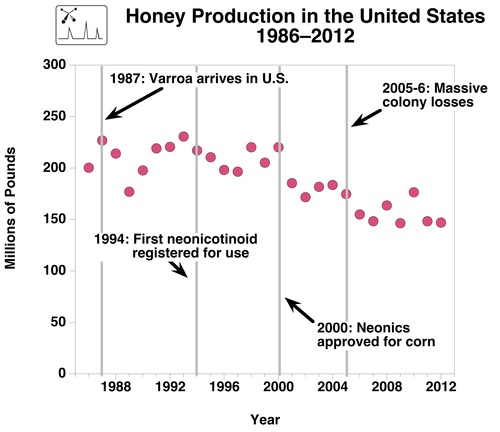
    Our Nation’s bees are in a tail spin, and victims include commercial honey bees, wild bumble bees, and other native bee species. This isn’t just a bee problem – it’s our problem too because we rely on the pollination services of our buzzing invertebrate friends to grow food and make flowers bloom. According to the US Department of Agriculture Honey Report, honey production is down, as it has been almost every year since the neonicotinoid pesticides were approved (see graph below from Dr. Susan Kegley, Pesticide Research Institute). The decline of bee colonies almost certainly has numerous causes. Much of the pesticide industry is focused on pathogens like Nosema parasites and Varroa mites, shifting attention away from their own harmful pesticide products. But, science is bringing pesticides and bee deaths closer together. It is now evident that even low field-realistic levels of neonicotinoids (‘neonics’) – a class of pesticides purposely designed to soak into the whole plant – are compromising the immunity of bees, leaving them unable to fend off viruses and other deadly pathogens that stress and eventually kill bee colonies. It is a deadly one-two punch. The bees are immune compromised from the pesticides, and then fall prey to mites and other viruses that kill them.

    Our Nation’s bees are in a tail spin, and victims include commercial honey bees, wild bumble bees, and other native bee species. This isn’t just a bee problem – it’s our problem too because we rely on the pollination services of our buzzing invertebrate friends to grow food and make flowers bloom. According to the US Department of Agriculture Honey Report, honey production is down, as it has been almost every year since the neonicotinoid pesticides were approved (see graph below from Dr. Susan Kegley, Pesticide Research Institute). The decline of bee colonies almost certainly has numerous causes. Much of the pesticide industry is focused on pathogens like Nosema parasites and Varroa mites, shifting attention away from their own harmful pesticide products. But, science is bringing pesticides and bee deaths closer together. It is now evident that even low field-realistic levels of neonicotinoids (‘neonics’) – a class of pesticides purposely designed to soak into the whole plant – are compromising the immunity of bees, leaving them unable to fend off viruses and other deadly pathogens that stress and eventually kill bee colonies. It is a deadly one-two punch. The bees are immune compromised from the pesticides, and then fall prey to mites and other viruses that kill them.

    A new study (Di Prisco et al 2013) suggests a mechanism for how these neonics are compromising bee immunity. Researchers exposed honey bees to clothianidin – a neonicotinoid pesticide commonly used as a seed treatment and to spray on field and tree crops, turf, and ornamental trees and flowers – and then infected the bees with a virus. Compared to unexposed (control) bees, the pesticide neonic bees had reduced immune system function and impaired signaling of a molecule called “NF-kappa B” (NF-kB), normally required for proper function of the immune system. Interestingly, when chlorpyrifos, an organophosphate pesticide that shares a mechanism of toxicity with the neonicotinoids, was tested under the same conditions its effects on immune response were negligible, suggesting this toxic mechanism may be specific to the neonic pesticides.

    This research supports the findings of earlier studies. US Department of Agriculture chief scientist Dr. Jeff Pettis and his research collaborators at Penn State University reported in 2012 that honey bees born and raised in hives with low sub-lethal levels of neonicotinoid pesticides had a significantly higher risk of infections of the deadly gut parasite Nosema.

    And an earlier study found that imidacloprid – a neonicotinoid used as a seed treatment and to spray field and tree crops and ornamental plants, trees, and turf – when coupled with the Nosema parasite resulted in more bee deaths than either the pesticide or the parasite alone (Alaux et al 2010). This study used field-realistic levels of imidacloprid, at 0.7, 7, and 70 parts per billion (ppb).

    In addition to immune system damage, a handful of well-conducted studies on honey bees and bumble bees suggest that bee colonies exposed to field-realistic levels of neonic pesticides in small but repeated or lasting (several weeks) doses have significant behavioral and functional impairments such as impaired learning, food collection, navigation, immune function, and reduced fecundity and queen production. While not likely to cause immediate (acute) death, such abnormal behavior can hinder the ability of the colony to survive winter. (See the Xerces Society report and my blog here for details).

    The neonic pesticides were developed to replace the highly acutely toxic war-era organophosphate (OP) pesticides that were not only highly toxic to bees, but also responsible for fish kills, bird kills, farmworker poisonings, poisoning of children from residential uses, and even long-term neurological impairments to the children born in the womb to exposed mothers.(see my blog here for details)

    However, the systemic neonic approach has two major failings that make these pesticides potentially even more dangerous to pollinators and other beneficial insects than the OP pesticides that they replaced. First, their use undermines the principles of Integrated Pest Management (IPM) which requires that pesticides only be used if they are needed, and then only where they are needed, and in the least amount possible to be effective. ‘Use only when needed’ is important to reduce the development of pesticide-resistant pests. Systemic pesticides are the opposite of IPM – they are prophylactic and unavoidable by design. Second, whereas the OP pesticides could be avoided by not spraying when bees are foraging (a label requirement), the neonics cannot be avoided because all the components of the plant – and particularly the pollen, nectar, and guttation drops – carry the pesticide at measurable levels.

    These problems combined with the accumulating evidence that neonics are likely a significant factor in recent bee declines means that it’s time to reconsider the now pervasive use of these pesticides.

    Recent research by USDA scientist Jeff Pettis found 35 different pesticides in bee pollen in addition to neonics that appear to weaken the immunity of bees, leaving them unable to fend off the viruses that eventually kill them. (Pettis et al 2013)

    Many landscape and ornamental trees or flowering plants for homes and gardens are pre-treated with neonicotinoid pesticides, often at levels are exceeding those used in agriculture. Friends of the Earth US (FoE US) and the Pesticide Research Institute (PRI) issued an important report in August 2013 called, Gardeners Beware: Bee-toxic pesticides found in bee-friendly plants sold at garden centers nationwide. The report found that 54% of garden plants purchased from major retailers (including Lowes and Home Depot) contained system neonicotinoids at levels that could harm bees. Since the plants are not labeled consumers have no way of knowing that their garden may poison bees, so ask your retailer and let them know that you won’t purchase bee-poison plants.

    The “Saving America’s Pollinators Act of 2013” was introduced into Congress by Representative John Conyers, Jr. (D-Mich.) and Representative Earl Blumenauer (D-OR). The Act directs EPA to suspend use of the most bee-toxic neonicotinoids for use in seed treatment, soil application, or foliar treatment on bee attractive plants within 180 days – with some exceptions – and to review these neonicotinoids and make a new determination about their application and safe use. If this Act passes Congress it will certainly be a big step in the right direction to protecting pollinators.

    Source: NRDC Switchboard, November 8, 2013
    http://switchboard.nrdc.org/blogs/jsass/more_research_shows_neonic_pes.html

  • Once-fertile landscapes have been destroyed due to decades of agricultural production

    Once-fertile landscapes have been destroyed due to decades of agricultural production

    In a new study on ecosystems in the Midwest, scientists suggest that once-fertile landscapes dominated by tall grass prairies and supported by microbial biodiversity have been destroyed due to decades of agricultural production. The study, Reconstructing the Microbial Diversity and Function of Pre-Agricultural Tall Grass Prairie Soils in the United States, published in the journal Science, demonstrates the crucial role soil microbial diversity plays in ecosystem stability and health. Although soil microbes are inherently important for the breakdown of organic matter, the cycling of nutrients, as well as plant productivity, previous research has narrowly focused on the role of nitrogen fixing root fungi, rather than broader aspects of soil microbial diversity. Thus, this new study represents one of the first to delve into the importance of soil microorganisms in ecosystem restoration projects.

    In a new study on ecosystems in the Midwest, scientists suggest that once-fertile landscapes dominated by tall grass prairies and supported by microbial biodiversity have been destroyed due to decades of agricultural production. The study, Reconstructing the Microbial Diversity and Function of Pre-Agricultural Tall Grass Prairie Soils in the United States, published in the journal Science, demonstrates the crucial role soil microbial diversity plays in ecosystem stability and health. Although soil microbes are inherently important for the breakdown of organic matter, the cycling of nutrients, as well as plant productivity, previous research has narrowly focused on the role of nitrogen fixing root fungi, rather than broader aspects of soil microbial diversity. Thus, this new study represents one of the first to delve into the importance of soil microorganisms in ecosystem restoration projects.

    By comparing soil samples from 31 uncultivated prairie sites, such as cemeteries and national parks, lead author Noah Fierer, PhD., at University of Colorado at Boulder and colleagues were able to identify microbes that likely inhabited the prairies prior to agricultural production. The study found that small changes to the abundance of Verrucomicrobia —until now a poorly researched soil bacterium— were the primary driving force behind changes to the ecosystem processes. The bacterium is thought to play a crucial role in carbon cycling. Researchers found that the bacteria seemed to thrive in soils with poor nutrients, which would certainly explain why they tend to be less common on agricultural land that has been over-fertilized with chemical inputs.

    “They were the most fertile soils that existed in North America,” says Dr. Fierer. “Problem is, those soils don’t exist anymore. They’ve been ploughed under and subjected to centuries of growing corn.”

    The research builds upon a mounting body of evidence demonstrating that conventional farming methods not only destroy habitat, they also destroy soil structure and affect plant health and crop production. One recent study, published in Proceedings from the National Academy of Sciences, found that pesticide use on farms severely reduced the efficiency of nitrogen-fixing plants, impacting soil fertility and ultimately reducing crop yields by over a third over the past 25 years. Other recent research on genetically engineered (GE) crops, dominating the landscape in the Midwest, found that corn genetically engineered to express the insecticidal bacterial Bacillus thuringiensis (Bt) reduced the functioning of beneficial soil fungi.

    The study opens up a range of further research possibilities for soil science, demonstrates the importance of soil microbial communities and provides guidance on sustainable soil management.

    Beyond Pesticides has long supported “feed-the-soil” approaches to lawn and landscape management. Understanding the role of healthy soils in creating healthy landscapes, we promote a systems approach that centers on management of soil health and proper fertilization that eliminates synthetic fertilizers and focuses on building the soil food web and nurturing soil microorganisms. Experience demonstrates that this approach will build a soil environment rich in microbiology that will produce a strong, healthy lawn that is able to withstand many of the stresses that affect lawns and landscape. For more information lawn and landscape management, visit our issues page.

    Sources: Science, Nature, http://www.beyondpesticides.org