Auteur: Henk Tennekes

  • Obama Administration Takes Important Step to Protect Endangered Species From Pesticides

    Obama Administration Takes Important Step to Protect Endangered Species From Pesticides

    The Environmental Protection Agency and several other federal agencies released new policies today designed to better assess the risks that pesticides pose to endangered species. These policies will ensure that mitigation measures recommended by the federal wildlife agencies are put in place to protect endangered species in agricultural areas, as well as in areas downstream that are affected by pesticide runoff. They come in response to an April 2013 report from the National Academy of Sciences that criticized the EPA for failing to fully assess the impact of pesticides on endangered species. “The actions announced today represent an important step forward in protecting our nation’s most endangered plants and animals from toxic pesticides, but this is just the first step,” said Brett Hartl, endangered species policy director at the Center for Biological Diversity. “The EPA needs to do much more to ensure this new plan results in meaningful, on-the-ground conservation actions to protect our most endangered species and their habitats.”

    The Environmental Protection Agency and several other federal agencies released new policies today designed to better assess the risks that pesticides pose to endangered species. These policies will ensure that mitigation measures recommended by the federal wildlife agencies are put in place to protect endangered species in agricultural areas, as well as in areas downstream that are affected by pesticide runoff. They come in response to an April 2013 report from the National Academy of Sciences that criticized the EPA for failing to fully assess the impact of pesticides on endangered species. “The actions announced today represent an important step forward in protecting our nation’s most endangered plants and animals from toxic pesticides, but this is just the first step,” said Brett Hartl, endangered species policy director at the Center for Biological Diversity. “The EPA needs to do much more to ensure this new plan results in meaningful, on-the-ground conservation actions to protect our most endangered species and their habitats.”

    For more than two decades, the EPA has routinely disregarded the Endangered Species Act by failing to consult with federal wildlife agencies on how to implement conservation measures to protect threatened and endangered species from pesticides. As a result endangered species have been put at unnecessary risk of exposure to toxic pesticides. In 2011 Congress asked the National Academy of Sciences to study this issue and report on ways of addressing the EPA’s failures to fully protect listed species.

    The Academy report identified deficiencies for all the agencies involved in pesticide consultations, but singled out the EPA’s approach for its numerous analytical shortcomings, concluding the agency’s “does not estimate risk,” “is ad hoc,” and “has unpredictable performance outcomes.”

    In response to the Academy’s recommendations, the EPA announced several reforms designed to better protect endangered species. Most importantly the agency will now consult on all sublethal, indirect and cumulative impacts on endangered species and their critical habitats from pesticides. It will only be allowed to bypass full consultation for endangered species when the anticipated risk of lethal pesticide exposure is less than one in a million. The agency will also now consider the effects of pesticides on listed species and their critical habitat in areas downstream of agricultural areas where the chemicals are used.

    “With over a billion pounds of pesticides applied each year in this country — the highest pesticide usage rate in the world — the dangers to America’s endangered wildlife are still enormous,” said Hartl. “It’s time for the EPA to start using the best available science and put in place common-sense conservation measures.”

    The Endangered Species Act consultation process is designed to identify which pesticides are the most harmful to protected species and determine reasonable conservation measures to protect species, such as using less-toxic chemicals, creating no-spray buffer zones next to creeks and rivers, and adopting integrated pest-management solutions to reduce overall pesticide use. The EPA’s Office of Pesticides Policy has systemically failed to consult on the impacts of pesticides on endangered species, though the consultation process is routine in nearly every arm of the federal government. As a result of this failure, there are more than 1,000 pesticides that have not undergone any meaningful review of their potential impacts on endangered species.

    “It will take a lot of hard work and additional resources from all of the federal agencies involved to address this backlog, but at least now agencies are moving forward together,” said Hartl. “This critically important work is worth those additional efforts. As far back as the era of DDT, endangered species have been our canary in the coal mine; making sure endangered species are protected from pesticides is the best way to make sure all of us are protected.”

    Source:
    The Center for Biological Diversity, November 14, 2013
    http://www.biologicaldiversity.org/news/press_releases/2013/pesticides-11-14-2013.html
    The Center for Biological Diversity is a national, nonprofit conservation organization with more than 625,000 members and online activists dedicated to the protection of endangered species and wild places.
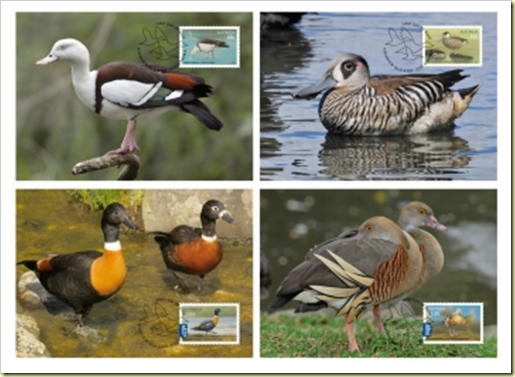

  • The largest lake in Britain and Ireland, Lough Neagh, has lost more than three quarters of its overwintering water birds according to researchers at Queen’s University Belfast

    The largest lake in Britain and Ireland, Lough Neagh, has lost more than three quarters of its overwintering water birds according to researchers at Queen’s University Belfast

    The study by Quercus, Northern Ireland’s Centre for Biodiversity and Conservation Science, found the number of diving ducks migrating to the lake for the winter months has dropped from 100,000 to less than 21,000 in the space of a decade. The research, published in the journal Freshwater Biology, found the ecosystem of the lake has dramatically changed since 2000/01 leading to a huge decline in the numbers of insects and snails living at the bottom of the lake.
    This combined with the effects of global climate change dramatically affected the numbers of migratory and overwintering water birds, a feature for which the lake is designated a Special Protection Area. Dr Irena Tománková, from Quercus at the School of Biological Sciences at Queen’s and who led the study, said: “Our research found there was a 66 per cent decline in the numbers of insects and snails in the lake and that this was associated with a decline of algae. As the water birds, which migrate from Northern and Eastern Europe to spend the winter months on the lake, depend on these invertebrates, we partly attribute their decline to the lack of food as well as the effects of climate change. “Historically the lake was heavily affected by organic pollution as a result of nutrients from agricultural run-off. This artificially boosted its productivity. Now that conservation schemes are beginning to have an effect and reduce levels of pollution we are seeing increasing water quality and the unexpected consequence is fewer invertebrates and as a result less duck food.”

    The study by Quercus, Northern Ireland’s Centre for Biodiversity and Conservation Science, found the number of diving ducks migrating to the lake for the winter months has dropped from 100,000 to less than 21,000 in the space of a decade. The research, published in the journal Freshwater Biology, found the ecosystem of the lake has dramatically changed since 2000/01 leading to a huge decline in the numbers of insects and snails living at the bottom of the lake.
    This combined with the effects of global climate change dramatically affected the numbers of migratory and overwintering water birds, a feature for which the lake is designated a Special Protection Area. Dr Irena Tománková, from Quercus at the School of Biological Sciences at Queen’s and who led the study, said: “Our research found there was a 66 per cent decline in the numbers of insects and snails in the lake and that this was associated with a decline of algae. As the water birds, which migrate from Northern and Eastern Europe to spend the winter months on the lake, depend on these invertebrates, we partly attribute their decline to the lack of food as well as the effects of climate change. “Historically the lake was heavily affected by organic pollution as a result of nutrients from agricultural run-off. This artificially boosted its productivity. Now that conservation schemes are beginning to have an effect and reduce levels of pollution we are seeing increasing water quality and the unexpected consequence is fewer invertebrates and as a result less duck food.”

    Source: Newsroom America, 13 November 2013
    http://www.newsroomamerica.com/story/394945/largest_lake_in_britain_has_lost_three-quarters_of_winter_water_birds.html

  • Golden eagle numbers dive: Audubon documents a decline at the Bridger Mountains route

    Golden eagle numbers dive: Audubon documents a decline at the Bridger Mountains route

    The number of migrating golden eagles (Aquila chrysaetos) through Montana’s Bridger Mountains, the top fall golden eagle migration route in the Lower 48, has dropped 35 to 40 percent over the past two decades, mirroring similar declines at migrating raptor count sites elsewhere in the West and raising concerns for Montana Audubon, which conducts the surveys. Steve Hoffman, executive director of Montana Audubon, says the declines in southwest Montana are being documented in migrating golden eagles, which could indicate habitat loss in wintering grounds in the United States or problems in breeding areas in Canada and Alaska. The decline in numbers of golden eagles has been documented in annual raptor counts conducted at Bridger Bowl Ski Area near Bozeman since 1992. Each year, from Sept. 1 to late October or early November, two official observers count raptors from a helicopter-landing platform at an elevation of 8,600 feet. In the 2013 survey, which concluded earlier this month, the trend of declining golden eagles continued with 1,131 golden eagles counted compared to 1,272 in 2012. In 1992, the first full year of survey results, 1,579 golden eagles were recorded. In 1999, the last year counters recorded a high number of eagles, 1,870 golden eagles were spotted. “Our data in the Bridgers has determined it is a problem,” Hoffman said. Since the late 1990s, the number of birds counted has declined 35 to 40 percent, the survey results show.

    The number of migrating golden eagles (Aquila chrysaetos) through Montana’s Bridger Mountains, the top fall golden eagle migration route in the Lower 48, has dropped 35 to 40 percent over the past two decades, mirroring similar declines at migrating raptor count sites elsewhere in the West and raising concerns for Montana Audubon, which conducts the surveys. Steve Hoffman, executive director of Montana Audubon, says the declines in southwest Montana are being documented in migrating golden eagles, which could indicate habitat loss in wintering grounds in the United States or problems in breeding areas in Canada and Alaska. The decline in numbers of golden eagles has been documented in annual raptor counts conducted at Bridger Bowl Ski Area near Bozeman since 1992. Each year, from Sept. 1 to late October or early November, two official observers count raptors from a helicopter-landing platform at an elevation of 8,600 feet. In the 2013 survey, which concluded earlier this month, the trend of declining golden eagles continued with 1,131 golden eagles counted compared to 1,272 in 2012. In 1992, the first full year of survey results, 1,579 golden eagles were recorded. In 1999, the last year counters recorded a high number of eagles, 1,870 golden eagles were spotted. “Our data in the Bridgers has determined it is a problem,” Hoffman said. Since the late 1990s, the number of birds counted has declined 35 to 40 percent, the survey results show.

    Source:
    Great Falls Tribune, November 13, 2013
    http://www.greatfallstribune.com/article/20131113/NEWS01/311130023/Golden-eagle-numbers-dive?nclick_check=1

  • Ctgb wijst verzoek tot intrekking toelating 5 neonicotinoiden deels af

    Ctgb wijst verzoek tot intrekking toelating 5 neonicotinoiden deels af

    In oktober 2012 vroeg de organisatie PAN Europe het College voor de toelating van gewasbeschermingsmiddelen en biociden (Ctgb) om de toelating van 6 gewasbeschermingsmiddelen en 1 biocide in te trekken in verband met de risico’s voor waterorganismen en geconstateerde overschrijdingen in het oppervlaktewater. Lopende de behandeling van dit verzoek verscheen een nieuw rapport van Alterra. Het Ctgb heeft deze nieuwe gegevens niet alleen betrokken bij de behandeling van het verzoek van PAN Europe, maar ook is onderzocht of deze studie geen gevolgen zou moeten hebben voor andere toelatingen op basis van imidacloprid. Dit heeft geleid tot een zienswijzeprocedure naar aanleiding van het voornemen van het Ctgb om in te grijpen in een drietal toelatingen.

    In oktober 2012 vroeg de organisatie PAN Europe het College voor de toelating van gewasbeschermingsmiddelen en biociden (Ctgb) om de toelating van 6 gewasbeschermingsmiddelen en 1 biocide in te trekken in verband met de risico’s voor waterorganismen en geconstateerde overschrijdingen in het oppervlaktewater. Lopende de behandeling van dit verzoek verscheen een nieuw rapport van Alterra. Het Ctgb heeft deze nieuwe gegevens niet alleen betrokken bij de behandeling van het verzoek van PAN Europe, maar ook is onderzocht of deze studie geen gevolgen zou moeten hebben voor andere toelatingen op basis van imidacloprid. Dit heeft geleid tot een zienswijzeprocedure naar aanleiding van het voornemen van het Ctgb om in te grijpen in een drietal toelatingen.

    De reactietermijn voor de zienswijzeprocedure is inmiddels verstreken. De indieners van zienswijzen en de betrokken toelatinghouders hebben nog 2 weken de gelegenheid om te reageren op de ingekomen zienswijzen. Het Ctgb zal daarna de reacties verwerken en de besluitvorming afronden. Dit betreft echter niet alle toelatingen waarvan PAN Europe intrekking heeft gevraagd. Ten aanzien van een aantal daarvan is het Ctgb voornemens om het verzoek tot intrekking af te wijzen. Het betreft de volgende vier gewasbeschermingsmiddelen en één biocide waarvan de ontwerpbesluiten ter inzage worden gelegd:
    •Admire O-teq

    •Amigo Flex

    •Imex-Imidacloprid

    •MonAmi

    •Maxforce Quantum
    Het ontwerpbesluit van deze strekking ligt 4 weken ter inzage op de website en bij het Ctgb zelf; aangezien de website momenteel niet beschikbaar is, kan het ontwerpbesluit op verzoek ook per email worden toegezonden. Belanghebbenden kunnen zich daartoe wenden tot helpdesk@ctgb.nl. Van deze terinzagelegging wordt op 13 november kennis gegeven in de Staatscourant; gedurende deze periode kunnen belanghebbenden bij het Ctgb een zienswijze indienen. De termijn voor inzage en voor het indienen van zienswijzen eindigt derhalve vier weken na datum van de kennisgeving in de Staatscourant.

    Wanneer het Ctgb een besluit neemt op een verzoek tot intrekking van een toelating, afkomstig van een ander dan de toelatinghouder, is een zienswijzeprocedure van toepassing.

    Bronnen: Ctgb & Groene Ruimte Nieuws, 13/11/13
    http://www.groeneruimte.nl/nieuws/artikel.html?id=153743

  • The steep decline of insectivores in Ontario is telling us they’re running out of insect food

    The steep decline of insectivores in Ontario is telling us they’re running out of insect food

    Birds that eat flying insects are in a shocking and mysterious decline, says the co-editor of the new Atlas of Breeding Birds in Ontario. “It is an alarm bell,” Gregor Beck, a wildlife biologist and the book’s co-editor, said. The atlas, created after five years of research and employing 1.2 million individual bird records from Pelee Island to Hudson Bay, found most of the birds that eat flying insects declined 30 to 50 per cent in the last 20 years. The birds include some swallows, the common nighthawk (Chordeiles minor), the whip-poor-will (Caprimulgus vociferus) and the chimney swift (Chaetura pelagica). The decline was the biggest shock that came from the research, Beck said. We need to be very concerned, he said. Other insectivores are in steep decline as well. Reptile populations have declined drastically in Ontario over the past century. The Ontario Endangered Species Act, 2007 considers 18 of the province’s 24 reptile species (75%!) to be at risk. Fewer amphibian species are considered to be at risk, although amphibian populations are declining in parts of the province. Three species – timber rattlesnake, spring salamander and tiger salamander – have been extirpated.

    Birds that eat flying insects are in a shocking and mysterious decline, says the co-editor of the new Atlas of Breeding Birds in Ontario. “It is an alarm bell,” Gregor Beck, a wildlife biologist and the book’s co-editor, said. The atlas, created after five years of research and employing 1.2 million individual bird records from Pelee Island to Hudson Bay, found most of the birds that eat flying insects declined 30 to 50 per cent in the last 20 years. The birds include some swallows, the common nighthawk (Chordeiles minor), the whip-poor-will (Caprimulgus vociferus) and the chimney swift (Chaetura pelagica). The decline was the biggest shock that came from the research, Beck said. We need to be very concerned, he said. Other insectivores are in steep decline as well. Reptile populations have declined drastically in Ontario over the past century. The Ontario Endangered Species Act, 2007 considers 18 of the province’s 24 reptile species (75%!) to be at risk. Fewer amphibian species are considered to be at risk, although amphibian populations are declining in parts of the province. Three species – timber rattlesnake, spring salamander and tiger salamander – have been extirpated.

    Sources:
    Canada.com, March 7, 2008
    http://www.canada.com/windsorstar/news/story.html?id=d22b16fd-97dd-4b04-9dc8-537935877676&k=62386
    Ontario Nature
    http://www.ontarionature.org/protect/species/threats_to_reptiles_and_amphibians.php

  • Onze doodgewone huismus is nu officieel een met uitsterven bedreigde soort

    Onze doodgewone huismus is nu officieel een met uitsterven bedreigde soort

    Het aantal broedparen van de huismus is sinds 1960 met 40 tot 50% teruggelopen. Waren er in de jaren ’70 nog tussen de 1 en 2 miljoen broedparen in Nederland, nu ligt het aantal broedparen naar schatting tussen de 500.000 en 1 miljoen. Tellingen laten zien dat het aantal broedparen jaarlijks verder afneemt. Voor de Vogelbescherming Nederland is dit aanleiding om de huismus (Passer domesticus) op de Rode Lijst voor bedreigde vogelsoorten te zetten. Daarmee is onze ‘gewoonste vogel’ nu officieel een met uitsterven bedreigde soort.

    Het aantal broedparen van de huismus is sinds 1960 met 40 tot 50% teruggelopen. Waren er in de jaren ’70 nog tussen de 1 en 2 miljoen broedparen in Nederland, nu ligt het aantal broedparen naar schatting tussen de 500.000 en 1 miljoen. Tellingen laten zien dat het aantal broedparen jaarlijks verder afneemt. Voor de Vogelbescherming Nederland is dit aanleiding om de huismus (Passer domesticus) op de Rode Lijst voor bedreigde vogelsoorten te zetten. Daarmee is onze ‘gewoonste vogel’ nu officieel een met uitsterven bedreigde soort.

    Bron: Natuurinformatie
    http://www.natuurinformatie.nl/nnm.dossiers/natuurdatabase.nl/i003319.html

  • Developments in the area of pollinator regulatory testing and risk assessment in North America

    Developments in the area of pollinator regulatory testing and risk assessment in North America

    Continuing on from their recent article “Risk Assessment for Bees I – Recent Regulatory Developments in Europe” Huntingdon Life Sciences has published a follow-up article which focuses on developments in the area of pollinator
    regulatory testing and risk assessment in North America.

    Continuing on from their recent article “Risk Assessment for Bees I – Recent Regulatory Developments in Europe” Huntingdon Life Sciences has published a follow-up article which focuses on developments in the area of pollinator
    regulatory testing and risk assessment in North America.

  • Prince Charles has accused the big supermarkets of profiting from Britain’s farmers while taking on “none of the risk” of dealing with the roller-coaster economics of food production

    Prince Charles has accused the big supermarkets of profiting from Britain’s farmers while taking on “none of the risk” of dealing with the roller-coaster economics of food production

    In his latest forthright intervention on issues of public debate from architecture to homeopathy, the heir to the throne has highlighted the iniquities faced by farmers who deal with dramatically fluctuating incomes while retailers reap substantial profits from their squeezed suppliers. The Prince, who has previously been outspoken on threats to the countryside and is himself a substantial landowner through the Duchy of Cornwall, takes up the cudgels against the supermarkets in an edition of Country Life magazine which he guest-edited. His lengthy editorial defends the work of farmers as guardians of rural Britain and argues that plummeting incomes are depriving farmers of the ability to invest long-term in their land, thereby storing up problems for sustainable domestic food production. He said producers were, in effect, being “penalised” for choosing their way of life, adding: “Small farmers find themselves in the iniquitous position of taking the biggest risk, often acting as the buffer from the retailer against all the economic uncertainties of producing food, but receiving the least return.“It cannot be right that a typical hill farmer earns just £12,600, with some surviving on as little as £8,000 a year, whilst the big retailers and their shareholders do so much better out of the deal, having taken none of the risk.”

    In his latest forthright intervention on issues of public debate from architecture to homeopathy, the heir to the throne has highlighted the iniquities faced by farmers who deal with dramatically fluctuating incomes while retailers reap substantial profits from their squeezed suppliers. The Prince, who has previously been outspoken on threats to the countryside and is himself a substantial landowner through the Duchy of Cornwall, takes up the cudgels against the supermarkets in an edition of Country Life magazine which he guest-edited. His lengthy editorial defends the work of farmers as guardians of rural Britain and argues that plummeting incomes are depriving farmers of the ability to invest long-term in their land, thereby storing up problems for sustainable domestic food production. He said producers were, in effect, being “penalised” for choosing their way of life, adding: “Small farmers find themselves in the iniquitous position of taking the biggest risk, often acting as the buffer from the retailer against all the economic uncertainties of producing food, but receiving the least return.“It cannot be right that a typical hill farmer earns just £12,600, with some surviving on as little as £8,000 a year, whilst the big retailers and their shareholders do so much better out of the deal, having taken none of the risk.”

    Among the most adept agricultural managers is the Prince himself. The Duchy of Cornwall last year increased the income from its farm holdings from £7m to £7.3m as part of an overall surplus of £19.1m paid to him to fund his lifestyle and that of dependents, including his sons.

    But the Prince’s criticism is supported by Government figures which show that total income from farming fell by 14 per cent last year to £4.7bn, while average income per farm dropped by 29 per cent to £47,500. The profits of the big six supermarkets over the same period rose to £7.6bn, according to the Campaign for the Protection of Rural England (CPRE).

    Emergency payments by the Royal Agricultural Benevolent Institution have also increased dramatically, with three times as many working farmers (nearly 300) approaching the charity for financial support in the first nine months of 2013, compared with the same period last year.

    The profit margins of the supermarkets are not the only targets for royal ire. In comments likely to be seen as a shot across the bows of Coalition proposals which critics say imperil areas such as national parks, the Prince describes the countryside as “the unacknowledged backbone of our national identity”. He says: “It is as precious as any of our great cathedrals, and we erode it at our peril.”

    Complaints from farmers that they are pressured into reducing their margins beyond sustainable levels are a running sore between retailers and producers.

    Campaigners claim supermarkets’ growth has impacted on farmers both by virtue of their huge direct buying power and their competitive advantage over smaller or independent retailers in rural areas.

    Graeme Willis, policy adviser for the CPRE, said: “We have lost a lot of the traditional stores that should be the first port of call as outlets for smaller farms. There is a very strong argument for the supermarkets to deepen their direct links by buying from smaller local producers.”

    Farmers have placed significant store in the introduction this summer of a new supermarkets ombudsman – the Groceries Code Adjudicator – who will investigate complaints from suppliers of unfair practice.

    The new Groceries Code, which applies to the UK’s 10 biggest supermarkets with a turnover of more than £1bn, includes measures such as a ban on retailers from varying supply contracts without notice.

    In response to Prince Charles, the British Retail Consortium (BRC) said supermarkets had a record of strong investment in farmers but added that they could not be expected to resolve all the issues faced by the agriculture sector.

    Andrew Opie, the BRC’s food director, said: “Retailers are confident their investment means a strong future for farmers in their chain and that a very high proportion of our food will continue to be sourced in the UK. However, retailers cannot resolve all the problems for farmers, many of which are structural and beyond their control.”

    Source: The Independent, 13 November 2013
    http://www.independent.co.uk/life-style/food-and-drink/news/supermarkets-give-squeezed-farmers-a-raw-deal-says-prince-charles-8935681.html

  • Actieprogramma Bijengezondheid – Schone Schijn

    Actieprogramma Bijengezondheid – Schone Schijn

    Op initiatief van staatssecretaris Sharon Dijksma zijn vertegenwoordigers van 25 organisaties het afgelopen halfjaar met elkaar in gesprek gegaan om te komen tot een gezamenlijk Actieprogramma Bijengezondheid. Op 11 november 2013 heeft Felix Rottenberg voorstellen voor zo’n actieprogramma namens deze organisaties aan staatssecretaris Sharon Dijksma aangeboden. Deze daad verhult het feit dat er geen consensus is ontstaan over de uitgangspunten die de basis zouden moeten vormen voor het gebruik van neonicotinoide insecticiden. Deze gewasbeschermers worden door vele wetenschappers gezien als een primaire oorzaak van de sedert een aantal jaren sterk verhoogde wintersterfte van bijenvolken. Het Europese Agentschap voor Voedselveiligheid (EFSA) heeft onlangs een nieuwe aanpak van de risicobeoordeling van bestrijdingsmiddelen voor bijen aanbevolen, maar de producenten van de neonicotinoiden (Bayer CropScience en Syngenta) waren niet bereid op basis van deze aanbevelingen tot objectieve beoordelingscriteria voor de toelaatbaarheid van bestrijdingsmiddelen te komen. Ze blijven vasthouden aan de visie dat de neonicotinoiden bij gebruik volgens voorschrift veilig zijn. Deze impasse in het beleid ten aanzien van de neonicotinoiden wordt in het Actieprogramma Bijengezondheid niet of nauwelijks beschreven. Als gevolg daarvan blijven de ernstige problemen waarvoor de neonicotinoiden de bijenstand stellen onopgelost. Voor de toxicoloog Henk Tennekes was dat reden om uit het overleg te stappen.

    Op initiatief van staatssecretaris Sharon Dijksma zijn vertegenwoordigers van 25 organisaties het afgelopen halfjaar met elkaar in gesprek gegaan om te komen tot een gezamenlijk Actieprogramma Bijengezondheid. Op 11 november 2013 heeft Felix Rottenberg voorstellen voor zo’n actieprogramma namens deze organisaties aan staatssecretaris Sharon Dijksma aangeboden. Deze daad verhult het feit dat er geen consensus is ontstaan over de uitgangspunten die de basis zouden moeten vormen voor het gebruik van neonicotinoide insecticiden. Deze gewasbeschermers worden door vele wetenschappers gezien als een primaire oorzaak van de sedert een aantal jaren sterk verhoogde wintersterfte van bijenvolken. Het Europese Agentschap voor Voedselveiligheid (EFSA) heeft onlangs een nieuwe aanpak van de risicobeoordeling van bestrijdingsmiddelen voor bijen aanbevolen, maar de producenten van de neonicotinoiden (Bayer CropScience en Syngenta) waren niet bereid op basis van deze aanbevelingen tot objectieve beoordelingscriteria voor de toelaatbaarheid van bestrijdingsmiddelen te komen. Ze blijven vasthouden aan de visie dat de neonicotinoiden bij gebruik volgens voorschrift veilig zijn. Deze impasse in het beleid ten aanzien van de neonicotinoiden wordt in het Actieprogramma Bijengezondheid niet of nauwelijks beschreven. Als gevolg daarvan blijven de ernstige problemen waarvoor de neonicotinoiden de bijenstand stellen onopgelost. Voor de toxicoloog Henk Tennekes was dat reden om uit het overleg te stappen.

    De traditionele benadering van giftigheid is het testen in modelorganismen van dosis (concentratie)/effect verhoudingen bij een willekeurig vastgelegde blootstellingsduur, waarvan wordt verondersteld dat daarmee de ‘acute’ of ‘chronische’ blootstelling wordt nagebootst. Deze benadering meet het aandeel van alle blootgestelde individuen waarbij effecten worden waargenomen. Aan de hand van dergelijke benaderingen wordt een niveau van blootstelling bepaald waarbij geen nadelige effecten meer worden waargenomen. Met behulp van een veiligheidsfactor, die kan varieren van 10 tot 100, wordt dan een ‘veilig’ niveau van blootstelling berekend voor het modelorganisme.

    Aan deze methode om giftigheid vast te stellen kleven fundamentele bezwaren:
    1. De dosis (concentratie)/effect gegevens kunnen niet worden gerelateerd aan de sterk uiteenlopende blootstellingssituaties van mens en dier aan de vele potentieel giftige stoffen, en
    2. Het daadwerkelijke risico kan schromelijk worden onderschat wanneer de giftigheid van de stof door de blootstellingsduur wordt versterkt. Een voorbeeld daarvan is de giftigheid van neonicotinoide insecticiden voor arthropoden (geleedpotigen). De dosis-werkingsrelatie wordt door de volgende vergelijking, die bekend staat als de Druckrey-Küpfmüller vergelijking, beschreven (1) : d. t n = constant (1)
    In deze formule geldt: d= dosis (concentratie), t = gemiddelde tijd tot het optreden van het effect, en n ≥ 1 (een exponent van t waarmee de versterkende werking van de tijd tot uitdrukking wordt gebracht). Kenmerkend voor deze dosis-werkingsrelatie is dat de voor een effect benodigde hoeveelheid stof sterk afneemt naarmate de blootstellingsduur toeneemt.

    De Druckrey-Küpfmüller vergelijking werd voor het eerst door Druckrey en medewerkers beschreven voor genotoxische (DNA beschadigende) carcinogenen (2). Henk Tennekes ontdekte enkele jaren geleden met gegevens van Francisco Sánchez-Bayo (3) dat de Druckrey-Küpfmüller vergelijking ook de toxiciteit van de neonicotinoide insecticiden voor geleedpotigen beschrijft (4). Naar mijn mening was er sprake van een schromelijke onderschatting van het risico van chronische blootstelling van honingbijen aan neonicotinoide insecticiden (5).

    In de meest recente guidance van het Europese Agentschap voor Voedselveiligheid (EFSA) wordt uitdrukkelijk gevraagd om chronische toxiciteitsproeven met bestrijdingsmiddelen in honingbijen (6), waardoor een uitbreiding van de huidige orale en contact acute toxiciteitsgegevens na blootstellingen van 24 en 48 uur (EPPO richtlijnen 170 en OESO 213 en 214) zal plaatsvinden. Daarbij wordt een variant van het traditionele test protocol gebruikt, waarbij de dosis (concentratie) wordt gekoppeld aan de tijd tot een bepaald effect (TTE).

    Gewenst voor TTE benaderingen is informatie over de blootstellingsconcentraties en blootstellingsduur die nodig is om bijen te doden (t50). Daarvoor moet de sterfte worden vastgesteld op vastgelegde tijdstippen (bijvoorbeeld na 1, 2, 3, 7 en 14 dagen blootstelling) bij blootstelling aan minstens 5 concentraties van iedere teststof. Deze TTE benadering meet de effecten bij alle individuen (en niet slechts de mortaliteit bij een bepaald percentage bijen na een willekeurig vastgestelde blootstellingsduur). De TTE benadering levert informatie over dosis (concentratie) en de blootstellingstijden die nodig zijn voor een giftige werking op de geteste organismen. Op die manier kunnen extrapolaties en voorspellingen worden gemaakt over de giftige gevolgen van iedere combinatie van dosis (concentratie) en blootstellingstijd.

    Tegen die achtergrond is Tennekes van mening dat die methode moet worden gebruikt om de daadwerkelijke dosis-werkingsrelaties bij honingbijen te onderzoeken. Dat zou moeten gebeuren voor de volgende stoffen: Imidacloprid, Clothianidine, Thiacloprid, Thiamethoxam, Acetamiprid, Nitenpyram, Dinetofuran, Fipronil en Sulfoxaflor. Met de dosis-werkingsrelaties kan dan aan de hand van de te verwachten besmetting van stuifmeel en nectar worden geschat of de stoffen onder praktijk omstandigheden een risico voor bijen vormen. De producenten van de neonicotinoiden waren echter niet bereid een dergelijk onderzoeksprogramma te ondersteunen.

    Noten
    (1) Tennekes HA, 2010. The significance of the Druckrey–Küpfmüller equation for risk assessment—The toxicity of neonicotinoid insecticides to arthropods is reinforced by exposure time. Toxicology,276, 1-4.
    (2) Druckrey, H., Schildbach, A., Schmaehl, D., Preussmann, R., Ivankovic, S.,1963. Quantitative analysis of the carcinogenic effect of diethylnitrosamine. Arzneimittelforschung 13, 841–851
    (3) Sánchez-Bayo, F. (2009) From simple toxicological models to prediction of toxic effects in time. Ecotoxicology 18:343-354
    (4) Tennekes HA, 2010. The significance of the Druckrey–Küpfmüller equation for risk assessment—The toxicity of neonicotinoid insecticides to arthropods is reinforced by exposure time. Toxicology,276, 1-4.
    (5) Tennekes HA, Sánchez-Bayo F., 2013. The molecular basis of simple relationships between exposure concentration and toxic effects with time. Toxicology 309, 39– 51
    (6) EFSA Guidance Document on the risk assessment of plant protection products on bees (Apis mellifera, Bombus spp. and solitary bees). EFSA Journal 2013;11(7):3295

    Bron:
    Henk Tennekes in Foodlog, 13 november 2013
    http://www.foodlog.nl/artikel/schone-schijn-het-actieprogramma-bijengezondheid1/

  • Staatssecretaris Dijksma van Economische Zaken heeft het Actieprogramma Bijengezondheid in ontvangst genomen

    Staatssecretaris Dijksma van Economische Zaken heeft het Actieprogramma Bijengezondheid in ontvangst genomen

    Het programma moet de gezondheid van bijen bevorderen en de oorzaken van bijensterfte aanpakken. Zo komt er onder meer een onderzoeksprogramma met als doel de bijengezondheid in Nederland te meten, een ‘groene lijst’ van nu al beschikbare gewasbeschermingsmiddelen en -maatregelen die het minste risico’s voor bijen vormen. Daarbij moet een ‘bijenmakelaar’ als nieuwe spil verdere kennisoverdracht en professionalisering binnen de imkerij bevorderen. Ook komen er meer functionele bloem- en akkerranden. Op initiatief van staatssecretaris Dijksma zijn vertegenwoordigers van 25 organisaties het afgelopen halfjaar met elkaar in gesprek gegaan om te komen tot een gezamenlijk Actieprogramma Bijengezondheid. In het actieprogramma zijn punten opgenomen over gewasbeschermingsmiddelen, het gebrek aan voedselaanbod en een bijenmakelaar die zorgt voor meer kennisoverdracht tussen partijen die veel met bijen te maken hebben. Op 11 november 2013 heeft Felix Rottenberg voorstellen voor zo’n actieprogramma namens deze organisaties aan de staatssecretaris aangeboden. In een reactie schrijft de toxicoloog Henk Tennekes dat er sinds 2003 een onaanvaardbare milieuverontreiniging met neonicotinoiden heeft plaats gevonden en van overheidswege onvoldoende maatregelen zijn genomen deze wantoestand effectief te bestrijden. Ook in het Actieprogramma Bijengezondheid zijn geen dwingende maatregelen geformuleerd. Voor Tennekes is dit het zoveelste bewijs dat het Hollandse poldermodel totaal ongeschikt is voor beleidsvorming, omdat soms maatregelen onontkoombaar zijn, die de belangen van sommige aan het beraad deelnemende partijen ernstige schade toebrengt.

    Het programma moet de gezondheid van bijen bevorderen en de oorzaken van bijensterfte aanpakken. Zo komt er onder meer een onderzoeksprogramma met als doel de bijengezondheid in Nederland te meten, een ‘groene lijst’ van nu al beschikbare gewasbeschermingsmiddelen en -maatregelen die het minste risico’s voor bijen vormen. Daarbij moet een ‘bijenmakelaar’ als nieuwe spil verdere kennisoverdracht en professionalisering binnen de imkerij bevorderen. Ook komen er meer functionele bloem- en akkerranden. Op initiatief van staatssecretaris Dijksma zijn vertegenwoordigers van 25 organisaties het afgelopen halfjaar met elkaar in gesprek gegaan om te komen tot een gezamenlijk Actieprogramma Bijengezondheid. In het actieprogramma zijn punten opgenomen over gewasbeschermingsmiddelen, het gebrek aan voedselaanbod en een bijenmakelaar die zorgt voor meer kennisoverdracht tussen partijen die veel met bijen te maken hebben. Op 11 november 2013 heeft Felix Rottenberg voorstellen voor zo’n actieprogramma namens deze organisaties aan de staatssecretaris aangeboden. In een reactie schrijft de toxicoloog Henk Tennekes dat er sinds 2003 een onaanvaardbare milieuverontreiniging met neonicotinoiden heeft plaats gevonden en van overheidswege onvoldoende maatregelen zijn genomen deze wantoestand effectief te bestrijden. Ook in het Actieprogramma Bijengezondheid zijn geen dwingende maatregelen geformuleerd. Voor Tennekes is dit het zoveelste bewijs dat het Hollandse poldermodel totaal ongeschikt is voor beleidsvorming, omdat soms maatregelen onontkoombaar zijn, die de belangen van sommige aan het beraad deelnemende partijen ernstige schade toebrengt.

    Dijksma: “Bijen zijn onmisbaar in onze natuur en biodiversiteit, voor de bestuiving van onze gewassen en voor de voedselproductie. Al langer zijn er zorgen over bijensterfte. Het is pure winst dat partijen met tegengestelde belangen nu samen om de tafel zitten en gezondheid van bijen voorop stellen. En dat die samenwerking wordt voortgezet in het zogeheten Bijenberaad.”

    Dijksma zal de voorstellen voor het Actieprogramma Bijengezondheid binnenkort naar de Tweede Kamer sturen. De voorstellen komen voort uit 4 werkgroepen die zich hebben bezig gehouden met gewasbeschermingsmiddelen, ziekten en plagen van bijen, (gebrek aan) voedselaanbod en biodiversiteit en de imkerpraktijk.

    Bron: Rijksoverheid, 11-11-13
    http://www.rijksoverheid.nl/nieuws/2013/11/11/samen-werken-aan-bijengezondheid.html