Auteur: Henk Tennekes

  • Pierre Mineau: Tennekes’s self-published assessment of a ‘disaster in the making’ was correct in the fundamentals

    Pierre Mineau: Tennekes’s self-published assessment of a ‘disaster in the making’ was correct in the fundamentals

    Evidence that neonicotinoids are a strong contributor to insect declines should not come as a surprise. Their use has exploded in the last two decades. As early as 2008, the USEPA in one of its reviews of thiamethoxam went as far as to predict “structural and functional changes of both the aquatic and terrestrial ecosystems” following registration of the insecticide. Such a broad statement of concern is rarely encountered in a formal regulatory assessment. It is unfortunate indeed that this EPA scientist’s views fell on deaf ears. Similarly, Tennekes’s self-published assessment of a ‘disaster in the making’ was roundly criticized for being alarmist and not distinguishing correlation from causation – but it now appears to have been correct, if not in all of the details, at least in the fundamentals.

    Sanchez-Bayo summarizes the level of concern aptly: “Negative impacts of neonicotinoids in aquatic environments are a reality…. The decline of many populations of invertebrates, due mostly to the widespread presence of waterborne residues and the extreme chronic toxicity of neonicotinoids, is affecting the structure and function of aquatic ecosystems. Consequently, vertebrates that depend on insects and other aquatic invertebrates as their sole or main food resource are being affected.”

    Source: Mineau, P. and C. Callaghan 2018. Neonicotinoid insecticides and bats: an assessment of the direct and indirect risks. Canadian Wildlife Federation. 87 pp.

  • Bewoners van Westerveld onderzoeken landbouwgif in bodem en water en vinden 57 middelen

    Bewoners van Westerveld onderzoeken landbouwgif in bodem en water en vinden 57 middelen

    In het Drentse Westerveld worden op grote schaal lelies geteeld. Daarbij gebruiken de boeren veel bestrijdingsmiddelen. Honderdzestig bezorgde omwonenden van velden met lelieteelt in Westerveld lieten dertien monsters van de bodem en het oppervlaktewater onderzoeken en vonden giftige stoffen. In tien grond- en gewasmonsters zaten 57 verschillende bestrijdingsmiddelen. De burgers eisen dat de overheid maatregelen neemt.

    “Om geld voor het onderzoek te krijgen werd een crowdfundingsactie gestart waarbij binnen een week meer dan 7000 euro gedoneerd werd door honderdzestig mensen. Dit geeft wel aan hoezeer het onderwerp bestrijdingsmiddelen in Westerveld leeft”, zegt het burgerinitiatief ‘Meten = Weten’.

    De resultaten van drie watermonsters zijn nog niet binnen. Maar het onderzoek naar de overige tien monsters laten volgens de bewonersgroep zien dat “op alle meetpunten in de gemeente Westerveld een groot aantal verschillende gifstoffen is aangetroffen.” In elk monster zijn meerdere middelen gevonden.

    De gemeten concentratie van elk afzonderlijk middel is onder de norm die de EU stelt. “Er is echter sprake van veel middelen en voor een optelsom van middelen en het effect daarvan op de mens bestaan in de EU geen normen”, zeggen de bezorgde burgers.

    De bewoners van Westerveld noemen het “onbegrijpelijk dat de gemeente wel grootschalige bollen­teelt toestaat, maar in de afgelopen vijftien jaar geen enkele poging heeft ondernomen om te onderzoeken wat de effecten van deze teelt zijn op de inwoners en de omgeving.”

    De bewoners eisen de volgende maatregelen:

    “Dat de gemeente Westerveld bij teelten waar veel bestrijdingsmiddelen gebruikt worden wettelijk spuitvrije zones van 100 meter instelt, gemeten vanaf de erfgrenzen van woningen, scholen, campings, biologische bedrijven en drink- / grondwaterbeschermingsgebieden.

    Dat de gemeente, de waterschappen en de provincie jaarlijks metingen verrichten naar bestrijdingsmiddelen in oppervlaktewater, in (moes)tuinen en natuurgebieden die grenzen aan percelen met bollen-, pioenrozen- en lelieteelt. En dat de uitkomsten van dit onderzoek worden voorgelegd aan onafhankelijke deskundigen.”

    Bron: Zembla, 06-03-19
    https://zembla.bnnvara.nl/nieuws/drentse-bewoners-onderzoeken-landbouwgif-in-bodem-en-water-en-vinden-57-middelen

  • The novel pesticide flupyradifurone (Sivanto) affects honeybee motor abilities

    The novel pesticide flupyradifurone (Sivanto) affects honeybee motor abilities

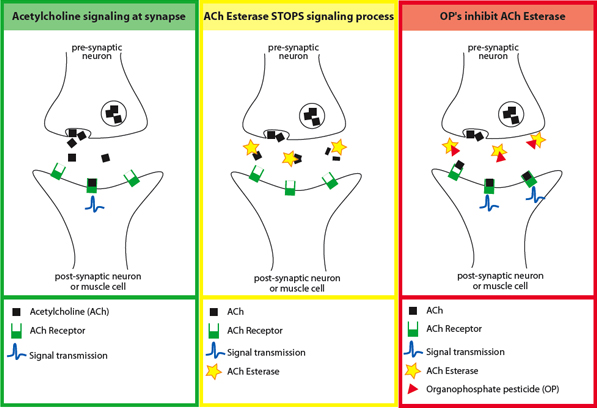
    A new pesticide by the name of “Sivanto” was recently released by Bayer AG. Its active ingredient flupyradifurone binds to the nicotinic acetylcholine receptor (AchR) in the honeybee brain, similar to neonicotinoids. Nevertheless, flupyradifurone is assumed to be harmless for honeybees and can even be applied on flowering crops. So far, only little has been known about sublethal effects of flupyradifurone on honeybees. Intact motor functions are decisive for numerous behaviors including foraging and dancing. We therefore selected a motor assay to investigate in how far sublethal doses of this pesticide affect behavior in young summer and long-lived winter honeybees. Our results demonstrate that flupyradifurone (830 µmol/l) can evoke motor disabilities and disturb normal motor behavior after a single oral administration (1.2 µg/bee). These effects are stronger in long-lived winter bees than in young summer bees. After offering an equal amount of pesticide (1.0–1.75 µg) continuously over 24 h with food the observed effects are slighter. For comparisons we repeated our experiments with the neonicotinoid imidacloprid. Intriguingly, the alterations in behavior induced by this pesticide (4 ng/bee) were different and longer-lasting compared to flupyradifurone, even though both substances bind to nicotinic acetylcholine receptors.

    Source:
    Hesselbach, H. & Scheiner, R. Ecotoxicology (2019). https://doi.org/10.1007/s10646-019-02028-y

  • Het aantal weidevogels in Zuid-Holland nam de afgelopen jaar 30 jaar met 80% af

    Het aantal weidevogels in Zuid-Holland nam de afgelopen jaar 30 jaar met 80% af

    De vogelbescherming luidde dit weekend de noodklok. Het gaat nog veel slechter met weidevogels dan gedacht. Zo nam het aantal in Zuid-Holland de afgelopen jaar dertig jaar met tachtig procent af. Nieuws dat in de Hoeksche Waard zeker niet als een verrassing komt. “Ik schrik er helaas niet van. Het is een bevestiging van wat we hier al langer zien.”Aan het woord is Dick van Houwelingen van de weidevogelwerkgroep van de Stichting Hoekschewaards Landschap.

    Hij hoort het verschil vooral heel goed. “Vroeger hoorde je als je door de polder fietste allerlei baltsende en zingende vogels. En nu is dat verdwenen. Landschapspijn noem ik dat.”

    Er worden wel maatregelen genomen in de Hoeksche Waard. Zo zijn er afspraken met boeren over het maaien en bemesten en de aanleg van akkerranden. Verder liggen er vanuit de natuurorganisaties en provincie actieplannen. Maar het duurt lang voordat dit allemaal tot concrete ingrepen leidt, vindt ook Van Houwelingen.

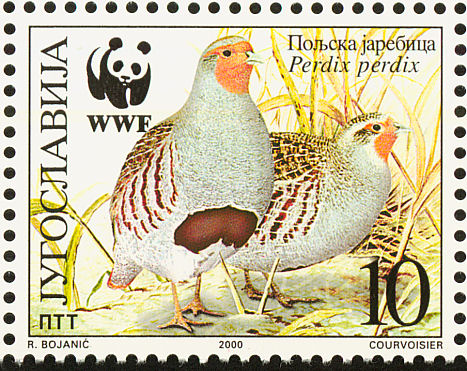
    De Vogelbescherming geeft aan dat we snel met echte maatregelen moeten komen, anders raken we binnen tien jaar verschillende soorten kwijt. In de Hoeksche Waard zijn vooral grote zorgen over de patrijs (Perdix perdix). “We zetten nu alles op alles om ze te behouden, maar het is geen 5 voor 12, maar 1 voor 12 wat dat betreft.

    Een grote oorzaak is de voedselvoorziening van de vogels. “Met de grote terugloop van het aantal insecten is een groot probleem ontstaan. Zeker jonge vogels zijn hier afhankelijk van. Maar er zijn meer oorzaken aan te wijzen: de verdroging, de werkzaamheden op het land.”

    Ondanks dat de toekomst van de akker- en weidevogels er somber uitziet blijft Van Houwelingen strijden voor het behoud van iedere soort. “Ik ben opa geworden. En dan wil je toch ook dat je als met je kleinkind de polder in gaat kunt zeggen: hé een veldleeuwerik (Alauda arvensis) of hé een graspieper (Anthus pratensis). Dat wil ik graag aan hem over kunnen brengen.”

    Bron: RTV Rijnmond, maart 2019
    https://www.rijnmond.nl/nieuws/178991/Tijd-dringt-voor-weidevogels-in-de-regio

  • Belangwekkend proefschrift van Meino Smit over de ontwikkeling van duurzaamheid in de landbouw vanaf 1950

    Belangwekkend proefschrift van Meino Smit over de ontwikkeling van duurzaamheid in de landbouw vanaf 1950

    Op dinsdag 11 september 2018 is ir. M.J. Smit aan Wageningen University & Research gepromoveerd op het onderwerp “De duurzaamheid van de Nederlandse landbouw, 1950 – 2015 – 2040”. In dit proefschrift is een beeld weergegeven van de ontwikkelingen in de Nederlandse landbouw in de periode 1950 t/m 2015. Vervolgens is aangegeven aan welke randvoorwaarden de landbouw in de toekomst moet gaan voldoen.

    Op basis van beide voorgaande punten is een scenario voor de landbouw in 2040 geschetst. De duurzaamheid van de Nederlandse landbouw is in de periode 1950 t/m 2015 sterk afgenomen. Dit als gevolg van een toename van het gebruik van energie en grondstoffen, een toename van het landgebruik en een afname van de hoeveelheid arbeid. Verder zijn de opbrengsten en de arbeidsproductiviteit veel minder gestegen dan tot nu toe werd aangenomen.

    De hoeveelheid gebruikte hulpmiddelen (input) is sneller toegenomen dan de opbrengsten (output). De verhouding tussen output en input is daardoor in 2015 ongunstiger dan in 1950. Dit heeft hoge maatschappelijke kosten veroorzaakt (bijvoorbeeld aantasting landschap, milieuvervuiling, afname biodiversiteit).
    Verder staan de middelen die in de periode 1950 t/m 2015 zijn ingezet om de productie te verhogen niet in een redelijke verhouding tot de gerealiseerde opbrengstverhogingen. Voor de toekomst moeten de maatschappelijke kosten dalen en moeten de emissies in CO2-equivalenten op basis van het Akkoord van Parijs worden gereduceerd met 90% ten opzichte van 1990. Dat betekent voor de landbouw een reductie van 39 miljoen ton CO2-equivalenten in plaats van 3,5 miljoen ton voor 2030 zoals nu door de regering wordt voorgesteld.

    De landbouw moet omschakelen naar een lage-input kringlooplandbouw.
    Voor het jaar 2040 is een schets gegeven van een duurzaam landbouwsysteem, dat kan voldoen aan de eisen die op basis van het akkoord van Parijs worden gesteld, voldoende voedselzekerheid biedt en een aanzienlijke vermindering geeft van de door de landbouw veroorzaakte maatschappelijke kosten. Ook kunnen bodemvruchtbaarheid en voedselkwaliteit hiermee worden verbeterd.

    Dit betekent voor de landbouw in 2040 o.a.:
     voedselproductie voor de eigen bevolking/zo weinig mogelijk export en import;
     geen verwarmde kassen en geen intensieve veehouderij;
     hergebruik van alle reststromen van organisch materiaal;
     geen/heel weinig gebruik van fossiele brandstoffen;
     kapitaal vervangen door arbeid: 470.000 extra arbeidsplaatsen.

    Bron: BD vereniging
    https://bdvereniging.nl/dynamisch-perspectief/duurzame-kringlandbouw-in-2040

  • Decline in bogong moth numbers could have catastrophic effects in the Australian Alps

    Decline in bogong moth numbers could have catastrophic effects in the Australian Alps

    Millions of bogong moths normally line the walls of caves in the Australian Alps over summer, but for the past two years there have been zero moths in some caves. Every year Professor Warrant returns from Lund University in Sweden to his house — and field laboratory — in Adaminaby in New South Wales to study the moths and their incredible migratory skills. Last year he was shocked to find two caves he regularly visited had no moths at all. A third, larger cave in the Snowy Mountains had fewer than previous years, but still millions of moths, he said.

    When he came back again this year, what he found was “catastrophic”. “I went again to those two caves and found the same thing — no moths. But what was really scary was the bigger cave was also completely empty,” Professor Warrant said. “We’re talking about caves that normally would have tens of millions of moths in each, easily.

    Bogong moths are a very important source of protein in the Alps for wildlife including the threatened mountain pygmy possum and other insectivorous mammals and birds. “Bogong moths bring a huge influx of nutrients and productivity into the Alps,” said alpine biologist Kate Umbers from the University of Western Sydney. “Losing them would affect everything,” she said.

    Each spring, Bogong moths migrate from their breeding grounds in southern Queensland, north and western New South Wales and Victoria to the Australian Alps.

    Source: ABC News, 26 Feb 2019
    https://www.abc.net.au/news/science/2019-02-27/bogong-moth-decline-in-australian-alps/10850036

  • The UK’s insects are dying out

    The UK’s insects are dying out

    In a corner of Hertfordshire, in one of the oldest agricultural research institutes in the world – the Rothamsted Research Institute, founded in 1843 – entomologist Chris Shortall spends his days counting and categorising mounds of moths, aphids and beetles. In fact, that is exactly what he has been doing ever since he joined the Rothamsted Insect Survey (RIS) in 2003 – a branch of the Rothamsted Institute that has been dedicated to the tracking and study of all types of bugs in the UK since 1964. The RIS has existed for almost 55 years, making it the longest-standing insect monitoring facility of its kind in the world. It has over 80 traps spread around the country to sample insect populations every day – over the years, this has come to a total of up to 250,000 samples available, containing about 120 million insects.

    For entomologists like Shortall, this is a goldmine. And it has become all the more relevant in recent years, as successive scientific papers have warned about the catastrophically declining insect numbers across the planet. Earlier this week, a scientific paper reviewing 73 of the most comprehensive studies into insect decline concluded that 40 per cent of insect species are declining with the total mass of insects falling by 2.5 per cent every year.

    Some of the most recent research was conducted in the Puerto Rican rainforest and found that 98 per cent of ground insects had disappeared in the last 35 years. That came on top of a study published in 2017, which concluded that flying insect populations in nature protection areas around Germany had declined by up to 82 per cent in the past 27 years.

    Source: WIRED, 12 Feb 2019
    https://www.wired.co.uk/article/insects-dying-out-uk

  • Six days of eating all organic is enough to significantly reduce pesticide levels  in the body

    Six days of eating all organic is enough to significantly reduce pesticide levels in the body

    Researchers in California just demonstrated that a mere six days of eating all organic is enough to significantly reduce levels of harmful pesticides in your body. In the study, four families (with completely different backgrounds) consumed conventional products for six days and had their urine tested. Then, they ate a 100 percent organic diet for six days and had their urine tested again. The drop in pesticide levels present in their urine between tests was massive. Some of the most affected pesticide levels were neonicotinoids and pyrethroids, which are ubiquitous in our lives and potentially damaging.

    These results suggest that the toxins present in our bodies are the direct result of pesticide residue on our diets—which means eating organic really is as important as we’ve been led to believe. It also suggests that our bodies are pretty efficient at flushing these nasties out when we give them the right tools.

    Source: Care2, 19 Feb 2019
    https://www.care2.com/greenliving/study-shows-its-never-too-late-to-go-organic.html

  • Pesticides as Poisons

    Pesticides as Poisons

    There has been a recent investigation here on Bellingcat, of a poisoning incident in Bulgaria in April 2015, where an individual named Emilian Gebrev was posioned. An angle of this investigation has been to see if it is at all connected to the attempted murder of Sergei Skripal. One particular aspect of recent publicity has been to examine whether or not a “Novichok” series nerve agent was responsible for the 2015 poisoning incident.

    The respected Finnish research institute Verifin was asked to analyse serum and urine samples taken from Mr. Gebrev. There does not appear to be a physical sample of the actual poison used in the samples sent to Finland. Therefore, the analysis performed was not examining the actual poison, but its biological descendants (metabolites) that remained in the human body. Although the report is not available online at the time of writing, I have read a copy of the report.

    We may not ever actually learn whether or not “Novichok” agent such as A-234 was used in this particular incident. However, it is definitely worth examining the various chemicals mentioned in the Verifin report, as these chemicals actually are poisonous and have potential for deliberate use to make people ill or even kill them. Pages 18 and 19 of the Verifin report provide a list of organophosphate pesticides that the Finnish institute believes might have been responsible for this particular poisoning. The report lists the chemicals detailed below , although they have many synonyms as trade names. For reference, I include their CAS numbers. Chemical Abstract Service (CAS) numbers are basically an indexing scheme for specific chemicals, to provide an exact reference as nomenclature does vary widely.

    General notes: All of these chemicals are in the general family of organic phosphorus compounds which attack the human nervous system in ways similar to military nerve agents. The properties and availability of these chemicals vary greatly from one another. Some of them have numerous synonyms and trade names. Some are more suited for poisonings than others. All of these chemicals are poisons to humans, although their effectiveness by various routes of exposure vary greatly.

    Chlorethoxyphos (CAS 54593-83-8) is a pesticide used to control agricultural pests in soil, including corn rootworm and white grubs. It is used in the USA and is found in dilution (in 2.5% and 5% strengths) in the DuPont pesticide “Fortress”. It’s use in the USA is restricted by Federal regulations and some states. It is not allowed in the EU. This chemical is deadly if ingested or inhaled. LD50 for ingestion is 1.8 mg per kg of body weight in rats. As chlorethoxyphos is a solid, there would need to be some sort of mechanism for inhalation to happen. The substance has toxicity by dermal absorption through the skin. However, toxicity by this route is inefficient, and relatively large amount (at least a gram of pure) would be needed to be absorbed through the skin for possible lethality.

    Chlorpyrifos (CAS 2921-88-2) is an insecticide which is widely used. It was first developed and marketed by Dow Chemical (US) and is considered a highly effective insecticide. It has come under criticism for various long term health effects, which are from different mechanisms than its acute toxicity as a nerve agent. The status of a ban on it is controversial in the USA, and is in litigation. It was formerly used in widespread ways in household and commercial buildings, but it is now largely used in agriculture. It is banned in many places, but allowed in others. It is approved in the EU. It is a solid, but it is not very soluble in water. It is highly soluble in solvents like toluene or methanol. Although it does have toxicity in mammals, the amounts needed for account poisoning by oral exposure are quite high (66 mg per kg of body weight in rats.) If an aerosol of particles could be achieved, it would be quite dangerous by inhalation, but this would need some mechanism to disperse it. It’s dermal toxicity is inefficient and low relative to other poisons in this class. It would need an impractically high amount of material to be absorbed through the skin in order to have a reasonable chance of acutely poisoning someone.

    Coumaphos (CAS 56-72-4) is used as a dip or a wash to combat fleas, ticks, and related parasites. It is allowed in the US for restricted use, and is not permitted in the EU. It is soluble in solvents but not in water. Its oral toxicity (80 mg/kg of body weight in rabbits) makes a dangerous oral dose for an adult human rather large and improbable. Inhaled toxicity requires a large amount over a long period of time, and is thus impractical. Likewise, the dermal toxicity is as high as several grams per kg of body weight so someone would have to literally roll around in powdered coumaphos to achieve a viable poisoning scenario.

    Diazinon (CAS 333-41-5) was originally developed in the 1950s in Switzerland by Ciba-Geigy (a predecessor to Novartis) as a replacement for DDT. It is a broad-spectrum general purpose insecticide useful against a wide variety of pests. It is considered an environmental menace, and is no longer allowed in the EU. It is allowed in some agricultural uses in the US, but not for household use. It is soluble in water and its properties as a water pollutant are well known. It is far more toxic to birds than mammals, by several orders of magnitude. It’s toxicity in mammals is rather too poor for its use as an efficient acute poison. An adult person might have to eat 75 or 80 grams in order to face a lethal dose. It’s toxicity by dermal absorption is quite low (several grams per kg of body weight). Also, it is a skin irritant, so it would likely be washed off long before a dangerous dose could be absorbed.

    Disulfoton (CAS 298-04-4) was manufactured by Bayer and was introduced in 1956. It was designed for agricultural use against sucking insects on various crops, such as cotton, tobacco, and potatoes. It is no longer allowed to be used in the EU. It is restricted in the USA and many of its agricultural uses there were discontinued. It has been noted for its hazards to household pets. It is no longer widely available in commercial quantities, although various specialty vendors will sell laboratory samples for analytical use. It is an oily liquid at room temperature. It has low solubility in water, but is mixable with various solvents. In relatively pure form, it significantly toxic through ingestion, inhalation, or contact. Well under a gram could make a person seriously ill and dermal absorption is a viable threat with this material.

    Ethion (CAS 563-12-2) was first developed in the USA in the 1950s. It is an insecticide with broad applicability against various pests, including red spider mites, aphids, and some types of moths. It had a record of use in fruit trees. It is not allowed in the EU, but is allowable with restrictions in the USA. It is easily available in the developing world and can be easily purchased in India and China. It is a solid at room temperatures, with low solubility in water. While it is dangerous to bees, it has only moderate toxicity in mammals. For use as a viable deliberate poison, a fine aerosol of particulates by inhalation would work, but would take some engineering to achieve. By ingestion and dermal absorption, the doses for lethality would be rather large compared to the other pesticides on this list.

    Parathion (CAS 56-38-2) is a very dangerous pesticide. It was originally developed in the 1940s by the German scientist Gerhard Schrader. He was the inventor of Tabun and Sarin, the first military nerve agents. The patent for Parathion was seized by the allies from I. G. Farben after the war. It is highly restricted and when it is used, it is used in weak dilution. It is extremely hazardous to humans, particularly through ingestion or inhalation, although inhalation would take some sort of mist or spray. The toxicity of Parathion through skin absorption is high enough that in the 1970s it was deliberately used by Rhodesian forces to poison insurgents by contaminating the crotch and armpits of items of clothing. Parathion is a prime candidate for deliberate poisoning. It is soluble in toluene and other organic solvents.

    Phorate (CAS 298-08-2) is a pesticide banned in the EU, but it has relevance in control of leaf borers and nematodes. It has been used in corn and cotton farming in the past. It is highly restricted in the USA. It is a liquid at room temperatures and is somewhat soluble in water. It is extremely toxic by all routes of exposure. It has a strong odour and is irritating to the skin. (Poisons which are strong skin irritants but which also absorb slowly tend to not be effective as weapons as the target is likely to seek to wash off the material.) If it were not for the strong odour and immediate skin irritation effect, phorate would actually have many of the properties of a persistent chemical warfare agent. Phorate is certainly a strong candidate for poisonings. It appears to be commercially available in China.

    Sulfotep (CAS 3689-24-5) is a pesticide developed after the Second World War by Bayer, based on the original nerve agent research done by I. G. Farben. It is a pale yellow liquid with a garlic-like odour. It is useful against aphids, thrips, spider mites, and white flies. It’s normal use formerly was in smoke generators which contained 14-15% Sulfotep. Burning these smoke generators created a toxic white smoke which would fumigate greenhouses without leaving residual contamination on plants. Formerly, it was produced by the German conglomerate BASF. It’s toxitciy to humans is high by inhalation or ingestion, but only moderate through skin absorption. It has been implicated in some accidental poisonings of greenhouse workers. It is banned in the EU. It’s availability now is poor, although in original packaging the shelf life of old products could be very long.

    Terbufos (CAS 13071-79-9) is a liquid in its pure form, although it is marketed in solid granules for use in soil. Formerly produced by BASF, it’s use is banned in the EU. It is useful for control of pests in soil and has been used in corn, sugarbeet, potato, and peanut farming, among other uses. It is produced by American Cyanamid and is used in the developing world, where accidental poisonings are not unheard of. It is produced in China and is available for purchase online in powder and liquid form. It is toxic by every route of exposure and would certainly be a feasible poison. However, as a skin irritant, it’s practical utility as a poison by dermal exposure might be low.

    Tetraethylpyrophosphate/TEPP (CAS 107-49-3): This chemical is banned in the EU and is limited to restricted use in the USA. Gerhard Schrader worked on it in the 1930s while conducting the research that led to the development of the military nerve agents. It is highly effective against aphids, mites, spiders, and similar pests. It is a liquid at room temperatures. It is dangerous by inhalation, ingestion and dermal absorption. It is not as widely available as some of the other chemicals on this lists.

    Amiton: (CAS 78-53-5) Amiton is actually a very deadly chemical. It is, chemically, a close cousin of the military nerve agent VX, so much so that it was even given a chemical warfare designation of “VG” by NATO. It was developed by the British company ICI, but was also known in the USSR as Tetram. It is the only pesticide on this list to rate being scheduled in the Chemical Weapons Convention. There are no manufacturers of it, having been completely withdrawn from the market for safety reasons in the 1950s. It is extremely dangerous. It has some issues with flammability which limited its utility for certain types of chemical weapons systems, and was less toxic than VX, hence it was not seriously pursued as a chemical warfare agent. Although extremely useful as a poison, it is far less available than the other chemicals on the list.

    Demeton (CAS 126-75-0): Like Amiton, Demeton was investigated for use as a insecticide and is highly effective in that role. However, it’s toxicity in humans is too high and it has been discontinued. It is chemically similar to some of the V-series of military nerve agents. Several closely related compounds have been implicated in accidental poisonings in agricultural settings. Of the substances on the Verifin list, Demeton and Amiton should be considered the least probable due to its poor availability. However, a facility capable of synthesizing VX is likely to be able to synthesize Amiton should it so desire.

    Any of these chemicals could have been used to poison food or drink. This was an active angle at the time. It should be noted that the Verifin report found hippuric acid in the urine sample, which could have been an indicator of toluene or a similar solvent. Such solvents can be used with many of the chemicals on this list.

    Information sources used in this paper include but are not limited to the US Environmental Protection Agency, Pubchem at the National Library of Medicine (USA), the Extension Toxicology Network at Cornell University (USA) and the excellent Pesticides Properties Database at the University of Hertfordshire (UK).

    Source: Bellingcat, 19 Feb 2019
    https://www.bellingcat.com/resources/articles/2019/02/19/pesticides-as-poisons-analysis-of-the-debrev-case/

  • NRC checkt: ‘Mondiaal neemt 40 procent van de insectensoorten af’ en noemt uitspraak ongefundeerd

    NRC checkt: ‘Mondiaal neemt 40 procent van de insectensoorten af’ en noemt uitspraak ongefundeerd

    Naar aanleiding van de kelderende insectenaantallen besloten twee Australische biologen, Francisco Sánches-Bayo en Kris Wyckhuys, om de mondiale achteruitgang in kaart te brengen. Daarvoor analyseerden ze 73 artikelen over insectenbiodiversiteit uit de afgelopen 40 jaar. In het tijdschrift Biological Conservation schrijven ze over een „wereldwijde afname”. Ze noteren in de samenvatting „dramatische afnamesnelheden” die in een paar decennia zouden kunnen leiden tot „het uitsterven van 40 procent van de insectensoorten wereldwijd”. Belangrijkste oorzaak, volgens de onderzoekers: grootschalige landbouw.

    Conclusie
    Insectenaantallen in Europa en de VS nemen inderdaad af, maar er is te weinig informatie om te spreken van een wereldwijde trend. Ook is het afnamepercentage onduidelijk. We beoordelen deze uitspraak daarom als ongefundeerd.

    Bron: NRC, 14-02-19
    https://www.nrc.nl/nieuws/2019/02/14/mondiaal-neemt-40-procent-van-de-insectensoorten-af-a3654077