Auteur: Henk Tennekes

  • Sterftecijfers als gevolg van kanker nemen wereldwijd toe

    Sterftecijfers als gevolg van kanker nemen wereldwijd toe

    In 2012 zijn wereldwijd 8,2 miljoen mensen overleden aan de gevolgen van kanker. Dat heeft de Wereldgezondheidsorganisatie WHO donderdag bekendgemaakt. Het aantal is 8 procent hoger dan in 2008, de laatste keer dat het aantal was opgeteld. Vooral het aantal fataal afgelopen gevallen van borstkanker nam toe: vorig jaar bezweken wereldwijd 522.000 vrouwen aan deze ziekte en dat was 14 procent meer dan in 2008.

    In 2012 zijn wereldwijd 8,2 miljoen mensen overleden aan de gevolgen van kanker. Dat heeft de Wereldgezondheidsorganisatie WHO donderdag bekendgemaakt. Het aantal is 8 procent hoger dan in 2008, de laatste keer dat het aantal was opgeteld. Vooral het aantal fataal afgelopen gevallen van borstkanker nam toe: vorig jaar bezweken wereldwijd 522.000 vrouwen aan deze ziekte en dat was 14 procent meer dan in 2008.

    Bron: Nu.nl, 12-12-13
    http://www.nu.nl/buitenland/3652638/wereldwijd-meer-doden-kanker-in-2012.html

  • Current Risk Approaches Are Flawed – Endocrine Disruptors Are A Case In Point

    Current Risk Approaches Are Flawed – Endocrine Disruptors Are A Case In Point

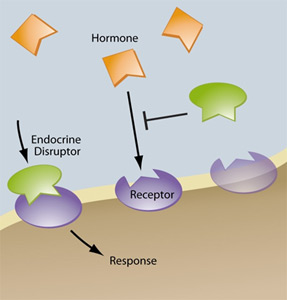
    Rising levels of cancers and fertility problems have attracted scientists’ attention to endocrine disrupting chemicals, with some calling for strict regulation of the substances, in line with the precautionary principle. Others meanwhile, stress the worthiness of those chemicals in everyday products such as plastics and warn that the foundations of science risk being turned upside down if precautionary measures are taken. Endocrine disruptors are suspected of triggering diseases such as cancer or diabetes and contributing to people becoming overweight or infertile. The controversy has gone beyond the traditional confrontation between the chemicals industry and environmental and health activists. Among scientists, too, opinions vary on whether a link exists between these chemicals and diseases. But all parties agree on one point – that the protection of consumers and the environment must be ensured. Henk Tennekes comments that a new risk assessment is needed to evaluate the effects that chemicals have on humans and the environment and that endocrine disruptors may be a case in point.

    Rising levels of cancers and fertility problems have attracted scientists’ attention to endocrine disrupting chemicals, with some calling for strict regulation of the substances, in line with the precautionary principle. Others meanwhile, stress the worthiness of those chemicals in everyday products such as plastics and warn that the foundations of science risk being turned upside down if precautionary measures are taken. Endocrine disruptors are suspected of triggering diseases such as cancer or diabetes and contributing to people becoming overweight or infertile. The controversy has gone beyond the traditional confrontation between the chemicals industry and environmental and health activists. Among scientists, too, opinions vary on whether a link exists between these chemicals and diseases. But all parties agree on one point – that the protection of consumers and the environment must be ensured. Henk Tennekes comments that a new risk assessment is needed to evaluate the effects that chemicals have on humans and the environment and that endocrine disruptors may be a case in point.

    The European Union has been at the forefront of efforts to regulate those substances, for example by banning the use of Bisphenol A in baby bottles, or trying to reduce the amount of pesticides used by farmers. Most importantly, EU lawmakers adopted in 2006 the REACH regulation, which for the first time requested chemical producers to prove that their products are safe before they can be allowed on the market.

    The European Commission has now started a review of endocrine disruptors and is expected to submit proposals in 2015 on how to identify and regulate substances with endocrine disruptive properties in products such as pesticides and biocides.

    Source: EurActiv, 12 December 2013
    http://www.euractiv.com/science-policymaking/endocrine-disruptors-harmful-linksdossier-532278

  • De veeteelt begint last te krijgen van genetisch gemodificeerd diervoeder

    De veeteelt begint last te krijgen van genetisch gemodificeerd diervoeder

    Met 13 duizend varkens op zijn boerderij kent de Deense varkenshouder Ib Pedersen alle ins en outs. Hij raakte gealarmeerd toen de gezondheid van zijn varkens snel achteruit ging. Naast merkbaar lagere geboortecijfers zag Pedersen ook varkens met vreemde afwijkingen. “Bij het gebruik van genetisch gemodificeerd voer zag ik een toename van zwellingen, maagzweren, veelvuldig voorkomen van diarree en varkens met misvormingen”, zei Pedersen tegen Andrew Wasley, een correspondent van “The Ecologist”. “Ik ben toen overgestapt naar het voeren van de varkens met niet gemodificeerd voer met als gevolg dat de problemen verdwenen, bij sommigen zelfs binnen een paar dagen”, aldus Pedersen. Het geval Pedersen is nauwelijks als losstaand te beschouwen, nu boeren over de hele wereld bevestigen dat ziektes en ook sterfte met het gebruik van genetisch gemanipuleerd diervoeder in verband zou kunnen staan. Vooral Monsanto’s Roundup Ready sojabonen zijn nogal problematisch omdat deze besproeid worden met het giftige herbicide glyfosaat, waarvan uit dierproeven bekend is dat het de oorzaak van geboorteafwijkingen kan zijn.

    Met 13 duizend varkens op zijn boerderij kent de Deense varkenshouder Ib Pedersen alle ins en outs. Hij raakte gealarmeerd toen de gezondheid van zijn varkens snel achteruit ging. Naast merkbaar lagere geboortecijfers zag Pedersen ook varkens met vreemde afwijkingen. “Bij het gebruik van genetisch gemodificeerd voer zag ik een toename van zwellingen, maagzweren, veelvuldig voorkomen van diarree en varkens met misvormingen”, zei Pedersen tegen Andrew Wasley, een correspondent van “The Ecologist”. “Ik ben toen overgestapt naar het voeren van de varkens met niet gemodificeerd voer met als gevolg dat de problemen verdwenen, bij sommigen zelfs binnen een paar dagen”, aldus Pedersen. Het geval Pedersen is nauwelijks als losstaand te beschouwen, nu boeren over de hele wereld bevestigen dat ziektes en ook sterfte met het gebruik van genetisch gemanipuleerd diervoeder in verband zou kunnen staan. Vooral Monsanto’s Roundup Ready sojabonen zijn nogal problematisch omdat deze besproeid worden met het giftige herbicide glyfosaat, waarvan uit dierproeven bekend is dat het de oorzaak van geboorteafwijkingen kan zijn.

    Veel boeren hebben geen andere keus dan gebruik te maken van het ziekmakende genetisch gemanipuleerde diervoeder. Het is in Europa, waarvan de bevolking op grote schaal genetische manipulatie afwijst en waar GMO-etikettering verplicht is, steeds moeilijker wordt om aan niet gemanipuleerd voedsel te komen. “Het is een nachtmerrie om een toeleverancier te vinden die niet gemanipuleerd diervoeder levert” zegt een groot toeleveringsbedrijf tegen “The Ecologist”. “De realiteit is dat het heel moeilijk is om te kunnen leveren op een schaal die nodig is. De voedsel multinationals controleren de complete voedselketen”, aldus de retailer.

    Bron: Gewoon Nieuws, 11-12-13
    http://www.gewoon-nieuws.nl/2013/12/gruwelijke-misvorming-en-afwijkingen-bij-biggen-door-gmo-voer-2/#.UqiVHmd3sdU

  • The interaction between forest birds and eastern spruce budworm

    The interaction between forest birds and eastern spruce budworm

    The eastern spruce budworm, Choristoneura fumiferana Clem., (hereafter budworm) is responsible for the largest areas of insect-caused disturbance in North America, and as such, is an important part of spruce–fir forest change and succession. The insectivorous forest bird community shows large and rapid responses to budworm outbreaks. There is good evidence that there are budworm-linked species (bay-breasted, Cape May, and Tennessee warblers) that respond to budworm outbreak much more strongly and consistently than other species, probably through increased productivity of local populations when budworm are abundant. There also appears to be a more widespread positive bird community response to budworm outbreak that involves many more species.

    The eastern spruce budworm, Choristoneura fumiferana Clem., (hereafter budworm) is responsible for the largest areas of insect-caused disturbance in North America, and as such, is an important part of spruce–fir forest change and succession. The insectivorous forest bird community shows large and rapid responses to budworm outbreaks. There is good evidence that there are budworm-linked species (bay-breasted, Cape May, and Tennessee warblers) that respond to budworm outbreak much more strongly and consistently than other species, probably through increased productivity of local populations when budworm are abundant. There also appears to be a more widespread positive bird community response to budworm outbreak that involves many more species.

    The response is evident in local and regional scale studies, but individual species’ responses across studies are not always consistent, probably because of the relatively small number of studies conducted in a wide variety of contexts. Budworm outbreaks provide a short-term increase in food supply for birds, but also result in longer-term habitat change due to budworm-induced defoliation and tree mortality. Birds appear to influence budworm cycles, mostly at endemic population levels, through predation of large larvae and pupae.
    Source:
    L.A. Venier and S.B. Holmes Environ. Rev. 18: 191–207 (2010)

  • Thiacloprid affects trophic interaction between gammarids and mayflies

    Thiacloprid affects trophic interaction between gammarids and mayflies

    Neonicotinoid insecticides like thiacloprid enter agricultural surface waters, where they may affect predator-prey interactions, which are of central importance for ecosystems as well as the functions these systems provide. The effects of field relevant thiacloprid concentrations on the leaf consumption of Gammarus fossarum (Amphipoda) were assessed over 96 h (n = 13-17) in conjunction with its predation on Baetis rhodani (Ephemeroptera) nymphs. The predation by Gammarus increased significantly at 0.50-1.00 ug/L. Simultaneously, its leaf consumption decreased with increasing thiacloprid concentration. As a consequence of the increased predation at 1.00 ug/L, gammarids’ dry weight rose significantly by 15% compared to the control. At 4.00 ug/L, the reduced leaf consumption was not compensated by an increase in predation causing a significantly reduced dry weight of Gammarus (~20%). These results may finally suggest that thiacloprid adversely affects trophic interactions, potentially translating into alterations in ecosystem functions, like leaf litter breakdown and aquatic terrestrial subsidies.

    Neonicotinoid insecticides like thiacloprid enter agricultural surface waters, where they may affect predator-prey interactions, which are of central importance for ecosystems as well as the functions these systems provide. The effects of field relevant thiacloprid concentrations on the leaf consumption of Gammarus fossarum (Amphipoda) were assessed over 96 h (n = 13-17) in conjunction with its predation on Baetis rhodani (Ephemeroptera) nymphs. The predation by Gammarus increased significantly at 0.50-1.00 ug/L. Simultaneously, its leaf consumption decreased with increasing thiacloprid concentration. As a consequence of the increased predation at 1.00 ug/L, gammarids’ dry weight rose significantly by 15% compared to the control. At 4.00 ug/L, the reduced leaf consumption was not compensated by an increase in predation causing a significantly reduced dry weight of Gammarus (~20%). These results may finally suggest that thiacloprid adversely affects trophic interactions, potentially translating into alterations in ecosystem functions, like leaf litter breakdown and aquatic terrestrial subsidies.

    Source:

    D.Englert et al. Environmental Pollution 167 (2012) 41-46

  • Influence on Birds of Rice Field Management Practices during the Growing Season: A Review and an Experiment

    Influence on Birds of Rice Field Management Practices during the Growing Season: A Review and an Experiment

    Most literature on birds and rice (Oryza sativa) focuses on the non-growing period and little is known about the influence of management practices during cultivation. A review found that the main factors affecting species composition and abundance in rice fields during the growing season were water level, flooding period, rice plant structure and size, and pesticide use. Highest bird density and diversity occurred at intermediate water levels (10–20 cm). Early flooding and late drying favored waterbird density and diversity, and the stopover of migrating species. Taller plants, at higher densities, reduced prey availability to most waterbirds but favored smaller species. Pesticides and herbicides have been shown to be toxic to birds and reduce food resources.

    Most literature on birds and rice (Oryza sativa) focuses on the non-growing period and little is known about the influence of management practices during cultivation. A review found that the main factors affecting species composition and abundance in rice fields during the growing season were water level, flooding period, rice plant structure and size, and pesticide use. Highest bird density and diversity occurred at intermediate water levels (10–20 cm). Early flooding and late drying favored waterbird density and diversity, and the stopover of migrating species. Taller plants, at higher densities, reduced prey availability to most waterbirds but favored smaller species. Pesticides and herbicides have been shown to be toxic to birds and reduce food resources.

    A case study is presented for the Ebro delta, Spain. Three management schemes were compared: organic, agri-environmental and conventional. Bird density, biomass and diversity throughout the growing and non-growing seasons were determined in three consecutive years. Bird biomass, density and diversity averaged higher in the organic rice fields, but only biomass was significantly different. The higher biomass reflects the presence of a higher biomass of prey items (fish, invertebrates and macrophytes) in the organic rice fields, likely due to the lack of pesticides. Further research should focus on a quantitative assessment of the effects of specific management practices.
    Source:
    Carles Ibáñez, Antoni Curcó, Xavier Riera, Ignasi Ripoll and Cristina Sánchez.
    Waterbirds 33(sp1):167-180. 2010
    doi: http://dx.doi.org/10.1675/063.033.s113
    http://www.bioone.org/doi/abs/10.1675/063.033.s113

  • Farmland bird invertebrate food provision in arable crops

    Farmland bird invertebrate food provision in arable crops

    Invertebrates are an essential food source for most farmland birds yet their relative abundance and biomass in the most commonly grown arable crops are poorly understood. Dvac suction sampling was used to determine the abundance, biomass and community composition of those invertebrate groups considered important in the diet of farmland birds for the commonest arable crops. Approximately 40 fields were sampled at the edge and mid-field over 2 years in three different locations in England. In cereals, the fauna was primarily comprised of Araneae (10%), Coleoptera (30%) and Hemiptera (58%), whereas the oilseed rape fauna was dominated by Coleoptera (65%) and peas and potatoes by Hemiptera (89%). Beans contained a high proportion of Coleoptera (39%) and Hemiptera (49%). Aphididae were the most abundant family (20–86% of total), although in oilseed rape and beans, Chrysomelidae, Curculionidae and Nitidulidae formed ca 20% of the fauna. Aphids only formed a small proportion (7%) of the total biomass, except in peas (32%).

    Invertebrates are an essential food source for most farmland birds yet their relative abundance and biomass in the most commonly grown arable crops are poorly understood. Dvac suction sampling was used to determine the abundance, biomass and community composition of those invertebrate groups considered important in the diet of farmland birds for the commonest arable crops. Approximately 40 fields were sampled at the edge and mid-field over 2 years in three different locations in England. In cereals, the fauna was primarily comprised of Araneae (10%), Coleoptera (30%) and Hemiptera (58%), whereas the oilseed rape fauna was dominated by Coleoptera (65%) and peas and potatoes by Hemiptera (89%). Beans contained a high proportion of Coleoptera (39%) and Hemiptera (49%). Aphididae were the most abundant family (20–86% of total), although in oilseed rape and beans, Chrysomelidae, Curculionidae and Nitidulidae formed ca 20% of the fauna. Aphids only formed a small proportion (7%) of the total biomass, except in peas (32%).

    Instead, Araneae, Carabidae, Heteroptera, Homoptera and Tipulidae formed much larger and more equal proportions. The highest abundance and biomass of invertebrates were recorded in cereals and least in potatoes. The Grey Partridge chick-food index in all crops was only a half or less of the level required to ensure that chick survival is sufficient to maintain numbers of this red-listed species. The total number of invertebrates, their biomass, diversity and the Grey Partridge chick-food index were higher at the crop edge compared to mid-field. Conservation measures are needed to help reverse the long-term declines of invertebrates on farmland, which should include developing further invertebrate-rich, agri-environment scheme options and management techniques to encourage invertebrates considered important as bird food within arable crops.
    Source:
    Holland, J.M., Smith, B.M., Birkett, T.C. and Southway, S. (2012), Farmland bird invertebrate food provision in arable crops. Annals of Applied Biology, 160: 66–75. doi: 10.1111/j.1744-7348.2011.00521.x
    http://onlinelibrary.wiley.com/doi/10.1111/j.1744-7348.2011.00521.x/abstract?deniedAccessCustomisedMessage=&userIsAuthenticated=false

  • Wildlife Ecotoxicology of Pesticides: Can We Track Effects to the Population Level and Beyond?

    Wildlife Ecotoxicology of Pesticides: Can We Track Effects to the Population Level and Beyond?

    During the past 50 years, the human population has more than doubled and global Agricultural production has similarly risen. However, the productive arable area has increased by just 10%; thus the increased use of pesticides has been a consequence of the demands of human population growth, and its impact has reached global significance. Although we often know a pesticide´s mode of action in the target species, we still largely do not understand the full impact of unintended side effects on wildlife, particularly at higher levels of biological organization: populations,
    communities, and ecosystems. In these times of regional and global species declines, we are challenged with the task of causally linking knowledge about the molecular actions of pesticides to their possible interference with biological processes, in order to develop reliable predictions about the consequences of pesticide use, and misuse, in a rapidly changing world.

    During the past 50 years, the human population has more than doubled and global Agricultural production has similarly risen. However, the productive arable area has increased by just 10%; thus the increased use of pesticides has been a consequence of the demands of human population growth, and its impact has reached global significance. Although we often know a pesticide´s mode of action in the target species, we still largely do not understand the full impact of unintended side effects on wildlife, particularly at higher levels of biological organization: populations,
    communities, and ecosystems. In these times of regional and global species declines, we are challenged with the task of causally linking knowledge about the molecular actions of pesticides to their possible interference with biological processes, in order to develop reliable predictions about the consequences of pesticide use, and misuse, in a rapidly changing world.

    Source:
    Heinz-R. Köhler and Rita Triebskorn. SCIENCE VOL 341 16 AUGUST 2013, pp. 759-765

  • Comparisons of arthropod and avian assemblages in insecticide-treated and untreated eastern hemlock stands in Great Smoky Mountains National Park

    Comparisons of arthropod and avian assemblages in insecticide-treated and untreated eastern hemlock stands in Great Smoky Mountains National Park

    Great Smoky Mountains National Park is using systemic imidacloprid to treat eastern hemlocks (Tsuga canadensis [L.] Carr.) infested with the exotic insect, hemlock woolly adelgid (Adelges tsugae Annand). This study investigated effects of these treatments on insectivorous birds and hemlock canopy arthropod assemblages in the context of food availability for insectivorous birds. Six pairs of treated and untreated hemlock sites were studied in 2007. Territories of three hemlock-associated Neotropical migratory foliage-gleaning bird species were mapped in these six sites, and relationships between bird territory density and hemlock foliar density were examined. Canopy arthropods were sampled by clipping mid-canopy hemlock branches in each paired site. Arthropods were identified to order or suborder and categorized into bird prey guilds and non-target herbivorous insect guilds.

    Great Smoky Mountains National Park is using systemic imidacloprid to treat eastern hemlocks (Tsuga canadensis [L.] Carr.) infested with the exotic insect, hemlock woolly adelgid (Adelges tsugae Annand). This study investigated effects of these treatments on insectivorous birds and hemlock canopy arthropod assemblages in the context of food availability for insectivorous birds. Six pairs of treated and untreated hemlock sites were studied in 2007. Territories of three hemlock-associated Neotropical migratory foliage-gleaning bird species were mapped in these six sites, and relationships between bird territory density and hemlock foliar density were examined. Canopy arthropods were sampled by clipping mid-canopy hemlock branches in each paired site. Arthropods were identified to order or suborder and categorized into bird prey guilds and non-target herbivorous insect guilds.

    Despite being treated within the previous two years, there were no differences in hemlock woolly adelgid infestation between treated and untreated sites. This may reflect recovery or because the imidacloprid is slow-acting. Bird densities also did not differ between treated and untreated sites but were positively related to branch foliage mass, implying a preference in these birds for well-foliated hemlocks. A total of 10,219 hemlock woolly adelgids, and a total of 906 other arthropods from 16 orders were collected. There were no differences in species richness, abundance, or species composition between treated and untreated sites for total arthropods, or for immature arthropods ≥ 3 mm. In contrast, non-target herbivorous Hemiptera and larval Lepidoptera were significantly reduced in treated hemlocks. Although larval Lepidoptera are primary prey for insectivorous foliage-gleaning birds, the similarity in bird densities between treated and untreated sites suggests the birds are able to find other food resources in the mixed hemlock-deciduous stands where the study sites were located. Therefore, controlling hemlock woolly adelgid-induced defoliation through use of imidacloprid may have short-term benefits for hemlock-associated birds. While imidacloprid treatments did not appear to be currently affecting most arthropods, primary prey guilds should be monitored for long-term declines that could impact hemlock-associated birds.

    Source:
    Josephine F. Falcone, Laura E. DeWald. Comparisons of arthropod and avian assemblages in insecticide-treated and untreated eastern hemlock (Tsuga canadensis [L.] Carr) stands in Great Smoky Mountains National Park, USA. Forest Ecology and Management Volume 260, Issue 5, 30 July 2010, Pages 856–863
    http://www.sciencedirect.com/science/article/pii/S0378112710003269

  • Children from rural areas exposed to pesticides demonstrated significant DNA damage

    Children from rural areas exposed to pesticides demonstrated significant DNA damage

    A study investigated whether cytogenetic damage increased through prolonged pesticide exposure in n = 117 children, aged 7-11 years, living in rural areas of intensive agriculture; controls being n = 87 children from an agri-tourism region without pesticide exposure. DNA Single-Strand Breaks (SSB) were detected by the Comet assay in whole fresh blood samples together with ‘formamidopyrimidine DNA-glycosylase (FPG)-sensitive sites’ with the bacterial FPG protein in isolated lymphocytes. Micronuclei (MN) levels were measured by the cytokinesis-block MN assay. Acetylcholinoesterase (AChE) and Pseudocholinesterase (PChE) activities were used as biomarkers of exposure. Subjects exposed to pesticides had significantly higher AChE and PChE activities than controls, although average levels were well below the biological exposure limit. In addition, those exposed to pesticides had significantly higher levels of steady-state FPG sites and SSB levels (p < 0.001), as well as MN levels. A positive correlation was found between PChE activity and FPG-sensitive sites and also between MN levels and FPG-sensitive sites, (both p < 0.01). In conclusion, despite the relatively low pesticide exposures in the test group of children, significant biological/developmental effects were detected. A study investigated whether cytogenetic damage increased through prolonged pesticide exposure in n = 117 children, aged 7-11 years, living in rural areas of intensive agriculture; controls being n = 87 children from an agri-tourism region without pesticide exposure. DNA Single-Strand Breaks (SSB) were detected by the Comet assay in whole fresh blood samples together with ‘formamidopyrimidine DNA-glycosylase (FPG)-sensitive sites' with the bacterial FPG protein in isolated lymphocytes. Micronuclei (MN) levels were measured by the cytokinesis-block MN assay. Acetylcholinoesterase (AChE) and Pseudocholinesterase (PChE) activities were used as biomarkers of exposure. Subjects exposed to pesticides had significantly higher AChE and PChE activities than controls, although average levels were well below the biological exposure limit. In addition, those exposed to pesticides had significantly higher levels of steady-state FPG sites and SSB levels (p < 0.001), as well as MN levels. A positive correlation was found between PChE activity and FPG-sensitive sites and also between MN levels and FPG-sensitive sites, (both p < 0.01). In conclusion, despite the relatively low pesticide exposures in the test group of children, significant biological/developmental effects were detected.
    Source: Salem News, December 2013
    http://www.salem-news.com/articles/december092013/pesticide-youth.php