Auteur: Henk Tennekes

  • Cumulative effects of thiacloprid on non-target invertebrates

    Cumulative effects of thiacloprid on non-target invertebrates

    Pesticides applied in agriculture can affect the structure and function of nontarget populations at lower doses and for longer timespans than predicted by the current risk assessment frameworks. We identified a mechanism for this observation. The populations of an aquatic invertebrate (Culex pipiens) exposed over several generations to repeated pulses of low concentrations of the neonicotinoid insecticide (thiacloprid) continuously declined and did not recover in the presence of a less sensitive competing species (Daphnia magna). By contrast, in the absence of a competitor, insecticide effects on the more sensitive species were only observed at concentrations 1 order of magnitude higher, and the species recovered more rapidly after a contamination event. The underlying processes are experimentally identified and reconstructed using a simulation model. We conclude that repeated toxicant pulse of populations that are challenged with interspecific competition may result in a multigenerational culmination of low-dose effects.

    Pesticides applied in agriculture can affect the structure and function of nontarget populations at lower doses and for longer timespans than predicted by the current risk assessment frameworks. We identified a mechanism for this observation. The populations of an aquatic invertebrate (Culex pipiens) exposed over several generations to repeated pulses of low concentrations of the neonicotinoid insecticide (thiacloprid) continuously declined and did not recover in the presence of a less sensitive competing species (Daphnia magna). By contrast, in the absence of a competitor, insecticide effects on the more sensitive species were only observed at concentrations 1 order of magnitude higher, and the species recovered more rapidly after a contamination event. The underlying processes are experimentally identified and reconstructed using a simulation model. We conclude that repeated toxicant pulse of populations that are challenged with interspecific competition may result in a multigenerational culmination of low-dose effects.

    Source: Liess et al. Environ. Sci. Technol. 2013, 47, 8862−8868
    dx.doi.org/10.1021/es401346d

  • FOCUS models, legally prescribed for pesticide approval, do not accurately predict the fungicide levels actually found later in surface waters

    FOCUS models, legally prescribed for pesticide approval, do not accurately predict the fungicide levels actually found later in surface waters

    The method used to approve pesticides in the EU needs to be revised. This was confirmed by a recent study by the Institute for Environmental Sciences Landau. According to the study, the level of fungicides measured in surface waters is often much higher than the level predicted by the current calculation model used in the approval process. Last year a study by the Institute on insecticides had a similarly alarming conclusion.

    The method used to approve pesticides in the EU needs to be revised. This was confirmed by a recent study by the Institute for Environmental Sciences Landau. According to the study, the level of fungicides measured in surface waters is often much higher than the level predicted by the current calculation model used in the approval process. Last year a study by the Institute on insecticides had a similarly alarming conclusion.

    Almost half of all pesticides used in the EU are fungicides. As they are normally used as a preventive measure, they are routinely applied in larger quantities, particularly in wine growing. When it rains, for instance, the pesticides are washed into rivers and lakes, where, in higher concentrations, they can result in effects on aquatic organisms. This is because many fungicides do not specifically combat fungi, but prevent general processes in cells such as energy production or cell mitosis.

    In order to calculate the concentrations of pesticides in surface waters when applied correctly in agriculture, the EU has been using mathematical simulation models (FOCUS models) since the end of the 1990s. These are legally prescribed for the approval process. A pesticide may only be approved in Europe if the concentrations predicted by the model are below the environmentally acceptable threshold. However, it had not previously been examined in detail whether the predictions were consistent with the concentrations actually measured.

    The Institute for Environmental Sciences Landau already proved last year that there is no statistical or even apparent correlation between theory and practice for insecticides. In as many as four out of ten cases the actual pollution of surface waters was higher than calculated, and this number was even higher for newer insecticides. The research group led by Prof. Dr. Ralf Schulz has now compared 417 measured field concentrations of fungicides in surface waters and sediments with the environmental concentrations predicted by FOCUS. In 12 to 23 percent of cases, the actual measured field concentrations in waters were higher. Taking only the 90th percentile concentration and only EU studies into account, the error rates are as high as 43 percent, and therefore even higher than for insecticides. For sediments as much as 76 percent of the cases compared had been underestimated.

    “Our findings show that the FOCUS predictions do not protect plant and animal life in surface waters, nor do they predict properly the level of fungicide concentrations actually found later in surface waters,” explains Prof Dr. Ralf Schulz of the Institute for Environmental Sciences Landau of the University of Koblenz-Landau. “It is therefore recommended that the risk assessment for numerous agents approved in the EU is revised taking into account the latest findings.”

    Compared to insecticides and herbicides, relatively little is known about the effects of fungicides on ecosystems. Initial studies indicate, though, that they may possibly have a strong effect on amphibians such as frogs.

    The differences between the measured and calculated concentrations might be due not just to an unsuitable calculation model, but also the incorrect application of pesticides by farmers or the publication of inadequate application instructions by manufacturers. However, even the failure to comply with buffer zones would only account for around half of the concentrations that are too high. In nine out of ten cases the difference between the predicted concentration and reality is more than 30 percent.

    “We were unable to identify a statistical correlation between the calculated and measured concentrations either for insecticides or fungicides,” adds Schulz. “The FOCUS predictions have therefore proven to be unreliable for use in the field and should therefore be replaced by a revised and adjusted model. In any case, based on the concentrations of pesticides actually measured, their approval and application guidelines should be revised and where applicable modified after a few years. Accordingly we need data on the pollution of surface waters with pesticides to be collected regularly and independently in Germany as well.

    Source: Science Daily, 11 December 2013
    http://www.sciencedaily.com/releases/2013/12/131211093734.htm#.Uqrf8g_auXM.twitter

  • De lange termijn effecten van neonicotinoiden op het leefmilieu zijn onaanvaardbaar

    De lange termijn effecten van neonicotinoiden op het leefmilieu zijn onaanvaardbaar

    Neonicotinoïden behoren tot de ’nieuwe generatie’ van pesticiden en worden in de landbouw frequent aangewend voor de bestrijding van onder andere bladluizen. Ze vallen in de klasse van de neurotoxines, wat betekent dat ze inwerken op het zenuwstelsel van het organisme. Niet alleen de doelsoorten worden hierdoor getroffen, maar de impact reikt veel verder. De actieve stoffen die niet door de planten worden opgenomen, dringen de grond in of komen in het oppervlaktewater terecht, waar ze ook het waterleven beïnvloeden. Onderzoek toonde recent aan dat de werking van neonicotinoïden zich niet enkel afspeelt op het niveau van het organisme zelf maar dat ze ook op een complexe en indirecte manier het evenwicht tussen soorten verstoort.

    Neonicotinoïden behoren tot de ’nieuwe generatie’ van pesticiden en worden in de landbouw frequent aangewend voor de bestrijding van onder andere bladluizen. Ze vallen in de klasse van de neurotoxines, wat betekent dat ze inwerken op het zenuwstelsel van het organisme. Niet alleen de doelsoorten worden hierdoor getroffen, maar de impact reikt veel verder. De actieve stoffen die niet door de planten worden opgenomen, dringen de grond in of komen in het oppervlaktewater terecht, waar ze ook het waterleven beïnvloeden. Onderzoek toonde recent aan dat de werking van neonicotinoïden zich niet enkel afspeelt op het niveau van het organisme zelf maar dat ze ook op een complexe en indirecte manier het evenwicht tussen soorten verstoort.

    Om dit aan te tonen, onderzochten wetenschappers van het Duitse Helmholtz Centrum voor milieuonderzoek het effect van het neonicotinoïde Thiacloprid op larven van de Gewone steekmug en larven van watervlooien. Beide komen samen voor in natuurlijke waterpartijen waar ze in een normaal functionerend ecosysteem met elkaar in competitie treden voor voedsel.

    Tijdens het experiment werd een natuurlijk milieu nagebootst waarbij muggenlarven zowel apart in containers gehouden werden als samen in eenzelfde container met watervlolarven. Vervolgens werden beide systemen herhaaldelijk blootgesteld aan lage doses Thiacloprid en werd het effect gemeten op de populatiegrootte van beide soorten. De populaties muggenlarven die geen concurrentie kenden van de watervlolarven namen af na blootstelling aan de neonicotinoïden, maar konden opnieuw herstellen voor de volgende toediening plaatsvond. De muggenlarven die echter samen met de larven van watervlooien in een container werden gehouden, slaagden er niet in om na blootstelling aan de sproeistoffen weer op hun peil te komen van voor de toediening.
    Volgens de wetenschappers kan dit fenomeen verklaard worden door drie opeenvolgende processen:
    1.Door herhaaldelijke blootstelling aan toxische stoffen sterft een deel van de meest gevoelige soort (hier de muggenlarven) met een hogere voedselbeschikbaarheid in het systeem tot gevolg.
    2.Dit beschikbare voedsel wordt vervolgens voor het grootste deel verorberd door de minder gevoelige soort (hier de watervlolarven), die hierdoor kan toenemen.
    3.Het voedsel dat opgenomen werd door de minder gevoelige soort is niet meer beschikbaar voor de meer gevoelige soort (competitie) waardoor de kans op herstel van deze laatste beperkt wordt. In een systeem zonder competitie zouden het enkel de resterende individuen van de meest gevoelige soort zijn die profiteren van het verhoogd voedselaanbod, waardoor deze populatie makkelijker weer kan herstellen na blootstelling aan pesticiden.

    Dit effect speelde vooral een rol bij aanhoudend lage concentraties neonicotinoïden. Naarmate de concentratie gifstoffen in het water toenam, nam het effect van de competitie tussen de soorten af en speelde enkel de invloed van het pesticide zelf nog een rol. Deze bevindingen suggereren dan ook dat initieel onschuldig lijkende effecten bij herhaaldelijke blootstelling kunnen cumuleren met langetermijneffecten op de overlevingskansen van natuurlijke populaties en een mogelijke decimeren van de soortenrijkdom tot gevolg.

    Mogelijk vormen deze bevindingen nog maar het topje van de ijsberg. De langetermijneffecten van neonicotinoïden zijn onvoldoende gekend en nu reeds is de impact van neonicotinoïden op het leefmilieu onaanvaardbaar. Sinds 1 december 2013 heeft Europa een tijdelijk verbod opgelegd voor het gebruik van neonicotinoïden. Natuurpunt wil een totaal en blijvend verbod, zowel voor de landbouw als voor persoonlijk gebruik.

    Bron: Environmental Science & Technology

    Tekst: Griet Nijs, Natuurpunt Studie

    http://natuurbericht.be/?id=11837

  • Actieprogramma Bijengezondheid – een ‘bijenmakelaar’ moet kennis van imkers over bijengezondheid vergroten en onderzoeksprogramma wil factoren in kaart te brengen die van invloed zijn op bijengezondheid en wintersterfte

    Actieprogramma Bijengezondheid – een ‘bijenmakelaar’ moet kennis van imkers over bijengezondheid vergroten en onderzoeksprogramma wil factoren in kaart te brengen die van invloed zijn op bijengezondheid en wintersterfte

    Er komt een ‘bijenmakelaar’ om kennis van imkers over bijengezondheid te vergroten. Deze bijenmakelaar zal ervoor zorgen dat beschikbare wetenschappelijke kennis bij trainers van cursussen voor imkeropleidingen terechtkomt. Ook zal de bijenmakelaar als taak hebben het bevorderen van het uitwisselen van kennis tussen imkerorganisaties, landbouw en overheden. Hij of zij zal in het groene onderwijs het invoeren van lesmodules over bijengezondheid bevorderen. Dat schrijft staatssecretaris Sharon Dijksma van Economische Zaken in een brief waarmee ze het Actieprogramma Bijengezondheid aanbiedt aan de Tweede Kamer. Voor de komende 3 jaar wil de staatssecretaris de helft van de kosten voor zo’n bijenmakelaar voor haar rekening nemen, tot een maximum van €300.000. Tevens komt er een meerdere jaren doorlopend onderzoeksprogramma. Doel is door standaardinspecties op zo’n 150 locaties factoren in kaart te brengen die van invloed zijn op bijengezondheid en wintersterfte. Voor de komende vier jaar stelt staatssecretaris Dijksma voor dit onderzoek in totaal €600.000 beschikbaar.

    Er komt een ‘bijenmakelaar’ om kennis van imkers over bijengezondheid te vergroten. Deze bijenmakelaar zal ervoor zorgen dat beschikbare wetenschappelijke kennis bij trainers van cursussen voor imkeropleidingen terechtkomt. Ook zal de bijenmakelaar als taak hebben het bevorderen van het uitwisselen van kennis tussen imkerorganisaties, landbouw en overheden. Hij of zij zal in het groene onderwijs het invoeren van lesmodules over bijengezondheid bevorderen. Dat schrijft staatssecretaris Sharon Dijksma van Economische Zaken in een brief waarmee ze het Actieprogramma Bijengezondheid aanbiedt aan de Tweede Kamer. Voor de komende 3 jaar wil de staatssecretaris de helft van de kosten voor zo’n bijenmakelaar voor haar rekening nemen, tot een maximum van €300.000. Tevens komt er een meerdere jaren doorlopend onderzoeksprogramma. Doel is door standaardinspecties op zo’n 150 locaties factoren in kaart te brengen die van invloed zijn op bijengezondheid en wintersterfte. Voor de komende vier jaar stelt staatssecretaris Dijksma voor dit onderzoek in totaal €600.000 beschikbaar.

    “De intensieve en voortvarende manier waarop alle betrokken partijen bij de totstandkoming van het Actieprogramma hebben samengewerkt, geeft mij vertrouwen voor de toekomst. Bijen zijn onmisbaar in onze natuur, voor de bestuiving van onze gewassen en voor de voedselproductie. Samen kunnen we iets betekenen om de bijensterfte een halt toe te roepen”, aldus Dijksma. Op initiatief van de staatssecretaris zijn vertegenwoordigers van zo’n 25 organisaties met elkaar in gesprek gegaan om een gezamenlijk Actieprogramma Bijengezondheid op te stellen. Dit actieprogramma heeft zij op 11 november 2013 in ontvangst genomen. In dit programma zijn voorstellen gedaan om de gezondheid van bijen te bevorderen en de oorzaken van bijensterfte aan te pakken.

    Er komt een meerdere jaren doorlopend onderzoeksprogramma. Doel is door standaardinspecties op zo’n 150 locaties factoren in kaart te brengen die van invloed zijn op bijengezondheid en wintersterfte. Voor de komende vier jaar stelt staatssecretaris Dijksma voor dit onderzoek in totaal €600.000 beschikbaar. De staatssecretaris ondersteunt ook de oprichting van het zogenoemde Bijenberaad, een beraad van bij het actieprogramma betrokkenen. Doel is te stimuleren dat de activiteiten om de bijengezondheid te bevorderen van de grond komen. Ook zal dit Bijenberaad het platform zijn voor verdere discussies over dit onderwerp. Dit beraad moet in principe door betrokken partijen zelf worden gedragen. Maar het eerste jaar wil de staatssecretaris dit een vliegende start geven door een voorzitter en vergaderfaciliteiten te leveren.

    Bron: Rijksoverheid, 15-12-2013
    http://www.rijksoverheid.nl/documenten-en-publicaties/kamerstukken/2013/12/15/kamerbrief-actieprogramma-bijengezondheid.html

  • There are now fewer than 1,000 breeding pairs of barn owls in England, which should be home to as many as 4,000 pairs of the birds

    There are now fewer than 1,000 breeding pairs of barn owls in England, which should be home to as many as 4,000 pairs of the birds

    Ornithologists say 2013 will be viewed as the worst year ever recorded for one of Britain’s favourite farmland birds.
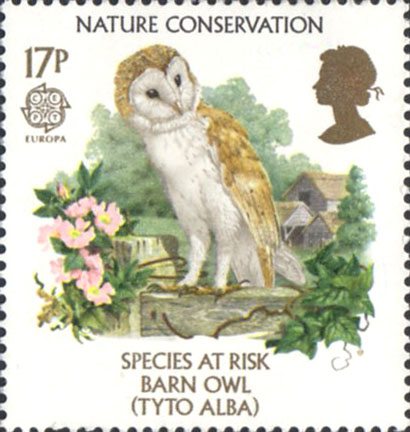
    They fear that there are now fewer than 1,000 breeding pairs of barn owls (Tyto alba) in England, the population of the protected bird declining by more than three-quarters over the last four years. In a typical year, conservationists estimate, Britain should be home to as many as 4,000 pairs of the birds. The birds were a common sight on farmland in Britain a century ago, but numbers had declined by 70% by the early 1980s, according to some reports. Over this summer, the trust warned that the owl was facing a “catastrophe” and now, following an end-of-year assessment, the true scale of the birds’ plight has been revealed. “They have gone from scarce to rare,” said David Ramsden, head of conservation at the Barn Owl Trust. “The scale of the decline is not normal.” This year, occupancy of nest sites has been between 5% and 15% of previous levels, and for large parts of the country the figure has been even lower.

    Ornithologists say 2013 will be viewed as the worst year ever recorded for one of Britain’s favourite farmland birds.
    They fear that there are now fewer than 1,000 breeding pairs of barn owls (Tyto alba) in England, the population of the protected bird declining by more than three-quarters over the last four years. In a typical year, conservationists estimate, Britain should be home to as many as 4,000 pairs of the birds. The birds were a common sight on farmland in Britain a century ago, but numbers had declined by 70% by the early 1980s, according to some reports. Over this summer, the trust warned that the owl was facing a “catastrophe” and now, following an end-of-year assessment, the true scale of the birds’ plight has been revealed. “They have gone from scarce to rare,” said David Ramsden, head of conservation at the Barn Owl Trust. “The scale of the decline is not normal.” This year, occupancy of nest sites has been between 5% and 15% of previous levels, and for large parts of the country the figure has been even lower.

    Source:
    The Guardian,14 December 2013
    http://www.theguardian.com/environment/2013/dec/14/barn-owls-threatened-freak-weather

  • Pesticides Annihilate Birds, Bees and Butterflies

    Pesticides Annihilate Birds, Bees and Butterflies

    Unless regulators take action, one of gifts in the lyrics to “Twelve Days of Christmas,” the turtle dove, may become extinct. The dove has experienced major population decline in England over the past 20 years, due in significant part to the destruction of turtle dove habitat and food sources from increasing herbicide use in English agriculture. Other species, such as Monarch butterflies and other pollinators around the world, are also experiencing similar loses of habitat and food sources through an increase in herbicide use. These increasing rates of population decline in wild species underscore the problem that chemical-intensive agriculture plays in the degradation of natural habitats.

    Unless regulators take action, one of gifts in the lyrics to “Twelve Days of Christmas,” the turtle dove, may become extinct. The dove has experienced major population decline in England over the past 20 years, due in significant part to the destruction of turtle dove habitat and food sources from increasing herbicide use in English agriculture. Other species, such as Monarch butterflies and other pollinators around the world, are also experiencing similar loses of habitat and food sources through an increase in herbicide use. These increasing rates of population decline in wild species underscore the problem that chemical-intensive agriculture plays in the degradation of natural habitats.

    According to a spokesman for the Royal Society for the Protection of Birds, “The turtle dove is the fastest declining bird in the country [England] and within ten years we could lose this icon of the British countryside completely.” Turtle doves in the United Kingdom are found in just a few areas of Southern England and migrate during the winter toward Africa. Turtle doves are obligate granivors, feeding predominantly on seeds of certain arable weeds form farm countryside, such as fumitory, clover and vetch. However, increased herbicide use in England has decimated vegetation (considered “weeds”) that turtle doves have traditionally eaten. In the 1960’s, arable weeds, including fumitory and chickweed, made up more than 75% of the adult diet, but parents are now heavily reliant on cultivated wheat and oilseed corps. The number of breeding pairs in the UK is thought to have dropped this year to a record low of bellow 14,000, making an 84% drop since 1995. This problem is now compounded by the cold and damp summer of 2012 hampered the bird’s efforts to feed their chicks as well as keeping them warm.

    Serious losses in the Monarch butterfly population have been tied to the expansion of genetically engineered (GE) corn and soybeans production. Historically, for butterflies in the U.S., their key source of food, milkweed, was typically found in several key states where the butterfly feeds and breeds: Iowa, Minnesota, Wisconsin, Illinois, Indiana, parts of Ohio, and the eastern Dakotas. But now fields have been planted with more than 120 million acres of corn and soybeans genetically engineered to be tolerant to glyphosate (Roundup), and many other herbicides, resulting in milkweed destruction in and around agricultural fields. According to the researchers, the utilization of these GE crops has all but eliminated milkweeds from these fields, thus eliminating the butterfly’s source of food. A rapid expansion of farmland —more than 25 million new acres in the United States since 2007— has eaten away grasslands and conservation reserves that supplied the Monarchs with milkweed. Milkweed was once widespread throughout the U.S., but is considered a nuisance weed by farmers throughout the Midwest.

    Recently, the New York Times published an analysis of the decline and near absence of Monarch butterflies at their end migration destination in the mountains of Mexico this fall. This report highlights that the use of Roundup on GE herbicide-resistant crops has devastated Monarch habitat by nearly eliminating milkweed from rural agricultural landscapes.

    A 2011 decision by the U.S. Department of Agriculture (USDA) to fully deregulate GE alfalfa seed will certainly have an impact on bee populations that are essential for the pollination of the alfalfa seed crop. This deregulation is also troubling because alfalfa seed crops is a pollinated crop and there is a high possibility of cross pollination between GE and organic production. Alfalfa is the key feedstock for the dairy industry. GE contamination will cause organic dairies to lose their source of organic feed, a requirement for organic dairy, including milk and yogurt products. Earlier in September, GE alfalfa was confirmed to have contaminated non-GE alfalfa in Washington State. According to the Organic Seed Alliance, “Although both the organic and biotechnology industries acknowledge that transgenic material is moving into fields and markets where it is not allowed or wanted, little has been done to address the problem through regulatory processes and enforcement. No new law has been created to address this novel technology.”

    GE alfalfa designed to be resistant to herbicides is unnecessary. USDA data shows that 90% of all the alfalfa planted by farmers in the U.S. was previously grown without the use of any herbicides, which the GE alfalfa is engineered to withstand. Due to the planting of GE alfalfa, USDA estimates that up to 23 million more pounds of toxic herbicides will be released into the environment each year which could lead to the destruction of habitat for wildlife. In discussions with EPA, Beyond Pesticides has told the agency that because of the adverse impact that herbicides are expected to have on bees in GE alfalfa seed production, and given its extremely limited benefit to alfalfa productivity, it should prohibit herbicide use in GE alfalfa production. Beyond Pesticides has noted that EPA’s failure to fully consider direct and secondary impacts of pesticides on bees and beneficial insect habitat, associated with increasing and unnecessary herbicide use in genetically engineered alfalfa, is leading to escalating ecological destruction.

    Beyond Pesticides, along with other environmental and farming organizations, filed a suit in March of 2011 challenging the agency’s deregulation of the GE alfalfa. The suit, Center for Food Safety, et al., v. Vilsack, et al., argues that the agency’s deregulation of Roundup Ready alfalfa is unlawful, and tried to prevent any further planting of the engineered crop. However, in 2012, a U.S. District Judge in San Francisco issued a ruling that USDA’s decision to deregulate GE alfalfa was not unlawful.

    The protection of organic integrity and growth of uncontaminated organic production, which must become a national and international priority, is perhaps the central and most effective strategy for protecting threatened species like bees, butterflies, and birds, including turtle doves. Beyond Pesticides encourages consumers to think about the big picture, and support a wider shift toward organic practices through their purchases. Buying organic is a simple move that makes a big difference in preventing unnecessary contamination to themselves, the environment, and the loss of wild habitat. For more information on the chemicals used on everyday conventional produce, see the Eating With a Conscience website. And for more information on why organic is the right path for the future of agriculture, see Beyond Pesticides’ Organic Agriculture webpage.

    All unattributed positions and opinions in this piece are those of Beyond Pesticides.

    Sources: Daily Mail, http://www.beyondpesticides.org
  • Het absurde gebruik van antibiotica in de vee- en pluimveehouderij zal veel onschuldige mensen de das omdoen

    Het absurde gebruik van antibiotica in de vee- en pluimveehouderij zal veel onschuldige mensen de das omdoen

    Een Nieuw-Zeelandse man heeft de twijfelachtige ‘eer’ het eerste slachtoffer te zijn van het zogenaamde “post antibiotische tijdperk”. Hij overleed onlangs aan een nieuwe bacteriestam die volledig resistent is tegen alle bekende antibiotica. Volgens John Aziz van “The Week” zijn resistente bacteriën waarschijnlijk de grootste bedreiging voor de mensheid waarvoor momenteel geen oplossing in zicht is. Deze ‘superbacteriën’ kunnen zéér binnenkort verwoestende en rampzalige gevolgen hebben. Kwaadaardige bacteriën zijn de moderne geneeskunde te slim af. Misschien wel het meest verantwoordelijk voor de snelle stijging van resistentie tegen antibiotica is het wijdverbreide gebruik van antibiotica in de vee- en pluimveehouderij, welke goed is voor meer dan 80% van het totale gebruik van antibiotica. Het toedienen van antibiotica aan gezonde dieren met het doel om ze dichter opéén ter kunnen stapelen is een praktijk die al plaatsvindt sinds de jaren 1950 en is een van de oorzaken waarvoor absurde hoeveelheden antibiotica worden voorgeschreven. Het is tevens een van de belangrijkste factoren achter de superbacterie epidemie waarmee we vandaag de dag worden geconfronteerd.

    Een Nieuw-Zeelandse man heeft de twijfelachtige ‘eer’ het eerste slachtoffer te zijn van het zogenaamde “post antibiotische tijdperk”. Hij overleed onlangs aan een nieuwe bacteriestam die volledig resistent is tegen alle bekende antibiotica. Volgens John Aziz van “The Week” zijn resistente bacteriën waarschijnlijk de grootste bedreiging voor de mensheid waarvoor momenteel geen oplossing in zicht is. Deze ‘superbacteriën’ kunnen zéér binnenkort verwoestende en rampzalige gevolgen hebben. Kwaadaardige bacteriën zijn de moderne geneeskunde te slim af. Misschien wel het meest verantwoordelijk voor de snelle stijging van resistentie tegen antibiotica is het wijdverbreide gebruik van antibiotica in de vee- en pluimveehouderij, welke goed is voor meer dan 80% van het totale gebruik van antibiotica. Het toedienen van antibiotica aan gezonde dieren met het doel om ze dichter opéén ter kunnen stapelen is een praktijk die al plaatsvindt sinds de jaren 1950 en is een van de oorzaken waarvoor absurde hoeveelheden antibiotica worden voorgeschreven. Het is tevens een van de belangrijkste factoren achter de superbacterie epidemie waarmee we vandaag de dag worden geconfronteerd.

    Bron: Gewoon Nieuws, 10-12-2013
    http://www.gewoon-nieuws.nl/2013/12/superbacterie-is-een-regelrechte-bedreiging-voor-de-mensheid/#.UqtDZ2d3sdV

  • Common montane birds are declining in northern Europe

    Common montane birds are declining in northern Europe

    Large-scale multi-species data on population changes of alpine or arctic species are largely lacking. Here we present a multi-national bird indicator for the Fennoscandian mountain range in northern Europe (Finland, Sweden and Norway), based on 14 common species of montane tundra and subalpine birch forest. The data were collected at 262 alpine survey plots, mainly as a part of geographically representative national breeding bird monitoring schemes. The area sampled covers around 1/4 million km2, spanning 10 degrees of latitude and 1600 km in a northeast–southwest direction. During 2002–2012, nine of the 14 bird species declined significantly in numbers, in parallel to higher summer temperatures and precipitation during this period compared to the preceding 40 yr. The population trends were largely parallel in the three countries and similar among montane tundra and subalpine birch forest species. Long-distance migrants declined less on average than residents and short-distance migrants.

    Large-scale multi-species data on population changes of alpine or arctic species are largely lacking. Here we present a multi-national bird indicator for the Fennoscandian mountain range in northern Europe (Finland, Sweden and Norway), based on 14 common species of montane tundra and subalpine birch forest. The data were collected at 262 alpine survey plots, mainly as a part of geographically representative national breeding bird monitoring schemes. The area sampled covers around 1/4 million km2, spanning 10 degrees of latitude and 1600 km in a northeast–southwest direction. During 2002–2012, nine of the 14 bird species declined significantly in numbers, in parallel to higher summer temperatures and precipitation during this period compared to the preceding 40 yr. The population trends were largely parallel in the three countries and similar among montane tundra and subalpine birch forest species. Long-distance migrants declined less on average than residents and short-distance migrants.

    Some potential causes of the current decline of alpine birds are discussed, but since montane bird population sizes may show strong natural annual variation due to several factors, longer time series are needed to verify the observed population trends. The present Fennoscandian monitoring systems, which from 2010 onwards include more than 400 montane survey plots, have the capacity to deliver a robust bird indicator in the climate-sensitive mountainous regions of northernmost Europe for conservation purposes.
    Source:

    Aleksi Lehikoinen, Martin Green, Magne Husby, John Atle Kålås, Åke Lindström. Journal of Avian Biology, first published online: 2 DEC 2013. DOI: 10.1111/j.1600-048X.2013.00177.x
    http://onlinelibrary.wiley.com/doi/10.1111/j.1600-048X.2013.00177.x/abstract

  • De teloorgang van broedvogels in de Oostvaardersplassen

    De teloorgang van broedvogels in de Oostvaardersplassen

    Veel broedvogels komen niet meer naar de open graslanden van de Oostvaardersplassen, een randzone die ongeveer een derde van het totale natuurgebied beslaat. Dat blijkt uit een telling van Sovon Vogelonderzoek in opdracht van Staatsbosbeheer. Het onderzoek werd uitgevoerd in 2012 en was een geplande vijfjaarlijkse inventarisatie die voor de vierde keer werd gehouden. Waar in 1997 nog bijna 100 soorten broedvogels werden geteld, zijn er nu nog geen zestig over.

    Veel broedvogels komen niet meer naar de open graslanden van de Oostvaardersplassen, een randzone die ongeveer een derde van het totale natuurgebied beslaat. Dat blijkt uit een telling van Sovon Vogelonderzoek in opdracht van Staatsbosbeheer. Het onderzoek werd uitgevoerd in 2012 en was een geplande vijfjaarlijkse inventarisatie die voor de vierde keer werd gehouden. Waar in 1997 nog bijna 100 soorten broedvogels werden geteld, zijn er nu nog geen zestig over.

    Hoewel Staatsbosbeheer begrijpt dat het verdwijnen van broedvogels als een verlies kan worden beschouwd, ziet hij de ontwikkeling positief. De grazers zorgen er namelijk weer voor dat ganzen en plantenetende watervogels het gebied juist opzoeken. Bij de beantwoording van de vragen van het Kamerlid Heerema (VVD) over het bericht Broedvogels verdwijnen uit Oostvaardersplassen schrijft staatssecretaris Sharon Dijksma dat de gesignaleerde trends vooral vogels betreffen die in struweel en ruigte broeden en er mede onder invloed van de in de loop der tijd toegenomen aantallen grote grazers, nu meer grazige vegetatie en minder struweel en ruigte is. Volgens de toxicoloog Henk Tennekes is de bezoedeling van het milieu met zeer giftige bestrijdingsmiddelen, waaronder het neonicotinoide insecticide imidacloprid, die de ongewervelde dieren uitroeien, een hoofdoorzaak voor de teloorgang van veel broedvogelsoorten, omdat daardoor de onmisbare eiwitrijke voedselbronnen voor de voortplanting ontbreken. De struisvogelpolitiek van het landsbestuur over de oorzaken van de achteruitgang van broedvogelsoorten is niet alleen onbegrijpelijk maar ook onverantwoordelijk, aldus Tennekes.

    Bron: Nu.nl, 1-11-2013
    http://www.nu.nl/binnenland/3617253/broedvogels-mijden-oostvaardersplassen.html

  • Where are all the Western Toads?

    Where are all the Western Toads?

    Thea Venckus from Nicasio sent in this week’s Ask the Naturalist question: Hi, I have lived on a ranch in Nicasio, for 13 years now. We used to have a multitude of western toads (Anaxyrus boreas) but I no longer see them. We still have abundant Pacific tree frogs, and bullfrogs in our deep pond. I was wondering what happened to all the toads?

    Thea Venckus from Nicasio sent in this week’s Ask the Naturalist question: Hi, I have lived on a ranch in Nicasio, for 13 years now. We used to have a multitude of western toads (Anaxyrus boreas) but I no longer see them. We still have abundant Pacific tree frogs, and bullfrogs in our deep pond. I was wondering what happened to all the toads?

    The loss of Western toads in Nicasio could reflect the nationwide trend of declining amphibian populations. Earlier this year the U.S. Geological Survey’s Amphibian Research and Monitoring Initiative released the first estimate of how fast we are losing amphibians (frogs, toads and salamanders) across the country. The study found there was a 3.7 percent average annual rate of decline for all populations of amphibians monitored, while species listed on the IUCN Red list are experiencing an average 11.6 percent decline. While these numbers seem slight, small declines build up dramatically over time. “The Western toad was once a very common site in the Bay Area but their populations are now in steady decline,” said Michael Starkey, Save the Frogs ecologist and advisory committee chair. “The common Pacific chorus frog and non-native American bullfrog are resilient species and can thrive almost anywhere in California.”

    Gary Fellers, a USGS researcher emeritus based in Point Reyes, cites two possible reasons— amphibian chytrid fungus and increased exposure to pesticide.

    In his research, Fellers has studied the impact of pesticides on amphibians in the Sierra Nevada and suggests they have contributed to population decline. While pesticide concentrations are lower in Marin county than in the Central Valley or downwind areas such as the Sierra foothills, local pesticides may have contributed to the loss of toad populations.

    The chytrid fungus (Batrachochytrium dendrobatidis) is one of the most significant global threats to amphibian populations. Amphibians “drink” water and absorb important electrolytes like sodium and potassium through their skin. With chytridiomycosis the skin becomes very thick, resulting in abnormal electrolyte levels that often prove deadly.

    In a 2005-2007 study, the chytrid fungus was present in some toad populations in Point Reyes, but that doesn’t necessarily mean the toads are declining because of the fungus. McKissock, said that Western toads may or may not be killed by the fungus even when exposed though.
    Source: Bay Nature, December 12, 2013
    http://baynature.org/2013/12/12/where-are-all-the-western-toads/