Auteur: Henk Tennekes

  • Nach Eingang von ca. einem Drittel der Meldungen zeigten sich in den bayerischen Gärten und Parks deutlich weniger Vögel als noch im Vorjahr

    Nach Eingang von ca. einem Drittel der Meldungen zeigten sich in den bayerischen Gärten und Parks deutlich weniger Vögel als noch im Vorjahr

    Nach Eingang von ca. einem Drittel der Meldungen verzeichnet der LBV in Bayern einen deutlichen Rückgang der insgesamt beobachteten Vögel. Überraschend ist bisher das gute Abschneiden des Feldsperlings, der auf Platz 1 rangiert. Dahinter folgen der Vorjahressieger die Kohlmeise und der Haussperling (Spatz) nahezu gleich auf. Der Grünfink gibt Anlass zur Sorge. Das Endergebnis steht Ende Januar fest. Meldungen können bis 14. Januar eingegeben werden.

    Nach Eingang von ca. einem Drittel der Meldungen verzeichnet der LBV in Bayern einen deutlichen Rückgang der insgesamt beobachteten Vögel. Überraschend ist bisher das gute Abschneiden des Feldsperlings, der auf Platz 1 rangiert. Dahinter folgen der Vorjahressieger die Kohlmeise und der Haussperling (Spatz) nahezu gleich auf. Der Grünfink gibt Anlass zur Sorge. Das Endergebnis steht Ende Januar fest. Meldungen können bis 14. Januar eingegeben werden.

    Noch können die Zahlen stark schwanken. Nach Eingang von ca. einem Drittel der aller Meldungen zeigten sich in den bayerischen Gärten und Parks jedoch deutlich weniger Vögel als noch im Vorjahr. „Der Rückgang liegt derzeit bei 20 Prozent“, so Projektleiter Alf Pille vom LBV. Im Durchschnitt zählten Naturfreunde in Bayern nur 36 Vögel je Beobachtungsort, im Rekordjahr 2013 waren es hingegen 43. Genaue Gründe für den allgemeinen Rückgang sind derzeit noch unklar, dürfen aber mit der milden Witterung zusammenhängen. Vermehrte Besuche von spektakulären nordischen Gästen wie dem Seidenschwanz 2013 oder die mögliche Invasion des Fichtenkreuzschnabels fanden nicht statt.

    Zum wiederholten Male wird wohl der Feldsperling der große Gewinner der größten Vogelzählung Bayerns werden. Auch wenn er insgesamt auf dem Vorjahresniveau liegt, belegt er derzeit überraschend den 1. Platz. Da der Vorjahressieger Kohlmeise keine Unterstützung durch einen Einflug von nordischen Artgenossen erhielt, wird sie ihre Spitzenposition 2014 wohl nicht verteidigen können. Verlierer ist erneut der Haussperling (Spatz). Nach dem 1. Rang 2012 und dem 2. Platz 2013 liegt diesmal auf den 3. Platz und seine Zahlen haben erneut abgenommen.

    Sorgen machen sich die Vogelschützer um den dramatischen Rückgang des Grünfinken mit minus 20 Prozent. „Grünfinken waren 2013 besonders vom sogenannten ‚Grünfinkensterben‘ betroffen, hervorgerufen durch Trichomoniasis, den Befall durch einzellige Parasiten“, sagt Alf Pille. „Er wird vor allem bei milder Witterung an unhygienischen Futterstellen übertragen.“

    Quelle: Neumarkt TV, 08.01.14
    http://www.neumarkt-tv.de/Aktuelles/Neumarkt-Nachrichten/Artikel/1341778/Zwischenbilanz-zur-Stunde-der-Wintervoegel-2014-in-Bayern/

  • Japanse diepvriesproducten besmet met malathion. Honderden mensen melden vergiftigingsverschijnselen

    Japanse diepvriesproducten besmet met malathion. Honderden mensen melden vergiftigingsverschijnselen

    Een partij diepvriesproducten in Japan is besmet met het bestrijdingsmiddel malathion. De afgelopen weken hebben zich honderden mensen door het hele land gemeld met vergiftigingsverschijnselen. De besmetting werd eind december vastgesteld bij een aantal artikelen van Aqlifoods, een dochterbedrijf van het Japanse voedingsconcern Maruha Nichiro Holdings. Consumenten hadden aanvankelijk contact opgenomen met Aqlifoods na het ruiken van een vreemde geur. De besmette eetwaren, waaronder pizza’s, zijn afkomstig uit een fabriek ten noordwesten van de hoofdstad Tokio. Van de in totaal 6,4 miljoen artikelen die werden teruggeroepen, waren er dit weekeinde 1,1 miljoen achterhaald. Bijna een half miljoen verontruste consumenten namen tot dusverre contact op met het bedrijf. Ziek geworden klanten die zich bij de dokter meldden, hadden last van onder meer diarree en braken.

    Een partij diepvriesproducten in Japan is besmet met het bestrijdingsmiddel malathion. De afgelopen weken hebben zich honderden mensen door het hele land gemeld met vergiftigingsverschijnselen. De besmetting werd eind december vastgesteld bij een aantal artikelen van Aqlifoods, een dochterbedrijf van het Japanse voedingsconcern Maruha Nichiro Holdings. Consumenten hadden aanvankelijk contact opgenomen met Aqlifoods na het ruiken van een vreemde geur. De besmette eetwaren, waaronder pizza’s, zijn afkomstig uit een fabriek ten noordwesten van de hoofdstad Tokio. Van de in totaal 6,4 miljoen artikelen die werden teruggeroepen, waren er dit weekeinde 1,1 miljoen achterhaald. Bijna een half miljoen verontruste consumenten namen tot dusverre contact op met het bedrijf. Ziek geworden klanten die zich bij de dokter meldden, hadden last van onder meer diarree en braken.

    Malathion is een wereldwijd gebruikt insecticide dat afgeleid is van DIPF (di-isopropylfosfofluoridaat). Het is een organofosforverbinding. Malathion wordt in de Europese Unie niet meer toegelaten in gewasbeschermingsmiddelen. Het verbod ging in op 6 december 2007; bestaande voorraden mochten nog tot 6 december 2008 gebruikt worden. De redenen voor het verbod op malathion zijn: 1. het risico voor toedieners, werknemers en omstanders kon niet afdoende worden vastgesteld, wegens de aanwezigheid in het technische materiaal van uiteenlopende gehalten aan isomalathion, een onzuiverheid die in aanzienlijke mate bijdraagt aan het toxiciteitsprofiel van malathion en waarvan de genotoxiciteit (DNA beschadigend vermogen) niet kan worden uitgesloten; 2. er kon niet worden aangetoond dat het risico voor de consumenten als gevolg van de acute en chronische inname van eetbare gewassen aanvaardbaar is, omdat er onvoldoende informatie beschikbaar is over de effecten van bepaalde, toxicologisch relevante metabolieten.

    Bronnen: AD, 7-1-14
    http://www.ad.nl/ad/nl/1013/Buitenland/article/detail/3573014/2014/01/07/Pesticide-in-Japanse-diepvriesproducten.dhtml
    Wikipedia
    http://nl.wikipedia.org/wiki/Malathion

  • De ecologische ramp met de neonicotinoiden die Henk Tennekes voor Nederland beschreef, wordt nu bevestigd op de Canadese prairies

    De ecologische ramp met de neonicotinoiden die Henk Tennekes voor Nederland beschreef, wordt nu bevestigd op de Canadese prairies

    Een biologe van de Universiteit van Saskatchewan zegt dat veel wetlands over de prairies zijn besmet met een pesticide dat het ecosysteem bedreigt. Christy Morrissey zegt dat in de afgelopen jaren neonicotinoïden steeds vaker gebruikt zijn op gewassen in West-Canada en deze stoffen de wetlands verontreinigen, die potentieel een verwoestende “domino-effect” kunnen hebben op insecten en de vogels die daarvan afhankelijk zijn. Morrissey is net een jaar en een half bezig met een studie van vier jaar, maar ze is geschrokken van de bevindingen. “Dit is heel ernstig”, zei Morrissey. “De impact op biodiversiteit kan waarschijnlijk groter zijn dan we ooit eerder hebben gezien als we in dit tempo doorgaan.”

    Een biologe van de Universiteit van Saskatchewan zegt dat veel wetlands over de prairies zijn besmet met een pesticide dat het ecosysteem bedreigt. Christy Morrissey zegt dat in de afgelopen jaren neonicotinoïden steeds vaker gebruikt zijn op gewassen in West-Canada en deze stoffen de wetlands verontreinigen, die potentieel een verwoestende “domino-effect” kunnen hebben op insecten en de vogels die daarvan afhankelijk zijn. Morrissey is net een jaar en een half bezig met een studie van vier jaar, maar ze is geschrokken van de bevindingen. “Dit is heel ernstig”, zei Morrissey. “De impact op biodiversiteit kan waarschijnlijk groter zijn dan we ooit eerder hebben gezien als we in dit tempo doorgaan.”

    Bron: Huffington Post, 06-01-2014
    http://www.huffingtonpost.ca/2014/01/06/wetlands-pesticide-neonics_n_4547990.html

  • The Disaster in the Making Henk Tennekes Described For His Native Country Holland Now Confirmed On Canadian Prairies

    The Disaster in the Making Henk Tennekes Described For His Native Country Holland Now Confirmed On Canadian Prairies

    A University of Saskatchewan biologist says many wetlands across the Prairies are being contaminated by a relatively new pesticide that is threatening the ecosystem. Christy Morrissey says that over the past few years neonicotinoids have been used increasingly on crops in Western Canada and the chemical is making its way into wetlands, potentially having a devastating “domino effect” on insects and the birds that rely on them. Morrissey is just a year and a half into a four-year study, but she’s alarmed by what she’s finding. “This is huge” Morrissey said. “The impact on biodiversity could be probably bigger than we’ve ever seen before if we keep going at this rate.”

    A University of Saskatchewan biologist says many wetlands across the Prairies are being contaminated by a relatively new pesticide that is threatening the ecosystem. Christy Morrissey says that over the past few years neonicotinoids have been used increasingly on crops in Western Canada and the chemical is making its way into wetlands, potentially having a devastating “domino effect” on insects and the birds that rely on them. Morrissey is just a year and a half into a four-year study, but she’s alarmed by what she’s finding. “This is huge” Morrissey said. “The impact on biodiversity could be probably bigger than we’ve ever seen before if we keep going at this rate.”

    Neonics, as they’re commonly called, hit the market in the early 2000s, but sales have taken off over the past five years.

    They’re used on a wide variety of crops such as corn, soybeans, wheat, oats, barley, potatoes and fruit. In Western Canada, neonics are most commonly found on canola. Virtually all of the 8.5 million hectares of canola planted in Saskatchewan, Manitoba and Alberta are now treated with them.

    Based on confidential data obtained from the federal government, Morrissey said her conservative estimate is 44 per cent of crop land in the Prairies was treated with neonics in the year she reviewed.

    “We’re not talking about a little regional problem. We’re talking about something that’s happening over tens of millions of acres.”

    Morrissey said her study is the first in Canada looking at how the widespread use of this chemical may be affecting wetlands across the Prairies.

    Neonics ‘contaminating’ western wetlands

    Her research has found the chemical is commonly showing up in wetlands in concentrations at least three to four times higher than what has been deemed habitable for insects.

    “In some cases we have peak concentrations that are 100 times or more higher than those benchmarks of safe levels.” Morrissey said. She and her fellow researchers have sampled hundreds of wetlands and have found that “upwards of 80 to 90 per cent of the wetlands are contaminated.”

    Most alarming, she said, is that the chemical was detected in the water before farmers planted in the spring. Morrissey said her research shows neonics are persisting in the water for months and in some cases years. She said that is likely to be devastating to insects.

    “The longer that the chemical is in the water the longer the exposure time for the bugs. So they basically are being hit continuously with the chemical.”

    Morrissey said preliminary data suggests just what she suspected: an apparent decline in mosquito and midge populations, which could have serious ramifications for birds.

    “So birds that are flying around, they are primarily eating midges and mosquitos,” Morrissey said. “The ducks in the ponds, they are reliant on the midges, for example. So we know that these insects are basically the food supply for a lot of wildlife.”

    Morrissey said there’s plenty of evidence to show bird and insect populations are declining, but she acknowledges it’s not yet clear if neonicotinoids are playing any role. Morrissey said she’s attempting to learn how all of these pieces fit together.

    “It’s forensics, really, to see whether or not this one is causing the other. That takes a considerable amount of careful experimentation.”

    She said she’s approaching this work with a real sense of urgency, because of how quickly neonics have become the pesticide of choice.

    “We all want to have food that we consume and enjoy. But at what cost?” Morrissey wonders. “Is that at the cost of having no more birds around? Of having no more butterflies? Having no bees? People are thinking about that now.”

    Morrissey isn’t alone in her concerns. In March 2013, American Bird Conservancy published a paper citing data from Canada, California and the Netherlands claiming “that concentrations of several of the neonicotinoid insecticides are high enough to be causing impacts in aquatic food chains.”

    The paper is titled “The Impact of the Nation’s Most Widely Used Insecticides on Birds.” It was written by Pierre Mineau, a former senior research scientist specializing in pesticide ecotoxicology with Environment Canada, and an adjunct professor at Carleton University and the University of Saskatchewan.

    The paper refers to Morrissey’s research and other findings that led Mineau to conclude “it is clear that we are witnessing contamination of the aquatic environment at levels that will affect aquatic food chains. This has a potential to affect consumers of those aquatic resources, be they birds, fish or amphibians.”

    Morrissey criticizes the U.S. Environmental Protection Agency for its continued approval of new neonicotinoids for use in that country.

    “EPA risk assessments have greatly underestimated this risk, using scientifically unsound, outdated methodology that has more to do with a game of chance than with a rigorous scientific process.”

    Mineau said concerns about neonics have now led the American Bird Conservancy and partners in the National Pesticide Reform coalition to urge the EPA to ban the use of neonics as seed treatments and do a thorough review of their effects on the ecosystem.

    Despite these concerns, there is not unanimity in the scientific community regarding the reasons behind declining bird and insect populations. Another study by Mineau points out that “most investigators have blamed farmland bird declines on some aspect of agricultural intensification.”

    In other words, declining bird populations could be explained by farms that are larger and more dense than in the past, and as a result wildlife is losing its previous habitat.

    Other scientists blame the decline on increased predation, which they argue is also a consequence of changes in habitat.

    The companies that manufacture neonicotinoids, Bayer CropScience and Syngenta, say their products have been rigorously tested and were found to be safe before they were introduced into the market.

    CropLife Canada is an industry group that speaks on behalf of those companies. It said there’s no reason to believe that neonics persist in water over long periods of time.

    “The companies have done studies in Europe and in North America where they’ve applied the product consecutively for 10 years and have seen no accumulation, no bioaccumulation.” explained CropLife Canada’s Pierre Patelle. “And they’ve also seen no persistence beyond the levels that you would expect in a field for one year.”

    And so, while he hasn’t yet seen Morrissey’s data, he’s quite sure, based on previous research, that it won’t identify significant concerns with neonics.

    “We’re confident that the levels that would be detected under normal use won’t pose a problem. So we would love to discuss these data with the researchers.”

    Patelle said that neonics, far from causing harm, are a welcome replacement to older sprayed-on pesticides that were potentially harmful to humans and animals.

    “This class of insecticide [neonicotiniods] had extremely low toxicity to humans, extremely low toxicity to other mammals as well as birds and fish.”

    Patelle said the coated seeds make a lot of sense because they do away with the possibility of overspray and allow farmers to avoid multiple applications of pesticides throughout the growing season.

    But Morrissey said that it’s still quite possible farmers are applying more chemical to their fields now, using these treated seeds.

    “Obviously the disadvantage from an environmental perspective is that every single plant is treated whether it needs it or not.” said Morrissey. “So now you have a situation where large tracts of land are basically treated when they may or may not need to be treated.”

    Neonics embroiled in global bee controversy

    Until now, neonics have primarily raised environmental concerns because of their perceived effect on bees.

    In April of last year the European Union placed a two-year trial ban on the chemical because of complaints from beekeepers about dramatically declining populations, and scientific evidence that may show neonics are partly to blame.

    CropLife Canada said the ban was a reaction to overheated rhetoric.

    “The problem here is that now you’ve got activist groups who’ve got a very clear anti-pesticide perspective and they don’t hide that,” Patelle said. “And it’s unfortunate.”

    He said there’s no unambiguous evidence to suggest that neonics are to blame for the decline in bee populations.

    Unlike Europe, which has moved to ban neonics, the Canadian government said in an email to CBC “we do not feel a suspension is warranted at this time.”

    However, Health Canada’s Pest Management Regulatory Authority has publicly raised concerns about the pesticide, and its possible effect on bees in the corn-growing regions of Ontario, Quebec and Manitoba.

    In the statement, Health Canada said its research shows “the use of neonicotinoid treated corn and soybean seed are affecting the environment due to their impact on bees and other pollinators.”

    It found that about 70 per cent of dead bee samples tested positive for neonic residue, whereas the chemical was detected in one sample of unaffected bees.

    “We concluded that the majority of pollinator mortalities were a result of exposure to neonicotinoid insecticides” the report said.

    And so Ottawa is now publicly consulting on new proposed standards for safer planting practices and enhanced warning labels on soybean and corn seed treated with the pesticide. It is also conducting a detailed scientific re-evaluation of the effects of neonics on bees, which will be released this year.

    While not commenting directly on Morrissey’s research, Health Canada does say that “the overall potential effects of neonicotinoid insecticides to Canada’s ecosystem are one of the topics that will be examined as part of the broader re-evaluation, which is currently underway.”

    Source: Huffington Post, 6 January 2014
    http://www.huffingtonpost.ca/2014/01/06/wetlands-pesticide-neonics_n_4547990.html

    Dutch toxicologist Henk Tennekes described the impact of neonicotinoid insecticides in the preface of his book “The Systemic Insecticides: A Disaster in the Making”, published in November 2010, as follows:

    An ecological crisis threatens to bring global agriculture to a standstill. Bees, the number one insect pollinator on the planet, are dying at an alarming rate. In parts of China farmers are already forced to pollinate by hand. Many believe that pests, such as the varroa mite, are at the root of this devastation, but recent French studies indicated that these pests struck particularly hard in areas where a new class of insecticides, the so-called neonicotinoids, were being used. Neonicotinoids are revolutionary because they are put inside seeds, and permeate the whole plant because they are water soluble, which is why they are called systemic insecticides. Any insect that feeds on the crop dies. The neonicotinoids may seem ideal insecticides because application rates are much lower than for older, traditionally used insecticides, but, unfortunately, there are catastrophic disadvantages as well.
    Any bee or butterfly that collects pollen or nectar from the crop is poisoned. Neonicotinoids bind irreversibly to critical receptors in the central nervous system of insects. The damage is cumulative, and with every exposure more receptors are blocked. In fact, there may not be a safe level of exposure. Neonicotinoids account for worker bees neglecting to provide food for eggs and larvae, and for a breakdown of the bees’ navigational abilities. The French Comité Scientifique et Technique concluded in 2003 that neonicotinoids were implicated in a mass die-off of the bee population. In 2008, Germany banned seed treatment with neonicotinoids after bee keepers had suffered a severe decline linked to the use of clothianidin in the Baden-Württemberg region of Germany.
    The second catastrophic disadvantage of neonicotinoids is their potential to leach from soils. Soil acts as a major sink for bulk of the pesticides used in agriculture and public health programs. Pesticides may cause problems when they seep out of storage or are washed out of the soil into waterways and groundwater. The chemicals are then diffused through the environment and may affect marine and bird life. Neonicotinoids are prone to cause such problems because not only are they water soluble, they are also quite persistent in soil and water. Not surprisingly, the widely used neonicotinoid insecticide imidacloprid has now caused major contamination of Dutch surface water.
    Ground and surface water contamination with persistent insecticides that cause irreversible damage to non-target insects is an environmental disaster in the making. The excessive imidacloprid levels noted in surface water of Western Dutch provinces with intensive agriculture have already been associated with insect decline and a dramatic decline of common grassland birds. Graham White, an environmental author who keeps bees in the Scottish Borders, recently wrote: “We are witnessing an ecological collapse in all the wildlife that used to live in fields, hedgerows, ponds and streams. All the common species we knew as children are being wiped from the face of the countryside.”
    Henk Tennekes
    Zutphen, September 2010

    “It is not my contention that chemical insecticides must never be used. I do contend that we have put poisonous and biologically potent chemicals indiscriminately into the hands of persons largely or wholly ignorant of their potentials for harm.”

    Rachel Carson
    Silent Spring (1962)

  • Belligerent strongman seeks control of America’s food supply

    Belligerent strongman seeks control of America’s food supply

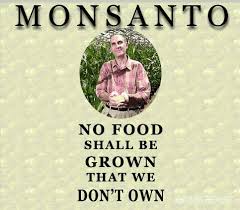
    It began in the mid-’90s, when Monsanto developed genetically modified (GM) crops such as soybeans, alfalfa, sugar beets, and wheat. These Franken-crops were immune to its leading weed killer, Roundup. That meant that farmers no longer had to till the land to kill weeds, as they’d done for hundreds of years. They could simply blast their entire fields with chemicals, leaving GM crops the only thing standing. Problem solved. The so-called no-till revolution promised greater yields, better profits for the family farm, and a heightened ability to feed a growing world. But there was one small problem: Agriculture had placed a belligerent strongman in charge of the buffet line.

    It began in the mid-’90s, when Monsanto developed genetically modified (GM) crops such as soybeans, alfalfa, sugar beets, and wheat. These Franken-crops were immune to its leading weed killer, Roundup. That meant that farmers no longer had to till the land to kill weeds, as they’d done for hundreds of years. They could simply blast their entire fields with chemicals, leaving GM crops the only thing standing. Problem solved. The so-called no-till revolution promised greater yields, better profits for the family farm, and a heightened ability to feed a growing world. But there was one small problem: Agriculture had placed a belligerent strongman in charge of the buffet line.

    Monsanto knew that it needed more than genetically modified crops to squeeze out competitors, so it also began buying the biggest seed businesses, spending $12 billion by the time its splurge concluded. The company was cornering agriculture by buying up the best shelf space and distribution channels. All its boasting about global benevolence began to look much more like a naked power grab.

    Seed prices soared. Between 1995 and 2011, the cost of soybeans increased 325 percent. The price of corn rose 259 percent. And the cost of genetically modified cotton jumped a stunning 516 percent.

    Instead of feeding the world, Monsanto simply drove prices through the roof, taking the biggest share for itself. A study by Charles Benbrook, a research professor at Washington State University, found that rapidly increasing seed and pesticide costs were tamping farmers’ incomes.

    To further corner the field, Monsanto offered steep discounts to independent dealers willing to restrict themselves to mostly selling Monsanto products. And the arrangements brought severe punishment if independents ever sold out to a rival.

    Intel had run a similar campaign within the tech industry, only to be drilled by the European Union with a record $1.45 billion fine for anti-competitive practices. Yet U.S. regulators showed little concern for Monsanto’s expanding power.

    “They’re a pesticide company that’s bought up seed firms,” says Bill Freese, a scientist at the Center for Food Safety, a nonprofit public-interest and environmental-advocacy group. “Business-wise, it’s a beautiful, really smart strategy. It’s just awful for agriculture and the environment.”

    Today, Monsanto seeds cover 40 percent of America’s crop acres—and 27 percent worldwide.

    “If you put control over plant and genetic resources into the hands of the private sector . . . and anybody thinks that plant breeding is still going to be used to solve society’s real problems and to advance food security, I have a bridge to sell them,” says Benbrook.

    It didn’t used to be like this. At one time, seed companies were just large-scale farmers who grew various strains for next year’s crop. Most of the innovative hybrids and cross-breeding was done the old-fashioned way, at public universities, and the results were shared publicly.

    “It was done in a completely open-sourced way,” says Benbrook. “Scientists at the U.S. Department of Agriculture exchanged all sorts of seeds with other scientists and researchers all over the world. This free trade and exchange of plant genetic resources was the foundation of progress in plant breeding. And in less than a decade, it was over.”

    The first crack appeared in 1970, when Congress empowered the USDA to grant exclusive marketing rights to novel strains, with two exceptions: Farmers could replant the seeds if they chose, and patented varieties had to be provided to researchers.

    But that wasn’t enough. Corporations wanted more control, and they got it with a dramatic, landmark Supreme Court decision in 1980, which allowed the patenting of living organisms. The decision was intended to increase research and innovation. But it had the opposite effect, encouraging market concentration.

    Monsanto would soon go on its buying spree, gobbling up every rival seed company in sight. It patented the best seeds for genetic engineering, leaving only the inferior for sale as conventional, non-GM brands. (Monsanto declined an interview request for this story.)

    Biotech giants Syngenta and DuPont both sued, accusing Monsanto of monopolistic practices and a “scorched-earth campaign” in its seed-company contracts. But instead of bringing reform, the companies reached settlements that granted them licenses to use, sell, and cross-develop Monsanto products. (Some DuPont suits drag on.)

    It wasn’t until 2009 that the Justice Department, working in concert with several state attorneys general, began investigating Monsanto for antitrust violations. But three years later, the feds quietly dropped the case. (They also ignored interview requests for this story.)

    “I’m told by some of those working on all of this that they had a group of states that were seriously interested,” says Peter Carstensen, a professor at the University of Wisconsin Law School. “They had actually found private law firms that would represent the states on fairly low fees—basically quasi-contingency—and then nobody would drop a dime. Some of the staff in the antitrust division wanted to do something, but top management—you say the word ‘patent,’ and they panic.”

    Historically, farmers have been able to save money on seeds by using those produced by last year’s crops for the coming year’s planting. But such cost-saving methods are largely a thing of the past.

    Monsanto’s thick contracts dropped like shackles on the kitchen tables of every farmer who used the company’s seed, allowing Monsanto access to farmers’ records and fields and prohibiting them from replanting leftover seed, essentially forcing farmers to buy new seed every year—or face up to $3 million in damages.

    Armed with lawyers and private investigators, the company has embarked on a campaign of spying and intimidation to stop any farmer from replanting seeds.

    Farmers call them the “seed police,” using words such as “gestapo” and “mafia” to describe the company’s tactics. Monsanto’s agents fan out into small towns, where they secretly videotape and photograph farmers, store owners, and co-ops; infiltrate community meetings; and gather information from informants.

    Some Monsanto agents pretend to be surveyors; others confront farmers on their land and try to pressure them into signing papers that give Monsanto access to their private records.

    Leading the charge, says Carstensen, is the private police force that once terrorized union organizers from another generation. “You know who does their policing?” he chuckles ruefully. “The Pinkertons. These are the strikebreakers, the railroad goons. It’s déjà vu all over again.”

    In one case, Monsanto accused Indiana farmer David Runyon of illegally using its soybean seeds. Runyon claims the company threatened to sue for patent infringement, despite documentation proving that he’d bought non-patented seed from local universities for years. Monsanto’s lawyer claimed the company had an agreement with the Indiana Department of Agriculture to search his land.

    One problem: Indiana didn’t have a Department of Agriculture at the time.

    But most cases never go to trial. In 2006, the Center for Food Safety estimated that Monsanto had pressured as many as 4,500 farmers into paying settlements worth as much as $160 million.

    Yet Monsanto wanted even more leverage. So it naturally turned to Congress.

    Earlier this year, a little-noticed provision was slipped into a budget resolution. The anonymous measure, pushed by Missouri Republican Senator Roy Blunt, granted the company an unheard-of get-out-of-jail-free card widely known as the Monsanto Protection Act.

    Despite indications that GM foods could have adverse health effects, the feds have never bothered to extensively study them. Instead, they’ve basically taken Monsanto’s word that all is kosher. So organic farmers and their allies sued the company in 2009, claiming that Monsanto’s GM sugar beets had not been studied enough. A year later, a judge agreed, ordering all recently planted GM sugar-beet crops destroyed until their environmental impact was studied.

    The Monsanto Protection Act was designed to end such rulings. It essentially bars judges from intervening during lawsuits—a notion that would seem highly unconstitutional.

    Not that Congress noticed. Monsanto has spent more than $10 million on campaign contributions in the past decade—and another $70 million on lobbying since 1998. The money speaks so loudly that Congress has become tone-deaf.

    In fact, the U.S. government has become Monsanto’s de facto lobbyist in countries distrustful of GM safety. Two years ago, WikiLeaks released diplomatic cables showing how the feds had lobbied foreign governments to weaken laws and encourage the planting of genetically modified crops in third-world countries.

    The leaks also showed State Department diplomats asking for money to fly in corporate flacks to lean on government officials. Even Mr. Environment, former vice president Al Gore, was key in getting France to briefly approve Monsanto’s GM corn.

    These days, the company has infiltrated the highest levels of government. It has ties to the Supreme Court (former Monsanto lawyer Clarence Thomas), with former and current employees in high-level posts at the USDA and the FDA.

    But the real coup came when President Obama appointed former Monsanto vice president Michael Taylor as the FDA’s new deputy commissioner for foods. It was akin to making George Zimmerman the czar of gun safety.

    At the same time that Monsanto was cornering the food supply, its principal products—GM crops—were receiving less scrutiny than an NSA contractor.

    Monsanto understood early on that the best way to stave off bad publicity was to limit research. Prior to a recently negotiated agreement with major universities, the company had severely restricted access to its seeds.

    Filmmaker Bertram Verhaag’s 2010 award-winning documentary, Scientists Under Attack: Genetic Engineering in the Magnetic Field of Money, noted that nearly 95 percent of genetic-engineering research is paid for and controlled by corporations like Monsanto.

    Meanwhile, former employees embedded in government make sure the feds never get too nosy.

    Michael Taylor has turned that into an art form. He’s gone back and forth from government to Monsanto enough times that it’s no longer just a revolving door; it’s a Batpole. During an early ‘90s stint with the FDA, he helped usher bovine growth hormone milk into the food supply and authored the decision that kept the government out of Monsanto’s GM crop business.

    Known as “substantial equivalence,” it declared that genetically modified products are essentially the same as their non-GM counterparts—and therefore require no additional labeling or testing for food safety or toxicity. Never mind that no accepted science backed his theory.

    “It’s simply a political calculation invented by Michael Taylor and Monsanto and adopted by U.S. federal policy-makers to resist labeling,” says Jim Gerritsen, a farmer in Maine. “You have this collusion between corporations and the government, and the essence is that the people’s interest isn’t being served.”

    The FDA is a prime example. It approves GM crops by doing no testing of its own; it simply takes Monsanto’s word for their safety. Monsanto spokesman Phil Angell says the company agrees that it should have nothing to do with verifying safety: “Our interest is in selling as much of it as possible,” he told the New York Times. “Assuring its safety is the FDA’s job.”

    So if neither Monsanto nor the government is doing it, who is?

    The answer: no one. A boy with a Native American dance troupe holds a sign during a protest against agribusiness giant Monsanto in Los Angeles on May 25, 2013. Marches and rallies against Monsanto and genetically modified organisms (GMO) in food and seeds were held across the US and in other countries with protestors calling attention to the dangers posed by GMO food. AFP PHOTO / ROBYN BECK

    So far, it appears that the GM revolution has done little more than raise the cost of food.

    A 2009 study by Doug Gurian-Sherman, a senior scientist with the Union of Concerned Scientists, looked at four Monsanto seeds and found only minimal increases in yield. Since GM crops cost more to produce, their economic benefit seemed questionable at best.

    “It pales in comparison to other conventional approaches,” says Gurian-Sherman. “It’s a lot more expensive, and it comes with a lot of baggage . . . like pesticide use, monopoly issues, and control of the seed supply.”

    Use of those pesticides has soared as weeds and insects become increasingly resistant to them. Since GM crops were introduced in 1996, pesticide usage has increased by 404 million pounds. Last year, Syngenta, one of the world’s largest pesticide makers, reported that sales of its major corn-soil insecticide more than doubled in 2012, a response to increased resistance to Monsanto’s pesticides.

    Part of the blame belongs to a monoculture that developed around farming. Farmers know it’s better to rotate crops and pesticides and leave fields fallow for a season. But when corn prices are high, who wants to grow a less profitable crop? The result has been soil degradation, more static yields, and an epidemic of weed and insect resistance.

    Weeds and insects are fighting back with their own law: that of natural selection. Last year, 49 percent of surveyed farmers reported Roundup-resistant weeds on their farms, up from 34 percent the year before. The problem costs farmers more than $1 billion annually.

    Pests like Roundup-resistant pigweed can grow as thick as your arm and more than six feet high, requiring removal by hand. Many farmers simply abandon weed-choked fields.

    In order to kill the pests, chemical giants like Monsanto and Dow are developing crops capable of withstanding even harsher pesticides, resulting in an endless cycle of greater pesticide use at commensurate financial and environmental cost.

    Nature, as it’s proved so often before, will not be easily vanquished.

    “We are not making our agriculture more resistant to environmental stress, not lowering the amount of pesticides, and not creating a sustainable agricultural system that works,” says Mary-Howells Martens, an organic grain farmer in New York. “There are so many things that are short-term, quick-buck kind of things, without any kind of eye to if this is going to be a good deal long-term.”

    The biggest problem for Monsanto’s global growth: It doesn’t have the same juice with foreign governments as it does with ours. That’s why it relies on the State Department to work as its taxpayer-funded lobbyist abroad.

    Yet this has become increasingly difficult. Other nations aren’t as willing to play corporate water boy as our government is. The countries that need GM seeds often can’t afford them (or don’t trust Monsanto). And the nations that can afford them (other than us) don’t really want them (or don’t trust Monsanto).

    Ask Mike Mack, CEO of the Swiss biotech giant Syngenta. The Swiss, he argues, are more interested in environmental safety and food quality than in saving a few pennies at the grocery store.

    “Switzerland’s greatest natural resource is that it is a beautiful country that brings in a lot of tourism,” he says. “If the Swiss could lower their consumption spending by 1 percent by applying high-productivity farming, they probably would not do it if it requires changing their approach to how they think about food. Countries like Switzerland are a good example where such things as GM food would be very difficult and perhaps commercially inadvisable.”

    Maybe Europe has simply been around the block enough to know better than to entrust its health to a bottom-line mentality. Although the European Union imports 30 million tons of GM crops annually for livestock feed, it’s approved only two GM crops for human consumption.

    In April, biotech companies took another hit when the European Union banned neonicotinoids—aka “neo-nics”—one of the most powerful and popular insecticides in the world. It’s a derivative of nicotine that’s poisonous to plants and insects.

    German giant Bayer CropScience and Syngenta both make neo-nics, which are used to coat seeds, protecting crops in their early growth stages. In America, 90 percent of the corn crop comes with the coating.

    The problem is that plants sweat these chemicals out in the morning dew, where they’re inadvertently picked up by bees.

    Last year, Christian Krupke, a professor of entomology at Purdue University, did one of the first studies linking neo-nics to the collapse of bee colonies, which threatens the entire food system. One-quarter of the human diet is pollinated by bees.

    These mysterious collapses—in which bees simply fly off and die—have been reported as far back as 1918. Yet over the past seven years, mortality rates have tripled. Some U.S. regions are witnessing the death of more than half their populations.

    “We’re looking at bee kills, persistently during corn-planting time,” Krupke explains. “So what was killing these bees at corn-planting?”

    While he’s still not sure how much responsibility the chemicals bear, his study indicates a link to Monsanto’s GM corn, which has been widely treated with neo-nics since 2005.

    But while other countries run from the problem, the U.S. government is content to let its citizens serve as guinea pigs.

    The same worries apply to contamination from GM crops. Ask Frank Morton, who grows organic sugar-beet seeds in Oregon’s Willamette Valley and is among the few non-GM holdouts.

    This became abundantly clear in 2010, when a federal judge demanded that all U.S. farmers stop planting GM sugar beets. Farmers were surprised to find that there was very little non-GM sugar-beet seed to be had. Since the GM variety was introduced in 2005, Monsanto had driven just about everyone out of the market.

    Morton’s farm is just two miles from a GM sugar-beet farm. Unfortunately, beet pollen can travel as much as five miles, cross-pollinating other farmers’ fields and, in the case of an organic farmer, threatening his ability to sell his crop as organic and GM-free. The contamination can arrive in the most benign ways.

    Morton recalls how a landscaper bought potting soil from a nearby GM beet farm, then sold it to homeowners throughout the area. A scientist from Oregon State University discovered the error. Morton claims the landscaper was forced to retrieve the soil—lest nearby farms become contaminated—paying his customers $100 each to not say anything.

    It’s especially galling because GM crops have perverted longstanding property law. Organic farmers, for example, are responsible for protecting their farms from contamination, since courts have consistently refused to hold GM growers liable.

    Kansas farmer Bryce Stephens had to stop growing organic corn and soybeans for fear of contamination; he has 30-foot buffer crops to protect his organic wheat. (Wheat pollen doesn’t travel far.)

    “Monsanto and the biotechs need to respect traditional property rights and need to keep their pollution on their side of the fence,” says Maine farmer Jim Gerritsen. “If it was anything but agriculture, nobody would question it.

    If I decided to spray my house purple and I sprayed on a day that was windy, and my purple paint drifted onto your house and contaminated your siding and shingles, there isn’t a court in the nation that wouldn’t in two minutes find me guilty of irresponsibly damaging your property. But when it comes to agriculture, all of a sudden the tables are turned.”

    Contamination isn’t just about boutique organic brands, either. It maims U.S. exports, too.

    Take Bayer, which grew unapproved, experimental GM rice at test plots around Louisiana State University for just one year. Within five years, these plots had contaminated 30 percent of U.S. rice acreage. No one’s certain how it happened, but Bayer’s rice was found as far away as Central America and Africa.

    Within days of the announcement, rice futures lost $150 million in value, while U.S. rice exports dropped by 20 percent during the next year. (Bayer ended up paying $750 million in damages.)

    Last month brought another hit. A Monsanto test of GM wheat mysteriously contaminated an Oregon farm eight years after the test was shut down. Japan and South Korea immediately halted imports of U.S. soft white wheat—a particularly harsh pill for the Japanese, who have used our white wheat in nearly all their cakes and confectionery since the 1960s.

    Monsanto’s response? It’s blaming the whole mess on eco-terrorism.

    Given the company’s history, is it any wonder that developing countries like Ecuador, Peru, and Haiti have shied away from GM crops? Haiti felt strong enough that in the wake of its 2010 earthquake, it turned down Monsanto’s offer of seeds, even with assurances that the seed wasn’t GM.

    Brazil is poised to become the world’s largest soybean exporter on the strength of Monsanto seed. Still, the country’s farmers aren’t big fans of the company. Thousands are suing Monsanto for more than $600 million after the company continued to charge them royalties two years after the expiration of its patent.

    Trust, unfortunately, has never been Monsanto’s strong suit. It’s become one of the main motives behind the push for GM labeling.

    “If they’re going to allow the American people to be lab rats in an experiment, could they at least know where it is so they can decide whether they want to participate or not?” asks Lance Harvell, a Republican state representative from Maine. “If the FDA isn’t going to do their job, it’s time we stepped in.”

    Last month, Harvell’s GM-labeling law overwhelmingly passed the Maine House (141-4) and Senate (35-0) and awaits the governor’s signature. That makes Maine the second state (nine days after Connecticut) to pass a GM-labeling law.

    The Right to Know movement has picked up steam since chemical companies defeated California’s labeling initiative, thanks to a $46 million publicity campaign full of deceptive statements. A recent ABC News poll found that 93 percent of Americans surveyed support GM labeling.

    When Vermont raised the issue a year ago, a Monsanto official indicated that the company might sue. But the states are smart. The new laws in both Maine and Connecticut won’t take effect until other states pass similar legislation, so they can share defense costs.

    What’s interesting is that Harvell, by his own admission, is a very conservative Republican. Yet on this issue, left and right have the same quest for greater caution.

    “God gave the seed to the earth and the fruit to the trees,” Harvell says. “Notice it didn’t say he granted Monsanto a patent. The human body has developed with its seeds. You’re making a major leap into Pandora’s box—a quantum leap that maybe the human body isn’t ready to make yet.”

    As more information comes out, it’s increasingly clear that GM seed isn’t the home run it’s portrayed to be. It encourages greater pesticide use, which has a negative impact on the environment and our bodies. And whether or not GM food is safe to eat, it poses a real threat to biodiversity through monopolization of the seed industry and the kind of farming monoculture that inspires.

    Meanwhile, a study by the University of Canterbury in England found that non-GM crops in America and Europe are increasing their yields faster than GM crops.

    “All this talk about feeding the world, it’s really PR,” explains Wenonah Hauter, author of Foodopoly and executive director of Food & Water Watch. “The hope is to get into these new markets, force farmers to pay for seed, then start changing the food and eating habits of the developing world.”

    Since farming is such a timeworn tradition, there’s a tendency to take it for granted, and that worries a lot of people. But as much as he hates GM, Bryce Stephens is sanguine.

    “I’ve seen changes since I was little to where it is now,” the Kansas farmer says. “I don’t think it will last. This land and these people here have gone through cycles of boom and bust. We’re just in another cycle, and it will be something different.”

    Providing we don’t break it irreparably first.
    – See more at: http://www.independent.co.ug/news/news-analysis/8573-the-monsanto-menace#sthash.sfEAJfj6.dpuf


  • Der massive Einsatz von Pestiziden hat die Ackerflächen weltweit schwer geschädigt

    Der massive Einsatz von Pestiziden hat die Ackerflächen weltweit schwer geschädigt

    Eine Studie zeigt, dass das Ökosystem der Erde durch Insektengifte bereits schwer geschädigt ist. Die Vielfalt der Bodenorganismen hat in landwirtschaftlich genutzten Böden massiv abgenommen. Jedes Jahr geht ein Prozent der weltweiten Anbauflächen durch Erosion verloren. Hungersnöte drohen – für die Schwellenländer und den reichen Westen.

    Eine Studie zeigt, dass das Ökosystem der Erde durch Insektengifte bereits schwer geschädigt ist. Die Vielfalt der Bodenorganismen hat in landwirtschaftlich genutzten Böden massiv abgenommen. Jedes Jahr geht ein Prozent der weltweiten Anbauflächen durch Erosion verloren. Hungersnöte drohen – für die Schwellenländer und den reichen Westen.

    Forscher der University of Colorado konnten mittels DNA-Analyse feststellen, dass sich die Vielfalt der Bodenorganismen auf Ackerflächen verringert hat. Die Forscher verglichen mittels DNS-Analyse die Bakterienvielfalt aus Ackerland mit Erde, die keiner Landwirtschaft ausgesetzt war. Erde aus der Landwirtschaft ähnle nur noch entfernt dem ursprünglichen Boden. Bodenmikroben spielen aber die Schlüsselrolle im Ökosystem. Um das zu erhalten, sollte Düngemittel nicht mehr zum Einsatz kommen, so der Autor der Studie im britischen Telegraph.

    Mit einer „Suppe von Nährstoffen“ übergossene Anbauflächen geben uns ein falsches Gefühl der Sicherheit, so die Wissenschaftler der Dust Unto Dust“-Studie. Jedes Jahr geht ein Prozent der weltweiten Ackerfläche durch Bodenerosion verloren, so Studien-Autor Robert Scholes.

    Ernteausfälle auf bereits erodierter Erde können unter dem Einsatz von Düngemittel noch eine Zeitlang herausgezögert werden, gleichzeitig wird das Ökosystem weiter gestört – ein Teufelskreis. Irgendwann hilft auch keine Chemie mehr, der Boden ist ausgelaugt und verloren.

    Von den Folgen der Erosion ist Afrika besonders schlimm getroffen. Auf dem Kontinent muss ein Großteil des zukünftigen Wachstums in der Landwirtschaft stattfinden. Doch tatsächlich hat der Bodenverlust die Erträge bereits um acht Prozent reduziert.

    „Wir haben keine Freiheit mehr, Fehler zu machen. In den nächsten 30 bis 40 Jahren stehen wir vor einer drohenden Lebensmittel-Knappheit. Hungersnot ist eine sehr reale Möglichkeit“, so Robert Scholes.

    Ein kompletter Kurswandel sei „der einzige gangbare Weg, die Welt mit Nahrung versorgen zu können.“

    Dies würde bedeuten, dass die Geschäfte von global agierenden Konzernen drastisch beschnitten werden müssen: Es müsste eine Abkehr von den industriellen Agrarbetrieben zu überschaubaren Einheiten geben, in denen die produzierten Lebensmittel denen zugute kommen, in deren Ländern sie angebaut werden.

    Dies würde aber auch die Macht der internationalen Saatgut-Industrie beschränken: Firmen wie Monsanto, Syngenta oder Bayer profitieren vom massiven Einsatz der Pestizide.

    Der Einfluss der Lobbyisten dieser Konzerne etwa auf EU-Ebene oder den USA lässt eine solche Trendwende eher unwahrscheinlich erscheinen.

    Wir befinden uns auf einem gefährlichen Weg.

    Die Konsequenz der globalen Ausbeutung: Lebensmittel werden zum Luxus, die Preise werden weiter steigen.

    Überleben werden die, die es sich leisten können.

    Solches hatte nicht einmal Darwin im Sinn.
    Quelle: Deutsche Wirtschaftsnachrichten, 30.12.13
    http://deutsche-wirtschafts-nachrichten.de/2013/12/30/studie-ackerland-weltweit-durch-pestizide-zerstoert-hungersnoete-drohen/

  • De hele gemeenschap van de bestuivende insecten kan plotseling ineenstorten met weinig hoop op herstel, stellen Wageningse onderzoekers

    De hele gemeenschap van de bestuivende insecten kan plotseling ineenstorten met weinig hoop op herstel, stellen Wageningse onderzoekers

    Wereldwijd hebben bestuivers het moeilijk. Insecticiden, parasieten, ziekten en verlies van leefgebied zitten de bestuivers in de weg. En ze hebben steeds meer moeite om te overleven. En wanneer hun omstandigheden verder verslechteren, ziet het er niet best uit, zo stellen Wageningse onderzoekers. Het kan wel eens leiden tot het uitsterven van heel veel soorten. Stel dat de omstandigheden van de bestuivers nog verder verslechteren: welke gevolgen heeft dat dan? Onderzoekers van de Wageningen University zochten het met behulp van wiskundige modellen uit. Ze tonen aan dat de toekomst van de bestuivers mede bepaald wordt door de manier waarop interactienetwerken in elkaar zitten. De structuur van deze netwerken zorgt ervoor dat bestuivers elkaar in moeilijke tijden ondersteunen. Het betekent tegelijkertijd dat soorten in één gebied in moeilijke tijden sterk van elkaar afhankelijk zijn. Wanneer de omstandigheden echt heel slecht worden, bestaat dus het gevaar dat de hele gemeenschap van bestuivers – denk aan bijen, vlinders, zweefvliegen, hommels, enzovoort – instort. En het is bijzonder lastig om zo’n ingestorte gemeenschap weer te herstellen. Daarvoor moeten de omstandigheden van deze soorten namelijk heel sterk verbeteren: nog sterker dan deze verslechterd zijn.

    Wereldwijd hebben bestuivers het moeilijk. Insecticiden, parasieten, ziekten en verlies van leefgebied zitten de bestuivers in de weg. En ze hebben steeds meer moeite om te overleven. En wanneer hun omstandigheden verder verslechteren, ziet het er niet best uit, zo stellen Wageningse onderzoekers. Het kan wel eens leiden tot het uitsterven van heel veel soorten. Stel dat de omstandigheden van de bestuivers nog verder verslechteren: welke gevolgen heeft dat dan? Onderzoekers van de Wageningen University zochten het met behulp van wiskundige modellen uit. Ze tonen aan dat de toekomst van de bestuivers mede bepaald wordt door de manier waarop interactienetwerken in elkaar zitten. De structuur van deze netwerken zorgt ervoor dat bestuivers elkaar in moeilijke tijden ondersteunen. Het betekent tegelijkertijd dat soorten in één gebied in moeilijke tijden sterk van elkaar afhankelijk zijn. Wanneer de omstandigheden echt heel slecht worden, bestaat dus het gevaar dat de hele gemeenschap van bestuivers – denk aan bijen, vlinders, zweefvliegen, hommels, enzovoort – instort. En het is bijzonder lastig om zo’n ingestorte gemeenschap weer te herstellen. Daarvoor moeten de omstandigheden van deze soorten namelijk heel sterk verbeteren: nog sterker dan deze verslechterd zijn.

    Bron: Scientias, 3 januari 2014

    Gemeenschap van bestuivers kan heel plotseling ineenstorten

  • Redelijk alledaagse vogels als de spreeuw of scholekster kunnen binnen afzienbare tijd grotendeels uit Nederland zijn verdwenen

    Redelijk alledaagse vogels als de spreeuw of scholekster kunnen binnen afzienbare tijd grotendeels uit Nederland zijn verdwenen

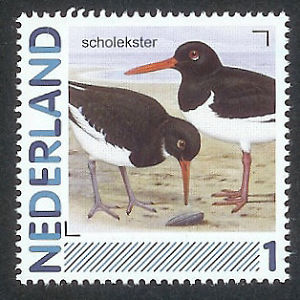
    Nog 20 andere vogelsoorten die nu nog niet op de Nederlandse Rode Lijst staan, zullen volgen. Deze schokkende nieuwe cijfers zijn naar boven gekomen dankzij een nieuwe onderzoeksmethode die Vogelbescherming samen met Sovon Vogelonderzoek heeft ontwikkeld: het Early Warning en Alert Protocol (EWAP). Met behulp van het EWAP heeft Vogelbescherming Nederland de Oranje Lijst opgesteld. Daarop staan 22 soorten die nog niet aan de criteria van de Rode Lijst voldoen maar waarvan wordt aangenomen dat ze dat in de nabije toekomst wel zullen gaan doen. Het stoplicht staat voor deze vogels zeg maar op oranje. Het EWAP geeft een zorgwekkend signaal. Tussen de 22 soorten die op de Oranje Lijst staan, zitten ook veel doodgewone soorten als grote lijster (Turdus viscivorus), spreeuw (Sturnus vulgaris), kokmeeuw (Chroicocephalus ridibundus), scholekster (Haematopus ostralegus), torenvalk (Falco tinnunculus) of waterhoen (Gallinula chloropus). Soorten die we nu nog elke dag overal tegenkomen. Als we niet snel actie ondernemen zullen zelfs heel algemene vogels als scholekster en spreeuw straks een zeldzaamheid zijn.

    Nog 20 andere vogelsoorten die nu nog niet op de Nederlandse Rode Lijst staan, zullen volgen. Deze schokkende nieuwe cijfers zijn naar boven gekomen dankzij een nieuwe onderzoeksmethode die Vogelbescherming samen met Sovon Vogelonderzoek heeft ontwikkeld: het Early Warning en Alert Protocol (EWAP). Met behulp van het EWAP heeft Vogelbescherming Nederland de Oranje Lijst opgesteld. Daarop staan 22 soorten die nog niet aan de criteria van de Rode Lijst voldoen maar waarvan wordt aangenomen dat ze dat in de nabije toekomst wel zullen gaan doen. Het stoplicht staat voor deze vogels zeg maar op oranje. Het EWAP geeft een zorgwekkend signaal. Tussen de 22 soorten die op de Oranje Lijst staan, zitten ook veel doodgewone soorten als grote lijster (Turdus viscivorus), spreeuw (Sturnus vulgaris), kokmeeuw (Chroicocephalus ridibundus), scholekster (Haematopus ostralegus), torenvalk (Falco tinnunculus) of waterhoen (Gallinula chloropus). Soorten die we nu nog elke dag overal tegenkomen. Als we niet snel actie ondernemen zullen zelfs heel algemene vogels als scholekster en spreeuw straks een zeldzaamheid zijn.

    Bron: Vogelbescherming & Vogelwacht Ameland, 10-12-2013
    http://vogelwachtameland.blogspot.nl/2013_12_01_archive.html

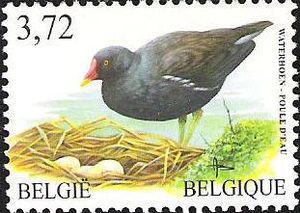
  • De waterhoentjes worden steeds schaarser in Nederland

    De waterhoentjes worden steeds schaarser in Nederland

    Vanaf december 2012 tot de zomer van 2015 wordt in het kader van een atlasproject de vogelstand in Nederland opnieuw in kaart gebracht. Het onderzoek toont nu al af en toe opvallende trends. Zo lijkt het helemaal niet zo goed te gaan met het waterhoen, toch een van de algemenere vogels van ons land en een soort die je zelfs in veel sloten en stadsvijvers aantreft. Veel tellers bleken desondanks opvallend veel moeite te hebben om waterhoentjes te vinden. De structurele achteruitgang van het waterhoen (Gallinula chloropus) tekent zich al sinds de jaren zeventig van de vorige eeuw af. Het waterhoen voedt zich met waterplanten, grassen, insecten en kikkervisjes.

    Vanaf december 2012 tot de zomer van 2015 wordt in het kader van een atlasproject de vogelstand in Nederland opnieuw in kaart gebracht. Het onderzoek toont nu al af en toe opvallende trends. Zo lijkt het helemaal niet zo goed te gaan met het waterhoen, toch een van de algemenere vogels van ons land en een soort die je zelfs in veel sloten en stadsvijvers aantreft. Veel tellers bleken desondanks opvallend veel moeite te hebben om waterhoentjes te vinden. De structurele achteruitgang van het waterhoen (Gallinula chloropus) tekent zich al sinds de jaren zeventig van de vorige eeuw af. Het waterhoen voedt zich met waterplanten, grassen, insecten en kikkervisjes.

    Bronnen: Dieren Blog, 29-12-13
    http://dieren.blog.nl/natuur-in-nederland/2013/12/29/minder-waterhoentjes-nederland
    Wikipedia
    http://nl.wikipedia.org/wiki/Waterhoen

  • West Nile Virus Behind Utah Bald Eagle Deaths

    West Nile Virus Behind Utah Bald Eagle Deaths

    A mysterious die-off of 27 bald eagles (Haliaeetus leucocephalus) in Utah is being blamed on West Nile Virus, after lab tests from the state’s Division of Wildlife Resources (DWR) showed the deadly illness was behind the deaths. Officials with the DWR say the eagles contracted the virus after eating infected grebes. Luckily for other eagles in the area, though, they note that the grebe population should soon subside as that bird’s migration season comes to an end. Five other eagles are being treated and rehabilitated by wildlife officials. The Utah DWR is urging residents not to try to handle any sick birds they might encounter.

    A mysterious die-off of 27 bald eagles (Haliaeetus leucocephalus) in Utah is being blamed on West Nile Virus, after lab tests from the state’s Division of Wildlife Resources (DWR) showed the deadly illness was behind the deaths. Officials with the DWR say the eagles contracted the virus after eating infected grebes. Luckily for other eagles in the area, though, they note that the grebe population should soon subside as that bird’s migration season comes to an end. Five other eagles are being treated and rehabilitated by wildlife officials. The Utah DWR is urging residents not to try to handle any sick birds they might encounter.

    Source: Discovery, January 2, 2014
    http://news.discovery.com/animals/endangered-species/west-nile-virus-behind-utah-bald-eagle-deaths-140102.htm