Auteur: Henk Tennekes

  • Kein Ende des Bienensterbens im Burgenland

    Kein Ende des Bienensterbens im Burgenland

    Aufregung herrscht derzeit unter den Imkern im Raum Deutsch Jahrndorf (Bez. Neusiedl). Dutzende Bienenvölker sind tot. Die betroffenen Imker glauben, dass das Bienensterben nach wie vor auf das Konto von Schädlingsbekämpfungsmitteln geht. Es sieht schlimm aus in den Bienenkästen. Einer der Betroffenen ist der Bio-Imker und ehemalige Landesobmann der burgenländischen Bienenzuchtvereine Konrad Schneider aus Deutsch Jahrndorf. „Ich habe 60 Völker auf den Ständen in Nickelsdorf, Deutsch Jahrndorf und Pama verloren. Auch andere Imker sind betroffen, mein Nachbar hat 30 verloren“, erklärt Schneider.

    Aufregung herrscht derzeit unter den Imkern im Raum Deutsch Jahrndorf (Bez. Neusiedl). Dutzende Bienenvölker sind tot. Die betroffenen Imker glauben, dass das Bienensterben nach wie vor auf das Konto von Schädlingsbekämpfungsmitteln geht. Es sieht schlimm aus in den Bienenkästen. Einer der Betroffenen ist der Bio-Imker und ehemalige Landesobmann der burgenländischen Bienenzuchtvereine Konrad Schneider aus Deutsch Jahrndorf. „Ich habe 60 Völker auf den Ständen in Nickelsdorf, Deutsch Jahrndorf und Pama verloren. Auch andere Imker sind betroffen, mein Nachbar hat 30 verloren“, erklärt Schneider.

    Laut Schneider gibt es in den Bienenkästen derzeit keine Bienen. Sie hätten die Kästen zum Sterben verlassen, was typisch sei, wenn Bienen einen langsamen Gifttod sterben. „Das ist dieser Nestfluchttrieb, wo die Bienen schön langsam das Volk verlassen. Das ist auch schon bei dem großen Bienensterben in Amerika beobachtet worden“, erklärt der Imker.

    Die Schuld am Bienensterben gibt der Bio-Imker den Schädlingsbekämpfungsmitteln in der Landwirtschaft. Obwohl die Regierung im Vorjahr den Einsatz von so genannten Neonicotinoiden verboten hat, dürften die Mitteln noch nachwirken, glaubt Schneider. „Die Halbwertszeit von diesen Mitteln beträgt 1.300 Tage. Dort wo intensive Landwirtschaft betrieben wird, kann man keine Bienen halten“, so Schneider.

    Völker, die im Wald oder am Waldrand stehen, seien völlig gesund, so Schneider. Er beziffert den Schaden durch das Bienensterben mit mindestens 10.000 Euro.

    Man nehme jeden Verlust an Bienen sehr ernst und fordere daher eine unabhängige Untersuchung, man verwehre sich allerdings gegen pauschale Verdächtigungen und unsachliche Anschuldigungen, heißt es vom Vorstand der Industriegruppe Pflanzenschutz in einer Aussendung.

    Die Abbauzeit von Neonicotinoiden im Boden betrage zudem 30–50 Tage und nicht 1.300 Tage. Außerdem hätten Studien im Auftrag der EU bewiesen, dass Schädlingsbefall und Krankheiten die Hauptursache für das Bienensterben seien und nicht die Pflanzenschutzmittel, heißt es in der Aussendung der IG Pflanzenschutz.

    Quelle: ORF Burgenland, 03.02.14
    http://burgenland.orf.at/news/stories/2628791/

  • Stephanie Seneff presentation on harmful effects of the active ingredient of Roundup, glyphosate (as from minute 19)

    Stephanie Seneff presentation on harmful effects of the active ingredient of Roundup, glyphosate (as from minute 19)

    A very quick overview of the problem of Autism and other epidemic diseases in the USA which Dr Seneff believes are linked to the massive increase in the use of Glyphosate weedkiller, which saturates all grain crops in America (corn, wheat, soya, oilseed rape etc.). http://www.youtube.com/watch?v=MqWwhggnbyw

    A very quick overview of the problem of Autism and other epidemic diseases in the USA which Dr Seneff believes are linked to the massive increase in the use of Glyphosate weedkiller, which saturates all grain crops in America (corn, wheat, soya, oilseed rape etc.). http://www.youtube.com/watch?v=MqWwhggnbyw

    Glyphosate goes ‘hand in glove’ with GM crops because they are mostly engineered to resist this herbicide, which means the farmer can spray his corn six times in a season; the weeds die, but the corn survives – and absorbs the weedkiller ‘systemically’. We are all eating weedkiller.

  • The Impact of Pesticides on Bee Health Meeting in London

    The Impact of Pesticides on Bee Health Meeting in London

    We are delighted to welcome you to Charles Darwin House for the “The Impact of Pesticides on Bee Health” – the third joint meeting between the three societies. The Biochemical Society, the British Ecological Society and the Society for Experimental Biology have a long history of organizing and supporting meetings on all aspects of biochemistry, cell biology and ecology. We believe this joint meeting between the societies (to be held at the joint headquarters of the three societies) will succeed in bringing together experts from around the world, who are solving biological problems using multiple integrated approaches. The final video discussion session can be viewed on Youtube at a http://www.youtube.com/watch?v=6pbCGDWed68.

    We are delighted to welcome you to Charles Darwin House for the “The Impact of Pesticides on Bee Health” – the third joint meeting between the three societies. The Biochemical Society, the British Ecological Society and the Society for Experimental Biology have a long history of organizing and supporting meetings on all aspects of biochemistry, cell biology and ecology. We believe this joint meeting between the societies (to be held at the joint headquarters of the three societies) will succeed in bringing together experts from around the world, who are solving biological problems using multiple integrated approaches. The final video discussion session can be viewed on Youtube at a http://www.youtube.com/watch?v=6pbCGDWed68.

  • Beantwoording Kamervragen over het grondontsmettingsmiddel metam-natrium

    Beantwoording Kamervragen over het grondontsmettingsmiddel metam-natrium

    Antwoorden van staatssecretaris Dijksma (EZ) op vragen van de Kamerleden Ouwehand (PvdD), Jacobi (PvdA), Van Gerven (SP), Graus (PVV), Schouw (D66), Klaver (GroenLinks) en Klein (50Plus) over de gevolgen van het grondontsmettingsmiddel metamnatrium op de volksgezondheid, het milieu en de natuur (bijlage). Dijksma gaat binnenkort in gesprek met landbouworganisatie LTO over het gebruik van het grondontsmettingsmiddel metam natrium. In een reactie schrijft de toxicoloog Henk Tennekes dat de hand van Jaap van Wenum van de LTO onmiskenbaar is bij de beantwoording van de Kamervragen. Tennekes wijst op de enorme gezondheidsrisico’s voor omwonenden (van landbouwgebieden) die met het gebruik van dit grondontsmettingsmiddel verbonden zijn. Het heeft er alle schijn van dat deze risico’s ondergeschikt worden gemaakt aan het overschot op de handelsbalans, aldus Tennekes.

    Antwoorden van staatssecretaris Dijksma (EZ) op vragen van de Kamerleden Ouwehand (PvdD), Jacobi (PvdA), Van Gerven (SP), Graus (PVV), Schouw (D66), Klaver (GroenLinks) en Klein (50Plus) over de gevolgen van het grondontsmettingsmiddel metamnatrium op de volksgezondheid, het milieu en de natuur (bijlage). Dijksma gaat binnenkort in gesprek met landbouworganisatie LTO over het gebruik van het grondontsmettingsmiddel metam natrium. In een reactie schrijft de toxicoloog Henk Tennekes dat de hand van Jaap van Wenum van de LTO onmiskenbaar is bij de beantwoording van de Kamervragen. Tennekes wijst op de enorme gezondheidsrisico’s voor omwonenden (van landbouwgebieden) die met het gebruik van dit grondontsmettingsmiddel verbonden zijn. Het heeft er alle schijn van dat deze risico’s ondergeschikt worden gemaakt aan het overschot op de handelsbalans, aldus Tennekes.

    Bron: RTV Noord & Rijksoverheid, 4 februari 2014
    http://www.rijksoverheid.nl/documenten-en-publicaties/kamerstukken/2014/02/03/beantwoording-kamervragen-over-het-grondontsmettingsmiddel-metam-natrium.html
    http://www.rtvnoord.nl/artikel/artikel.asp?p=129955

  • On average, organic farms support 34% more plant, insect and animal species than conventional farms, say Oxford University scientists

    On average, organic farms support 34% more plant, insect and animal species than conventional farms, say Oxford University scientists

    Researchers looked at data going back thirty years and found that this effect has remained stable over time and shows no signs of decreasing. ‘Our study has shown that organic farming, as an alternative to conventional farming, can yield significant long-term benefits for biodiversity,’ said Sean Tuck of Oxford University’s Department of Plant Sciences, lead author of the study. ‘Organic methods could go some way towards halting the continued loss of diversity in industrialised nations.’ For pollinators such as bees, the number of different species was 50% higher on organic farms, although it is important to note that the study only looked at ‘species richness’. ‘Species richness tells us how many different species there are but does not say anything about the total number of organisms,’ said Mr Tuck. ‘There are many ways to study biodiversity and species richness is easy to measure, providing a useful starting point. Broadly speaking, high species richness usually indicates a variety of species with different functions. Taking the example of bees, species richness would tell us how many different species of bee were on each farm but not the total number of bees.’

    Researchers looked at data going back thirty years and found that this effect has remained stable over time and shows no signs of decreasing. ‘Our study has shown that organic farming, as an alternative to conventional farming, can yield significant long-term benefits for biodiversity,’ said Sean Tuck of Oxford University’s Department of Plant Sciences, lead author of the study. ‘Organic methods could go some way towards halting the continued loss of diversity in industrialised nations.’ For pollinators such as bees, the number of different species was 50% higher on organic farms, although it is important to note that the study only looked at ‘species richness’. ‘Species richness tells us how many different species there are but does not say anything about the total number of organisms,’ said Mr Tuck. ‘There are many ways to study biodiversity and species richness is easy to measure, providing a useful starting point. Broadly speaking, high species richness usually indicates a variety of species with different functions. Taking the example of bees, species richness would tell us how many different species of bee were on each farm but not the total number of bees.’

    The study, published this week in the Journal of Applied Ecology, looked at data from 94 previous studies covering 184 farm sites dating back to 1989. The researchers re-analysed the data using satellite imagery to estimate the land use in the landscape surrounding each farm site to see if this had an impact on species richness. The study was carried out by scientists at Oxford University and the Swedish University of Agricultural Science, and partly funded by the Natural Environment Research Council (NERC).

    Organic farms had a bigger impact on species richness when the land around them was more intensively farmed, particularly when it contained large tracts of arable land. Arable land is defined as land occupied by crops that are sown and harvested in the same agricultural year, such as wheat or barley.

    ‘We found that the impacts of organic farms on species richness were more pronounced when they were located in intensively-farmed regions,’ said Dr Lindsay Turnbull of Oxford University’s Department of Plant Sciences, senior author of the study. ‘This makes sense because the biodiversity benefits of each organic farm will be diluted in clusters of organic farms compared to an organic ‘island’ providing rich habitats in a sea of pesticide-covered conventional fields. This effect was weakest in pollinators, which may be because pollinators are likely to visit neighbouring farms and could be affected by pesticides there.’

    The impact of organic farming on total species richness varied significantly across the data, with the average gain in species richness varying between 26% and 43%. This variation could be down to a number of factors relating to regional variation in farming practices and definitions of ‘organic’.

    ‘Some conventional farms will intensively spray pesticides and fertilisers whereas others will use mixed methods of crop rotation and organic fertilisers with minimal chemical pesticides,’ said Dr Turnbull. ‘There are also regional differences in farming practices, and the majority of the studies in our data were in developed nations with long histories of farming such as those in Western Europe. There, some wildlife have thrived in extensively managed farmland but are threatened by agricultural intensification. However, in developing nations there is often great pressure on the land to provide enough food for local people, resulting in the conversion of natural habitat to farmland. In such cases the benefits of organic farming are less clear, as this may require more land to achieve the same yield as conventional farming.

    ‘More research is needed on the impact of organic farming in tropical and subtropical regions. For example, there are no studies on organic bananas or cocoa beans, two of the most popular organic products found in European supermarkets. At present, we simply cannot say whether buying organic bananas or chocolate has any environmental benefit.’
    Source: GBE News, February 2014
    http://greenbuildingelements.com/2014/02/04/organic-farms-support-species/

  • Many of the things that threaten honeybees are also affecting wild pollinators

    Many of the things that threaten honeybees are also affecting wild pollinators

    Many people have read about the decline of the honeybee in the news in recent years. Experts agree that a combination of changes in habitat, exposure to pesticides, mites, disease, and other factors have harmed them. But less attention is paid to wild bees and other pollinators, which are also extremely important.

    Honeybees are not native to North America. Records indicate they were brought over by English settlers in the 1600s for honey and wax. But there have always been native bees and other pollinators who did the work of pollination before honeybees arrived and still do much of that work today. Pennsylvania has 300 different species of wild bees, alone. The honeybee is useful to us. They alone provide delicious honey and we need them for pollinating some of the cultivated landscapes we require to feed ourselves. Honeybees are considered to be the most valuable pollinators in agriculture, because they are well understood, relatively easy to maintain, movable, and able to communicate rapidly the locations of new food sources. Some crops are almost entirely dependent on the honeybee for production. Blueberries and cherries are 90-percent dependent and almonds almost entirely.

    Many people have read about the decline of the honeybee in the news in recent years. Experts agree that a combination of changes in habitat, exposure to pesticides, mites, disease, and other factors have harmed them. But less attention is paid to wild bees and other pollinators, which are also extremely important.

    Honeybees are not native to North America. Records indicate they were brought over by English settlers in the 1600s for honey and wax. But there have always been native bees and other pollinators who did the work of pollination before honeybees arrived and still do much of that work today. Pennsylvania has 300 different species of wild bees, alone. The honeybee is useful to us. They alone provide delicious honey and we need them for pollinating some of the cultivated landscapes we require to feed ourselves. Honeybees are considered to be the most valuable pollinators in agriculture, because they are well understood, relatively easy to maintain, movable, and able to communicate rapidly the locations of new food sources. Some crops are almost entirely dependent on the honeybee for production. Blueberries and cherries are 90-percent dependent and almonds almost entirely.

    But in general honeybees do only some of the pollination required for food production. The US Fish and Wildlife Service reports that, “Honey bees pollinate approximately $10 billion worth of crops in the United States each year. However, of the hundred or so crops that make up most of the world’s food supply, only 15% are pollinated by domestic bees, while at least 80% are pollinated by wild bees and other wildlife. (See http://www.fws.gov/pollinators/pollinatorpages/aboutpollinators.html)

    A 2006 report by the National Academies of Science concluded that the populations of many other wild pollinators—especially wild bees—are trending downward. Many of the things that threaten honeybees are also affecting wild pollinators.

    By learning more about honeybees and how we depend on them for some of the food we grow, we can start learning more about pollinators in general. Because of their usefulness to us, a lot of study has gone into better understanding honeybees. Much more so than wild bees and other pollinators.

    Many people who care about honeybees and other pollinators believe that we can make a difference in their preservation by creating habitat for them in our yards. This Penn State Extension brochure describes what people can do in their own yards to make a positive difference to bees and other pollinators, including planting native flowers and reducing herbicide and pesticide use.

    People who study honeybees and other pollinators have described them living together in a colony, which essentially functions as a single organism since they are constantly working for the good of the whole. Nature is stunning in its sophistication. Understanding more about the place of domesticated and wild bees in nature helps us understand more about our own place, which seems more and more important all the time.

    Source:
    http://blogs.mcall.com/master_gardeners/2014/02/domesticated-honeybees-arent-the-only-bees-we-need-to-worry-about.html, Febrary 3, 2014

  • Besluit Ctgb tot beperking van de toelating van de imidaclopridhoudende gewasbeschermingsmiddelen Admire, Gaucho Tuinbouw en Kohinor 700 WG

    Besluit Ctgb tot beperking van de toelating van de imidaclopridhoudende gewasbeschermingsmiddelen Admire, Gaucho Tuinbouw en Kohinor 700 WG

    Het College voor de toelating van gewasbeschermingsmiddelen en biociden (Ctgb) heeft tijdens de collegevergadering van januari 2014 besloten tot beperking van de toelating van de imidaclopridhoudende gewasbeschermingsmiddelen Admire, Gaucho Tuinbouw en Kohinor 700 WG. Aanleiding daartoe is nieuwe wetenschappelijke kennis over emissies en restwaterzuivering en een recente publicatie over het effect van imidacloprid op waterorganismen. Het verzoek tot herregistratie van Gaucho per 31 januari 2014 is niet toegekend vanwege het risico van het middel voor vogels. In een reactie schrijft de toxicoloog Henk Tennekes dat het – gezien de extreme verontreiniging van het oppervlaktewater met imidacloprid die sinds 2004 vooral in het westen van Nederland goed gedocumenteerd is (zie bijgevoegde tabel) – absoluut onverteerbaar is dat het Ctgb sinds 2009 bij de (her)beoordeling van imidacloprid het werk van zeer gerenommeerde toxicologen buiten beschouwing heeft gelaten en pas maatregelen nam nadat na een inhaalslag (in het laboratorium van Paul van den Brink) in Wageningen de al lang bekende risico’s van imidacloprid voor geleedpotigen volledig werden bevestigd.

    Het College voor de toelating van gewasbeschermingsmiddelen en biociden (Ctgb) heeft tijdens de collegevergadering van januari 2014 besloten tot beperking van de toelating van de imidaclopridhoudende gewasbeschermingsmiddelen Admire, Gaucho Tuinbouw en Kohinor 700 WG. Aanleiding daartoe is nieuwe wetenschappelijke kennis over emissies en restwaterzuivering en een recente publicatie over het effect van imidacloprid op waterorganismen. Het verzoek tot herregistratie van Gaucho per 31 januari 2014 is niet toegekend vanwege het risico van het middel voor vogels. In een reactie schrijft de toxicoloog Henk Tennekes dat het – gezien de extreme verontreiniging van het oppervlaktewater met imidacloprid die sinds 2004 vooral in het westen van Nederland goed gedocumenteerd is (zie bijgevoegde tabel) – absoluut onverteerbaar is dat het Ctgb sinds 2009 bij de (her)beoordeling van imidacloprid het werk van zeer gerenommeerde toxicologen buiten beschouwing heeft gelaten en pas maatregelen nam nadat na een inhaalslag (in het laboratorium van Paul van den Brink) in Wageningen de al lang bekende risico’s van imidacloprid voor geleedpotigen volledig werden bevestigd.

    Imidacloprid is één van de neonicotinoïden waarvan de toelatingen vorig jaar zijn ingeperkt door de Europese Commissie wegens risico’s voor bijen. Nieuw Nederlands onderzoek heeft in 2013 uitgewezen dat niet alleen voor bijen maar ook voor waterorganismen de risico’s van imidacloprid groter zijn dan gedacht. Vooruitlopend op Europese besluitvorming heeft het Ctgb op basis van dit Nederlandse onderzoek de toelatingen van Admire, Gaucho Tuinbouw en Kohinor 700 WG ingeperkt en het gebruik aan nadere voorwaarden verbonden.

    In 2013 hebben onderzoekers van Alterra Wageningen UR een studie gepubliceerd over het effect van imidacloprid op waterorganismen. Uit deze studie bleek dat bepaalde waterorganismen, namelijk ééndagsvliegen, gevoeliger zijn voor chronische blootstelling aan imadcloprid dan eerder werd aangenomen. Op basis hiervan heeft het RIVM het bestaande model voor de maximaal toegestane belasting van imidacloprid in oppervlaktewater doorgerekend en geadviseerd een nieuwe, lagere norm vast te stellen. Aan de hand van deze norm zijn de middelen opnieuw beoordeeld. Bij de herbeoordeling is tevens gebruik gemaakt van de kennis over nieuwe zuiveringstechnieken voor de gesloten teelt. De ontwerpbesluiten zijn ter inzage gelegd. Van deze hoor- en wederhoor mogelijkheid hebben de organisaties PAN Europe, Greenpeace, LTO Nederland, Unie van Waterschappen en de producenten van de middelen gebruik gemaakt.

    De toelatingen van Admire, Gaucho Tuinbouw en Kohinor 700 WG zijn als gevolg van deze herbeoordeling gewijzigd. Naast de wijzigingen in de toepassingsgebieden zijn ook nadere voorwaarden verbonden aan het gebruik in de glastuinbouw en de fruitteelt. Voor de toepassingen in bedekte teelten zijn zeer strenge voorwaarden gesteld aan het lozen van filterspoelwater, drainwater bij substraatteelten en drainagewater. Deze afvalwaterstromen dienen een uitgebreide zuivering te doorlopen voordat lozing plaats vindt. De toepassingen voor Admire en Kohinor 700 WG in de onbedekte teelten zijn teruggebracht tot toepassingen in de teelt van appel en peer en enkele bloembol- en bloemknolgewassen. Bij appel en peer zijn aanvullende driftbeperkende methoden voorgeschreven. Er is een opgebruik- en aflevertermijn tot 1 mei 2014 vastgesteld.

    Ook zijn in het kader van het reguliere toelatingsproces de middelen Admire en Gaucho Tuinbouw opnieuw beoordeeld en vervolgens geherregistreerd. Dat leidde ook tot beperkingen in de toepassingsgebieden. In de nu geldende wettelijk gebruiksvoorschriften voor deze middelen zijn ook de aanpassingen meegenomen die volgden uit de herbeoordeling vanwege het risico voor waterorganismen. De toelating van het middel Gaucho is per 31 januari 2014 verlopen. Bij de beoordeling in het kader van de verplichte herregistratie is gebruik gemaakt van nieuwe Europese richtlijnen voor de beoordeling van de risico’s voor vogels. Hierbij bleek dat het risico voor vogels groter was dan acceptabel wordt gevonden op grond van deze nieuwe criteria. Om die reden is Gaucho niet opnieuw geregistreerd. Gelet op de risico’s voor vogels is een opgebruik- en aflevertermijn toegekend tot 1 juli 2014.

    Bronnen: Ctgb & Groene Ruimte, 03/02/14
    http://www.groeneruimte.nl/nieuws/artikel.html?id=156076

  • De kaalslag in de duinen – Veel kenmerkende broedvogels, libellen en dagvlinders gaan achteruit

    De kaalslag in de duinen – Veel kenmerkende broedvogels, libellen en dagvlinders gaan achteruit

    Veel vogelsoorten, waaronder vooral soorten van open duinen, zijn sinds 1990 achteruitgegaan.Veel dagvlinders komen in 1992 minder voor dan halverwege de vorige eeuw en een aantal soorten gaat ook na 1992 nog achteruit. Als geheel gaat de groep van libellen in de duinen sinds 1999 achteruit. De trend van drie soorten is nog onzeker en één soort, de paardenbijter vertoont een sterke achteruitgang. In het westen van Nederland is het oppervlaktewater sterk verontreinigd met pesticiden waaronder neonicotinoiden die uitzonderlijk giftig zijn voor ongewervelde dieren. Het gaat om de regio’s Delfland, Rijnland en Bommelerwaard, waar de intensieve bollen- en bloementeelt grote hoeveelheden chemicaliën gebruikt. Gemiddeld verspreiden boeren zeven kilo chemicaliën over een hectare, in de bloembollenteelt is dat 42 kilo en in de bloementeelt 32 kilo. Deze milieuverontreiniging vormt een ernstige bedreiging voor ongewervelde dieren en soorten die van ongewervelde dieren afhankelijk zijn.

    Veel vogelsoorten, waaronder vooral soorten van open duinen, zijn sinds 1990 achteruitgegaan.Veel dagvlinders komen in 1992 minder voor dan halverwege de vorige eeuw en een aantal soorten gaat ook na 1992 nog achteruit. Als geheel gaat de groep van libellen in de duinen sinds 1999 achteruit. De trend van drie soorten is nog onzeker en één soort, de paardenbijter vertoont een sterke achteruitgang. In het westen van Nederland is het oppervlaktewater sterk verontreinigd met pesticiden waaronder neonicotinoiden die uitzonderlijk giftig zijn voor ongewervelde dieren. Het gaat om de regio’s Delfland, Rijnland en Bommelerwaard, waar de intensieve bollen- en bloementeelt grote hoeveelheden chemicaliën gebruikt. Gemiddeld verspreiden boeren zeven kilo chemicaliën over een hectare, in de bloembollenteelt is dat 42 kilo en in de bloementeelt 32 kilo. Deze milieuverontreiniging vormt een ernstige bedreiging voor ongewervelde dieren en soorten die van ongewervelde dieren afhankelijk zijn.

    Bronnen: Compendium voor de Leefomgeving en deze website
    http://www.compendiumvoordeleefomgeving.nl/indicatoren/nl1123-Broedvogels,-dagvlinders-en-zandhagedissen-in-de-duinen.html?i=4-26
    http://www.boerenlandvogels.nl/content/onderzoekers-van-de-universiteit-leiden-bepleiten-een-tijdelijk-verbod-op-het-spuiten-van-be

  • Nepal is losing its bird populations

    Nepal is losing its bird populations

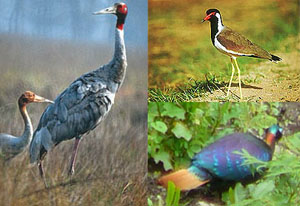
    The increasing loss of habitat due to deforestation, use of chemical fertilizers and human encroachment has caused the decline in the number of country’s bird population over the years. According to the 2011 report of the Department of National Parks and Wildlife Conservation (NPWC) and Bird Conservation Nepal (BCN), 149 species of birds have been listed in the threatened list. “There has been no let up in human activities and the bird habitat is dwindling. Not much effort is being put for conservation. It is only inevitable if the list of threatened bird species have become longer by now,” said Hemraj Baral, an ornithologist. The Zoological Society of London, National Trust for Nature Conservation and Himalayan Nature are jointly conducting a survey to find out the number of bird species in the country. The preliminary study suggests as many as 170 species could fall in the threatened list.

    The increasing loss of habitat due to deforestation, use of chemical fertilizers and human encroachment has caused the decline in the number of country’s bird population over the years. According to the 2011 report of the Department of National Parks and Wildlife Conservation (NPWC) and Bird Conservation Nepal (BCN), 149 species of birds have been listed in the threatened list. “There has been no let up in human activities and the bird habitat is dwindling. Not much effort is being put for conservation. It is only inevitable if the list of threatened bird species have become longer by now,” said Hemraj Baral, an ornithologist. The Zoological Society of London, National Trust for Nature Conservation and Himalayan Nature are jointly conducting a survey to find out the number of bird species in the country. The preliminary study suggests as many as 170 species could fall in the threatened list.

    Source: Ekantipur, 31 January 2014
    http://ekantipur.com/2014/02/02/national/nepal-losing-its-bird-populations-experts/384781.html

  • Een nieuw EU project – Biocomes – biedt boeren, tuinders en bosbouwers uitzicht op tenminste elf nieuwe duurzame gewasbeschermingsmiddelen

    Een nieuw EU project – Biocomes – biedt boeren, tuinders en bosbouwers uitzicht op tenminste elf nieuwe duurzame gewasbeschermingsmiddelen

    Een nieuw EU project – Biocomes – biedt boeren, tuinders en bosbouwers uitzicht op tenminste elf nieuwe duurzame gewasbeschermingsmiddelen. Het betreft biologische gewasbeschermingsmiddelen die zijn gebaseerd op de natuurlijke vijanden van een schadelijk organisme. Ze worden ontwikkeld voor de bestrijding van belangrijke plantenziekten zoals echte meeldauw in granen, Monilinia vruchtrot in fruit en plaaginsecten als de plakker (Lymantria dispar) en de dennensnuitkever in de bosbouw. De nieuwe producten zullen milieuvriendelijke alternatieven bieden voor belangrijke chemische gewasbeschermingsmiddelen in de Europese land- en tuinbouw en in de bosbouw.

    Een nieuw EU project – Biocomes – biedt boeren, tuinders en bosbouwers uitzicht op tenminste elf nieuwe duurzame gewasbeschermingsmiddelen. Het betreft biologische gewasbeschermingsmiddelen die zijn gebaseerd op de natuurlijke vijanden van een schadelijk organisme. Ze worden ontwikkeld voor de bestrijding van belangrijke plantenziekten zoals echte meeldauw in granen, Monilinia vruchtrot in fruit en plaaginsecten als de plakker (Lymantria dispar) en de dennensnuitkever in de bosbouw. De nieuwe producten zullen milieuvriendelijke alternatieven bieden voor belangrijke chemische gewasbeschermingsmiddelen in de Europese land- en tuinbouw en in de bosbouw.

    Bron: Biojournaal, 31-11-2013
    http://www.biojournaal.nl/artikel/14905/Biocomes-nieuwe-duurzame-gewasbeschermingsmiddelen-voor-landbouw-en-bosbouw