Auteur: Henk Tennekes

  • Roseate terns are now close to extinction in Northern Ireland, according to a shock new bird report

    Roseate terns are now close to extinction in Northern Ireland, according to a shock new bird report

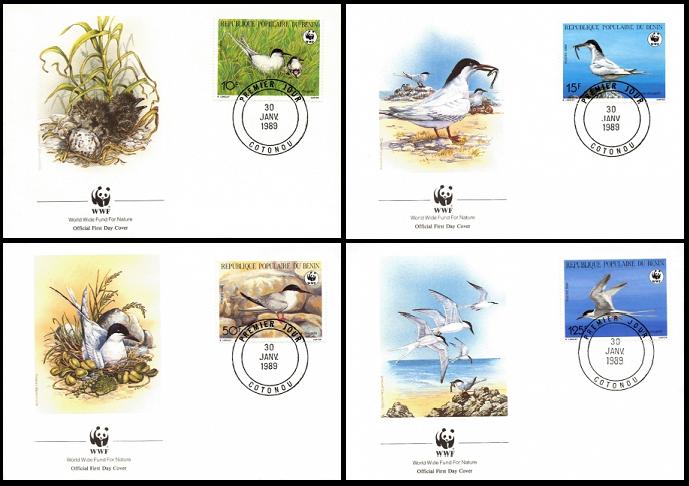
    The study from the British Trust for Ornithology (BTO) has chronicled the fortunes of our seabirds and found that last summer a single pair in Larne Lough laid at least one egg, but no young are known to have fledged. It comes after the species suffered a “near-terminal decline” in the 1980s, according to the first annual Northern Ireland Seabird Report 2013, which charts the changing fortunes of the seabirds making their homes on our coastal habitats. BTO spokesman Shane Wolsey said roseate terns (Sterna dougallii) used to breed in good numbers in some coastal colonies here but stopped breeding on Mew Island in the Copelands in the early 1960s, and left Green Island in Carlingford Lough in the early 1990s. “It’s been a long time coming. Roseate terns have just declined over donkey’s years. The last ones have been breeding for some time in Larne Lough,” he said. “We have one pair in Larne Lough. You only need something to happen to one of those birds and that is the end of that.”

    The study from the British Trust for Ornithology (BTO) has chronicled the fortunes of our seabirds and found that last summer a single pair in Larne Lough laid at least one egg, but no young are known to have fledged. It comes after the species suffered a “near-terminal decline” in the 1980s, according to the first annual Northern Ireland Seabird Report 2013, which charts the changing fortunes of the seabirds making their homes on our coastal habitats. BTO spokesman Shane Wolsey said roseate terns (Sterna dougallii) used to breed in good numbers in some coastal colonies here but stopped breeding on Mew Island in the Copelands in the early 1960s, and left Green Island in Carlingford Lough in the early 1990s. “It’s been a long time coming. Roseate terns have just declined over donkey’s years. The last ones have been breeding for some time in Larne Lough,” he said. “We have one pair in Larne Lough. You only need something to happen to one of those birds and that is the end of that.”

    The cause of the decline remains a mystery, although it appears to be linked to increases in herring gulls and lesser black-backed gulls.

    “The terns declined dramatically as herring gull and lesser black-backed gulls populations increased on the Copelands during the late 1950s and 1960s,” Mr Wolsey said.

    “A huge population of terns had been eradicated by 1966 and that included the roseates. They took a nose-dive at that stage.”

    After that the big gulls peaked in numbers and then dropped again, but the roseate terns never recovered.

    “It’s not a lost cause in that the biggest population in Europe is in Rockabill, two islands off Dublin which are managed by Birdwatch Ireland,” Mr Wolsey added.

    “There are roseate terns about – they’ve been seen at Cockle Island in Groomsport and the Copelands. I saw three one day at Green Island.

    “They come and investigate tern colonies. If you could get it right they would come back, but we are not sure what ‘right’ means.”

    The report also reveals that common tern and sandwich tern populations are also at a low ebb and decreasing.

    Source:
    Belfast Telegraph, 30 March 2014
    http://www.belfasttelegraph.co.uk/news/environment/tern-for-the-worse-once-thriving-seabird-now-virtually-extinct-in-northern-ireland-30125744.html

  • Early-life permethrin exposure imparts long-lasting consequences on the hippocampus such as impairment of long-term memory storage and synaptic morphology

    Early-life permethrin exposure imparts long-lasting consequences on the hippocampus such as impairment of long-term memory storage and synaptic morphology

    During the neurodevelopmental period, the brain is potentially more susceptible to environmental exposure to pollutants. The aim was to determine if neonatal exposure to permethrin (PERM) pesticide, at a low dosage that does not produce signs of obvious abnormalities, could represent a risk for the onset of diseases later in the life.

    During the neurodevelopmental period, the brain is potentially more susceptible to environmental exposure to pollutants. The aim was to determine if neonatal exposure to permethrin (PERM) pesticide, at a low dosage that does not produce signs of obvious abnormalities, could represent a risk for the onset of diseases later in the life.

    Methods: Neonatal rats (from postnatal day 6 to 21) were treated daily by gavage with a dose of PERM (34 mg/kg) close to the no-observed-adverse-effect level (NOAEL), and hippocampal morphology and function of synapses were investigated in adulthood.

    Fear conditioning, passive avoidance and Morris water maze tests were used to assess cognitive skills in rats, whereas electron microscopy analysis was used to investigate hippocampal morphological changes that occurred in adults.

    Results: In both contextual and tone fear conditioning tests, PERM-treated rats showed a decreased freezing. In the passive avoidance test, the consolidation of the inhibitory avoidance was time-limited: the memory was not impaired for the first 24 h, whereas the information was not retained 72 h following training.

    The same trend was observed in the spatial reference memories acquired by Morris water maze. In PERM-treated rats, electron microscopy analysis revealed a decrease of synapses and surface densities in the stratum moleculare of CA1, in the inner molecular layer of the dentate gyrus and in the mossy fibers of the hippocampal areas together with a decrease of perforated synapses in the stratum moleculare of CA1 and in the inner molecular layer of the dentate gyrus.

    Conclusions: Early-life permethrin exposure imparts long-lasting consequences on the hippocampus such as impairment of long-term memory storage and synaptic morphology.
    Source:
    Nasuti C, Fattoretti P, Carloni M, Fedeli D, Ubaldi M, Ciccocioppo R and Gabbianelli R
    Journal of Neurodevelopmental Disorders 2014, 6:7 (29 March 2014)http://healthmedicinet.com/news/neonatal-exposure-to-permethrin-pesticide-causes-lifelong-fear-and-spatial-learning-deficits-and-alters-hippocampal-morphology-of-synapses/
    http://7thspace.com/headlines/455804/neonatal_exposure_to_permethrin_pesticide_causes_lifelong_fear_and_spatial_learning_deficits_and_alters_hippocampal_morphology_of_synapses.html

  • Moderne voedselproductie in handen leggen van de industrie is geen optie. Terug naar oude vervlogen tijden nog minder. Wie begint met het leggen van de puzzel?

    Moderne voedselproductie in handen leggen van de industrie is geen optie. Terug naar oude vervlogen tijden nog minder. Wie begint met het leggen van de puzzel?

    ‘Gedane zaken nemen geen keer’. Vernieuwende technieken en technologie hebben allang hun intrede gedaan in onze voedselproductie. De moderne boerderij is een agrarische fabriek. Dit is geen verwijt, maar een constatering. De nostalgie naar het ambachtelijke landleven staat in schril contrast tot de werkelijkheid. De biologische ideologie en het sterk geromantiseerde beeld van het platteland staan meer dan haaks op huidige en toekomstige landbouwprocessen om tegemoet te komen aan ruim negen miljard monden in de nabije toekomst. Vooruitgang en verandering zijn niet te stoppen, maar ze mogen geen ethische en ecologische grenzen overschrijden. Wij als mondiale samenleving dienen deze grenzen vast te stellen en te bewaken. Wereldleiders moeten hun verantwoordelijk nemen in deze uitdagende kwestie.

    ‘Gedane zaken nemen geen keer’. Vernieuwende technieken en technologie hebben allang hun intrede gedaan in onze voedselproductie. De moderne boerderij is een agrarische fabriek. Dit is geen verwijt, maar een constatering. De nostalgie naar het ambachtelijke landleven staat in schril contrast tot de werkelijkheid. De biologische ideologie en het sterk geromantiseerde beeld van het platteland staan meer dan haaks op huidige en toekomstige landbouwprocessen om tegemoet te komen aan ruim negen miljard monden in de nabije toekomst. Vooruitgang en verandering zijn niet te stoppen, maar ze mogen geen ethische en ecologische grenzen overschrijden. Wij als mondiale samenleving dienen deze grenzen vast te stellen en te bewaken. Wereldleiders moeten hun verantwoordelijk nemen in deze uitdagende kwestie.

    We kunnen toch niet onze planeet gezond houden met monoculturen? Verlies van biodiversiteit en ontbossing hebben gevolgen voor het klimaat en vormen een groot risico voor de groeiende mensenpopulatie. ‘Lijnen trekken tot hier en niet verder’ lijkt moraliserend. Monsanto is een goed voorbeeld van ongebreidelde vrije marktmacht. Dit chemieconcern gebruikt moderne inzichten van de wetenschap (GMO) om het landbouwsysteem naar de eigen hand te zetten. Winstbejag en macht prevaleren boven een duurzame en menselijke voedselproductie.
    Vooruitgang door wetenschap heeft de mens veel gebracht en blijft dit ook in de toekomst doen, maar dan moeten we die toekomst ook veilig stellen. Genetische modificatie aan landbouwgewassen in plaats van klassieke veredeling, kan veel goeds brengen. Het is maar wat je ermee doet. Onze geschiedenis heeft aangetoond dat macht en kennis de mensen naar het hoofd stijgt. Maar laten we het kind niet met het badwater weggooien. Moderne voedselproductie volledig in handen leggen van de industrie, is dus geen optie. Terug naar oude vervlogen tijden nog minder. Wie begint met het leggen van de puzzel?
    Bron: Pascal Philipsen (Boer & Co) in Boerenbusiness, 27 maart 2014
    http://www.boerenbusiness.nl/columnisten/pascal-philipsen/item/10847240/Grenzeloze-voedselproductie-bedreigt-de-wereld

  • We still have a lot to learn about the possible benefits as well as the dangers of GMOs

    We still have a lot to learn about the possible benefits as well as the dangers of GMOs

    You hear a lot these days about genetically modified organisms, with many people arguing that they’ll be a necessity in the not-so-distant future, as climate change stresses agriculture, and as a growing, and increasingly affluent, population consumes more food, and more inefficient animal-based foods. Others argue that we’ll need GMOs to reduce global warming emissions, harm to biodiversity from pesticides, pollution from fertilizers (such as coastal “dead zones”), and overuse of scarce resources like fresh water by industrial agriculture. You might have seen one such argument a few months ago from David Rotman, the editor of MIT Technology Review, in his feature called “Why We Will Need Genetically Modified Foods.” But all these arguments rest on certain assumptions, and these assumptions are flawed, at best. Rotman, for example, argued that we’ll need GMOs because simpler, less controversial options such as breeding are simply too slow. He thinks breeding doesn’t give growers access to enough genetic diversity to allow adaptation to climate challenges and to sufficiently increase yields. Many breeders and molecular biologists disagree.

    You hear a lot these days about genetically modified organisms, with many people arguing that they’ll be a necessity in the not-so-distant future, as climate change stresses agriculture, and as a growing, and increasingly affluent, population consumes more food, and more inefficient animal-based foods. Others argue that we’ll need GMOs to reduce global warming emissions, harm to biodiversity from pesticides, pollution from fertilizers (such as coastal “dead zones”), and overuse of scarce resources like fresh water by industrial agriculture. You might have seen one such argument a few months ago from David Rotman, the editor of MIT Technology Review, in his feature called “Why We Will Need Genetically Modified Foods.” But all these arguments rest on certain assumptions, and these assumptions are flawed, at best. Rotman, for example, argued that we’ll need GMOs because simpler, less controversial options such as breeding are simply too slow. He thinks breeding doesn’t give growers access to enough genetic diversity to allow adaptation to climate challenges and to sufficiently increase yields. Many breeders and molecular biologists disagree.

    As pointed out by the many authors of a recent paper in Nature, we have barely scratched the surface of the genetic potential of crop species. Research on many major crops over the past 20 years such as wheat and its relatives has shown that current widely grown crop varieties use only a small fraction of available genetic potential. The so-called “yield plateau” of the last several decades in some crops is more likely due to complacency and reduced funding after the green revolution rather than deficiencies in breeding potential.

    And while it’s true there have been advances in GMO technology in recent years, it’s also true that there have been advances in breeding technologies, such as genomic methods that may speed the breeding process in some cases. For example, when a flood tolerance gene was identified in an obscure rice biotype, the use of marker technology led to improved rice varieties in about five years, rather than the typical 10 to 15.

    Some argue that the development of GMOs saves time—another questionable assertion. It typically takes 10 or more years to develop a genetically engineered trait—a time-frame similar to breeding. This fact was also recently acknowledged by a Monsanto executive. GMOs require years of field testing to ensure that the gene functions as expected, with no nasty surprises for farmers, under the varying conditions that a crop will face after commercialization.

    While breeding continues to meet important challenges like improving drought tolerance, improving nitrogen fertilizer efficiency, or increasing yield, genetic engineering has contributed little or nothing. For example, there is now one variety of genetically modified corn, tolerant to moderate drought, which would improve overall productivity by a total of only about 1 percent in the United States. By contrast, breeding and agronomy have improved corn drought tolerance by about 1 percent per year over the past three decades. And recent years have seen the development through conventional breeding of many drought tolerant varieties of corn, cassava, rice, wheat, millet, and sorghum.

    None of this means that GMOs won’t make some contributions that improve crop resilience, efficiency, or productivity. But that is different than establishing the need for GMOs, especially when all the current evidence suggests that breeding is more effective overall.

    And let’s not forget that there are solutions to our food issues that have nothing to do with genetics. Genetic improvements must be designed to complement agroecologically based farming systems to adequately address the challenges facing agriculture. By contrast, GMOs (and many conventional crop varieties) have been designed for use in unsustainable industrial monoculture farming systems. Prominent environmental scientist Jonathan Foley of the University of Minnesota concluded in a recent article that “While future genetically modified crops could add other beneficial plant traits, which might help boost productivity in crucial crops, I think the best answers lie elsewhere.” He pointed to several non-genetic alternatives, including reducing food waste (which accounts for about 30 to 40 percent of current food production), reducing our consumption of animal products, and reducing the amount of food crops used for biofuels.

    There are yet other ways to improve agriculture. Crop rotations, largely abandoned by industrial agriculture, typically increase yields by 20 or 30 percent. Water holding capacity of soil can be improved, and susceptibility to drought lessened, by planting cover crops that increase soil organic matter. Such methods can greatly reduce water pollution from nitrogen and the need for pesticides.

    Backers of GMOs also tend to downplay the unresolved challenges of the technology. One such challenge is the high economic concentration of the seed industry, facilitated by gene patents. Current uses of the technology also seem to encourage the expansion of industrial monoculture farming, with all its problems. And most of the pipeline for GMOs is more of the same—herbicide resistant crops that will exacerbate pesticide use.

    It’s also worth noting that there’s no real consensus on GMO crop safety. Although many of the crops may well be benign, some could be harmful, prompting unresolved questions about the adequacy of current regulations.

    And let’s consider the opportunity costs in pursuing GMOs. Money invested in GMOs is money that won’t go into the often cheaper and better solutions discussed above, and which are currently greatly underfunded.

    The point is that the so-called “need” for GMOs that we hear about from some circles isn’t really an adequately supported assertion. We still have a lot to learn about the possible benefits as well as the dangers of GMOs. And it’s important to remember that we have many better alternatives that are far from played out.
    Source: Doug Gurian-Sherman in MIT Technology Review, March 27, 2014
    http://www.technologyreview.com/view/525931/are-gmos-worth-the-trouble/
    Doug Gurian-Sherman is a senior scientist in the Food and Environment Program at the Union of Concerned Scientists, a nonprofit science advocacy group.
  • Volgens een Braziliaanse wetenschapper kunnen ratten bij een kleine dosis Roundup hersenschade oplopen

    Volgens een Braziliaanse wetenschapper kunnen ratten bij een kleine dosis Roundup hersenschade oplopen

    In een recent onderzoek laat de Braziliaanse wetenschapper Cattani zien dat ratten, bij een kleine dosis Roundup, hersenschade (in de hippocampus) kunnen ondervinden. De beestjes in het laboratorium van Cattani kregen op gezette tijden één procent Roundup in hun drinkwater gemengd. Na deze dosis trad er neurotoxiciteit op. Het onderzoek van Cattani is op 15 maart 2014 gepubliceerd in de wetenschappelijke journal Toxicology en werd gefinancierd door het Conselho Nacional de Desenvolvimento, een organisatie van het Braziliaanse ministerie van Wetenschap en Techniek. Vorige maand werd Monsanto’s Roundup ook al uit academische hoek onder vuur genomen. Dokter Channa Jayasumana constateerde in zijn paper, die op 20 februari in de International Journal of Environmental Research and Public Health werd gepubliceerd, een verband tussen het aantal nierziektes onder boeren in Sri Lanka en het gebruik van de onkruidverdelger Roundup.

    In een recent onderzoek laat de Braziliaanse wetenschapper Cattani zien dat ratten, bij een kleine dosis Roundup, hersenschade (in de hippocampus) kunnen ondervinden. De beestjes in het laboratorium van Cattani kregen op gezette tijden één procent Roundup in hun drinkwater gemengd. Na deze dosis trad er neurotoxiciteit op. Het onderzoek van Cattani is op 15 maart 2014 gepubliceerd in de wetenschappelijke journal Toxicology en werd gefinancierd door het Conselho Nacional de Desenvolvimento, een organisatie van het Braziliaanse ministerie van Wetenschap en Techniek. Vorige maand werd Monsanto’s Roundup ook al uit academische hoek onder vuur genomen. Dokter Channa Jayasumana constateerde in zijn paper, die op 20 februari in de International Journal of Environmental Research and Public Health werd gepubliceerd, een verband tussen het aantal nierziektes onder boeren in Sri Lanka en het gebruik van de onkruidverdelger Roundup.

    Onderzoeken als die van Cattani en Jayasumana vormen – in hoeverre deze dan ook worden tegengesproken door andere studies en Monsanto zelf – een gevaar voor de omzet van het bedrijf. Zo heeft de regering van Sri Lanka het middel Roundup op basis van de studie van Jayasumana verboden. Daarnaast staat het land El Salvador op het punt om de goedverkopende pesticide te verbieden.

    Bron:
    http://www.ftm.nl/ah-oh-monsanto-roundup-ratten-krijgen-hersenschade/

  • Roundup® (a glyphosate-based herbicide) leads to neurotoxicity in hippocampus of immature rats

    Roundup® (a glyphosate-based herbicide) leads to neurotoxicity in hippocampus of immature rats

    The aim of this study was to investigate whether Roundup® (a glyphosate-based herbicide) leads to neurotoxicity in hippocampus of immature rats following acute (30min) and chronic (pregnancy and lactation) pesticide exposure. Maternal exposure to pesticide was undertaken by treating dams orally with 1% Roundup® (0.38% glyphosate) during pregnancy and lactation (till 15-day-old). Hippocampal slices from 15 day old rats were acutely exposed to Roundup® (0.00005-0.1%) during 30min and experiments were carried out to determine whether glyphosate affects 45Ca2+ influx and cell viability. Moreover, we investigated the pesticide effects on oxidative stress parameters, 14C-α-methyl-amino-isobutyric acid (14C-MeAIB) accumulation, as well as glutamate uptake, release and metabolism. Results showed that acute exposure to Roundup® (30min) increases 45Ca2+ influx by activating NMDA receptors and voltage-dependent Ca2+ channels, leading to oxidative stress and neural cell death.

    The aim of this study was to investigate whether Roundup® (a glyphosate-based herbicide) leads to neurotoxicity in hippocampus of immature rats following acute (30min) and chronic (pregnancy and lactation) pesticide exposure. Maternal exposure to pesticide was undertaken by treating dams orally with 1% Roundup® (0.38% glyphosate) during pregnancy and lactation (till 15-day-old). Hippocampal slices from 15 day old rats were acutely exposed to Roundup® (0.00005-0.1%) during 30min and experiments were carried out to determine whether glyphosate affects 45Ca2+ influx and cell viability. Moreover, we investigated the pesticide effects on oxidative stress parameters, 14C-α-methyl-amino-isobutyric acid (14C-MeAIB) accumulation, as well as glutamate uptake, release and metabolism. Results showed that acute exposure to Roundup® (30min) increases 45Ca2+ influx by activating NMDA receptors and voltage-dependent Ca2+ channels, leading to oxidative stress and neural cell death.

    The mechanisms underlying Roundup®-induced neurotoxicity also involve the activation of CaMKII and ERK. Moreover, acute exposure to Roundup® increased 3H-glutamate released into the synaptic cleft, decreased GSH content and increased the lipoperoxidation, characterizing excitotoxicity and oxidative damage. We also observed that both acute and chronic exposure to Roundup® decreased 3H-glutamate uptake and metabolism, while induced 45Ca2+ uptake and 14C-MeAIB accumulation in immature rat hippocampus. Taken together, these results demonstrated that Roundup® might lead to excessive extracellular glutamate levels and consequently to glutamate excitotoxicity and oxidative stress in rat hippocampus.

    Source: Cattani D et al. Toxicology. 2014 Mar 15. pii: S0300-483X(14)00049-3. doi: 10.1016/j.tox.2014.03.001.
    http://www.ncbi.nlm.nih.gov/pubmed/24636977

  • Widespread Use and Frequent Detection of Neonicotinoid Insecticides in Wetlands of Canada’s Prairie Pothole Region

    Widespread Use and Frequent Detection of Neonicotinoid Insecticides in Wetlands of Canada’s Prairie Pothole Region

    Neonicotinoids currently dominate the insecticide market as seed treatments on Canada’s major Prairie crops (e.g., canola). The potential impact to ecologically significant wetlands in this dominantly agro-environment has largely been overlooked while the distribution of use, incidence and level of contamination remains unreported. We modelled the spatial distribution of neonicotinoid use across the three Prairie Provinces in combination with temporal assessments of water and sediment concentrations in wetlands to measure four active ingredients (clothianidin, thiamethoxam, imidacloprid and acetamiprid). From 2009 to 2012, neonicotinoid use was increasing; by 2012, applications covered an estimated ~11 million hectares (44% of Prairie cropland) with >216,000 kg of active ingredients. Thiamethoxam, followed by clothianidin, were the dominant seed treatments by mass and area. Areas of high neonicotinoid use were identified as high density canola or soybean production. Water sampled four times from 136 wetlands (spring, summer, fall 2012 and spring 2013) across four rural municipalities in Saskatchewan similarly revealed clothianidin and thiamethoxam in the majority of samples.

    Neonicotinoids currently dominate the insecticide market as seed treatments on Canada’s major Prairie crops (e.g., canola). The potential impact to ecologically significant wetlands in this dominantly agro-environment has largely been overlooked while the distribution of use, incidence and level of contamination remains unreported. We modelled the spatial distribution of neonicotinoid use across the three Prairie Provinces in combination with temporal assessments of water and sediment concentrations in wetlands to measure four active ingredients (clothianidin, thiamethoxam, imidacloprid and acetamiprid). From 2009 to 2012, neonicotinoid use was increasing; by 2012, applications covered an estimated ~11 million hectares (44% of Prairie cropland) with >216,000 kg of active ingredients. Thiamethoxam, followed by clothianidin, were the dominant seed treatments by mass and area. Areas of high neonicotinoid use were identified as high density canola or soybean production. Water sampled four times from 136 wetlands (spring, summer, fall 2012 and spring 2013) across four rural municipalities in Saskatchewan similarly revealed clothianidin and thiamethoxam in the majority of samples.

    In spring 2012 prior to seeding, 36% of wetlands contained at least one neonicotinoid. Detections increased to 62% in summer 2012, declined to 16% in fall, and increased to 91% the following spring 2013 after ice-off. Peak concentrations were recorded during summer 2012 for both thiamethoxam (range:

  • Dutch Parliament votes to ban all neonicotinoid pesticide uses in the Netherlands

    Dutch Parliament votes to ban all neonicotinoid pesticide uses in the Netherlands

    On March 18, a majority of Dutch parliament rallied behind a motion of the Animal Welfare Party for a national ban on the use of all neonicotinoid insecticides in agriculture and retail sales. The Party for Animal Welfare has been campaigning for many years against the neonicotinoids. In early 2013 a parliamentary majority endorsed a motion of Esther Ouwehand for a European ban on the pesticides. Due to this motion the use of three types of neonicotinoids: imidacloprid, clothianidin and thiamethoxam is now restricted in all 27 countries of the EU. However, the European ban on neonicotinoids only applies to selected crops which are attractive to bees like sunflowers, canola and maize; this means that as much as 80 % of crops which are treated with neonicotinoids in the Netherlands remain unaffected by the EU ban. Dutch Parliament now forced Secretary of State Dijksma to take further action. A majority of political parties: PvdA , SP, GL , D66 , 50 + and Freedom Party, endorsed a ban on ALL neonicotinoids in the Netherlands for all uses in agriculture, domestic gardens and landscape uses. The motion which was passed also demanded a complete ban on a related systemic pesticide, fipronil.

    On March 18, a majority of Dutch parliament rallied behind a motion of the Animal Welfare Party for a national ban on the use of all neonicotinoid insecticides in agriculture and retail sales. The Party for Animal Welfare has been campaigning for many years against the neonicotinoids. In early 2013 a parliamentary majority endorsed a motion of Esther Ouwehand for a European ban on the pesticides. Due to this motion the use of three types of neonicotinoids: imidacloprid, clothianidin and thiamethoxam is now restricted in all 27 countries of the EU. However, the European ban on neonicotinoids only applies to selected crops which are attractive to bees like sunflowers, canola and maize; this means that as much as 80 % of crops which are treated with neonicotinoids in the Netherlands remain unaffected by the EU ban. Dutch Parliament now forced Secretary of State Dijksma to take further action. A majority of political parties: PvdA , SP, GL , D66 , 50 + and Freedom Party, endorsed a ban on ALL neonicotinoids in the Netherlands for all uses in agriculture, domestic gardens and landscape uses. The motion which was passed also demanded a complete ban on a related systemic pesticide, fipronil.

    Source: Ontario Beekeepers’ Association, March 2014
    http://www.ontariobee.com/inside-oba/news-and-updates/dutch-parliament-votes-to-ban-all-neonicotinoid-pesticide-uses-in-the-netherlands

  • Pesticides make the life of earthworms miserable

    Pesticides make the life of earthworms miserable

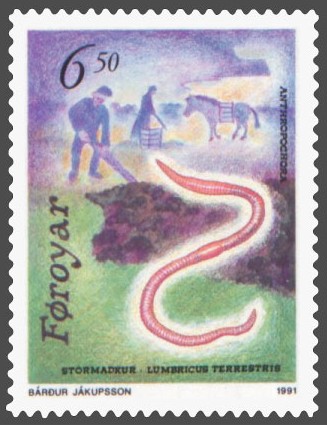
    Pesticides have a direct impact on the physiology and behaviour of earthworms, a Danish/French research team reports after having studied earthworms that were exposed to pesticides over generations. “We see that the worms have developed methods to detoxify themselves, so that they can live in soil sprayed with fungicide. They spend a lot of energy on detoxifying, and that comes with a cost: The worms do not reach the same size as other worms, and we see that there are fewer of them in sprayed soil. An explanation could be that they are less successful at reproducing, because they spend their energy on ridding themselves of the pesticide”, the researchers, Ph. D. student Nicolas Givaudan and associate professor, Claudia Wiegand, say.

    Pesticides have a direct impact on the physiology and behaviour of earthworms, a Danish/French research team reports after having studied earthworms that were exposed to pesticides over generations. “We see that the worms have developed methods to detoxify themselves, so that they can live in soil sprayed with fungicide. They spend a lot of energy on detoxifying, and that comes with a cost: The worms do not reach the same size as other worms, and we see that there are fewer of them in sprayed soil. An explanation could be that they are less successful at reproducing, because they spend their energy on ridding themselves of the pesticide”, the researchers, Ph. D. student Nicolas Givaudan and associate professor, Claudia Wiegand, say.

    Claudia Wiegand is from the Department of Biology at University of Southern Denmark, and she led the research together with Francoise Binet from University Rennes 1 in France. Nicolas Givaudan is doing his Ph. D. as a joint degree between University of Southern Denmark and University of Rennes 1 in France. They researchers reached their findings by metabolomic profiling and energetic parameters.

    The researchers set up an experiment to study the behaviour of the earthworm species Aporectodea caliginosa. They moved two portions of farmed soil with worms into the lab. One portion was taken from a local organic field, the other from a local conventionally cultivated field that had been sprayed with fungicide for 20 years. This soil had remnants of the internationally commonly used fungicide Opus® at a level common in fields. When crops are sprayed with fungicide, only a small part of the chemical is absorbed by the plant. The waste can be up to 70 per cent, and much of the fungicide ends up in the soil.

    In the laboratory, the researchers could see how the fungicide-exposed worms adapted to the toxic environment. Over generations the worms have developed a method to detoxify themselves.

    “The fungicide increased metabolism rate in the worms, both the adapted worms and the not adapted worms. In the not adapted worms we saw that their energy reserve of glycogen was used faster. Contrastingly, only in the adapted worms we saw that amino acids and protein contents increased, suggesting a detoxification mechanism. “They also increased their feeding activity, possibly to compensate for the increase in energy demand”, the researchers said.

    Often there are 2 – 3 times more earthworms in unsprayed soil than in sprayed soil.

    “The reason for this may be that earthworms in sprayed soil do not reproduce as successfully as worms in unsprayed soil, because they need to spend more energy on detoxifying”, the researchers say.

    They also weighed the worms in the experiment and found that the worms exposed to fungicide weighed only half of the worms in organic soil. Worms in organic soil had an average weight of 0.6 grams, worms in conventionally cultivated soil had an average weight of 0.3 grams.

    Read more at: http://phys.org/news/2014-03-pesticides-life-earthworms-miserable.html#jCp

  • Bijen die met neonicotinoiden in aanraking komen raken de weg kwijt

    Bijen die met neonicotinoiden in aanraking komen raken de weg kwijt

    Zelfs in een heel kleine hoeveelheid zijn insecticiden gevaarlijk voor bijen en hommels. Dat schrijft neurobioloog Randolf Menzel, van de Vrije Universiteit Berlijn, in een rapport. Hij onderzocht wat de gevolgen waren voor bijen wanneer ze aan bepaalde middelen werden blootgesteld. Vooral het oriëntatie vermogen blijkt te worden aangetast, meldt de website Top Agrar. Uit het onderzoek van Menzel bleek dat een aantal insecticiden de organen voor oriëntatie verstoren. Dat gebeurde bij de werkzame stof Imidacloprid, gebruikt in Gaucho en Sombrero, Clothianidin, gebruikt in Poncho en Thiacloprid, dat in het middel Calypso zit. Allemaal middelen die in de akkerbouwsector worden ingezet, voor onder andere de zaadcoating van suikerbieten.

    Zelfs in een heel kleine hoeveelheid zijn insecticiden gevaarlijk voor bijen en hommels. Dat schrijft neurobioloog Randolf Menzel, van de Vrije Universiteit Berlijn, in een rapport. Hij onderzocht wat de gevolgen waren voor bijen wanneer ze aan bepaalde middelen werden blootgesteld. Vooral het oriëntatie vermogen blijkt te worden aangetast, meldt de website Top Agrar. Uit het onderzoek van Menzel bleek dat een aantal insecticiden de organen voor oriëntatie verstoren. Dat gebeurde bij de werkzame stof Imidacloprid, gebruikt in Gaucho en Sombrero, Clothianidin, gebruikt in Poncho en Thiacloprid, dat in het middel Calypso zit. Allemaal middelen die in de akkerbouwsector worden ingezet, voor onder andere de zaadcoating van suikerbieten.

    ‘De uitkomst van het onderzoek is van algemeen belang’, meent Menzel. ‘Het gebruik van de zogenaamde neonicotinoiden is controversieel en er wordt heftig over gediscussieerd. Deze stoffen beïnvloeden het zenuwstelsel van de bij. Er is wel vaker onderzoek gedaan naar de effecten maar niet eerder zo gedetailleerd, gericht op een heel bijenvolk.’ Zo kwam Menzel erachter dat bijen, die waren aangetast, vaak hun weg niet meer terug naar huis konden vinden. De bijen die wel terugkwamen deden dit vaak met een omweg.

    Bron: Boerenbusiness, 25 maart 2014
    http://www.boerenbusiness.nl/artikel/item/10847018/Insecticide-verstoort-orientatie-van-bijen