Auteur: Henk Tennekes

  • De slangenpopulaties zijn sinds 1998 dramatisch achteruit gegaan

    De slangenpopulaties zijn sinds 1998 dramatisch achteruit gegaan

    Veel slangenpopulaties zijn vanaf 1998 vrij plotseling ingestort, meldt een internationaal biologengezelschap. Een groep biologen rapporteerde er in 2010 over in Biology Letters, en gebruikt daarbij meerdere malen het woord ‘alarmerend’. Ze hebben zo veel mogelijk slangentellingen samengevoegd. Chris Reading en zijn collega’s hadden gegevens van niet meer dan zeventien slangenpopulaties van in totaal elf soorten, meestal pas daterend vanaf de jaren negentig van de vorige eeuw. Ze zagen bij elf van de zeventien slangenpopulaties een gelijktijdige, snelle afname van het aantal dieren. Tot 1998 was er nog niets aan de hand, maar daarna daalde het aantal slangen binnen enkele jaren tot een fractie van het oorspronkelijke aantal. Opvallend was dat het aantal vrouwtjes harder achteruitging dan het aantal mannetjes. Van de damesslangen verdween gemiddeld ruim 80 procent, van de heren ‘maar’ 64 procent.

    Veel slangenpopulaties zijn vanaf 1998 vrij plotseling ingestort, meldt een internationaal biologengezelschap. Een groep biologen rapporteerde er in 2010 over in Biology Letters, en gebruikt daarbij meerdere malen het woord ‘alarmerend’. Ze hebben zo veel mogelijk slangentellingen samengevoegd. Chris Reading en zijn collega’s hadden gegevens van niet meer dan zeventien slangenpopulaties van in totaal elf soorten, meestal pas daterend vanaf de jaren negentig van de vorige eeuw. Ze zagen bij elf van de zeventien slangenpopulaties een gelijktijdige, snelle afname van het aantal dieren. Tot 1998 was er nog niets aan de hand, maar daarna daalde het aantal slangen binnen enkele jaren tot een fractie van het oorspronkelijke aantal. Opvallend was dat het aantal vrouwtjes harder achteruitging dan het aantal mannetjes. Van de damesslangen verdween gemiddeld ruim 80 procent, van de heren ‘maar’ 64 procent.

    Bron: NPO Wetenschap
    http://www.npowetenschap.nl/nieuws/artikelen/2010/juni/Slangenalarm.html
    Referentie: Chris Reading e.a.: ‘Are snake populations in widespread decline?’ Biology Letters, 9 juni 2010

  • De ringslang heeft het zwaar in Nederland

    De ringslang heeft het zwaar in Nederland

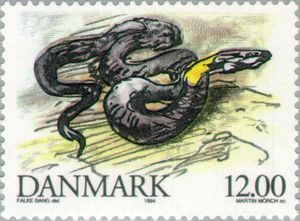
    De Ringslang (Natrix natrix) is landelijk gezien zeer kwetsbaar. De achteruitgang heeft vooral te maken met intensivering van de landbouw, verdroging en versnippering van de leefgebieden, verkeersslachtoffers, enz. Ook het verdwijnen van geschikte eilegplaatsen (open stalmesthopen) spelen de dieren parten. (Rode Lijstsoort). Het is niet altijd even duidelijk te zien maar de Ringslang is het duidelijkst te herkennen aan de oranje kleurige vlekjes achter op de kop. Water is voor de Ringslang van levensbelang. Daar vindt hij de kikkers, de visjes en salamanders die hij voornamelijk eet. De Ringslang houd van beschutte plekjes uit de wind waar zon en schaduw elkaar afwisselen. Regelmatig worden ze gezien onder, maar soms ook in, bramenstruiken. Hier liggen ze veilig. Het dier is een echte zwerver en kan grote afstanden afleggen. De Ringslang is niet giftig en volkomen ongevaarlijk!

    De Ringslang (Natrix natrix) is landelijk gezien zeer kwetsbaar. De achteruitgang heeft vooral te maken met intensivering van de landbouw, verdroging en versnippering van de leefgebieden, verkeersslachtoffers, enz. Ook het verdwijnen van geschikte eilegplaatsen (open stalmesthopen) spelen de dieren parten. (Rode Lijstsoort). Het is niet altijd even duidelijk te zien maar de Ringslang is het duidelijkst te herkennen aan de oranje kleurige vlekjes achter op de kop. Water is voor de Ringslang van levensbelang. Daar vindt hij de kikkers, de visjes en salamanders die hij voornamelijk eet. De Ringslang houd van beschutte plekjes uit de wind waar zon en schaduw elkaar afwisselen. Regelmatig worden ze gezien onder, maar soms ook in, bramenstruiken. Hier liggen ze veilig. Het dier is een echte zwerver en kan grote afstanden afleggen. De Ringslang is niet giftig en volkomen ongevaarlijk!

    Bron: Natuurvereniging Geaflecht
    http://www.geaflecht.nl/flora_fauna.php?sid=3

  • Henk Tennekes was invited to lecture at Harvard on new approaches to pesticide risk assessment

    Henk Tennekes was invited to lecture at Harvard on new approaches to pesticide risk assessment

    The Radcliffe Institute for Advanced Study at Harvard extended an invitation to Dutch toxicologist Henk Tennekes to participate in the workshop, “Colony Collapse Disorder (CCD) & Neonics: Can we reverse the trend of losing honeybees?” The workshop was held on the Radcliffe Institute campus in Cambridge, MA. It began on the morning of Wednesday, February 11 and concluded at noon on Thursday, February 12, 2015. The workshop convened a panel of international and U.S. experts with backgrounds relevant to public health, toxicology, entomology, governmental policy affairs, and commercial beekeeping to discuss the science on the hazards of neonics to bees and other pollinators, and the public policy implication to save bees and other pollinators.

    The Radcliffe Institute for Advanced Study at Harvard extended an invitation to Dutch toxicologist Henk Tennekes to participate in the workshop, “Colony Collapse Disorder (CCD) & Neonics: Can we reverse the trend of losing honeybees?” The workshop was held on the Radcliffe Institute campus in Cambridge, MA. It began on the morning of Wednesday, February 11 and concluded at noon on Thursday, February 12, 2015. The workshop convened a panel of international and U.S. experts with backgrounds relevant to public health, toxicology, entomology, governmental policy affairs, and commercial beekeeping to discuss the science on the hazards of neonics to bees and other pollinators, and the public policy implication to save bees and other pollinators.

  • The rusty blackbird is rapidly disappearing from the scene in North America

    The rusty blackbird is rapidly disappearing from the scene in North America

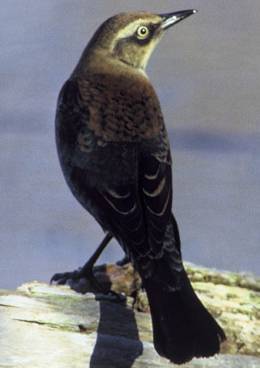
    Who knew they were disappearing? And, in reality, who knew there was such a thing as a rusty blackbird (Euphagus carolinus). “I think of lot of birders do enjoy rusty blackbirds,” said Nick Sly, a graduate student in the Department of Animal Biology at the University of Illinois. “They aren’t a species that aren’t generally known to the broader public.”Sly is a volunteer coordinator for this year’s Rusty Blackbird Spring Migration Blitz. The blitz is a three-year program designed to follow rusty blackbirds on their migration path from the swampy woodlands of southeastern United States to the boreal forests of Canada. The peak migration through Illinois is March through mid-April. “It used to be a really common bird throughout Canada and the eastern United States,” Sly said. “It’s experienced this pretty massive population decline, losing 90-95 percent of its population over the past four decades. Nobody really expected that. There is really no obvious reason.”

    Who knew they were disappearing? And, in reality, who knew there was such a thing as a rusty blackbird (Euphagus carolinus). “I think of lot of birders do enjoy rusty blackbirds,” said Nick Sly, a graduate student in the Department of Animal Biology at the University of Illinois. “They aren’t a species that aren’t generally known to the broader public.”Sly is a volunteer coordinator for this year’s Rusty Blackbird Spring Migration Blitz. The blitz is a three-year program designed to follow rusty blackbirds on their migration path from the swampy woodlands of southeastern United States to the boreal forests of Canada. The peak migration through Illinois is March through mid-April. “It used to be a really common bird throughout Canada and the eastern United States,” Sly said. “It’s experienced this pretty massive population decline, losing 90-95 percent of its population over the past four decades. Nobody really expected that. There is really no obvious reason.”

    “It’s a weird problem,” Sly said. “Most of the time when you have an endangered species they are restricted to a particular habitat. The rusty blackbird breeds in the boreal forests Canada. There is tons of that habitat. It winters in swampy forests in the eastern United States. There is plenty of that habitat too.”

    Scientists have hypothesized that migratory habitat might be the problem. That notion gave rise to the coming blitz.

    “We don’t know what the birds are doing during migration,” Sly said. “They are going to look at that by using birders, having them go out and finding them during migration and report their sightings to eBird.

    “The blitz is just an effort to get more people to do that, specifically looking for rusty blackbirds. We’re talking tens of thousands of data points across the map. Once we know where they’re migrating, when they are migrating we can say they need these habitats while migrating.”

    Last year’s effort proved successful.

    More than 4,700 birders submitted 13,400 observations last year. That was a 61 percent increase in sightings reported to eBird compared to previous years.

    The decline in the rusty blackbird’s population was first noted in the 1990s.

    Part of the difficulty in identifying the decline is the nondescript nature of the rusty blackbird. It is about the size of a red-wing blackbird, smaller than a grackle, but larger than a starling. And, like other blackbirds, it tends to join large flocks during non-breeding season.

    “They’re black,” Sly said matter-of-factly. “In particular they are called the rusty blackbird because they have this rusty brown speckling pattern over the black in the non-breeding. In the breeding season they are a bright, kind of glossy black.”

    Other than issues with migratory habitat, there are some other possible reasons for the bird’s decline.

    Blackbirds are sometimes considered a nuisance species by farmers. Large flocks of blackbirds are targeted with pest control measures in some areas.

    And, Sly noted that slight changes to habitat may be partially responsible.

    On their wintering grounds, rusty blackbirds favor wet forest habitat, shallow standing water. If management techniques change, resulting in slightly deeper water, the habitat could prove unsuitable.

    Scientists hope data collected during the blitz will provide some answers.

    “We were definitely successful in getting people to get out to look for them,” Sly said.

    Source: The Southern, February 13, 2015
    http://thesouthern.com/sports/outdoors/rusty-blackbirds-disappearing-from-landscape/article_2e5bbe48-844e-51d3-bc90-2a63cd3da859.html

  • Wading Bird Nesting In Key U.S. Area Plummets 28 Percent

    Wading Bird Nesting In Key U.S. Area Plummets 28 Percent

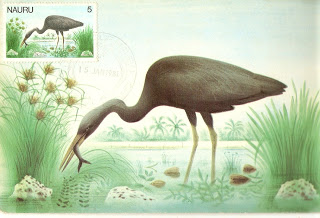
    One of the nation’s largest and most important wading bird breeding areas—south Florida, which includes Everglades National Park—has seen wading bird nesting plummet 28 percent below 2013 levels and about 18 percent below the nine-year average for the area. According to the South Florida Wading Bird Report from the South Florida Water Management District, an estimated 34,714 wading bird nests were initiated in south Florida during the 2014 nesting season (December 2013–July 2014), a significant drop from last year’s estimate of 48,291 nests and well below the average of the last nine years—42,782 nests.

    One of the nation’s largest and most important wading bird breeding areas—south Florida, which includes Everglades National Park—has seen wading bird nesting plummet 28 percent below 2013 levels and about 18 percent below the nine-year average for the area. According to the South Florida Wading Bird Report from the South Florida Water Management District, an estimated 34,714 wading bird nests were initiated in south Florida during the 2014 nesting season (December 2013–July 2014), a significant drop from last year’s estimate of 48,291 nests and well below the average of the last nine years—42,782 nests.

    Source: The Chattanoogan, February 10, 2015
    http://www.chattanoogan.com/2015/2/10/293776/Wading-Bird-Nesting-In-Key-U.S.-Area.aspx

  • Bee brains and colony health jeopardised by pesticide exposure

    Bee brains and colony health jeopardised by pesticide exposure

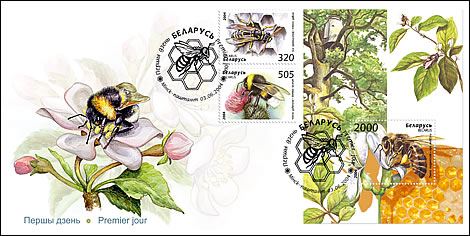
    Research at the Universities of Dundee and St Andrews has confirmed that levels of neonicotinoid insecticides accepted to exist in agriculture cause both impairment of bumblebees’ brain cells and subsequent poor performance by bee colonies. The contribution of the neonicotinoids to the global decline of insect pollinators is controversial and contested by many in the agriculture industry. However, the new research, published in the Journal of the Federation of American Societies for Experimental Biology, demonstrates for the first time that the low levels found in the nectar and pollen of plants is sufficient to deliver neuroactive levels to their site of action, the bee brain.

    Research at the Universities of Dundee and St Andrews has confirmed that levels of neonicotinoid insecticides accepted to exist in agriculture cause both impairment of bumblebees’ brain cells and subsequent poor performance by bee colonies. The contribution of the neonicotinoids to the global decline of insect pollinators is controversial and contested by many in the agriculture industry. However, the new research, published in the Journal of the Federation of American Societies for Experimental Biology, demonstrates for the first time that the low levels found in the nectar and pollen of plants is sufficient to deliver neuroactive levels to their site of action, the bee brain.

    Dr Chris Connolly, a Reader in the Division of Neuroscience at Dundee’s School of Medicine, has spent several years examining the risk from neonicotinoids and other commonly used classes of pesticides on both honeybees and bumblebees.

    He and his colleagues at Dundee carried out combined laboratory and field studies and the data was analysed at St Andrews. The results showed very low levels of neonicotinoids caused bumblebee colonies to have an estimated 55 per cent reduction in live bee numbers, a 71 per cent reduction in healthy brood cells, and a 57 per cent reduction in the total bee mass of a nest.

    Dr Connolly says the paper represents the best scientific evidence to date connecting neonicotinoid consumption to poor performance of bees and that the effects of the pesticide must be considered by policy makers seeking to protect the abundance and diversity of insect pollinators.

    “Our research demonstrates beyond doubt that the level of neonicotinoids generally accepted as the average level present in the wild causes brain dysfunction and colonies to perform poorly when consumed by bumblebees,” he said. “In fact, our research showed that the ability to perturb brain cells can be found at 1/5 to 1/10 of the levels that people think are present in the wild.

    “This is not surprising as pesticides are designed to affect brains of insects so it is doing what it is supposed to do but on a bumblebee as well as the pest species. The bumblebees don’t die due to exposure to neonicotinoids but their brains cells don’t perform well as a result and this causes adverse outcomes for individual bees and colonies.

    “This is not proof that neonicotinoids are solely responsible for the decline in insect pollinators, but a clear linear relationship is now established. We can now be confident that at these levels, neonicotinoids disrupt brain function, bee learning and the ability to forage for food and so limit colony growth.

    “It may be possible to help bees if more food (bee-friendly plants) were available to bees in the countryside and in our gardens. We suggest that the neonicotinoids are no longer used on any bee-friendly garden plants, or on land that is, or will be, used by crops visited by bees or other insect pollinators.”

    Insect pollinators provide essential ecosystem services and make an estimated contribution of $215 billion to worldwide economies every year while supporting much of the world’s food production. Recent years have seen up to 30 per cent annual honeybee colony losses, while the population of butterflies and other insects is also down and similar declines in insect-pollinated wild plants.

    Neonicotinoid contamination of the nectar and pollen consumed by bees is around 2.5 parts per billion (~ 1 teaspoon in an Olympic swimming pool). There has been wide debate over whether this level is enough to affect the bees. To answer this question, the Dundee-St Andrews team fed bumblebees this low level of neonicotinoid and measured its accumulation at its target site, the bee brain.

    At this level, some neonicotinoids were fast acting, shutting down the major site of energy production, the mitochondria, in brain cells. At even lower levels, brain cells become vulnerable to stimulation by the normal neurotransmitter used to transmit information. Under these conditions, brain cells cannot function and bees struggle to learn important life skills, such as recognising that the scent of a flower predicts a food reward, or remembering their way home.

    To test if these conditions affected whole colonies, the researchers provided nests with 2.5 ppb neonicotinoid in sugar water, while they were free flying in a wilderness environment in the Scottish Highlands, searching for nectar and pollen to raise their brood. They found that bumblebee colonies exposed to the neonicotinoid performed poorly in terms of nest size, number of bees and condition of the nest.

    The findings link environmental exposure levels of neonicotinoids to poor bumblebee performance and indicate that decreased brain function is responsible.

    Previous field studies conducted by industry had generated inconclusive results, largely because of the small sample size used. This drew criticism from statisticians at St Andrews who maintained that it is possible to produce robust findings from small field studies and performed with Dr Connolly’s data.

    Steve Buckland, Professor of Statistics at the University of St Andrews, said “Field studies of the effects of neonicotinoids on bees are plagued by small sample sizes and ‘pseudo-replication’, in which data are analysed assuming that each colony is independent, even though multiple colonies are housed within a single box, and so experience a common environment.

    “Small sample size in field trials has been used as an excuse to not carry out formal analysis, and to draw a conclusion that there is no observable effect of neonicotinoids from visual inspection of the data.

    “When analyses have been conducted, the problem of pseudo-replication has been ignored. In our field study, we used so-called ‘random effects’ to allow for pseudo-replication, and hence provide valid tests of the null hypothesis of no effect.

    “Despite the limited true replication, we found very strong evidence that low levels of neonicotinoids have adverse effects on bumblebee colonies, with an estimated 55 per cent reduction in live bee numbers, 71 per cent reduction in healthy brood cells, and 57 per cent reduction in the total bee mass of a nest.”

    For media enquiries contact:

    Grant Hill
    Press Officer
    University of Dundee
    Nethergate, Dundee, DD1 4HN
    TEL: 01382 384768
    E-MAIL: g.hill@dundee.ac.uk
  • Mumbai birds in dramatic decline

    Mumbai birds in dramatic decline

    An analysis of bird sightings logged during the Mumbai bird races held between 2005 and 2014 has revealed a decline in their numbers across various habitats. Bird sightings in the forests have dropped by 50% from 112 in 2005 to 77 last year. Likewise, grass-shrub-agriculture habitats have witnessed a dip from 102 to 89 during the same period, while only 68 birds were recorded in coastal wetlands in 2014, compared to 91 in 2005. According to the data, the total number of bird species spotted across six locations has nosedived from 277 in 2005 to 225 last year, with a significant drop in terms of average sightings and sighting frequency of birds at the Sanjay Gandhi National Park, Karnala Bird Sanctuary and Uran wetlands.

    An analysis of bird sightings logged during the Mumbai bird races held between 2005 and 2014 has revealed a decline in their numbers across various habitats. Bird sightings in the forests have dropped by 50% from 112 in 2005 to 77 last year. Likewise, grass-shrub-agriculture habitats have witnessed a dip from 102 to 89 during the same period, while only 68 birds were recorded in coastal wetlands in 2014, compared to 91 in 2005. According to the data, the total number of bird species spotted across six locations has nosedived from 277 in 2005 to 225 last year, with a significant drop in terms of average sightings and sighting frequency of birds at the Sanjay Gandhi National Park, Karnala Bird Sanctuary and Uran wetlands.

    Source: Hindustan Times, 28 Jan 2015
    http://www.hindustantimes.com/mumbai/where-have-all-the-birds-gone-from-mumbai/article1-1311557.aspx

  • Hausssperling Sieger im Sinkflug

    Hausssperling Sieger im Sinkflug

    Fast 3.000 Bürgerinnen und Bürger beteiligten sich in Thüringen an der bundesweiten Vogelzählung zur „Stunde der Wintervögel“. Insgesamt wurden am Aktionswochenende mehr als 73.000 Vögel aus über 1.700 Thüringer Gärten gemeldet. Als häufigster Wintervogel in Thüringens Gärten wurde, wie auch schon im Vorjahr, der Haussperling gesichtet. Auf den Plätzen zwei bis fünf folgen Kohlmeise, Feldsperling, Blaumeise und Amsel. Diese Platzierung entspricht auch den bundesweiten Ergebnissen. „Dass der Haussperling auch in diesem Jahr wieder auf Platz eins liegt, darf aber nicht darüber hinwegtäuschen, dass seine Bestände gravierend zurückgehen“, erklärt Klaus Lieder, der Sprecher des Landesfachausschusses für Ornithologie im NABU Thüringen. Diese Erkenntnis deckt sich auch mit den Ergebnissen der Aktion aus den letzten fünf Jahren. Hier ist ein deutlicher Abwärtstrend zu verzeichnen. „2010 lag die durchschnittliche Anzahl der gezählten Haussperlinge in Thüringen noch bei 9,55 Vögel pro Garten, in diesem Jahr sind es nur noch 7,63“, analysiert Lieder. Zu dem selben traurigen Schluss kommen die Ergebnisse einer Studie der Universität Exeter aus Großbritanien. Laut dieser hat der Bestand des Haussperling von 1980 bis 2009 um 61 % abgenommen.

    Fast 3.000 Bürgerinnen und Bürger beteiligten sich in Thüringen an der bundesweiten Vogelzählung zur „Stunde der Wintervögel“. Insgesamt wurden am Aktionswochenende mehr als 73.000 Vögel aus über 1.700 Thüringer Gärten gemeldet. Als häufigster Wintervogel in Thüringens Gärten wurde, wie auch schon im Vorjahr, der Haussperling gesichtet. Auf den Plätzen zwei bis fünf folgen Kohlmeise, Feldsperling, Blaumeise und Amsel. Diese Platzierung entspricht auch den bundesweiten Ergebnissen. „Dass der Haussperling auch in diesem Jahr wieder auf Platz eins liegt, darf aber nicht darüber hinwegtäuschen, dass seine Bestände gravierend zurückgehen“, erklärt Klaus Lieder, der Sprecher des Landesfachausschusses für Ornithologie im NABU Thüringen. Diese Erkenntnis deckt sich auch mit den Ergebnissen der Aktion aus den letzten fünf Jahren. Hier ist ein deutlicher Abwärtstrend zu verzeichnen. „2010 lag die durchschnittliche Anzahl der gezählten Haussperlinge in Thüringen noch bei 9,55 Vögel pro Garten, in diesem Jahr sind es nur noch 7,63“, analysiert Lieder. Zu dem selben traurigen Schluss kommen die Ergebnisse einer Studie der Universität Exeter aus Großbritanien. Laut dieser hat der Bestand des Haussperling von 1980 bis 2009 um 61 % abgenommen.

    Quelle:NNZ-Online, 30.01.15
    http://www.nnz-online.de/news/news_lang.php?ArtNr=163749

  • Stéphane Le Foll veut réduire les pesticides de 50 % d’ici 2025

    Stéphane Le Foll veut réduire les pesticides de 50 % d’ici 2025

    Suite au fiasco du plan Ecophyto, Stéphane le Foll, le ministre de l’Agriculture sort un nouveau projet concernant les pesticides. Son objectif est de diminuer les pesticides de 50 % entre 2018 et 2025. C’est un projet assez compliqué. Suite au Grenelle de l’environnement en 2008, le plan Ecophyto a été rejeté malgré son ambition de réduite l’utilisation des pesticides à 50%. En effet, le projet n’a pas réussi à limiter l’utilisation des produits chimiques en agriculture. L’emploi du pesticide a plutôt augmenté de 5 % entre 2009 et 2013.

    Suite au fiasco du plan Ecophyto, Stéphane le Foll, le ministre de l’Agriculture sort un nouveau projet concernant les pesticides. Son objectif est de diminuer les pesticides de 50 % entre 2018 et 2025. C’est un projet assez compliqué. Suite au Grenelle de l’environnement en 2008, le plan Ecophyto a été rejeté malgré son ambition de réduite l’utilisation des pesticides à 50%. En effet, le projet n’a pas réussi à limiter l’utilisation des produits chimiques en agriculture. L’emploi du pesticide a plutôt augmenté de 5 % entre 2009 et 2013.

    « On va fixer l’objectif d’une baisse de 50 % en 2025, avec un palier intermédiaire de 25 % en 2020 » a déclaré le ministre ce vendredi. Le ministre, pour ce projet, envisage l’utilisation d’une autre méthode en vulgarisant les nouveaux modèles de production beaucoup plus économe. Il pense également mettre en place l’utilisation d’alternatives naturelles aux pesticides en développant un « biocontrôle ». Cette alternative pourrait être un insecte qui lutterait contre les insectes ravageurs, ou une algue qui stimulerait les défenses des pommiers.
    Le ministre envisage également une innovation concernant les machines agricoles qui utiliseraient de la cartographie, de pulvérisateurs de précision pour utiliser aux mieux les pesticides.
    Source:Ekomomico, 31.01.2015

    Stéphane Le Foll veut réduire les pesticides de 50 % d’ici 2025

  • Neonicotinoid insecticide travels through a soil food chain, disrupting biological control of non-target pests and decreasing soya bean yield

    Neonicotinoid insecticide travels through a soil food chain, disrupting biological control of non-target pests and decreasing soya bean yield

    Neonicotinoids are the most widely used insecticides world-wide, but their fate in the environment remains unclear, as does their potential to influence non-target species and the roles they play in agroecosystems. We investigated in laboratory and field studies the influence of the neonicotinoid thiamethoxam, applied as a coating to soya bean seeds, on interactions among soya beans, nontarget molluscan herbivores and their insect predators. In the laboratory, the pest slug Deroceras reticulatum was unaffected by thiamethoxam, but transmitted the toxin to predaceous beetles (Chlaenius tricolor), impairing or killing >60%. In the field, thiamethoxam-based seed treatments depressed activity–density of arthropod predators, thereby relaxing predation of slugs and reducing soya bean densities by 19% and yield by 5%. Neonicotinoid residue analyses revealed that insecticide concentrations declined through the food chain, but levels in field-collected slugs (up to 500 ng g1) were still high enough to harm insect predators. Our findings reveal a previously unconsidered ecological pathway through which neonicotinoid use can unintentionally reduce biological control and crop yield. Trophic transfer of neonicotinoids challenges the notion that seed-applied toxins precisely target herbivorous pests and highlights the need to consider predatory arthropods and soil communities in neonicotinoid risk assessment and stewardship.

    Neonicotinoids are the most widely used insecticides world-wide, but their fate in the environment remains unclear, as does their potential to influence non-target species and the roles they play in agroecosystems. We investigated in laboratory and field studies the influence of the neonicotinoid thiamethoxam, applied as a coating to soya bean seeds, on interactions among soya beans, nontarget molluscan herbivores and their insect predators. In the laboratory, the pest slug Deroceras reticulatum was unaffected by thiamethoxam, but transmitted the toxin to predaceous beetles (Chlaenius tricolor), impairing or killing >60%. In the field, thiamethoxam-based seed treatments depressed activity–density of arthropod predators, thereby relaxing predation of slugs and reducing soya bean densities by 19% and yield by 5%. Neonicotinoid residue analyses revealed that insecticide concentrations declined through the food chain, but levels in field-collected slugs (up to 500 ng g1) were still high enough to harm insect predators. Our findings reveal a previously unconsidered ecological pathway through which neonicotinoid use can unintentionally reduce biological control and crop yield. Trophic transfer of neonicotinoids challenges the notion that seed-applied toxins precisely target herbivorous pests and highlights the need to consider predatory arthropods and soil communities in neonicotinoid risk assessment and stewardship.

    Source: Douglas, MR et al. Journal of Applied Ecology 2015, 52, 250–260