A NATURE reserve has found the evidence from its own research shows a number of common birds are in serious decline. The Foxglove Covert Nature Reserve in Catterick Garrison has completed its 24th bird ringing scheme, and said three quarters of the species surveyed are markedly decreasing. This year, more than 1,000 individual captures in their nets indicate it was the poorest for 10 years. This follows a progressive line of decline which Major Tony Crease, Foxglove’s founder, said is very depressing. He said: “The results for 20 of our most common species over the past 15 years show only five had a better than average year, and 15 species declined, some quite markedly. “Some of these results may be cyclical and others less convincing, but what is not in doubt, is that across the board, many of our feathered friends are in significant decline. The willow warbler (Phylloscopus trochilus), chaffinch (Fringilla coelebs), and the bullfinch (Pyrrhula pyrrhula) are all good examples where numbers have reduced by over 20 per cent, and the greenfinch (Chloris chloris) has declined by 80 per cent. Maj Crease believes the decline is due to a number of reasons. He said: “Development across the UK and loss of habitat is a major concern.”
Source: The Northern Echo, 31 October 2016
http://www.thenorthernecho.co.uk/news/14834557.Native_birds_on_the_decrease_in_Catterick_Garrison_nature_reserve/
Auteur: Henk Tennekes
-
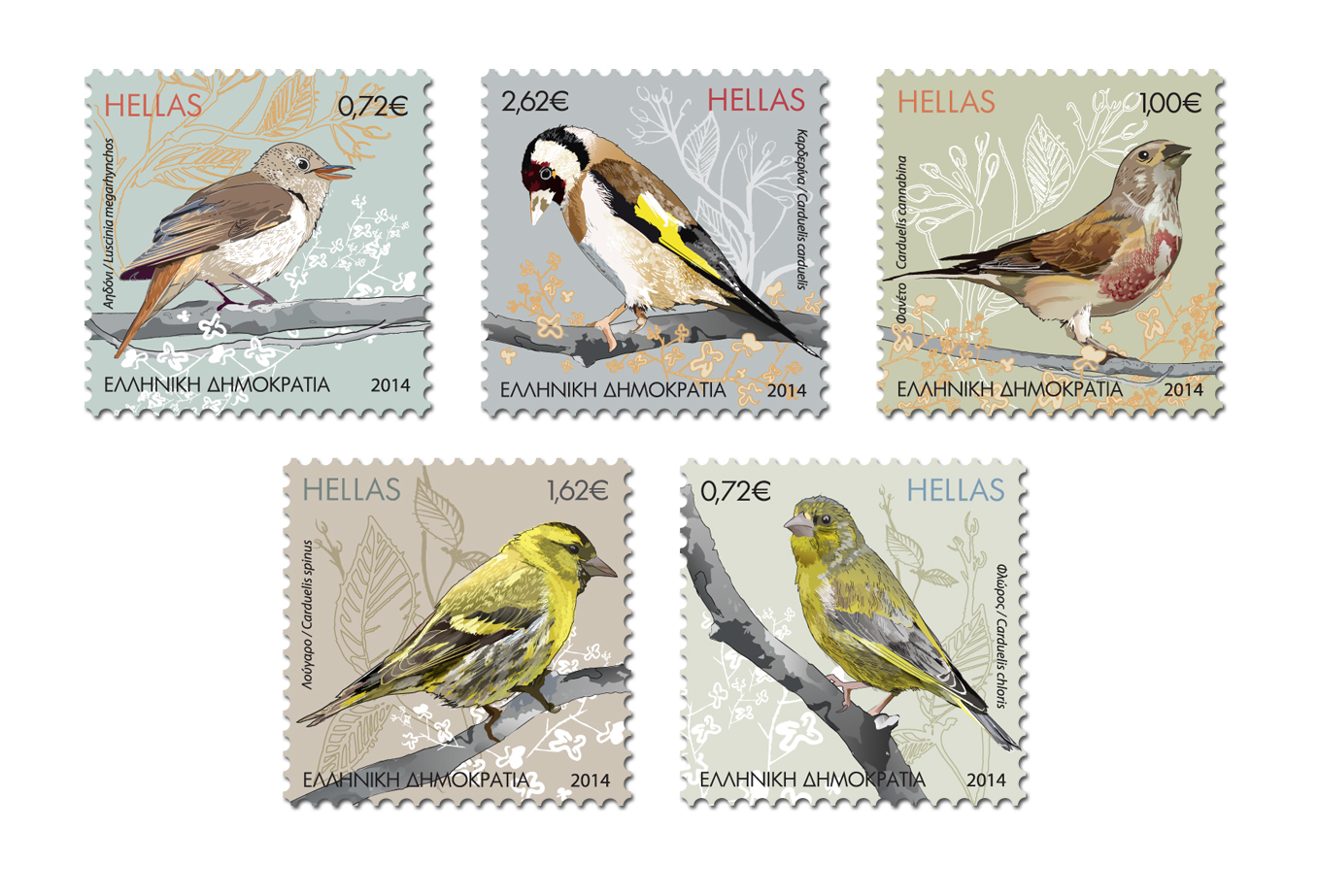
Three quarters of the bird species surveyed in Foxglove Covert Nature Reserve are markedly decreasing
-

Deutsche Flüsse schneiden richtig schlecht ab – Nur wenige Gewässer in akzeptablem Zustand
Die meisten Oberflächengewässer in Deutschland sind in mindestens unbefriedigendem ökologischem Zustand. Das geht aus einem Bericht des Bundesumweltministeriums an die EU-Kommission hervor. 34 Prozent der deutschen Gewässer sind laut Bericht in einem “unbefriedigenden” Zustand, 19 Prozent stehen sogar “schlecht” da. In Sachsen sind gerade mal knapp sieben Prozent mit “gut” oder “sehr gut” bewertet worden. Der Rhein zum Beispiel überschreitet die Umwelt-Qualitätsnorm der EU bei Blei, Cadmium, Nickel und diversen anderen industriellen Schadstoffen und Pestiziden.Bei den Küstengewässern steht sogar eine fette Null. Kein Einziges bekommt aktuell eine gute Ökobilanz. Schuld ist die intensive Nutzung der Küstengewässer und der daran angrenzenden Gebiete durch den Menschen. Dadurch kommt es zu Nährstoffüberschüssen, die wiederum die Wasserqualität verschlechtern. Insgesamt sind nur acht Prozent deutschen Gewässer – von den Flüssen, über die Seen bis zu den Küstengewässern – in einem akzeptablen Zustand. Auf der To Do Liste für die Zukunft stehen aus Sicht des Umweltbundesamtes deswegen noch einige Punkte. Zum Beispiel eine umweltfreundlichere Landwirtschaft, damit weniger Nährstoffe und Pestizide in den Gewässern landen. Und: Plastikverschmutzung vermeiden. Und: die Gewässer besser an den Klimawandel anpassen. Ob das alles aber ausreicht, um die Gewässer bis 2027 wieder naturnah und schadstofffrei zu bekommen ist fraglich. Viel Zeit bleibt bis dahin nämlich nicht mehr.
Quelle: Petra Haubner, SWR-Umweltredaktion, 31.10.2016
http://www.swr.de/landesschau-aktuell/nur-wenige-gewaesser-in-akzeptablem-zustand-deutsche-fluesse-schneiden-richtig-schlecht-ab/-/id=396/did=18406148/nid=396/1owxenz/ -
Irgendwann wird in Thüringen keine Feldlerche mehr singen
Feldlerche, Kiebitz und Rebhuhn haben es schwer in Thüringen. In vielen Regionen seien sie auf dem Rückzug oder bereits verschwunden, sagt der Vogelexperte des Nabu Thüringen, Klaus Lieder. Hauptgründe seien schwindende Nahrungsangebote und Möglichkeiten zum Verstecken – bedingt durch die intensive Landwirtschaft und den Einsatz von Pestiziden. Landwirte würden gern mehr Rückzugsmöglichkeiten durch Brachflächen oder Randstreifen schaffen, doch die bürokratischen Hürden seien zu hoch, hält Stefan Blöttner vom Thüringer Bauernverband gegen. Besonders dramatisch sieht es nach Darstellung der Naturschutzorganisation Nabu für die Feldlerche aus, die in Thüringen einst recht häufig vorkam. In den vergangenen 20 Jahren habe sich die Zahl der Brutpaare auf derzeit maximal rund 100 000 halbiert. “Und seit etwa 15 Jahren beobachten wir einen immer deutlicheren Rückgang. Irgendwann wird in Thüringen keine Feldlerche mehr singen”, prophezeit Lieder. Während im Jahr 1970 etwa 1400 Kiebitz-Brutpaare registriert wurden, gebe es heute nur noch maximal 100. Und das Rebhuhn sei nur noch vereinzelt im Thüringer Becken und im Altenburger Land zu finden. “Allein im Bezirk Gera wurden 1983 noch bis zu 171 Brutpaare erfasst. Heute kommt das Rebhuhn in dieser Region nicht mehr vor.”
Quelle: Thüringer Allgemeine, 01.11.16
http://www.thueringer-allgemeine.de/web/zgt/leben/detail/-/specific/Zahlreiche-Vogelarten-in-Thueringen-bedroht-147501271 -

One of Britain’s best-loved animals, the hedgehog, is in steep decline
Exeter University biologist Fiona Mathews is leading a national drive to count the hedgehog to try to find out how many survive and why their numbers have dropped so dramatically. Dr Mathews, Associate Professor in Mammalian Biology, who rescued a blind hedgehog she has named Prickole Kidman, urged members of the public to take part in a country-wide count of hedgehogs they have spotted this year, both dead and alive. Matthews, Chairman of the Mammals Society, is appealing for help with a new survey to shed light on where they are most scarce, and where they could be thriving.
Dr Mathews said: “Hedgehogs are one of our most appealing animals. Sadly, they seem to be in long-term decline, and we are still not sure of the cause. In fact they are so scarce in many parts of the country, that people can remember exactly how many they have seen and where they were at the time. This is critical information that will help us to understand what we can do to help.”Read more at: http://phys.org/news/2016-10-urged-mystery-britain-best-loved-animals.html#jCp
-
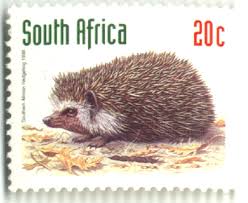
Rural hedgehog populations down by a half, and urban populations down by a third since 2000
In my last piece I covered the ‘State of Nature’ report, including its findings that much of our wildlife is declining at an alarming rate. To illustrate this here is a closer look at a once familiar animal – the hedgehog. I often used to see hedgehogs, both here in West Bromwich, and elsewhere, but now I can’t remember when I last saw one. In 2011 the British Hedgehog Preservation Society (BHPS) estimated that the population had reduced by a quarter since the year 2000. More recent work paints a bleaker picture still: rural populations down by a half, and urban populations down by a third. The plight of hedgehogs brings home to all of us the problems facing all wildlife, but at least most we can help our spiny friends. Not by putting out bread and milk please, that is no good at all. The BHPS recommends making it easier for hedgehogs to move around and under walls and fences. Those managing parks and larger gardens around institutions can do their bit too, and not be over tidy, especially at this time of the year. Leave some piles of leaves here and there, be careful poking about in odd corners or compost heaps, where hedgehogs might be hibernating and, of course, check any bonfires for their presence.
If many factors combined are causing hedgehog decline, perhaps many small actions by gardeners and parks and open spaces managers can help to turn the tide.
Source: Peter Shirley in the Birmingham Post, 6 October 2016
http://www.birminghampost.co.uk/lifestyle/lifestyle-opinion/worrying-decline-hedgehog-numbers-11987264 -

Central London’s last hedgehogs at risk from HS2
HS2 – the proposed high speed rail link between London and the north of England – want to use the Zoo’s car park as a lorry park for heavy goods vehicles and construction trucks for up to 20 years, despite conservation surveys identifying the land as a key habitat for the declining British species. ZSL has been working with the Royal Parks Foundation and independent hedgehog experts for the last two years to carry out surveys of Regent’s Park – staffed by volunteers including ZSL’s conservationists, scientists and vets – with early findings suggesting that the group of hedgehogs living in the car park are actually faring better than their counterparts in the main Park, but further assessments are needed to determine why.
Despite HS2’s acknowledgement that their proposal poses a risk to the hedgehogs, they are not considering alternative locations, leaving the urban animals in a vulnerable position.
David Field, Zoological Director of ZSL, said: “It may seem strange that we’re seeking protection for a car park, but this is an example of the increasingly desperate reality for urban wildlife. Forced by human pressures to find sanctuary in the unlikeliest of places, it is our duty to protect the remaining refuges of these creatures.
“While HS2 have admitted that their proposed use of the car park as a lorry-holding site will pose a risk to the hedgehogs, they have not accepted our advice that no mitigation measures will be enough to protect them from that risk.
“With the hedgehog surveys still in their infant stages, we’ve only just begun to learn more about these creatures living in the Park, and we need more surveys, more information and more time to understand how we can best protect them. We can’t do this if the car park becomes a 24/7 hub for construction.”
Source: ZSL, 7th September 2016
https://www.zsl.org/news/central-london%E2%80%99s-last-hedgehogs-at-risk-from-hs2 -
Streams within 40% of the global land surface are at risk from the application of insecticides
These were the results from the first global map to be modelled on insecticide runoff to surface waters, which has just been published in the journal Environmental Pollution by researchers from the Helmholtz Center for Environmental Research (UFZ) and the University of Koblenz-Landau together with the University of Milan, Aarhus University and Aachen University . According to the publication, particularly streams in the Mediterranean, the USA, Central America and Southeast Asia are at risk.
Unlike other chemicals, agricultural pesticides are intentionally applied to the environment to help farmers control insects, weeds and other potentially harmful pests threatening agricultural production. They can therefore affect land ecosystems but also surface waters from runoff. According to estimates, ca. 4 million tons of agricultural pesticides are applied annually, equating to an average of 0.27 kilograms per hectare of the global land surface. „We know from earlier investigations for example that pesticides can reduce the biodiversity of invertebrates in freshwater ecosystems by up to 42 percent and that we can expect an increased application of pesticides as a result of climate change“, explains Prof. Dr. Matthias Liess from the UFZ, who was recently appointed to a term of five years on the scientific advisory board “National Action Plan on Sustainable Use of Plant Protection Products” where he advises the Federal Ministry of Food and Agriculture. Liess warns of an increase in the application of pesticides in many developing countries as farmers increasingly switch from traditionally extensive agricultural practices to more intensive ones. Until now the global extent of the potential water pollution from the application of insecticides has remained largely unknown.
The international team of scientists therefore came up with a global model with a raster of ca. ten kilometres, into which agricultural data from FAO and land use data from NASA among other data were entered. Annual average temperatures and monthly maximum precipitation measurements from around 77,000 weather stations were also taken into account. Following that, the researchers then estimated the so-called runoff potential (RP), in other words the amount of insecticides that enters streams and rivers through the rainwater from agricultural land. „In this respect, daily rainfall intensity, terrain slope, and insecticide application rate play an equally important role as well as the crops cultivated“, explains junior professor Dr. Ralf B. Schäfer from the University of Koblenz-Landau. „In order to test such complex models, we therefore carried out control measurements of insecticide contamination in freshwater ecosystems from four different regions“.
Several world maps were produced: the vulnerability map only takes into account the geographic and climatic background. The risk map on the other hand shows the risks from this natural vulnerability through anthropogenic land use. In Central Europe, scientists largely assessed the risk for water bodies as medium to high. In the northern hemisphere, insecticide runoff presented an overall more significant latitudinal gradient. „The risks of insecticide exposure to water bodies increased significantly the further South one travelled on a North-South gradient in Europe, North America and Asia, mainly driven by a higher insecticide application rate as a result of higher average temperatures“, Dr. Mira Kattwinkel reports, who is now conducting research at the Swiss Federal Institute of Aquatic Science and Technology (Eawag). Because the economy and the population are growing rapidly in many countries of the southern hemisphere, scientists expect a higher insecticide application rate in those countries in the future to cover an increase in agricultural production. The map could therefore still change colour considerably in other parts of the world. At the moment it is water bodies in the Mediterranean, the USA, Central America and Southeast Asia that are particularly vulnerable.
In Southeast Asia, countries such as the Philippines or Vietnam are greatly affected for example. UFZ researchers are looking into solutions for such regions within the framework of the LEGATO-project together with the International Rice Research Institute (IRRI), in an attempt to reduce pesticide application rates. One approach for example could be to revitalise the functioning of ecosystems so that the natural competitors of rice pests can help to avoid their mass reproduction and subsequent harvest yield losses.
„Our analysis provides a global map of hotspots for insecticide contamination that are a major risk for biodiversity in water bodies. To our knowledge this is the first study that assesses insecticide contamination of water bodies on a global scale“, Prof. Dr. Matthias Liess summarizes the significance of the new investigation. The researchers intend to use the global map to sensitize citizens and authorities about this issue in vulnerable regions and to incite local investigations. Buffer zones along the edge of water bodies can significantly reduce negative impacts for example. Efficient environmental management and conservation efforts in the future should focus on informing authorities and farmers about the costs, impacts and alternatives. Ultimately, mitigation and management takes place at the local level, determining the extent to which a water body will be affected under the application of such chemicals.
Source: Helmholtz Center for Environmental Research, 25 February 2015
http://www.ufz.de/index.php?en=37214 -

Gary Rondeau’s Letter to the Washington State Department of Ecology on Control of Burrowing Shrimp using Imidacloprid
The proposed permit to use imidacloprid on shellfish beds recently came to my attention. The fact that imidacloprid is being sought as an alternative to carbaryl particularly caught my interest because I have been studying the toxic profile of the various insecticide classes as they relate to ecotoxicity for pollinators. As it turns out, carbaryl and imidacloprid are on the opposite ends of time-dependent toxicity scaling spectrum. I would urge regulators to look closely at the time-dependent nature of the toxicity of residual concentrations for these two chemicals. With carbaryl we have one of the pesticides with the most “threshold-like” toxic action. Imidacloprid, on the other hand, has significant enhanced or delayed toxicity at residual concentrations.
-

Common Insecticide Identified in Midwestern Streams Is Harmful To Aquatic Insects
A federal study published in the journal Environmental Science and Technology shows smaller amounts of a common bug killer may be more harmful in Midwest streams than previously thought. The chemical compound bifenthrin is used to kill mosquitoes, aphids on crops, and ants and termites in households. But the insecticide also gets into waterways. USGS scientists evaluated the effects of bifenthrin on natural communities of stream invertebrates, such as mayflies and midges, using artificial streams. Exposure to bifenthrin concentrations previously thought benign caused the insect populations to become less abundant and diverse, and caused an increase in algal growth as the larvae that feed on algae decreased. The insecticide also altered the timing of insect emergence from the larval state to become adults and complete their life cycle. There were obvious similarities between the data from the artificial stream test and data for 92 small streams in the Midwest studied by the USGS in 2013. The insect species that were most sensitive to bifenthrin in the artificial streams were less abundant or eliminated from Midwest streams with similar bifenthrin concentrations. About 40 percent of Midwest streams sampled had bifenthrin concentrations greater than levels that caused meaningful ecological change in the artificial stream study.
“The results of this experiment demonstrate that not only do aquatic insects die at concentrations of bifenthrin previously thought nontoxic, but that bifenthrin changes the way that stream ecosystems function,” said Travis Schmidt, a USGS ecologist and the lead scientist on the study. “Bifenthrin disrupts the ability of insects to control algal blooms, and disrupts the emergence of flying aquatic insects that are a food source for bats, birds and other animals in and around rivers.” Parts of Ohio, Indiana, Illinois, Kentucky, Wisconsin, Minnesota, Iowa, Missouri, South Dakota, Nebraska, and Kansas were included in the study.
Sources:
Wiscontext, October 14, 2016
http://www.wiscontext.org/study-finds-insecticide-more-damaging-wisconsin-stream-bugs-previously-thought
USGS, October 12, 2016
https://www.usgs.gov/news/common-insecticide-identified-midwestern-streams -
Über 80% der weltweiten Süsswasserfischbestände ausgerottet!
Der Rückgang der Biodiversität hält an. Im Schnitt gingen die Bestände der rund 3700 erfassten Wirbeltierarten seit 1970 weltweit um über die Hälfte zurück. Süsswasserfische oder Amphibien gehören mit über 80 Prozent Rückgang zu den grössten Verlierern. Davon ist auch die Schweiz betroffen.
Der neuste Living Planet Report des WWF analysiert 14‘152 Wildtierpopulationen von über 3‘700 Wirbeltierarten. Das Fazit: Die untersuchten Tierbestände gingen seit Beginn der Aufzeichnungen im Jahr 1970 bis 2012 im Schnitt um 58 Prozent (durchschnittliche Änderungsrate) zurück. Erstmals wirft der Living Planet Report auch einen Blick in die Zukunft und prognostiziert bis 2020 einen durchschnittlichen Bestandsrückgang von 67 Prozent.
Laut Living Planet Report verschwinden Tiere und Pflanzen in noch nie dagewesenem Tempo. Die grössten Bedrohungen sind vom Menschen verursacht: Verlust und Verschlechterung der Lebensräume, Übernutzung von Arten, Umweltverschmutzung, invasive Arten und Krankheiten und der Klimawandel. «Wirtschaft, Politik und Gesellschaft sind gefordert, diesen Abwärtstrend zu bremsen und für widerstandsfähige Ökosysteme zu sorgen», sagt Ion Karagounis, Leiter Umweltprogramm beim WWF Schweiz.
Besonders betroffen sind laut Living Planet Report die im Süsswasser lebenden Arten. Ihre Bestände sind zwischen 1970 und 2012 um 81 Prozent zurückgegangen. «Keine anderen Lebensräume wurden derart vom Menschen beeinträchtigt wie die Gewässer», sagt Karagounis. Flussverbauungen, Dämme für die Wasserkraftnutzung, Abwasser aus Industrie und Haushalten oder die landwirtschaftliche Bewässerung bedrohen Seen, Flüsse und Feuchtgebiete.
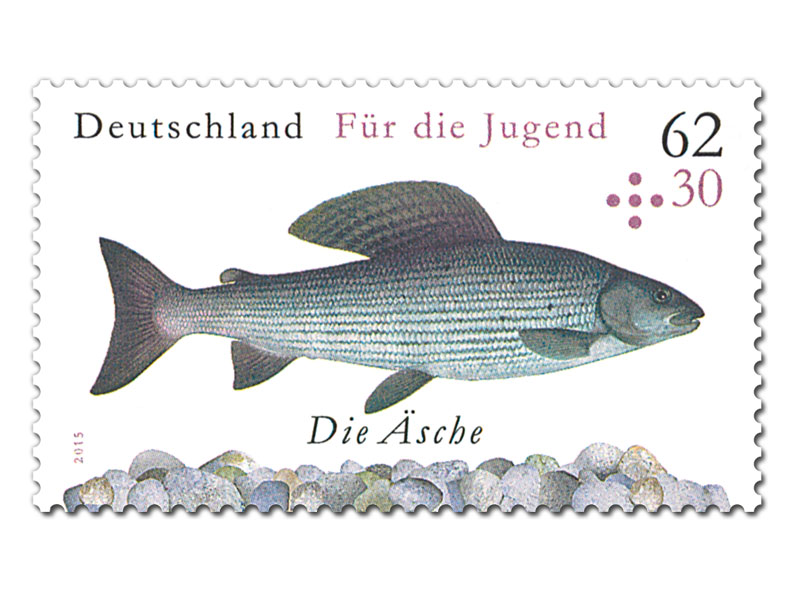
Dieser Befund trifft auch auf die Schweiz zu. Gewässer zählen zu den am stärksten bedrohten Lebensräumen – mit besonders rasanter Abnahme der Bestände. 58 Prozent aller Fischarten der Schweiz sind auf der Roten Liste. Acht Arten sind sogar ausgestorben. Stark gefährdet sind beispielsweise die Äsche, die Seeforelle oder der Bitterling. Lachse gibt es in der Schweiz gar nicht mehr.
«Wir sind auf gesunde Gewässer und funktionierende ökologische Kreisläufe angewiesen. Sie sorgen beispielsweise für die hohe Qualität unseres Trinkwassers», so Karagounis. Umso wichtiger ist es, weitere Verbauungen zu verhindern, weniger Pestizide und Düngemittel einzusetzen, vermehrt Gewässer zu revitalisieren und die letzten noch intakten Gewässer wirkungsvoll zu schützen.
Quelle: Naturschutz.ch, 30.10.16
http://naturschutz.ch/news/ueber-80-der-weltweiten-suesswasserfischbestaende-ausgerottet/109849