Auteur: Henk Tennekes

  • Im Südwesten dramatisch weniger Vögel

    Im Südwesten dramatisch weniger Vögel

    Am vergangenen Wochenende – von Freitag, 6. Januar, bis Sonntag, 8. Januar 2017 – hatte der Naturschutzbund NABU wieder zur Teilnahme an seiner traditionellen “Stunde der Wintervögel” aufgerufen. Jeder, der Lust hatte, sollte eine Stunde lang die Vögel auf dem heimischen Balkon, im Garten oder Park beobachten, zählen und anschließend dem NABU melden. Bundesweit haben sich rund 60.000 Menschen beteiligt. Das erste Ergebnis ist ernüchternd: Es gibt deutlich weniger Gartenvögel als im Vorjahr. Dieser Trend gilt zwar bundesweit, insgesamt ist der Vogelmangel im Westen Deutschlands aber dramatischer als im Osten. Besonders schlimm sieht die Lage im Südwesten, also auch in Rheinland-Pfalz und Baden-Württemberg, aus. Gerade bei den sogenannten Höhlenbrütern wurde generell ein starker Rückgang festgestellt. Bei Buntspechten oder allen Meisen-Arten gab es bundesweit ein Minus von 30 Prozent, im Südwesten aber sogar von über 40 Prozent. Warum, ist noch nicht ganz klar. Zwei Gründe hält der NABU für wahrscheinlich: Erstens das feuchte Frühjahr 2016, das vermutlich dazu geführt hat, dass viele Jungvögel an Unterkühlung gestorben sind. Gleichzeitig war Futter Mangelware. Zweitens sorgt der hohe Pestizid-Einsatz in der Landwirtschaft schon seit Jahren dafür, dass es generell immer weniger Insekten gibt.

    Quelle: SWR, 9.1.17
    http://www.swr.de/natuerlich/nabu-stunde-der-wintervoegel-im-suedwesten-dramatisch-weniger-voegel/-/id=100810/did=18791488/nid=100810/1itykie/


  • Bats feeding on imidacloprid-tainted insects are unable to fly along learned paths, and get lost

    Bats feeding on imidacloprid-tainted insects are unable to fly along learned paths, and get lost

    In the wake of ongoing debate by experts, neonicotinoid pesticide, imidacloprid, has been proven a threat to the survival of bats in Taiwan after last year being confirmed as harmful to bees by the Environmental Protection Agency of the United States. A research team headed by Wu Chung-hsin (吳忠信), professor in life sciences at National Taiwan Normal University, found that bats feeding on imidacloprid-tainted insects were unable to fly along learned paths, as a result of which they often “got lost” while out hunting. With Formosan leafnosed bats as its experimental subject, the team found that bats treated with a low dose of imidacloprid developed neural apopotosis — a process of programmed cell death — in the brain, according to Wu. “The sonogram of ultrasounds emitted by such bats becomes incomplete,” said Wu on Wednesday, discussing research published in Neuroreport, a peer-reviewed scientific journal in the field of neuroscience, in April 2016.

    Wu said his team monitored the sonogram with a customer-made flight tracking device, and filmed the track of light emitted from an LED lightbulb attached to the bats. The data collected indicated that after long-term exposure to imidacloprid the flight patterns of the bats differed from the paths they originally learned. “What were regular flight paths become disoriented,” Wu said and “some even lost their ability to catch insects.” The team found that the toxicity of imidacloprid and high doses of the heavy metal manganese accumulated in the bodies of bats if they fed on pesticide-tainted insects. “When toxic substances accumulate to a certain level, they damage the bats’ neurons and destroy their echolocation system,” said Wu, whose team has researched the echolocation ability of bats in Taiwan for more than two decades.

    Wu said the team has recorded a decline in bat populations around Taiwan in recent years, speculating that the phenomenon could be the result of various environmental pollutants. Bats serve as a “bio-index,” allowing humans to determine which toxic substances are poisoning the living environment, Wu said, expressing hope the research will alert people to the danger of environmental pollution. He suggested people reduce pesticide use, curb pollution and learn to live more harmoniously with nature.

    Imidacloprid is a broad-spectrum insecticide that works by interfering with the nerve impulses of insects, killing them. It is used to control pests on a large number of agricultural crops. In recent yeras, however, there have been reports that suggest neonicotinoid pesticides, including imidacloprid, are the cause of bees dying, hives collapsing and plummeting bee populations worldwide.

    Source: Focus Taiwan, 11 January 2017
    http://focustaiwan.tw/news/asoc/201701110013.aspx

  • Roundup residues in food cause fatty liver disease

    Roundup residues in food cause fatty liver disease

    The impairment of liver function by low environmentally relevant doses of glyphosate-based herbicides (GBH) is still a debatable and unresolved matter. Previously we have shown that rats administered for 2 years with 0.1 ppb (50 ng/L glyphosate equivalent dilution; 4 ng/kg body weight/day daily intake) of a Roundup GBH formulation showed signs of enhanced liver injury as indicated by anatomorphological, blood/urine biochemical changes and transcriptome profiling. Here we present a multiomic study combining metabolome and proteome liver analyses to obtain further insight into the Roundup-induced pathology. Proteins significantly disturbed (214 out of 1906 detected, q < 0.05) were involved in organonitrogen metabolism and fatty acid β-oxidation. Proteome disturbances reflected peroxisomal proliferation, steatosis and necrosis. The metabolome analysis (55 metabolites altered out of 673 detected, p < 0.05) confirmed lipotoxic conditions and oxidative stress by showing an activation of glutathione and ascorbate free radical scavenger systems. Additionally, we found metabolite alterations associated with hallmarks of hepatotoxicity such as γ-glutamyl dipeptides, acylcarnitines, and proline derivatives. Overall, metabolome and proteome disturbances showed a substantial overlap with biomarkers of non-alcoholic fatty liver disease and its progression to steatohepatosis and thus confirm liver functional dysfunction resulting from chronic ultra-low dose GBH exposure. Source: Robin Mesnage, George Renney, Gilles-Eric Séralini, Malcolm Ward & Michael N. Antoniou. Scientific Reports 7, Article number: 39328 (2017) doi:10.1038/srep39328

  • Silverspot butterfly numbers are plummeting

    Silverspot butterfly numbers are plummeting

    The last few years haven’t been good for the Oregon silverspot butterfly (Speyeria zerene hippolyta). Already a threatened species with just four populations on the Oregon Coast, the yellow-orange butterfly’s numbers plummeted even lower in recent years, biologists said. The silverspot declined from a population of thousands to as little as 120 on Mount Hebo, the species’ largest population in Oregon, according to a report by the U.S. Fish and Wildlife Service. Similar declines took place at the species’ three other population centers in Oregon — Cascade Head, Rock Creek Wilderness and Bray Point on the central coast.

    To combat the decline, USFWS and state agencies are proposing a reintroduction of silverspots at two new coastal sites in the spring of 2017. Butterfly pupae raised at the Oregon Zoo would be introduced at Saddle Mountain State Natural Area and Nestucca Bay National Wildlife Refuge in southern Tillamook County. Both sites have high numbers of nectar and violet plants, which are crucial to the butterfly’s survival.
    Source: Statesman Journal, December 22, 2016
    http://www.statesmanjournal.com/story/news/2016/12/22/silverspot-butterfly-plan-to-save/95762880/

  • Alarmerende achteruitgang van boerenlandvlinders in Drenthe

    Alarmerende achteruitgang van boerenlandvlinders in Drenthe

    Zaterdag 17 december presenteerde de Vlinderwerkgroep Drenthe in café/restaurant De Klipper in Zwiggelte de nieuwe verspreidingsatlas. Het is het werk van bijna 1.900 vrijwilligers, die op pad gingen om vlinders in kaart te brengen. Het gaat slecht met de typische vlinders van het Drentse boerenland. Tien van de twaalf boerenlandvlinders zijn achteruitgegaan. Vooral in het agrarisch gebied is de teruggang van vlinders alarmerend groot. Het aantal soorten is hier lager en neemt drie keer sneller af dan in de natuurgebieden. In veel graslanden, weilanden en bermen verdwenen vlindersoorten zoals de argusvlinder en het oranje zandoogje. Vlinders die hoge eisen stellen aan hun leefomgeving hebben het moeilijk. Dat geldt zowel voor de boerenlandvlinders als voor vlinders van heide, hoogveen en schrale graslanden.

    Bron: Emmen Nu, 26-12-16
    https://www.emmen.nu/nieuws/regio/474797/alarmerende-achteruitgang-boerenlandvlinders-drenthe.html

  • Neonicotinoid insecticides harm ability of bees to vibrate flowers and shake out pollen to fertilise crops

    Neonicotinoid insecticides harm ability of bees to vibrate flowers and shake out pollen to fertilise crops

    The world’s most widely used insecticides harm the ability of bees to vibrate flowers and shake out the pollen to fertilise crops, according to preliminary results from a new study. Some flowers, such as those of crops like tomatoes and potatoes, must be shaken to release pollen and bumblebees are particularly good at creating the buzz needed to do this. But the research shows that bumblebees exposed to realistic levels of a neonicotinoid pesticide fail to learn how to create the greatest buzz and collect less pollen as a result. The research is consistent with previous work that has shown neonicotinoid pesticides reduce learning and memory in bees. A moratorium on the use of three neonicotinoids on flowering crops was put in place in Europe in 2013 and will be reviewed next year.
    “So bees produce a vibration – or buzz – to shake pollen out of these anthers like a pepper pot,” said Penelope Whitehorn of the University of Stirling in Scotland, who led the study. “The bee lands on a flower, curls her body around the anther and grips the base with her mandibles. She then rapidly contracts the flight muscles to produce the vibration, without beating her wings.” The researchers took two colonies of bumblebees in a laboratory setting and split the bees in each into three groups. One control group was not exposed to the neonicotinoid thiamethoxam, but the other two groups were fed solutions containing two parts per billion or 10ppb of the pesticide, doses similar to those found in crop fields. After each visit to the buffalo-bur flowers used in the experiment, the bees in the control group learned how to buzz more pollen out of the anthers. But those in the 10ppb group did not improve at all. Whitehorn will present the preliminary results at the British Ecological Society’s annual meeting on Tuesday and said they were “striking” and statistically significant, and would be submitted to a scientific journal next year.

    The study adds to a large body of evidence from lab- and field-based studies that neonicotinoids reduce learning and memory in bees, impair their communication, foraging efficiency and immune systems and, crucially, reduce their reproductive success as well as the pollination services that they can provide, Whitehorn said.

    Source: The Guardian, 13 December 2016
    https://www.theguardian.com/environment/2016/dec/13/pesticides-stop-bees-buzzing-releasing-pollen-neonicotinoid-study

  • Shorebird populations have shrunk by 70% across North America since 1973

    Shorebird populations have shrunk by 70% across North America since 1973

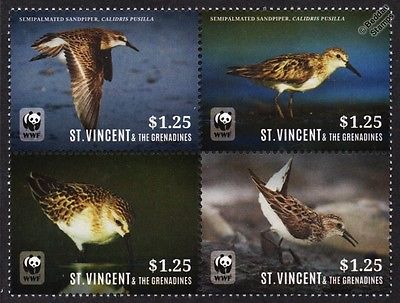
    Shorebird populations have shrunk, on average, by an estimated 70% across North America since 1973, and the species that breed in the Arctic are among the hardest hit. The crashing numbers, seen in many shorebird populations around the world, have prompted wildlife agencies and scientists to warn that, without action, some species might go extinct. Although the trend is clear, the underlying causes are not. That’s because shorebirds travel thousands of kilometres a year, and encounter so many threats along the way that it is hard to decipher which are the most damaging. Evidence suggests that rapidly changing climate conditions in the Arctic are taking a toll, but that is just one of many offenders. Other culprits include coastal development, hunting in the Caribbean and agricultural shifts in North America. The challenge is to identify the most serious problems and then develop plans to help shorebirds to bounce back.
    Source: Scientific American, January 4, 2017
    https://www.scientificamerican.com/article/what-rsquo-s-killing-the-world-rsquo-s-shorebirds/

  • The black rail is disappearing from Virginia

    The black rail is disappearing from Virginia

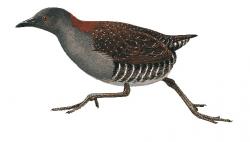
    As a species, the eastern black rail (Laterallus jamaicensis) tops the list for avid bird-lovers the world over who are eager to catch a glimpse of this reclusive, secretive little creature. That’s because most birders have never actually seen one in the flesh. And most of them never will. In just a few short years the night calls of the eastern black rail have gone silent in many coastal states. In Virginia, for instance, there have been no recorded sightings in two years. Its historic range runs from coastal Massachusetts to Texas and inland to the eastern slope of the Appalachian Mountains. It breeds in tidal and freshwater marshes. Population numbers have always been spotty, compiled piecemeal from a century of literature, museum specimens and unpublished observations. It wasn’t even recognized as a North American bird by the ornithological community until one was captured on a Pennsylvania farm in 1836. From then until 2016, there were 1,937 occurrence records. Outside the U.S., the eastern black rail is also found in Central America and the Caribbean Basin. A combined estimate of its wider population runs between 25,000 and 100,000 individual birds. The soft estimate of its Atlantic coastal population within a recent study area ranges between 455 and 1,315 breeding pairs. In Virginia, the birds were found historically throughout coastal areas from Back Bay in Virginia Beach to Accomack and Northampton counties on the Eastern Shore. When they migrated through in the spring and fall, they could be found along Mobjack Bay on the Middle Peninsula and Grandview Beach in Hampton. Up until modern times, the biggest concentration in Virginia was in Saxis Marsh along the Chesapeake Bay side of Accomack County. As recently as the 1980s, there were 25 birds there. Today, there are none.
    Source: The Washington Times, January 7, 2017
    http://www.washingtontimes.com/news/2017/jan/7/reclusive-feathered-mouse-disappearing-from-virgin/?utm_source=RSS_Feed&utm_medium=RSS

  • Irreversible Binding Kinetics of Bacillus thuringiensis CryIA δ-Endotoxins to Gypsy Moth Brush Border Membrane Vesicles Is Directly Correlated to Toxicity

    Irreversible Binding Kinetics of Bacillus thuringiensis CryIA δ-Endotoxins to Gypsy Moth Brush Border Membrane Vesicles Is Directly Correlated to Toxicity

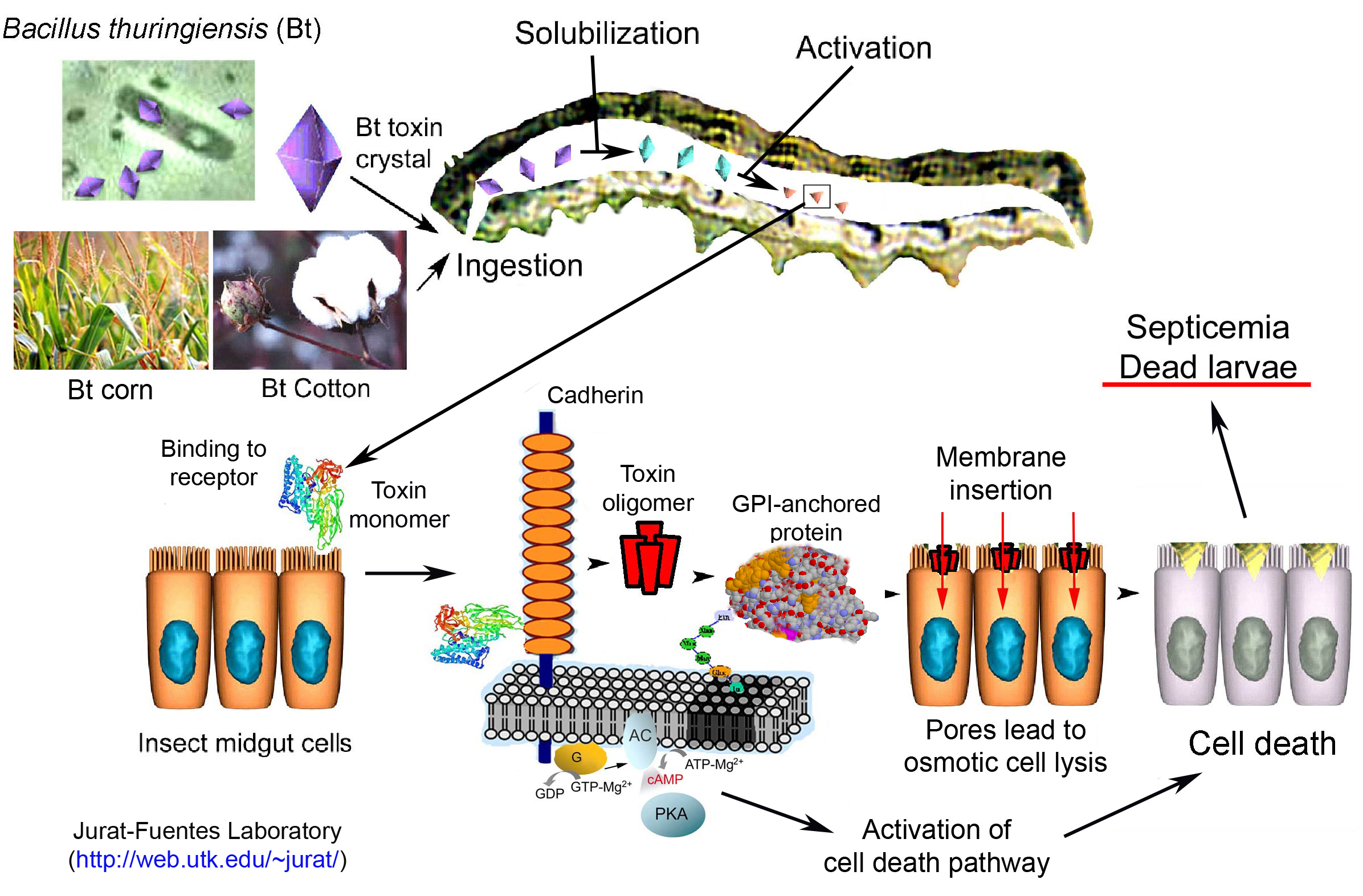
    To examine the binding of Bacillus thuringiensis δ-endotoxins, CryIAa, CryIAb, and CryIAc, to Lymantria dispar (gypsy moth) brush border membrane vesicles (BBMV), saturation kinetic analyses were conducted according to a two-step interaction scheme for δ-endotoxin binding to BBMV, rather than the one-step reversible binding presented in prior reports. So far, all published binding studies known to us have used the Scatchard equation or the Hill equation, which analyzes binding parameters assuming a one-step reversible interaction (Reaction 1): BS + T ↔ BS*T. Here BS is the binding site on the membrane, T is the toxin, and BS*T is the dissociable complex formed by binding site and toxin. However, a large body of evidence indicates that the binding between toxin and BBMV quickly becomes irreversible. A two-step interaction would describe toxin-BBMV interaction better than Reaction 1: BS + T ↔ BS*T→ BS-T (reaction 2). Here BS-T is the toxin irreversibly bound to the membrane. The order of toxicity of the δ-endotoxins, as measured by the dose required for a 50% inhibition of weight gain (ID50), was CryIAa (77.3 ng) > CryIAb (157 ng) > CryIAc (187 ng). While both the maximum extent of binding, Bmax, and the half-maximum insertion rate concentration, K1/2, was observed to be indirectly related to toxicity, the rate constant of irreversible binding, k2, was found to be directly correlated to toxicity.
    Source:
    Yizhi Liang, Smita S. Patel and Donald H. Dean. THE JOURNAL OF BIOLOGICAL CHEMISTRY Vol. 270, No. 42, Issue of October 20, pp. 24719 –24724, 1995

  • Naturschützer warnen vor einem Bestandsrückgang bei Singvögeln und appellieren an Landwirte, weniger Pestizide einzusetzen

    Naturschützer warnen vor einem Bestandsrückgang bei Singvögeln und appellieren an Landwirte, weniger Pestizide einzusetzen

    Kurzfristige Schwankungen bei der Sichtung von Singvögeln im Winter sind nach Einschätzung von Naturschützern kein Grund zur Sorge. Langfristig aber muss bei vielen Vogelarten mit einem weiteren Bestandsrückgang gerechnet werden, wenn die Intensivierung der Landwirtschaft weiter voranschreitet. So lautet das Ergebnis einer Umfrage bei Naturschützern und Ornithologen in Hessen und Rheinland-Pfalz.

    Möglicherweise finden viele Vogelarten in dem bislang schneearmen Winter noch reichlich Nahrung in den Wäldern, so dass sie bislang erst in geringer Zahl in die Siedlungen kommen. Ein anderer Grund könnte eine unterdurchschnittliche Brutsaison 2016 gewesen sein. Dies würde sich mit der Zeit wieder ausgleichen – wenn es nicht auch längerfristig wirksame Veränderungen im Lebensraum der heimischen Singvögel gäbe. Dazu gehören die stetige Verringerung von Grün- und Brachflächen und der Einsatz von Pestiziden in der Landwirtschaft.

    Vor einer bundesweiten Zählaktion von Wintervögeln an diesem Wochenende erklärten die Sprecher der Landesverbände des Naturschutzbunds (Nabu), dass die Ergebnisse diesmal mit besonderem Interesse erwartet würden. Im vergangenen Jahr beteiligten sich in Hessen rund 5000 Menschen und meldeten 145 000 Vogelsichtungen.

    Wenn bei Frost die Nahrung knapp wird, gehen Vögel auf Suche nach Futter in Vorgärten oder auf Balkonen. Für seine Zählaktion “Stunde der Wintervögel” macht der Nabu auf 35 Vogelarten aufmerksam, die an Futterplätzen erwartet werden können. Ihr Reigen reicht von der Amsel bis zum Zaunkönig. Darunter sind auch zunehmend seltene Singvögel wie der Stieglitz oder Distelfink, die Goldammer und der Feldsperling. Meisen, Sperlinge und Finken gehören zu den Körnerfressern. Auf Insekten und Früchte sind unter anderem Amseln, Drosseln und Rotkehlchen angewiesen. Insgesamt gehören rund 4000 Arten zur Unterordnung der Singvögel.
    Quelle: Frankfurter Rundschau, 06.01.17
    http://www.fr-online.de/rhein-main/naturschutz-singvoegel-machen-sich-rar,1472796,35061196.html