Auteur: Henk Tennekes

  • Many fish populations are coming under immense pressure in the Mediterranean

    Many fish populations are coming under immense pressure in the Mediterranean

    Along its 46,000km coastline, the Mediterranean Sea supports around 150 million people living along its shores. The report Reviving the Economy of the Mediterranean Sea: Actions for a sustainable future, launched today, shows that the Mediterranean Sea plays a fundamental role in the region’s economy but that the sea’s underlying natural asset base – which supports much of the economy and community wellbeing – is eroding.

    In his foreword, European Commissioner for the Environment, Maritime Affairs and Fisheries, Karmenu Vella, said, “developing a strong and sustainable Blue Economy for the Mediterranean region will greatly depend on keeping our sea, coastlines, and marine ecosystems healthy, and where possible to restore degraded ecosystems. We cannot continue to erode the very assets that Mediterranean cultures and economies depend on.”

    “We are seeing many fish populations, coastal areas and ocean ecosystems coming under immense pressure around the world and in important regions like the Mediterranean. We also are witnessing an unprecedented focus on the ocean and leaders in the Mediterranean and beyond can seize this moment to commit to the achievement of the UN Sustainable Development Goals and the global climate agreement of 2015. There is no time to lose.” adds John Tanzer, Leader for Oceans at WWF.

    Read more at: https://phys.org/news/2017-09-mediterranean-sea-incomparable-wealth-steep.html#jCp

  • Researcher touts potential of frogs, toads in restoring native fisheries

    Researcher touts potential of frogs, toads in restoring native fisheries

    Frogs, toads and salamanders often fall through the cracks of scientific study, but according to recently published research from Montana State University, they play a role so important they should be incorporated into strategies for conserving freshwater fisheries. In his first peer-reviewed paper as sole author, Niall Clancy, 22, said that native fish populations continue to decline around the world despite advances in management practices. Therefore, fisheries managers might want to add new approaches to the old. Clancy is a 2017 graduate from the Department of Ecology in MSU’s College of Letters and Science. His paper, “Can Amphibians Help Conserve Native Fishes?” was published in Fisheries, a monthly journal of the American Fisheries Society, the oldest and largest professional society representing fisheries scientists.

    “A complementary suite of techniques and approaches is needed if management is to prevent further losses,” Clancy said. “One such complementary approach is the preservation of organisms that maintain ecosystem processes and functions.” Amphibians — those cold blooded creatures that need both land and water to complete their lifecycles — are such organisms, Clancy said.

    Wildlife biologists tend to overlook amphibians because they aren’t fully terrestrial, Clancy said. Fisheries experts do the same because amphibians aren’t fully aquatic. But in many flowing and standing waters, young frogs, toads and salamanders are the dominant vertebrates. They change water chemistry, redistribute nutrients and alter the habitat for fish and other aquatic organisms.

    Clancy noted the amphibians in his study can be both predator and prey. Bullfrogs eat young fish and fish eggs, for example. Fish eat tadpoles. Salamanders tend to be carnivores, while tadpoles are generally herbivores. Both affect their environment, but in different ways. The actions of freshwater fisheries managers would be most effective where amphibian populations abound, Clancy said. To preserve or boost those populations, he suggested that managers remove invasive fish from lakes and streams and stop stocking hatchery fish in lakes that don’t normally contain fish. Additionally, they could record the types and numbers of amphibians they encounter while conducting fieldwork.

    When land is involved, fisheries managers might take on an advisory role, Clancy said. They could suggest limiting human activity where amphibians live in large numbers. They might encourage riparian buffer zones, the reduction of pesticide application near water, and maintaining or improving microhabitats that are important to amphibians. Among those microhabitats are rotting logs, leaves, dense tree stands and wetlands.

    “Fisheries management plans that incorporate amphibians will likely be beneficial for much of the aquatic community,” Clancy said. His paper focused on two categories of amphibians — one being toads and frogs and the other being salamanders. A third group, called Caecilians, is not found in North America, Clancy said. Caecilians are wormlike amphibians that live mostly underground in the wet tropical regions of South and Central America, Africa and southern Asia.

    Source: Sidney Herald, Sept 26, 2017
    http://www.sidneyherald.com/news/researcher-touts-potential-of-frogs-toads-in-restoring-native-fisheries/article_01c5af94-a304-11e7-9fc1-7bdfcbe9ac46.html

  • Battle to save spotted handfish

    Battle to save spotted handfish

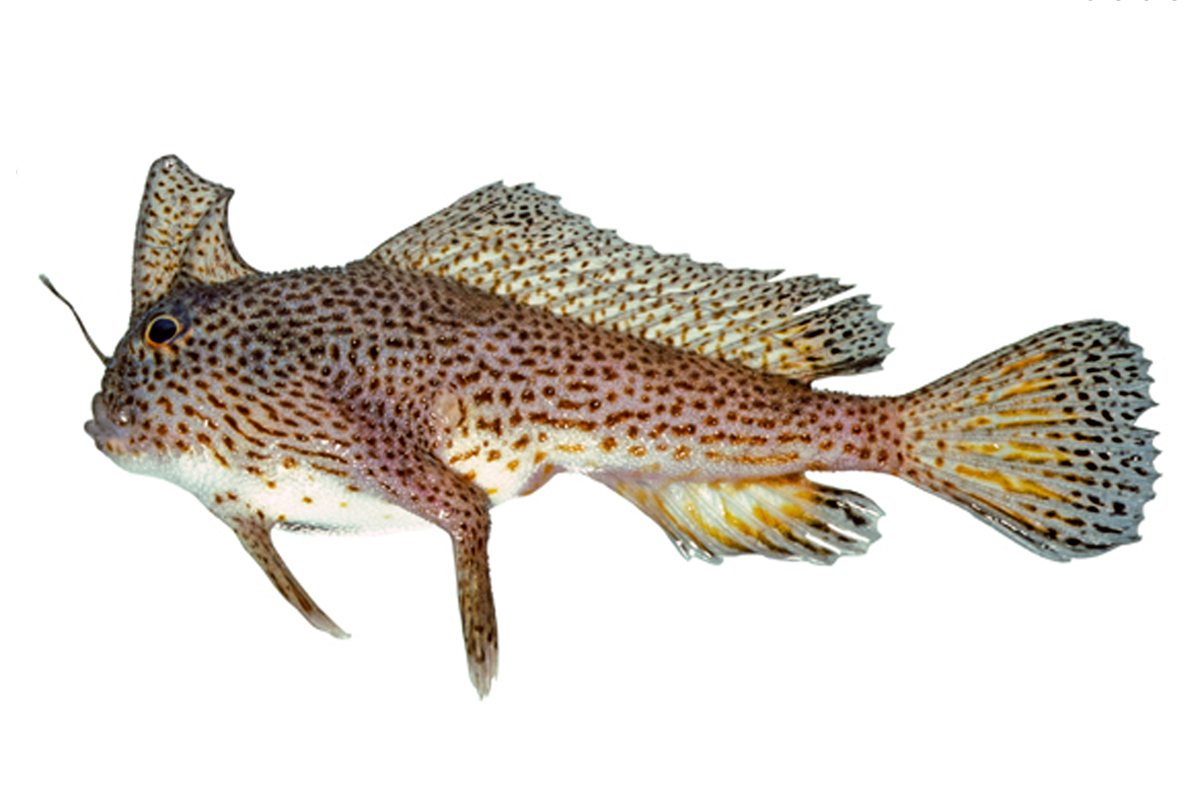
    The spotted handfish (Brachionichthys hirsutus), endemic to the Derwent River, is listed as critically endangered on the International Union for Conservation of Nature red list. It is also listed as endangered on the Tasmanian threatened species list. Handfish are coastal ­anglerfish that walk on the sea floor on their “hands”. There are 14 species distributed across South East Australia, with seven endemic to Tasmania and Bass Strait. Spotted handfish once extended up Tasmania’s East Coast as well as Frederick Henry Bay in the South East. But since the 1990s they have been in decline, with estimates of about 1000 left across nine sites in the Derwent and one in D’Entrecasteaux Channel.

    Source: The Mercury, Sept 30, 2017
    http://www.themercury.com.au/news/tasmania/battle-to-save-spotted-handfish/news-story/91fff72c8b388efa409d48223a1e6803

  • Hopes fading quickly for Turkey’s fishermen as fish stocks decline in new season

    Hopes fading quickly for Turkey’s fishermen as fish stocks decline in new season

    The tea houses in a fishing town in northern Istanbul were crowded with Turkish fishermen in the mornings in September, when they usually should have been busy on the sea as the fishing season just began. To the fishermen in Rumeli Kavagi at the northern mouth of Istanbul’s Bosphorus Strait linking the Marmara Sea and the Black Sea, their disappointment resulted from the sharp decline in fish stocks. Fishing is the sole source of income for most residents in the town, which has been a major supplier of fish to Istanbul and other cities in the region. After five months of ban on fishing, fishermen in the town set sail again last week with high hopes. First they were cheerful when they caught some mackerel 40 years after this species almost disappeared from the Black and Marmara Seas, a sign they took as an abundance of others. Their happiness did not last long, however.
    The abundance in mackerel in the first week ended quickly, and a kilo of mackerel now costs as much as 12 U.S. dollars, against expected dramatic drop in price in a fruitful season. The same was true for other species. For one, bonito, which has not appeared in plenty this year, sells for about 6 dollars each, up from 2 dollars last year. Now the fishermen prefer not to sail out but wait instead for more fish to enter the Marmara Sea.

    Source: Xin Hua Net, 9 Sept 2017
    http://news.xinhuanet.com/english/2017-09/09/c_136597104.htm

  • Iowa’s dwindling bee population is part of a larger, frightening trend

    Iowa’s dwindling bee population is part of a larger, frightening trend

    Paulina Mena, an associate professor of biology, has been studying bees for over a decade, an obsession which stems from her undergraduate experiences at Universidad Catolica de Valparaiso, Chile. “I did my undergraduate degree in Chile, and decided to do bee stuff because Chile is a hot spot for bees. Bees like deserts; that is where they have diversified a bunch,” Mena said. “Because of that, we had a bee biologist in my department, and I did work with him as an undergrad.” Chile has “significantly more than 436 species of bees” according to a study published in the journal Genome, which used DNA barcoding to estimate the number of bee species in Chile. At the time of that publication, 436 species were known to exist based on documentation, but the authors found DNA evidence that suggests a great deal more exist in the country.

    After finishing her undergraduate degree, Mena moved to Iowa in order to complete a Ph.D. in genetics and chromosome architecture at the University of Iowa. Today, Mena works with students every summer to collect, tally and document the roughly 400 different species of bees in Iowa. Working out of Central College’s field station and small, remaining prairies in nearby towns, Mena and her students assemble brightly painted traps in each hectare of prairie and, based on the number of bees that fall into each, calculate an estimate of each species’ numbers. Mena says that bee populations appear to be dwindling, particularly those species found in Iowa’s native tallgrass prairie environments, though research on the issue is scarce.

    “The foundation of biology is genetic diversity, the genes that nature has to work with,” she said. “The key is that the more diversity within a species, the greater the chance that species has of coping with environmental changes. When you have isolated populations, diversity decreases, and any number of things could then lead to extinction.”

    Significantly, many endangered and declining bee species are crucial for the agricultural industry. According to the Yale School of Forestry and Environmental Studies, a third of the world’s food supply relies on bee pollination. Corn and soybeans, Iowa’s predominant crops, are wind-pollinated and do not require bees to grow, but cross-pollination and the presence of bees does increase their yields, Mena said. Many other crops, from blueberries to almonds to strawberries, absolutely rely on bees.

    “But even if it’s not important for the main crops here, we still eat a lot of things besides corn and beans. Without bees, our health would suffer because there are a lot of nutrients that are only in plants pollinated by bees.”

    Back-to-back studies published in Science by researchers at the Natural Environment Research Council and the Department of Biology at York University in the United Kingdom both show frightening implications for a commonly-utilized class of pesticides called neonicotinoids. The vast majority of seeds sown by farmers today are coated with this pesticide. When the seed sprouts, the entire plant becomes covered in the chemical, including its pollen.

    The researchers of the York study, which focused on the use of neonicotinoids on corn crops, demonstrate that exposure to natural concentrations of the pesticide for four months, the majority of the bees’ active season, killed both worker bees and queen bees over time. When neonicotinoids were used in conjunction with fungicides, the bee populations died off even more rapidly — the neonicotinoids became twice as toxic.

    “Doses are sublethal to the bees, but it messes with them and affects their immune system, which makes them vulnerable to other things, such as mites or parasites and viruses,” Mena said. “This is definitely happening with the bumble bees, but we also think it is affecting native bees, though very few have been studied.”

    Source: Little Village, Sept 19, 2017

    Iowa’s dwindling bee population is part of a larger, frightening trend
  • Trout numbers are declining in the Tukituki, Ngaruroro and Tutaekuri rivers

    Trout numbers are declining in the Tukituki, Ngaruroro and Tutaekuri rivers

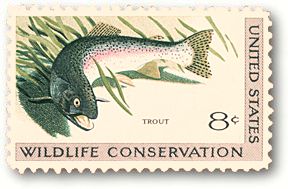
    Fishermen are concerned with the decline in trout numbers in the Tukituki, Ngaruroro and Tutaekuri rivers, with drought, winter floods, low water flows and agricultural pollution no doubt contributing factors. A survey in the past season showed that 68 per cent of fish caught in the Tukituki were adult fish, and only 32 per cent were juveniles. The results from recent national fly-fishing competitions saw a drop from 700 fish caught to only 36 in the last three years. This is a very disturbing trend. The degrading and even possible loss of these fisheries to Hawke’s Bay would be a disaster. On the other hand, the tourist revenue from a rejuvenated fishery would be a great boost to local economies and hard pressed farmers, home stays and for fishermen.

    Source: NZ Herald, Sept 26, 2017
    http://www2.nzherald.co.nz/the-country/news/article.cfm?c_id=16&objectid=11926632

  • No Upper Columbia steelhead fishery for the second year in a row

    No Upper Columbia steelhead fishery for the second year in a row

    About two dozen residents and sportsmen gathered at Howard’s on the River Central Building in Pateros last Tuesday, Sept. 19, 2017 to participate in a discussion of local wildlife issues – particularly steelhead (Oncorhynchus mykiss) – with Washington Department of Fish and Wildlife (WDFW) representatives. The balance of the two hour-plus meeting was devoted to the local steelhead fishery and its closure in the upper Columbia River system for the past two years. Chad Jackson, WDFW’s Region 2 fish program manager clarified the summer steelhead area under discussion as the upper Columbia region from Priest Rapids Dam upstream to Chief Joseph Dam, including the main stem Columbia, the Wenatchee, Entiat, Methow and Okanogan rivers and their tributaries. “It just isn’t the Methow we’re talking about,” said Jackson and recited the developments that affect the local steelhead fishery. “The upper Columbia summer steelhead were listed as threatened under the Endangered Species Act (ESA) back in 1999,” said Jackson, “and a key component of the listing is that both the wild and the hatchery steelhead are listed, they’re not separate.”

    Jackson explained the ESA permit that governs management of steelhead propagation in the upper Columbia requires that certain conditions be met before a season can be opened on the Methow River.
    • A minimum forecasted abundance of 9,550 fish total including wild and hatchery fish, 1,300 of which must be wild or native fish
    • Upper Columbia tributaries must also meet independent minimum escapement targets.
    Jackson said that 2017 steelhead forecasts above Bonneville Dam are at a 50-year low. Of those, the predicted steelhead coming over Priest Rapids Dam – the Upper Columbia fish – is about 3,400 fish, 615 of those wild. While the run is not yet completed, Jackson estimated another 1,000 to 1,200 fish would fall far short of the number needed to meet minimum requirements. “What that means is for the second year in a row, we’re not going to have an Upper Columbia steelhead fishery,” Jackson said.

    Source: Lake Chelan Mirror, Sept 29, 2017
    http://www.lakechelanmirror.com/outdoors/wdfw-fields-complaints-concerns-about-declining-steelhead-fishery

  • Pheasant numbers are down in North Dakota

    Pheasant numbers are down in North Dakota

    The first bad news came in July, when the Game and Fish Department reported a 14 percent decline in the pheasant population index based on spring counts of crowing roosters. Going into breeding season, pheasant numbers were down anywhere from 6 to 10 percent in the state’s primary pheasant regions, Game and Fish said. Results from the department’s annual roadside pheasant survey in late July and August showed pheasants observed per 100 miles were down 61 percent from last year. Brood counts were down 63 percent, and the average brood size was down 19 percent. Game and Fish bases the summary on results from 279 survey runs conducted along 103 brood routes across the state.

    The survey broke down pheasant numbers across the state as follows:

    – Southwest: Total pheasants were down 59 percent and brood counts declined 60 percent from 2016. Observers counted eight broods and 68 birds per 100 survey miles. The average brood size was 4.3.
    – Southeast: Pheasants declined 60 percent, and brood counts were down 70 percent. Observers counted two broods and 24 birds per 100 miles. The average brood size was 4.7.
    – Northwest: Total pheasants declined 72 percent from last year, and broods were down 76 percent. Observers tallied three broods and 24 birds per 100 miles, and the average brood size was 5.2.
    In northeast North Dakota, a marginal pheasant hunting area under the best conditions, the survey tallied one brood and six birds per 100 miles. The number of birds observed fell 54 percent, and brood counts were down 63 percent. The northeast generally lacks adequate habitat to carry pheasants through the winter.

    Source: Bismarck Tribune, Oct 1, 2017
    http://bismarcktribune.com/news/state-and-regional/pheasant-numbers-are-down-in-north-dakota/article_5ed0bf9b-237e-5c7c-af94-0b2d12dd27c6.html

  • These are tough times to be a snake

    These are tough times to be a snake

    The International Union for Conservation of Nature finds that 28 percent of reptiles are currently threatened with extinction. Though snake populations are notoriously difficult to assess, in the United States alone there are 14 snake species listed by the U.S. Fish & Wildlife Service as threatened or endangered. A 2010 study in the Royal Society journal Biology Letters found snake populations across five countries in widespread decline.

    Source: Sierra, Sept 25, 2017
    http://www.sierraclub.org/sierra/can-internet-save-snakes

  • Seeadler sind vom Aussterben bedroht

    Seeadler sind vom Aussterben bedroht

    Gelbe Kralle und ausgebreitete Schwingen: Seeadler (Haliaeetus albicilla) bieten den Besuchern des Feldberger Naturparks in Mecklenburg-Vorpommern einen atemberaubenden Anblick. Dort leben so viele wie nirgendwo sonst in Deutschland. Doch selbst hier drohen ihnen Gefahren. In freier Wildbahn leben in Deutschland derzeit rund 700 Adler-Brutpaare. Die meisten davon in Mecklenburg-Vorpommern. Doch vom Aussterben bedroht sind sie weiterhin, denn auch hier sind geeignete Brutplätze wie sehr hohe, freistehende Kiefern rar und Naturschützer wie Fred befinden sich im Dauerkampf mit Landwirten, die güllen und Insektizide und Pestizide einsetzen und somit die Nahrungsquellen der Adler deutlich einschränken. Drohnen und Windräder sind zudem neue Bedrohungen für die Adler.

    Quelle: Deutschlandfunk, 24.09.17
    http://www.deutschlandfunk.de/adler-safari-zum-koenig-der-luefte.1242.de.html?dram:article_id=396636