Auteur: Henk Tennekes

  • Worry over fish and wildlife decline in B.C.

    Worry over fish and wildlife decline in B.C.

    The B.C. Wildlife Federation is concerned about declining fish and wildlife populations – and is calling on the province to do something about it. The BCWF is kicking off a series of town halls across the province to discuss the matter. It’s also urging people to sign a petition calling on government to dedicate all hunting licence and fee revenues directly to wildlife management. “B.C. is one of the most biodiverse jurisdictions in the world, yet one of the most under-funded fish and wildlife management jurisdictions,” the group says. According to the federation, B.C. is home to more than half of all fish and wildlife species in Canada. Mountain caribou are in decline, and more than 85 per cent of wetlands in the Lower Mainland and the South Okanagan have been lost, removing habitat for amphibians, reptiles, fish, and birds. Kootenay and Arrow Lake kokanee (Oncorhynchus nerka) and rainbow trout (Oncorhynchus mykiss) are at record lows, and Thompson and Chilko River steelhead have declined from more than 6,000 fish in 1985 to just 600 today. Currently, only 18 per cent of hunting licence revenue is dedicated to fish and wildlife conservation.

    Source: Castanet, April 1, 2017
    https://www.castanet.net/news/BC/193266/Worry-over-wildlife-decline

  • Cod fish numbers decline greatly in the Gulf of Maine

    Cod fish numbers decline greatly in the Gulf of Maine

    Massachusetts scientists say they have reached the same conclusions as their federal counterparts in a study about the poor status of cod fish in the Gulf of Maine. The Boston Globe (http://bit.ly/2n4iLGQ ) reports the scientists found the region’s cod are at a historic low of about 80 percent less than the population from a decade ago. Micah Dean oversaw the survey for the Massachusetts Division of Marine Fisheries. He says he hopes fishermen who doubted federal government’s science on the issue will find the results credible. Republican Gov. Charlie Baker commissioned the survey last year after fishermen voiced concerns that the federal government was relying on bad science and exaggerating the cod’s distressed status. The state spent more than $500,000 trawling for cod as part of the study.

    Source: Moultrie Observer, April 4, 2017
    http://www.moultrieobserver.com/news/cod-fish-numbers-decline-greatly/article_a02cfc70-193c-11e7-ad86-0f765180ba0b.html

  • Naturschutz im Kanton Zürich: Die Artenvielfalt bleibt in Gefahr

    Naturschutz im Kanton Zürich: Die Artenvielfalt bleibt in Gefahr

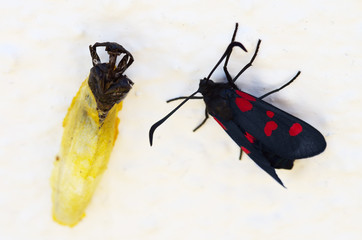
    Der Schutz der Tiere, Pflanzen und ihrer Lebensräume im Kanton Zürich reicht trotz einigen Erfolgen nicht aus. Die Fachstelle Naturschutz kann zwar laufende Massnahmen weiterführen. Für mehr fehlen ihr jedoch meist die Mittel. Der durchaus naturverbundene Baudirektor Markus Kägi hob an der Präsentation hervor, der Mensch sei nicht nur Geniesser und Nutzer, sondern habe eine Verpflichtung gegenüber der Natur. Diese sei ihm zum Schutz anvertraut, und das sei nicht einfach eine Last: «Es geht um einen Wert, den man nur einmal verlieren kann.» Zum Beispiel die Feldlerche (Alauda arvensis): Kägi kann ihren Gesang an seinem Wohnort Niederglatt zwar manchmal noch hören, aber das ist heute die Ausnahme. Zwischen 1988 und 2008 ist ihr Bestand im Kanton um etwa 80 Prozent regelrecht eingebrochen. Dem Bodenbrüter wird die zunehmende Mechanisierung der Landwirtschaft zum Verhängnis. Oder das Sumpfhornklee-Widderchen (Zygaena trifolii): In den 1990er Jahren war der schwarze Nachtfalter mit roten Tupfern noch in 80 Flachmooren verbreitet. Eine jüngere Erfassung wies ihn noch in 5 Gebieten nach. Da dieser Schmetterling ausserhalb des Kantons Zürich kaum vorkommt, ergriff man Sofortmassnahmen. Weil seine Raupen bis zu vier Jahre für die Entwicklung brauchen, kommen sie bei der Bewirtschaftung der Feuchtgebiete mit Traktor und Ladewagen buchstäblich unter die Räder. Nun wird die Streu vermehrt von Hand weggetragen. Für einen Bestand kam die Hilfe jedoch zu spät, es bleiben noch deren vier.

    Quelle: NZZ, 3.4.17
    https://www.nzz.ch/zuerich/naturschutz-im-kanton-zuerich-die-artenvielfalt-bleibt-in-gefahr-ld.155053

  • The Forest ringlet, NZ’s only forest butterfly faces extinction

    The Forest ringlet, NZ’s only forest butterfly faces extinction

    The elegant native butterfly, the forest ringlet or Dodonidia helmsii, is on the brink of extinction, experts claim. Up until the 1970s, forest ringlet butterflies were found throughout New Zealand districts, ranges and regional parks. However, over the last few decades it has experienced a major decline in both numbers and distribution. The Moths and Butterflies of New Zealand Trust has reached out to a Senior Conservation Officer, Steve Wheatley, from Sir David Attenborough’s Butterfly Conservation in the UK to advise on how best to protect the butterfly, New Zealand’s only true forest butterfly. Wheatley will travel to New Zealand in the summer when the forest ringlet is known to breed, and carry out critical field research.

    The cause of the decline in the species has been under much debate and speculation from expert entomologists. Wheatley will work closely with New Zealand entomologists and research the causes of the apparent decline, understand variables within the butterfly population, complete information on larval food plants to determine a preference for particular hosts in different areas and investigate the conditions necessary for mass-breeding.

    The Moths and Butterflies of New Zealand Trust has launched a Givealittle page, called The Forest Ringlet Butterfly Project, to fundraise for Wheatley’s vital research equipment and travel expenses.

    Jacqui Knight, the founder of the Moths and Butterflies of New Zealand Trust said that, “the forest ringlet is quite unique in that it is only found in this country, and it’s the only one of its species in the world. It really is a New Zealand icon.”

    The Moths and Butterflies of New Zealand Trust is a charitable trust which is committed to promoting New Zealand’s biodiversity by ensuring the protection and conservation of moths, butterflies and their habitats.

    Source: Stuff, October 4, 2016
    http://www.stuff.co.nz/life-style/home-property/84951193/NZs-only-forest-butterfly-faces-extinction

  • Butterflies on both sides of the Atlantic Ocean are in rapid decline

    Butterflies on both sides of the Atlantic Ocean are in rapid decline

    Urban populations of 28 butterfly species have fallen 69 percent across the UK since 1995, while in America monarch butterflies are down 80 percent since the mid-1990s and 27 percent since this time last year. The decline is worrying, say scientists, because butterflies are recognized as environmental indicators due to their rapid responses to small changes in climate and habitat. “Governments in the European Union use butterflies as a measure of the health of the environment and as a biodiversity indicator,” says Tom Brereton, head of monitoring at Butterfly Conservation, one of the organizations behind the U.K. study.

    Although, intensive agriculture has long been seen as one of the most destructive factors for butterflies and other pollinators, the UK’s urban butterfly populations have suffered the worst declines over the past 20 years, according to the UK study published in the Ecological Indicators journal. Scientists at the University of Kent, the Centre for Ecology and Hydrology and Butterfly Conservation found that species in cities and towns were declining at a much higher rate than their countryside counterparts – 69 percent compared to 45 percent.

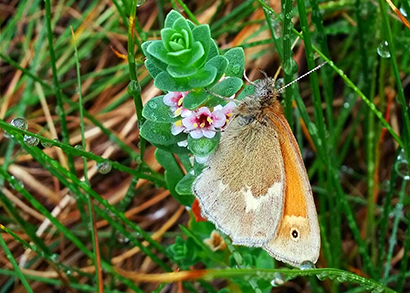
    The Small Copper and Small Heath species saw some of the biggest declines. Between 1995 and 2014, the former’s population fell by 75 percent in urban areas and 23 percent in rural areas. In the same time period, numbers of Small Heath dropped 78 percent and 17 percent respectively.
    “It’s a combination of factors,” says Brereton, adding that changes in how people manage their gardens has influenced the declines. “People with big gardens are selling spaces off for development. They’re using a lot more pesticides, which has a knock-on effect for butterflies. They’re putting in decking, barbeque areas and artificial surfaces.”

    Scientists said the dramatic decline in monarch butterflies in the US can be partly traced back to “widespread planting of genetically engineered crops” and the use of Monsanto’s Roundup herbicide. The majority of US corn and soybeans are genetically engineered for resistance to the herbicide, which is a “potent” killer of milkweed – the monarch caterpillar’s only food source, according to the Center for Food Safety, a US environmental, non-profit. A huge increase in the use of Roundup and other glyphosate herbicides has nearly wiped out milkweed in the midwest’s corn and soybean fields, says the CFS.

    “In addition to threats from more frequent and harsher weather events, monarchs are still severely jeopardized by the ever-increasing pesticides used with genetically-engineered crops, destroying their habitat,” said George Kimbrell, senior attorney at the Center for Food Safety, in a statement.
    The iconic orange and black butterflies make an astonishing migration from their summer quarters east of the Rockies to the mountains of central Mexico where they spend winter. There they gather in bunches on trees. But this is becoming a rarer sight. The latest monarch counts indicate ongoing risk of extinction.

    “The monarch butterfly is still in really big trouble and still needs really big help if we are going to save this beloved orange and black wonder for future generations,” said Tierra Curry, a senior scientist at the Center for Biological Diversity, in a statement.

    Last year researchers warned that in Europe, nine percent of bee and butterfly species were facing extinction, while 31 percent of butterfly species for which sufficient data is available were in decline. A drop in pollinators is also being detected elsewhere in the world. “Generally butterflies are in trouble. Something like seven out of ten species are in decline. There have been some conservation successes. But overall the pattern is quite gloomy,” says Brereton.

    The UN has warned that a decline in pollinators vital to agriculture, such as bees and butterflies, poses a threat to world food production and global biodiversity. Brereton says the loss of butterflies is also a “quality of life issue” for millions of people who like to see the creatures in their gardens in spring and summer. The scientists have called on more action from national and local lawmakers to deal with declines there but said individuals can play their part too.

    Source: Deutsche Welle, Feb 23, 2017
    http://www.dw.com/en/butterfly-declines-in-the-north-america-uk/a-37688619
  • Endangered Maritime Ringlet Shows Continued Decline in Eastern Canada

    Endangered Maritime Ringlet Shows Continued Decline in Eastern Canada

    Coenonympha nipisiquit, also known as the maritime ringlet, lives in just 10 salt marshes in Quebec and New Brunswick, Canada, and was first listed as endangered in New Brunswick in 1996. Between 2011 and 2015, visual counts were conducted on a daily basis during the butterfly’s flight period in four of those marshes, and the resulting data revealed declining numbers overall. “The maritime ringlet is still at risk of extirpation from its natural range, despite conservation efforts and past introductions of the species into unoccupied salt marshes. As such, the current conservation efforts should be reinforced or re-evaluated,” says Gaétan Moreau, Ph.D., associate professor in the department of biology at Université de Moncton in New Brunswick and co-author of the study.

    Source: Entomology Today, March 17, 2017

    Endangered Maritime Ringlet Shows Continued Decline in Eastern Canada

  • Fewer swallows to make a summer

    Fewer swallows to make a summer

    With this week bringing summer-like weather across much of France, swallows have also started to arrive in numbers – but those numbers are down on previous years. Swallows and house martin populations have fallen about 40% since the first count was done in France in 1989 – with man being the main reason for their decline. A study by the Fondation 30 Millions d’Amis said swallows were 42% down and house martins (Delichon urbicum) 39% down as an already reduced population was hit by the effects of droughts when they were over-wintering in Africa. Bird numbers have been hit by the effects of insecticides in agricultural areas and also by improved building standards which have left fewer ‘niches’ for them to build their nests – but also by people clearing old nests as the birds and chicks can leave a mess underneath (people destroying a nest risk a €9,000 fine). The barn swallow (Hirundo rustica), called hirondelle rustique, is the one most often seen across France and they nest on the outside of buildings, often under eaves, while house martins (hirondelle de fenêtre) nest inside barns or porches. Similar looking swifts, or martinets, are not related to swallows or martins but they are also in decline and, like house martins, are classed as ‘threatened’.

    Source: Connexion, April 2017
    https://www.connexionfrance.com/French-news/Fewer-swallows-to-make-a-summer

  • Aantal Nederlandse biologische boeren groeit met ruim twaalf procent

    Aantal Nederlandse biologische boeren groeit met ruim twaalf procent

    In 2016 groeide voor het eerst sinds 2010 het aantal geregistreerde biologische boerenbedrijven harder dan het aantal biologische handels- en verwerkingsbedrijven. Er zijn nu 1831 boerenbedrijven geregistreerd bij Skal Biocontrole. Door de krapte in het aanbod van biologische grondstoffen groeide het aantal handelsbedrijven langzamer, met tien procent naar 2.586. Steeds meer provincies kiezen ervoor om biologische landbouw te stimuleren. Zo gaan de drie noordelijke provincies samen onderzoek doen naar het effect van biologische landbouw op de economie, de voedselproductie, het milieu en het landschap. Groningen heeft daarnaast al een uitgebreid stimuleringsprogramma biologische landbouw. Met de groei van het biologisch landbouwareaal wordt de druk op het milieu in Nederland vanuit de landbouw kleiner. Een biologische boer werkt in harmonie met de natuur en grondgebonden. Hierbij worden geen chemische bestrijdingsmiddelen gebruikt. Ook zit er een grens aan het aantal dieren per hectare. Er mag nooit meer mest geproduceerd worden dan dat er nodig is voor het biologische land. Ook is de biodiversiteit op biologische bedrijven 25 % hoger dan op gangbare boerenbedrijven.

    Bron: Actief Online, 5-4-17
    http://www.actiefonline.nl/nieuws/achtkarspelen/aantal-nederlandse-biologische-boeren-groeit-met-ruim-twaalf-procent

  • Occurrence of Neonicotinoid Insecticides in Drinking Water

    Occurrence of Neonicotinoid Insecticides in Drinking Water

    Neonicotinoid insecticides are widespread in surface waters across the agriculturally intensive Midwestern United States. We report for the first time the presence of three neonicotinoids in finished drinking water and demonstrate their general persistence during conventional water treatment. Periodic tap water grab samples were collected at the University of Iowa over 7 weeks in 2016 (May−July) after maize/soy planting. Clothianidin, imidacloprid, and thiamethoxam were ubiquitously detected in finished water samples at concentrations ranging from 0.24 to 57.3 ng/L. Samples collected along the University of Iowa treatment train indicate no apparent removal of clothianidin or imidacloprid, with modest thiamethoxam removal (∼50%). In contrast, the concentrations of all neonicotinoids were substantially lower in the Iowa City treatment facility finished water using granular activated carbon (GAC) filtration. Batch experiments investigated potential losses. Thiamethoxam losses are due to base-catalyzed hydrolysis under high-pH conditions during lime softening. GAC rapidly and nearly completely removed all three neonicotinoids. Clothianidin is susceptible to reaction with free chlorine and may undergo at least partial transformation during chlorination. Our work provides new insights into the persistence of neonicotinoids and their potential for transformation during water treatment and distribution, while also identifying GAC as a potentially effective management tool for decreasing neonicotinoid concentrations in finished drinking water.

    Source:
    Kathryn L. Klarich et al. Environ. Sci. Technol. Lett. 2017. DOI: 10.1021/acs.estlett.7b00081

  • Neonicotinoids detected in drinking water

    Neonicotinoids detected in drinking water

    One of the most dangerous pesticides, neonicotinoids, has been found in drinking water, a new study reveals. Neonicotinoids, most of which were released in the 1990s, were designed to be the most environmentally-friendly chemicals on the market and soon became the most widely used, especially in the Midwest. The compounds don’t just coat leaves and stems but work their way into plant tissue, meaning fewer sprays are needed. But the neonics, as they are nicknamed, became reputable for being something else – a bee killer, wreaking havoc on insect nervous systems. A 2016 study suggested a link between neonicotinoid use and the drop in the bee population that was foraging on the crops treated with the pesticide.

    A year prior, the US Geological Survey collected water samples from streams throughout the country and found neonicotinoids in more than half of the samples. The current joint-study, from the US Geological Survey and University of Iowa, found the chemicals in drinking water as well. The researchers say it marks the first time that anyone has identified this class of pesticide in tap water.

    The team tested water as it went through two different water treatment systems. They found that a system serving Iowa City, which uses granular activated carbon filtration that dissolves organic compounds, removed 100 percent, 94 percent and 85 percent of the neonicotinoids clothianidin, imidacloprid and thiamethoxam, respectively. But the rapid sand filtration system serving the University of Iowa, which uses relatively coarse sand and other granular media to remove particles, reduced the same substances only by about one percent, eight percent and 44 percent, respectively.

    Regulators have not yet defined safe levels of neonicotinoids in drinking water, in part because researchers are currently working to understand if and how the compounds impact human health. ‘There is no EPA standard for drinking water,’ Dr LeFevre said. Dr Melissa Perry, a public health researcher at George Washington University, told The Washington Post that the new study ‘provides further evidence that neonicotinoid pesticides are present in our daily environments’. ‘From a public health standpoint, this issue clearly needs better attention,’ she added.

    Because the study had a small sample size, Dr Perry says more comprehensive assessments are needed to detect how prevalent neonics are in national water supplies. ‘There is currently no national effort to measure to what extent neonicotinoids are making it into our bodies, be it through water or food,’ she said.

    Read more: http://www.dailymail.co.uk/health/article-4383216/Harmful-farm-pesticide-detected-drinking-water-US.html#ixzz4dSJUFS8q