Amfibie: Algemeen

  • Zutphen Bijenstad – voordracht van Henk Tennekes op het BIJENfeest van 27 april 2013

    Zutphen Bijenstad – voordracht van Henk Tennekes op het BIJENfeest van 27 april 2013

    Wat heeft Zutphen Bijenstad tot nu toe bereikt? In 2010 en 2011 zijn ruim 1500 zakjes zaad verkocht onder het motto ‘Help de bij in de stad’ en ‘Alle bee(s)tjes helpen’. In 2012 deden we mee met de campagne ‘Bijen houden van biologisch’ en kregen we 2000 gratis zakjes biologisch zaad die via winkels zijn verspreid. In september 2010 wonnen we de Zutphense Toekomstprijs. In maart 2011 is het Bijenlint officieel gestart. In samenwerking met de gemeente zijn vier projecten gestart, waarna anderen volgden. In september 2012 is Zutphen Bijenstad een stichting geworden en gaat de doelstelling verder implementeren. De stichting heeft de ANBI status. Henk Tennekes gaf op het BIJENfeest van 27 april 2013 aan de Marsweg 115 in Zutphen een voordracht over de risico’s van neonicotinoide insecticiden voor mens en milieu. De voordracht is bijgevoegd.

    Wat heeft Zutphen Bijenstad tot nu toe bereikt? In 2010 en 2011 zijn ruim 1500 zakjes zaad verkocht onder het motto ‘Help de bij in de stad’ en ‘Alle bee(s)tjes helpen’. In 2012 deden we mee met de campagne ‘Bijen houden van biologisch’ en kregen we 2000 gratis zakjes biologisch zaad die via winkels zijn verspreid. In september 2010 wonnen we de Zutphense Toekomstprijs. In maart 2011 is het Bijenlint officieel gestart. In samenwerking met de gemeente zijn vier projecten gestart, waarna anderen volgden. In september 2012 is Zutphen Bijenstad een stichting geworden en gaat de doelstelling verder implementeren. De stichting heeft de ANBI status. Henk Tennekes gaf op het BIJENfeest van 27 april 2013 aan de Marsweg 115 in Zutphen een voordracht over de risico’s van neonicotinoide insecticiden voor mens en milieu. De voordracht is bijgevoegd.

    Bron: http://www.zutphenbijenstad.nl/

  • Henk Tennekes spreekt op het Slow Food Filmfestival op 12 mei 2013 in Deventer

    Henk Tennekes spreekt op het Slow Food Filmfestival op 12 mei 2013 in Deventer

    Na het succes van vorig jaar organiseren Filmhuis De Keizer en Slow Food IJsselvallei op zondag 12 mei a.s. het 2e slow food film festival deventer. Met bijzondere films en tussendoor genieten van volop Lekker, Puur en Eerlijk eten en drinken. De films brachten heel verschillende kanten van ons ‘food’ in beeld: de achtergronden en bedreigingen van onze voedselvoorziening, de hartstocht voor voedingsproducten en het gastronomisch genieten. Van 17:15 – 17.45 werd de film More than Honey ingeleid door dr ir Henk Tennekes, toxicoloog en pleitbezorger voor een verbod op toepassing van insecticiden die bijenvolkeren en insecten in het algemeen bedreigen. De voordracht is bijgevoegd.

    Na het succes van vorig jaar organiseren Filmhuis De Keizer en Slow Food IJsselvallei op zondag 12 mei a.s. het 2e slow food film festival deventer. Met bijzondere films en tussendoor genieten van volop Lekker, Puur en Eerlijk eten en drinken. De films brachten heel verschillende kanten van ons ‘food’ in beeld: de achtergronden en bedreigingen van onze voedselvoorziening, de hartstocht voor voedingsproducten en het gastronomisch genieten. Van 17:15 – 17.45 werd de film More than Honey ingeleid door dr ir Henk Tennekes, toxicoloog en pleitbezorger voor een verbod op toepassing van insecticiden die bijenvolkeren en insecten in het algemeen bedreigen. De voordracht is bijgevoegd.

    Lokatie filmfestival:
    Filmhuis De Keizer
    Keizerstraat 78
    7411 HH Deventer

    Programma:
    Zondag 12 mei 2013
    11:00 Opening in Filmhuis de Keizer, ontvangst met koffie en een ‘IJssel- bonk’ van Brood van Joop.
    11:30 The Story of Slow Food met inleiding & debat
    13:00 Slow Food-lunch in Paviljoen Het Vogeleiland
    14:30 l’Amour des Moules en speciaal voor de kinderen Ice Dragon (vanaf 9 jaar)
    16:00 – 17.00 Borrel met streekgemaakte hapjes in Filmhuis de Keizer
    17:00 The Trip
    17:15 – 17.45 Inleiding bij de film More than Honey door dr ir Henk Tennekes, toxicoloog
    17.45 – 19.15 More than Honey

    Kaartverkoop:
    Arrangementen ochtend-, middag- of dagprogramma via webwinkel www.slowfood.nl
    Losse kaarten per film via www.filmhuisdekeizer.nl

    Zie www.sfffd.nl voor uitgebreidere informatie en trailers.
    Interview met Markus Imhoof:
    http://www.morethanhoney-film.nl/interview

  • How surface runoff of imidacloprid turned Holland into a neonicotinoid dump that exterminates insects, birds, hedgehogs, bats, amphibians, reptiles, you name it

    How surface runoff of imidacloprid turned Holland into a neonicotinoid dump that exterminates insects, birds, hedgehogs, bats, amphibians, reptiles, you name it

    Surface runoff is an important process that affects the local water balance and causes soil erosion and rapid solute transport towards ditches, streams, and rivers. Surface runoff is the fastest route from field to stream and the main transport route for sediment and adsorbed contaminants, such as pesticides. It is the main contributor of pesticides to surface water bodies. The agricultural areas in The Netherlands most vulnerable to surface runoff are peat grasslands, where groundwater levels are kept close to the surface (less than 60 cm below soil surface), riverine heavy clay grasslands with low permeability and drainage by superficial trenches (less than 40 cm below soil surface), and sandy or clay soils with topsoil or subsoil compaction caused by treading, overstress due to large wheel loads of agricultural machinery, and tillage.

    Surface runoff is an important process that affects the local water balance and causes soil erosion and rapid solute transport towards ditches, streams, and rivers. Surface runoff is the fastest route from field to stream and the main transport route for sediment and adsorbed contaminants, such as pesticides. It is the main contributor of pesticides to surface water bodies. The agricultural areas in The Netherlands most vulnerable to surface runoff are peat grasslands, where groundwater levels are kept close to the surface (less than 60 cm below soil surface), riverine heavy clay grasslands with low permeability and drainage by superficial trenches (less than 40 cm below soil surface), and sandy or clay soils with topsoil or subsoil compaction caused by treading, overstress due to large wheel loads of agricultural machinery, and tillage.

    Source:
    Willemijn M. Appels.Thesis submitted in fulfilment of the requirements for the degree of doctor at Wageningen University (attached)

  • Henk Tennekes sprach am 23. März 2013 an der Sächsischen Ornithologentagung des Vereins Sächsischer Ornithologen (VSO) in Hohenstein-Ernstthal

    Henk Tennekes sprach am 23. März 2013 an der Sächsischen Ornithologentagung des Vereins Sächsischer Ornithologen (VSO) in Hohenstein-Ernstthal

    Insgesamt 275 Vereinsmitglieder und Gäste (neuer Rekord seit Altenburg 2007!) fanden sich am vergangenen Wochenende (22-24. März 2013) zur 51. Jahresversammlung und Sächsischen Ornithologentagung des Vereins Sächsischer Ornithologen in der westsächsischen Kleinstadt Hohenstein-Ernstthal ein, wo das „Schützenhaus“ beste Tagungsbedingungen bot. Höhepunkt im wissenschaftlichen Vortragsprogramm am Sonnabend war mit Sicherheit der Vortrag des niederländischen Toxikologen und Krebsforschers Dr. Henk Tennekes, der über neuartige Pestizide in der Landwirtschaft und deren katastrophalen Folgen auf die Nahrungskette in der Natur sprach. Viele Zuhörer zeigten sich nach diesen Ausführungen betroffen, ja geschockt und forderten eine Reaktion vom Verein. Wie daher zur Mitgliederversammlung beschlossen, wird der VSO eine entsprechende Petition an die Bundesregierung und die EU richten.

    Insgesamt 275 Vereinsmitglieder und Gäste (neuer Rekord seit Altenburg 2007!) fanden sich am vergangenen Wochenende (22-24. März 2013) zur 51. Jahresversammlung und Sächsischen Ornithologentagung des Vereins Sächsischer Ornithologen in der westsächsischen Kleinstadt Hohenstein-Ernstthal ein, wo das „Schützenhaus“ beste Tagungsbedingungen bot. Höhepunkt im wissenschaftlichen Vortragsprogramm am Sonnabend war mit Sicherheit der Vortrag des niederländischen Toxikologen und Krebsforschers Dr. Henk Tennekes, der über neuartige Pestizide in der Landwirtschaft und deren katastrophalen Folgen auf die Nahrungskette in der Natur sprach. Viele Zuhörer zeigten sich nach diesen Ausführungen betroffen, ja geschockt und forderten eine Reaktion vom Verein. Wie daher zur Mitgliederversammlung beschlossen, wird der VSO eine entsprechende Petition an die Bundesregierung und die EU richten.

    Quelle: VSO aktuell, 26.03.2013
    http://www.vso-web.de/aktuell.html

  • Congressional Briefing on Impacts of Pesticides on Birds, Bees and Broader Ecosystems

    Congressional Briefing on Impacts of Pesticides on Birds, Bees and Broader Ecosystems

    In the past decade, many studies have implicated a class of pesticides known as “neonicotinoids” in the declines of pollinator populations, including bumble bees and honey bees. The toxic impact that these chemicals may be having on bees and other insects has brought them the most attention recently, and rightly so; one-third of the U.S. diet depends on pollinator services and they contribute over $15 billion to the U.S. agricultural economy. Pollinator losses represent a serious threat to the agricultural industry and our nation’s food security. First introduced in the 1990s in response to widespread pest resistance as well as public health objections to older pesticides, the neonicotinoid class of insecticides are now the most widely used insecticides in the world; it is difficult to find pest control commodities that do not contain one or several of these chemicals. The environmental persistence of neonicotinoids, their propensity for runoff and for groundwater infiltration, and their cumulative effects on invertebrates raise environmental concerns that go well beyond bees. A new American Bird Conservancy commissioned report by toxicologist Pierre Mineau reviews the effects on avian species and on the aquatic systems on which they depend. Larger ecosystem impacts and the relationship between neonicotinoids and alarming declines of birds, bees, and other organisms will be addressed.

    In the past decade, many studies have implicated a class of pesticides known as “neonicotinoids” in the declines of pollinator populations, including bumble bees and honey bees. The toxic impact that these chemicals may be having on bees and other insects has brought them the most attention recently, and rightly so; one-third of the U.S. diet depends on pollinator services and they contribute over $15 billion to the U.S. agricultural economy. Pollinator losses represent a serious threat to the agricultural industry and our nation’s food security. First introduced in the 1990s in response to widespread pest resistance as well as public health objections to older pesticides, the neonicotinoid class of insecticides are now the most widely used insecticides in the world; it is difficult to find pest control commodities that do not contain one or several of these chemicals. The environmental persistence of neonicotinoids, their propensity for runoff and for groundwater infiltration, and their cumulative effects on invertebrates raise environmental concerns that go well beyond bees. A new American Bird Conservancy commissioned report by toxicologist Pierre Mineau reviews the effects on avian species and on the aquatic systems on which they depend. Larger ecosystem impacts and the relationship between neonicotinoids and alarming declines of birds, bees, and other organisms will be addressed.

    Severe losses in critical pollinator species continue to have crippling effects on our nation’s agricultural economy. Experts will address the impact of neonicotinoid pesticides on birds, bees, and other beneficial invertebrates as well as broader ecosystem concerns, along with how Congress might be able to fix the problems. Speakers:
    • Pierre Mineau, Toxicologist
    • Scott Hoffman Black, Xerces Society for Invertebrate Conservation, IUCN Butterfly Specialist Group
    • Steve Ellis, Commercial Beekeeper, Old Mill Honey Company (California and Minnesota)
    • Peter Jenkins, Attorney, Consultant Center for Food Safety

    Moderator:
    • Cynthia Palmer, American Bird Conservancy

    WHAT: Congressional briefing and expert testimony about the toxic effects of neonicotinoid pesticides and their impact on birds, bees, and other wildlife
    WHO: A panel of leaders in the science, wildlife, agriculture and beekeeping communities will brief Congressional staff
    WHEN: Tuesday, March 19th — 10:00 to 11:00 a.m. EST
    WHERE: EPW Committee Room, 406 Dirksen Senate Office Building, Washington, DC
    RSVP: Stephanie von Blackwood at svonblackwood@abcbirds.org or 202-234-7181

  • Van de 16 in ons land voorkomende amfibieën staat er 9 op de rode lijst

    Van de 16 in ons land voorkomende amfibieën staat er 9 op de rode lijst

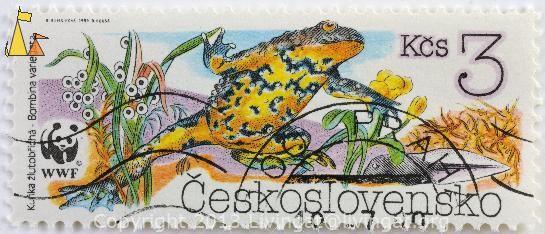
    De geelbuikvuurpad (Bombina variegata) is zeer ernstig bedreigd in ons land. In Nederland komt de geelbuikvuurpad alleen nog voor in Zuid-Limburg. De geelbuikvuurpad leeft van kleine ongewervelden zoals insecten en hun larven, vooral kevers, mieren en tweevleugeligen. Iets minder bedreigd, maar wel zeer zeldzaam zijn de vuursalamander (Salamandra salamandra), boomkikker (Hyla arborea) en de knoflookpad (Pelobates fuscus) te noemen. In Nederland komt de vuursalamander voor op de vochtigere overgangen van essenbronbossen naar vochtig berken-zomereikenbos. Deze situatie is alleen aan te treffen in Zuid-Limburg, op de Maasdal-flanken nabij Bunde. Het voedsel van een volwassen vuursalamander bestaat uit kleine tot middelgrote ongewervelden. Versnipperde populaties van de boomkikker komen voor in het zuiden en oosten in de provincies Limburg, Noord-Brabant, Zeeuws-Vlaanderen, de Achterhoek in Gelderland heeft de grootste populatie van het land, doorlopend aan de populatie in Oost Twente in Overijssel. In Drenthe waren enkele kleinere populaties in 2007 nog aanwezig. Deze zijn echter tot op een na vrijwel uitgestorven. Het voedsel van de boomkikker bestaat uit verschillende ongewervelden zoals insecten. In Nederland is het voorkomen van de knoflookpad beperkt tot de oostelijk gelegen, hogere gronden in de rivier- en beekdalen. Daarvan zijn het Overijsselse Vechtdal, verschillende IJssel-beekdalen in Gelderland, het Gelderse IJsseldal, oostelijk Noord-Brabant (waaronder twee locaties ten zuiden van het dorp Deurne) en het Noordlimburgse Maasdal te noemen als voornaamste populatiegebieden. De grootste populatie knoflookpadden bevindt zich in en rond het Gelderse Overasselt. De volwassen knoflookpad leeft van kleine ongewervelde dieren die hij ’s nachts tegenkomt op de bodem. De kamsalamander (Triturus cristatus), de vinpootsalamander (Lissotriton helveticus), de poelkikker (Rana lessonae), de heikikker (Rana arvalis) en de vroedmeesterspad (Alytes obstetricans) gaan in popolulatie de laatste jaren ook zorgwekkend hard achteruit.

    De geelbuikvuurpad (Bombina variegata) is zeer ernstig bedreigd in ons land. In Nederland komt de geelbuikvuurpad alleen nog voor in Zuid-Limburg. De geelbuikvuurpad leeft van kleine ongewervelden zoals insecten en hun larven, vooral kevers, mieren en tweevleugeligen. Iets minder bedreigd, maar wel zeer zeldzaam zijn de vuursalamander (Salamandra salamandra), boomkikker (Hyla arborea) en de knoflookpad (Pelobates fuscus) te noemen. In Nederland komt de vuursalamander voor op de vochtigere overgangen van essenbronbossen naar vochtig berken-zomereikenbos. Deze situatie is alleen aan te treffen in Zuid-Limburg, op de Maasdal-flanken nabij Bunde. Het voedsel van een volwassen vuursalamander bestaat uit kleine tot middelgrote ongewervelden. Versnipperde populaties van de boomkikker komen voor in het zuiden en oosten in de provincies Limburg, Noord-Brabant, Zeeuws-Vlaanderen, de Achterhoek in Gelderland heeft de grootste populatie van het land, doorlopend aan de populatie in Oost Twente in Overijssel. In Drenthe waren enkele kleinere populaties in 2007 nog aanwezig. Deze zijn echter tot op een na vrijwel uitgestorven. Het voedsel van de boomkikker bestaat uit verschillende ongewervelden zoals insecten. In Nederland is het voorkomen van de knoflookpad beperkt tot de oostelijk gelegen, hogere gronden in de rivier- en beekdalen. Daarvan zijn het Overijsselse Vechtdal, verschillende IJssel-beekdalen in Gelderland, het Gelderse IJsseldal, oostelijk Noord-Brabant (waaronder twee locaties ten zuiden van het dorp Deurne) en het Noordlimburgse Maasdal te noemen als voornaamste populatiegebieden. De grootste populatie knoflookpadden bevindt zich in en rond het Gelderse Overasselt. De volwassen knoflookpad leeft van kleine ongewervelde dieren die hij ’s nachts tegenkomt op de bodem. De kamsalamander (Triturus cristatus), de vinpootsalamander (Lissotriton helveticus), de poelkikker (Rana lessonae), de heikikker (Rana arvalis) en de vroedmeesterspad (Alytes obstetricans) gaan in popolulatie de laatste jaren ook zorgwekkend hard achteruit.

    Bronnen:
    Natuur Anders & Wikipedia
    http://www.stichtingnatuuranders.nl/de_rodelijst_amfibieen.htm

  • Umweltbundesamt sieht Handlungsbedarf bei Pflanzenschutzmitteln

    Umweltbundesamt sieht Handlungsbedarf bei Pflanzenschutzmitteln

    Amphibien sind die weltweit am stärksten gefährdeten Wirbeltiere. Auch in Deutschland steht mehr als die Hälfte der Frösche, Kröten und Molche auf der Roten Liste der gefährdeten Tierarten. Ergebnisse eines Forschungsvorhabens im Auftrag des Umweltbundesamtes (UBA) deuten darauf hin, dass der Einsatz von Pestiziden in der Landwirtschaft mitverantwortlich für den Rückgang der Amphibien ist. In Versuchen führten Pflanzenschutzmittel bei Grasfröschen schon in anwendungsüblichen Mengen zum Tod vieler Tiere. Bei Vögeln und Säugetieren gibt es seit längerer Zeit die Diskussion, ob Pestizide über die Haut aufgenommen werden und wie groß die dadurch bedingte Gefahr ist. Die feuchte Haut von Amphibien absorbiert Stoffe in noch viel größeren Mengen, da sie im direkten Kontakt mit der Umwelt steht. Daher ist die Gefahr der „dermalen Exposition“ hoch. „Amphibien nutzen landwirtschaftliche Flächen als Lebensraum und überqueren sie auf ihren Wanderungen zu den Laichgewässern“, erläutert UBA-Präsident Jochen Flasbarth. „Die Studie zeigt Handlungsbedarf auf. Das Umweltbundesamt hält es für erforderlich, den Schutz der Amphibien in der Produktzulassung, aber auch in der landwirtschaftlichen Praxis stärker zu berücksichtigen.“

    Amphibien sind die weltweit am stärksten gefährdeten Wirbeltiere. Auch in Deutschland steht mehr als die Hälfte der Frösche, Kröten und Molche auf der Roten Liste der gefährdeten Tierarten. Ergebnisse eines Forschungsvorhabens im Auftrag des Umweltbundesamtes (UBA) deuten darauf hin, dass der Einsatz von Pestiziden in der Landwirtschaft mitverantwortlich für den Rückgang der Amphibien ist. In Versuchen führten Pflanzenschutzmittel bei Grasfröschen schon in anwendungsüblichen Mengen zum Tod vieler Tiere. Bei Vögeln und Säugetieren gibt es seit längerer Zeit die Diskussion, ob Pestizide über die Haut aufgenommen werden und wie groß die dadurch bedingte Gefahr ist. Die feuchte Haut von Amphibien absorbiert Stoffe in noch viel größeren Mengen, da sie im direkten Kontakt mit der Umwelt steht. Daher ist die Gefahr der „dermalen Exposition“ hoch. „Amphibien nutzen landwirtschaftliche Flächen als Lebensraum und überqueren sie auf ihren Wanderungen zu den Laichgewässern“, erläutert UBA-Präsident Jochen Flasbarth. „Die Studie zeigt Handlungsbedarf auf. Das Umweltbundesamt hält es für erforderlich, den Schutz der Amphibien in der Produktzulassung, aber auch in der landwirtschaftlichen Praxis stärker zu berücksichtigen.“

    Pflanzenschutzmittel werden in der EU erst nach umfangreichen Untersuchungen zu ihrer Umweltverträglichkeit zugelassen. In Deutschland ist das UBA für die Bewertung des Umweltrisikos zuständig. Wenn dabei unvertretbare Risiken für den Naturhaushalt festgestellt werden, sind die Pflanzenschutzmittel nach europäischem Recht nicht zulassungsfähig. Eine Risikobewertung für Amphibien ist bislang nicht Bestandteil des auf europäischer Ebene festgelegten Bewertungsrahmens. Auf ihren Wanderungen von einem Lebensraum zum anderen können Amphibienarten aber landwirtschaftliche Flächen durchqueren. Manche Arten halten sich auch außerhalb der Wanderungszeiten auf Äckern und Wiesen auf. Dort können sie während oder nach der Ausbringung mit Pflanzenschutzmitteln in Kontakt kommen. Das UBA ließ deshalb prüfen, ob die Zulassungsbewertungen von Pflanzenschutzmitteln die Schutzbedürftigkeit von Amphibien ausreichend berücksichtigen. Bei Versuchen wurden zur Simulation des Pflanzenschutzmitteleinsatzes Grasfrösche mit sieben verschiedenen Präparaten besprüht. Sechs der getesteten Produkte führten zum Tod von 40 bis 100 Prozent der Frösche. Akut giftig wirkte bei dreien der Produkte bereits der Kontakt mit nur einem Zehntel der zugelassenen Aufwandmengen – er tötete 40 Prozent der Tiere innerhalb von sieben Tagen. Auf welche Mechanismen die beobachtete tödliche Wirkung der Pestizide auf Frösche zurückzuführen ist, konnte allerdings noch nicht geklärt werden. Die Stärke der Wirkung scheint auch von Lösemitteln abzuhängen, die Pestiziden beigemischt werden. Diese wirken entweder selbst giftig oder begünstigen das Eindringen der Wirkstoffe in den Körper. „Unsere Studie zeigt aber, dass schon jetzt dringender Handlungsbedarf besteht“, so Carsten Brühl vom Institut für Umweltwissenschaften Landau an der Universität Koblenz-Landau. „Auch Landwirte haben schließlich ein großes Interesse an einer intakten Natur und wollen Amphibien schützen, die schädliche Insekten vertilgen. Sie wollen daher Pestizide einsetzen, die diese nicht gefährden.“
    „Aufgrund dieser Ergebnisse empfiehlt das UBA eine Überarbeitung der EU-Leitfäden zur Risikobewertung von Pestiziden. Neben einer Änderung der Zulassungspraxis ist es wichtig, Lebensräume stärker zu vernetzen und Gewässerschutzstreifen in der Agrarlandschaft anzulegen“, betont UBA-Chef Flasbarth. Günstig würde sich auch die Ausweitung des ökologischen Landbaus auswirken, da die Biolandwirtschaft ganz auf den Einsatz chemisch-synthetischer Pestizide verzichtet. Diese Ziele verfolgt auch die vom EU-Landwirtschaftskommissar angestoßene Reform der Gemeinsamen Agrarpolitik. Eine ambitionierte Umsetzung der Vorschläge aus Brüssel trägt somit auch zum Erhalt der Amphibien bei.
    Quelle: NABU
    http://www.nabu.de/tiereundpflanzen/amphibienundreptilien/news/15533.html

  • Waarschuwingen over de mogelijke rol van milieuverontreiniging met neonicotinoiden bij sterk dalende populaties van vogels, kikkers, egels, vleermuizen en andere insectenetende dieren zijn niet ver gezocht en moeten  serieus worden genomen

    Waarschuwingen over de mogelijke rol van milieuverontreiniging met neonicotinoiden bij sterk dalende populaties van vogels, kikkers, egels, vleermuizen en andere insectenetende dieren zijn niet ver gezocht en moeten serieus worden genomen

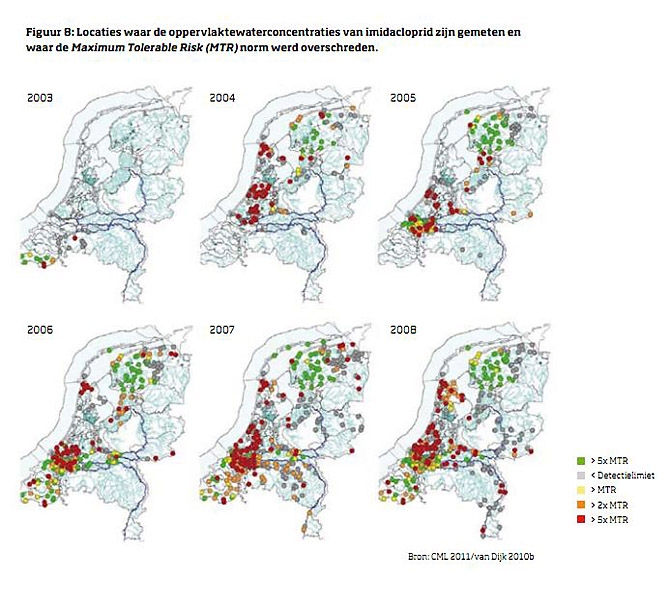
    Imidacloprid werd gevonden in 89% van watermonsters die werden genomen in agrarische gebieden van Californië, en in 19% van de monsters werd de maximaal toegestane concentratie van 1,05 microgram / L, zoals vastgesteld door Environmental Protection Agency (EPA), overschreden. In Nederland kwam imidacloprid in meetbare hoeveelheden voor in 30% van de 4.852 watermonsters die door Waterschappen werden verzameld tussen 1998 en 2007. Deze cijfers geven aan dat er inmiddels een wijdverbreide besmetting is van het oppervlaktewater met zeer langzaam afbreekbare (persistente) systemische insecticiden. Het eerste gevolg van deze besmetting is de geleidelijke vermindering, en mogelijk het verdwijnen van hele populaties van aquatische geleedpotigen in de getroffen gebieden. Aangezien de tijd de bepalende variabele bij dit proces is, kan er van worden uitgegaan dat, wanneer deze verontreiniging zich de komende jaren in het huidige tempo voortzet, de biodiversiteit en de functionaliteit van vele aquatische ecosystemen ernstig zal worden aangetast. Omdat deze organismen bovendien een primaire bron van voedsel voor een groot aantal soorten van gewervelde dieren zijn (bijv. vissen, kikkers en vogels), zal de uitputting van hun belangrijkste voedselbron onvermijdelijk indirecte effecten hebben op deze dierlijke populaties. Het geval van de patrijs (Perdix perdix) in Engeland is een voorbeeld van hoe een combinatie van herbiciden en insecticiden indirect de ondergang van een soort kan veroorzaken door de teloorgang van onmisbare voedselbronnen. Daarom zijn waarschuwingen over de mogelijke rol van milieuverontreiniging met neonicotinoiden bij de sterk dalende populaties van vogels, kikkers, egels, vleermuizen en andere insectenetende dieren niet ver gezocht en moeten serieus worden genomen.

    Imidacloprid werd gevonden in 89% van watermonsters die werden genomen in agrarische gebieden van Californië, en in 19% van de monsters werd de maximaal toegestane concentratie van 1,05 microgram / L, zoals vastgesteld door Environmental Protection Agency (EPA), overschreden. In Nederland kwam imidacloprid in meetbare hoeveelheden voor in 30% van de 4.852 watermonsters die door Waterschappen werden verzameld tussen 1998 en 2007. Deze cijfers geven aan dat er inmiddels een wijdverbreide besmetting is van het oppervlaktewater met zeer langzaam afbreekbare (persistente) systemische insecticiden. Het eerste gevolg van deze besmetting is de geleidelijke vermindering, en mogelijk het verdwijnen van hele populaties van aquatische geleedpotigen in de getroffen gebieden. Aangezien de tijd de bepalende variabele bij dit proces is, kan er van worden uitgegaan dat, wanneer deze verontreiniging zich de komende jaren in het huidige tempo voortzet, de biodiversiteit en de functionaliteit van vele aquatische ecosystemen ernstig zal worden aangetast. Omdat deze organismen bovendien een primaire bron van voedsel voor een groot aantal soorten van gewervelde dieren zijn (bijv. vissen, kikkers en vogels), zal de uitputting van hun belangrijkste voedselbron onvermijdelijk indirecte effecten hebben op deze dierlijke populaties. Het geval van de patrijs (Perdix perdix) in Engeland is een voorbeeld van hoe een combinatie van herbiciden en insecticiden indirect de ondergang van een soort kan veroorzaken door de teloorgang van onmisbare voedselbronnen. Daarom zijn waarschuwingen over de mogelijke rol van milieuverontreiniging met neonicotinoiden bij de sterk dalende populaties van vogels, kikkers, egels, vleermuizen en andere insectenetende dieren niet ver gezocht en moeten serieus worden genomen.

    Bron: Impact of Systemic Insecticides on Organisms and Ecosystems
    van Francisco Sánchez-Bayo, Henk A. Tennekes and Koichi Goka (bijlage)
    In:
    Agricultural and Biological Sciences » “Insecticides – Development of Safer and More Effective Technologies”, book edited by Stanislav Trdan, ISBN 978-953-51-0958-7, Published: January 30, 2013 under CC BY 3.0 license

  • Warnings about the possible role of environmental contamination with neonicotinoids in steeply declining populations of birds, frogs, hedgehogs, bats and other insectivorous animals are not far fetched and should be taken seriously

    Warnings about the possible role of environmental contamination with neonicotinoids in steeply declining populations of birds, frogs, hedgehogs, bats and other insectivorous animals are not far fetched and should be taken seriously

    Imidacloprid was detected in 89% of water samples in agricultural areas of California, with 19% exceeding the US Environmental Protection Agency’s chronic invertebrate Aquatic Life Benchmark of 1.05 μg/L. In the Netherlands, imidacloprid appeared in measurable quantities in 30% of the 4,852 water samples collected between 1998 and 2007. These figures indicate there is already a widespread contamination of waterways and estuaries with persistent systemic insecticides. The first consequence of such contamination is the progressive reduction, and possible elimination, of entire populations of aquatic arthropods from the affected areas. As time is a critical variable in this type of assessment, it is envisaged that should this contamination continue at the current pace over the years to come the biodiversity and functionality of many aquatic ecosystems will be seriously compromised. Secondly, as these organisms are a primary food source of a large number of vertebrates (e.g. fish, frogs and birds), the depletion of their main food resource will inevitably have indirect impacts on the animal populations that depend on them for their own survival. The case of the partridge in England is an example of how a combination of herbicides and insecticides can bring the demise of a non-target species by indirectly suppressing its food requirements. Therefore, warnings about the possible role of environmental contamination with neonicotinoids in steeply declining populations of birds, frogs, hedgehogs, bats and other insectivorous animals are not far fetched and should be taken seriously.

    Imidacloprid was detected in 89% of water samples in agricultural areas of California, with 19% exceeding the US Environmental Protection Agency’s chronic invertebrate Aquatic Life Benchmark of 1.05 μg/L. In the Netherlands, imidacloprid appeared in measurable quantities in 30% of the 4,852 water samples collected between 1998 and 2007. These figures indicate there is already a widespread contamination of waterways and estuaries with persistent systemic insecticides. The first consequence of such contamination is the progressive reduction, and possible elimination, of entire populations of aquatic arthropods from the affected areas. As time is a critical variable in this type of assessment, it is envisaged that should this contamination continue at the current pace over the years to come the biodiversity and functionality of many aquatic ecosystems will be seriously compromised. Secondly, as these organisms are a primary food source of a large number of vertebrates (e.g. fish, frogs and birds), the depletion of their main food resource will inevitably have indirect impacts on the animal populations that depend on them for their own survival. The case of the partridge in England is an example of how a combination of herbicides and insecticides can bring the demise of a non-target species by indirectly suppressing its food requirements. Therefore, warnings about the possible role of environmental contamination with neonicotinoids in steeply declining populations of birds, frogs, hedgehogs, bats and other insectivorous animals are not far fetched and should be taken seriously.

    Source:
    Source:
    Impact of Systemic Insecticides on Organisms and Ecosystems
    By Francisco Sánchez-Bayo, Henk A. Tennekes and Koichi Goka (attached)
    In:
    Agricultural and Biological Sciences » “Insecticides – Development of Safer and More Effective Technologies”, book edited by Stanislav Trdan, ISBN 978-953-51-0958-7, Published: January 30, 2013 under CC BY 3.0 license

  • It’s not the pesticides alone or introduced predators or ultraviolet light or global warming that’s causing this decline, but the interaction between these on an animal that is pretty sensitive to its environment

    It’s not the pesticides alone or introduced predators or ultraviolet light or global warming that’s causing this decline, but the interaction between these on an animal that is pretty sensitive to its environment

    The pesticide brew in many ponds bordering Midwestern cornfields is not only affecting the sexual development of frogs, but is making them more prone to deadly bacterial meningitis, according to a new study by University of California, Berkeley, scientists. These physiological effects combine with environmental disruptions to make the life of a frog seem like something out of a horror movie and are likely among the factors causing a decline in amphibian populations worldwide, the researchers said. “If you look at one of these frogs, it’s probably a hermaphrodite – plus, it metamorphoses late, which means it is subject to its pool drying up before it can become a frog,” said lead researcher Tyrone Hayes, professor of integrative biology at UC Berkeley. “It’s also smaller, if it metamorphoses at all, which increases the likelihood it will be eaten and decreases its ability to eat. Plus, it’s immuno-suppressed, so more prone to die from infection.” The stress on the frogs is increasing stress hormone levels, he found, which in turn create holes in the thymus gland that likely cause the impaired immune response. “It’s not the pesticides alone or introduced predators or ultraviolet light or global warming that’s causing this decline, but the interaction between these on an animal that is pretty sensitive to its environment,” said Hayes.

    The pesticide brew in many ponds bordering Midwestern cornfields is not only affecting the sexual development of frogs, but is making them more prone to deadly bacterial meningitis, according to a new study by University of California, Berkeley, scientists. These physiological effects combine with environmental disruptions to make the life of a frog seem like something out of a horror movie and are likely among the factors causing a decline in amphibian populations worldwide, the researchers said. “If you look at one of these frogs, it’s probably a hermaphrodite – plus, it metamorphoses late, which means it is subject to its pool drying up before it can become a frog,” said lead researcher Tyrone Hayes, professor of integrative biology at UC Berkeley. “It’s also smaller, if it metamorphoses at all, which increases the likelihood it will be eaten and decreases its ability to eat. Plus, it’s immuno-suppressed, so more prone to die from infection.” The stress on the frogs is increasing stress hormone levels, he found, which in turn create holes in the thymus gland that likely cause the impaired immune response. “It’s not the pesticides alone or introduced predators or ultraviolet light or global warming that’s causing this decline, but the interaction between these on an animal that is pretty sensitive to its environment,” said Hayes.

    In the new paper, published online last week in the journal Environmental Health Perspectives, Hayes and his colleagues report four years of experiments showing that, while some of the pesticides, herbicides and fungicides used on corn fields may not by themselves have a noticeable impact on frogs, in combination they create significant effects. Among these are delayed maturation – the tadpoles take longer to metamorphose into frogs – retarded growth and an increased susceptibility to meningitis caused by normally benign bacteria.

    Four years ago, Hayes showed that atrazine, the most common weed killer used on corn in the United States, disrupts the sexual development of frogs, feminizing males into hermaphrodites – frogs with female sex organs invading their testes – decreasing the size of their vocal organs, which are critical to mating success, and causing a tenfold drop in testosterone in mature male frogs.

    In the current study, he looked again at atrazine as well as three other herbicides, two fungicides and three insecticides used on Midwestern cornfields – a subset of more than two dozen pesticides approved for use. All nine were found in the scientists’ study area in Nebraska in pools of water beside cornfields early in the growing season, when spraying typically occurs. Levels ranged from 0.1 parts per billion (ppb) to 10 or more ppb.

    Native northern leopard frogs (Rana pipiens) raised in water with only one of these nine pesticides at 0.1 ppb appeared normal, though the fungicide propiconazole caused a small but significant increase in the time it took tadpoles to start metamorphasis. The insecticide tebupirimphos caused a small but statistically significant decrease in the size and weight of mature frogs.

    Mixtures, however, had a much stronger effect. All nine compounds together at 0.1 ppb – one of the lower concentrations measured in the field – lengthened the time to metamorphosis by 15 days, or about 25 to 30 percent. The mixture also caused a frog mortality of 35 percent.

    All nine compounds together also produced a startling effect: The longer a tadpole took to mature into a frog, the smaller it was. It’s normally the other way around, Hayes said. Separately, six of the pesticides did not affect this correlation, but three disrupted it so that there was no relationship between time to metamorphosis and size at metamorphosis.

    “In humans, this is like saying, ‘The longer you are pregnant, the smaller your baby will be,’ which means the womb is no longer a nurturing environment,” Hayes said.

    The nine-pesticide combo also damaged the thymus, a part of the immune system, causing 70 percent of frogs to develop flavo-bacterial meningitis. The pesticides atrazine and S-metolachlor, which are marketed as the combination Bicep II Magnum, caused the most thymic damage.

    To investigate why, Hayes and his laboratory colleagues, mostly undergraduate students, raised larvae of the common laboratory frog, the African clawed frog (Xenopus laevis), in water containing these pesticides and found four times the normal level of the stress hormone corticosterone. Hayes suspects that not all of the pesticides affect frogs, but that some enhance or trigger the deleterious effects of others when combined.

    “Estimating the ecological risk and the impact of pesticides on amphibians using studies that examine single pesticides at high concentrations only may lead to gross underestimations of the role of pesticides in amphibian declines,” he wrote.

    In a second study also published online last week in Environmental Health Perspectives, Hayes reported even stronger evidence that atrazine, a powerful endocrine disruptor, both chemically castrates male frogs by blocking the action of the male steroid androgen and feminizes them by stimulating the production of the female hormone estrogen. He was able to produce identical hermaphroditic malformations in frogs by administering estrogen or blocking androgen at the proper time of development.

    “One week of exposure at the critical time is all that’s required to make these males look feminine, which probably interferes with mating,” he said. Noting that some frogs seem to adapt to atrazine by delaying development, presumably so that the critical developmental period takes place when the herbicide is at its lowest, Hayes suspects that not all frogs would be expected to adapt, or to adapt quickly enough, to survive. Plus, delayed maturation comes at the risk of having the pond turn into a puddle and dry up before the frog completely metamorphoses.

    Hayes is continuing his studies with various combinations of pesticides to determine which are the true cause of the problem and which serve to enhance the effect of others.

    Source: Science Daily, Feb 3, 2006
    http://www.sciencedaily.com/releases/2006/02/060202180830.htm