
A very low exposure of honeybee larvae to imidacloprid lowers a larva’s probability of surviving to adulthood
![Caucasian-Honey-Bee[1]](https://boerenlandvogelswp.studiopuik.com/wp-content/uploads/2016/03/Caucasian-Honey-Bee1_1.jpg)
New research by academics at The University of Nottingham has shown that exposure to imidacloprid causes changes to the genes of the honeybee. The study, led by Dr Reinhard Stöger, Associate Professor in Epigenetics in the University’s School of Biosciences, was conducted under field realistic conditions and showed that a very low exposure of just two parts per billion of imidacloprid has an impact on the activity of some of the honeybee genes. The researchers identified that cells of honeybee larvae had to work harder and increase the activity of genes involved in breaking down toxins, most likely to cope with the insecticide. Genes involved in regulating energy to run cells were also affected. Such changes are known to reduce the lifespan of the most widely studied insect, the common fruit fly, and lower a larva’s probability of surviving to adulthood. Dr Stöger said: “Although larvae can still grow and develop in the presence of imidacloprid, the stability of the developmental process appears to be compromised. Should the bees be exposed to additional stresses such as pests, disease and bad weather then it is likely to increase the rate of development failure.”
Ireland’s honeybee losses (of between 50pc and 80pc of hives) are unsustainable
![romania[1]](https://boerenlandvogelswp.studiopuik.com/wp-content/uploads/2016/03/romania1_0.jpg)
MORE than half of Ireland’s honeybee population has been wiped out since winter, say beekeepers, who have described the losses as a “complete and utter meltdown”. Varroa mites and their related diseases, poor breeding and two years of bad weather have played a big role in decimating bee numbers. But beekeepers are also blaming a controversial range of new agricultural pesticides – neonicotinoids – for contributing to the losses of between 50pc and 80pc of Irish hives this year. In the UK, reports of 60pc losses spurred the government there to last week launch what it described as an “urgent review” of the bee crisis. According to the Federation of Irish Beekeepers’ Associations (FIBA), the wipeout among its 2,000-plus members is the worst ever. It estimates that Irish hive numbers have fallen below 10,000 from more than 20,000 before winter.
De mogelijkheden om de overheid te dwingen tot het saneren van gronden die de waterwinlocaties in Nederland bedreigen

Regelmatig trekken drinkwaterbedrijven via de media aan de bel omdat zij signaleren dat gifstoffen in de grond de (drink)waterwinning in Nederland bedreigen [1]. De waterbedrijven zijn van mening dat de overheid met spoed de betrokken gronden moet saneren om de drinkwatervoorziening in Nederland veilig te stellen. Heeft een waterbedrijf mogelijkheden om de overheid, zonodig in rechte, te dwingen tot het saneren van gronden die de waterwinlocaties in Nederland bedreigen?
Presentatie van Henk Tennekes op de bijeenkomst ‘Bij elkaar: naar een Actieprogramma Bijengezondheid’ op 8 juli 2013 in Den Haag
![4869[1]](https://boerenlandvogelswp.studiopuik.com/wp-content/uploads/2016/03/48691.jpg)
De Staatssecretaris van Economische Zaken, Mw. Sharon A.M. Dijksma heeft belanghebbende partijen uitgenodigd deel te nemen aan de bijeenkomst ‘Bij elkaar: naar een Actieprogramma Bijengezondheid’ op maandag 8 juli 2013 in het ‘New Babylon Meeting Center’ te Den Haag. Tijdens de bijeenkomst, die onder leiding stond van Felix Rottenberg, werden concrete voorstellen gedaan voor acties ter bevordering van de bijengezondheid. Bijgevoegd de presentatie van de toxicoloog Henk Tennekes, waarin de volgende 7 stellingen ter bevordering van de bijengezondheid werden toegelicht: 1. Verbod op alle toepassingen van alle neonicotinoiden; 2. Hervorming van de risico-analyse van bestrijdingsmiddelen; 3. Onafhankelijke supervisie van de ontwikkeling en toepassing van bestrijdingsmiddelen; 4. Geen belangenverstrengelingen bij personen die betrokken zijn bij het bestrijdingsmiddelenbeleid; 5. Geen prophylactisch (voorbehoedend) gebruik van bestrijdingsmiddelen; 6. Sterke bevordering van de ecologische landbouw; 7. Het primaat van de politiek bij het bestrijdingsmiddelenbeleid mag niet door lobbyisme worden aangetast.
Transient Exposure to Low Levels of Insecticide Affects Metabolic Networks of Honeybee Larvae
![ukrainianbees[1]](https://boerenlandvogelswp.studiopuik.com/wp-content/uploads/2016/03/ukrainianbees1_0.jpg)
The survival of a species depends on its capacity to adjust to changing environmental conditions, and new stressors. Such new, anthropogenic stressors include the neonicotinoid class of crop-protecting agents, which have been implicated in the population declines of pollinating insects, including honeybees (Apis mellifera). The low-dose effects of these compounds on larval development and physiological responses have remained largely unknown. Over a period of 15 days, we provided syrup tainted with low levels (2 µg/L−1) of the neonicotinoid insecticide imidacloprid to beehives located in the field. We measured transcript levels by RNA sequencing and established lipid profiles using liquid chromatography coupled with mass spectrometry from worker-bee larvae of imidacloprid-exposed (IE) and unexposed, control (C) hives.
Reduction in homing flights of honey bees after a sublethal dose of neonicotinoid insecticides
![945631_473003349442988_474428575_n[1]](https://boerenlandvogelswp.studiopuik.com/wp-content/uploads/2016/03/945631_473003349442988_474428575_n1.jpg)
The negative effects of a commonly applied systemic insecticide, neonicotinoid, on the honey bee Apis mellifera L. are of great concern worldwide, as the use of the chemical is expanding. Recently, special attention has been paid to the sublethal effects of insecticides. An increasing number of studies has identified sublethal effects on the honey bee in the laboratory or in experimental cages, but so far, few studies have examined sublethal effects in the field. To reveal sublethal effects under field conditions, I examined whether the proportion of successful homing flights by foraging honey bees during 30 min after release decreased after bees were topically exposed to insecticides. Honey bees were treated with two types of neonicotinoid insecticide (clothianidin, dinotefuran) and two types of previously common insecticide (etofenprox [pyrethroid] and fenitrothion [organophosphate]) at five different doses (one-half, one-fourth, one-tenth, one-twentieth, and one-fortieth of their median lethal dose – LD50). Then the bees were released 500 m from their hives in the field.
Immunsuppression durch neonikotinoide Insektizide an der Wurzel des globalen Rückgangs bei Wildtieren
![gam0211sh-wildlife6[1]](https://boerenlandvogelswp.studiopuik.com/wp-content/uploads/2016/03/gam0211sh-wildlife61.jpg)
Bereits in seinem Buch “Ende der Artenvielfalt – Neuartige Pestizide töten Insekten und Vögel“ warnt der niederländische Toxikologe Henk Tennekes vor den Gefahren von systemischen Neonicotinoid-Insektiziden. Damit untermauert er Ergebnisse verschiedener Studien aus den vergangenen Jahren: Neonicotinoide sind in jeglicher Konzentration wirksam, sofern die Dauer des Kontakts ausreichend lang ist. Selbst kleinste Mengen können auf lange Sicht verheerende Auswirkungen haben. Diese Stoffe (Handelsnamen sind Imidacloprid, Thiamethoxam oder Clothianidin) wirken nämlich auf das zentrale Nervensystem von Insekten und Wirbellosen und blockieren dort wichtige Funktionen. Die seit 1991 zunehmend eingesetzten Giftstoffe gelangen ins Grundwasser und verbleiben auch im Boden, wo sie schwer abbaubar sind. Wasser- und landlebende Tiere sind ihnen folglich permanent ausgesetzt. Wirken die Nervengifte in niedriger Dosierung zur Zeit der Anwendung nicht unmittelbar tödlich, haben sie dennoch langfristig eine zerstörerische Wirkung.Die Folgen dieser chronischen Toxizität sind Schäden an zahlreichen Arten wie Wassertiere, Regenwürmer, Käfer, Spinnen oder Schnecken. Und natürlich Bienen und anderen Insekten. Außerdem schwächen Neonicotinoide das Immunsystem der Tiere. Über dieses Phänomen berichtet Tennekes gemeinsam mit Forschern aus England und Australien in einer aktuellen Studie. Während bei Bienen und Fischen eine Schwächung des Immunsystems (Immunsuppression) durch Insektizide inzwischen nachgewiesen wurde, häufen sich die Indizien dafür, dass die Gifte auch für Infektionskrankheiten von Amphibien, Fledermäusen und insektenfressenden Vögeln verantwortlich sind. Solche Epidemien treten offensichtlich genau dort auf, wo in den Jahren zuvor große Mengen an systemischen Insektiziden eingesetzt wurden. Danach breiten sich die Krankheiten auch auf andere Regionen aus. Als Weckruf liefert die Studie nun Daten über die schleichende und heimtückische Gefahr, die von systemischen Insektiziden ausgehen. Und fordert zum Schutz der Land- und Wasserökosysteme ein Verbot der Neonicotinoide. Zumindest sollten die Gesamtauswirkungen aus einem neuen Blickwinkel untersucht und Langzeitfolgen zukünftig in Zulassungsverfahren integriert werden. Denn neonicotinoide Insektizide können auch bei Säugetieren – also uns Menschen – das Immunsystem beeinträchtigen.
Bijna 21.000 dieren en planten met uitsterving bedreigd
![sie0002sh3-birds-africa[1]](https://boerenlandvogelswp.studiopuik.com/wp-content/uploads/2016/03/sie0002sh3-birds-africa1.jpg)
Wereldwijd worden er 20.934 soorten planten en dieren met uitsterving bedreigd, zo blijkt uit de nieuwe Rode Lijst van bedreigde soorten die IUCN (International Union for Conservation of Nature) vandaag presenteert. Dit zijn er 1.117 meer dan bij de vorige taxatie in de zomer van 2012. In totaal bracht IUCN de status van 70.294 plant- en diersoorten in kaart. Hiervan zijn er 799 uitgestorven en komen er 61 niet meer in het wild voor. Drie soorten zijn sinds de vorige editie uitgestorven: een tandkarper (Cyprinodon arcuatus), een hagedis (Chioninia coctei) en een zoetwatergarnaal (Macrobrachium leptodactylus).
The steep decline of farmland birds in Sweden
![buzin-birds-stamps[1][1]](https://boerenlandvogelswp.studiopuik.com/wp-content/uploads/2016/03/buzin-birds-stamps11.jpg)
Of the 21 species associated with farmland in Sweden, 15 (71%) displayed a significant decline (P < 0.05) in numbers between 1976 and 2001. Farmland specialists and generalists differed in their population trend estimates. The total declines based on the geometric mean for farmland specialists and generalists were 55% and 7%, respectively. Only the greenfinch Carduelis chloris L. increased significantly in numbers, whereas five species showed non-significant population trends. Seven species experienced average population declines of more than 50% (curlew Numenius arquata L, stock dove Columba oenas L., wryneck Jynx torquilla L., skylark Alauda arvensis L., northern wheatear Oenanthe oenanthe L., house sparrow Passer domesticus L. and linnet Carduelis cannabina L.) of which the curlew experienced the greatest decline (average yearly decline of 7%). Our analyses showed that several farmland specialists have remarkably similar population trends in Sweden and England (e.g. skylark, linnet and yellowhammer Emberiza citrinella L.). This supports the view that the cause of the decline is connected to agriculture and that species with specialist requirements are most sensitive to agricultural change.
Study by James Cresswell et al. on clearance of ingested imidacloprid in honey bees and bumble bees
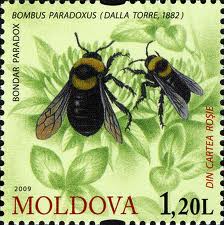
Bees in agricultural landscapes are exposed to dietary pesticides such as imidacloprid when they feed from treated mass-flowering crops. Concern about the consequent impact on bees makes it important to understand their resilience. In the laboratory, we therefore fed adult worker bees on dosed syrup (125 µg L-1 imidacloprid, 98 µg kg-1) either continuously or as a pulsed exposure and measured their behaviour (feeding and locomotory activity) and whole-body residues. On dosed syrup, honey bees maintained much lower bodily levels of imidacloprid than bumble bees (< 0.2 ng vs. 2.4 ng imidacloprid per bee). Dietary imidacloprid did not affect the behaviour of honey bees but it reduced feeding and locomotory activity in bumble bees. After the pulsed exposure, bumble bees cleared bodily imidacloprid after 48 hours and recovered behaviourally. We attribute the differential behavioural resilience of the two species to the observed differential in bodily residues. The ability of bumble bees to recover may be environmentally relevant in wild populations that face transitory exposures from the pulsed blooming of mass-flowering crops.